Neoclassicism
Europe turns back to Greece and Rome: clear line, calm figures and civic virtue.
First room, north wall

Wealth and Benefits of the Spanish Monarchy under Charles IIIGiovanni Battista Tiepolo, 1762Courtesy National Gallery of Art, Washington 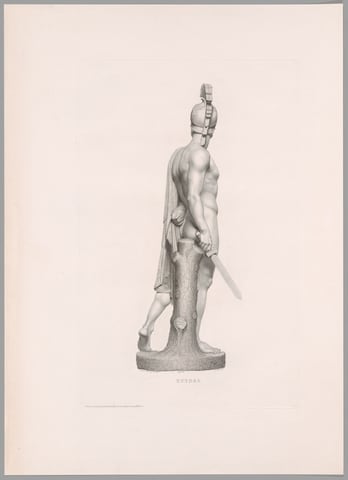
Ettore, Side View, from Oeuvre de CanovaAntonio Canova, 1817Courtesy of the Art Institute of Chicago 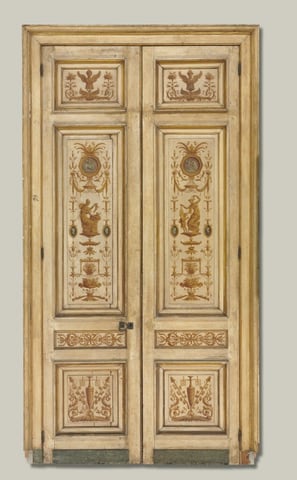
Overdoor PaintingPierre Rousseau, 1790sCourtesy of the Cleveland Museum of Art 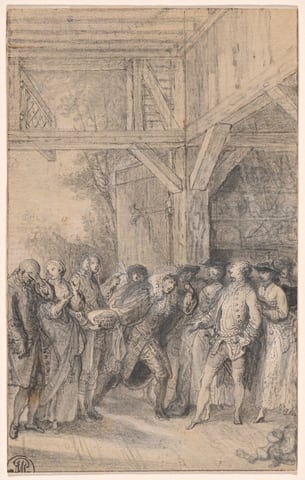
Farmer Requesting Permission to Marry a Nobleman's DaughterGabriel de Saint-Aubin, 1761Courtesy of the Art Institute of Chicago
First room, south wall

L'heureuse féconditéNicolas Delaunay, 1777Courtesy National Gallery of Art, Washington 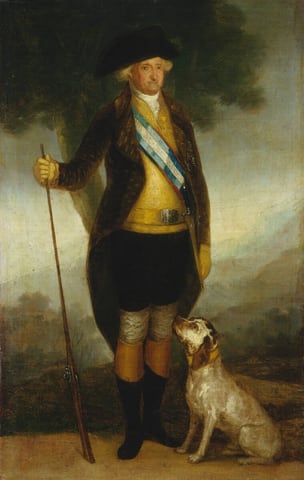
Charles IV of Spain as HuntsmanUnrecorded Spanish maker, c. 1799/1800Courtesy National Gallery of Art, Washington 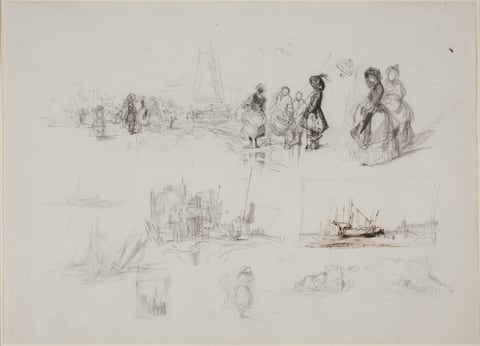
Seaside StudiesEugène Isabey, 1830sCourtesy National Gallery of Art, Washington 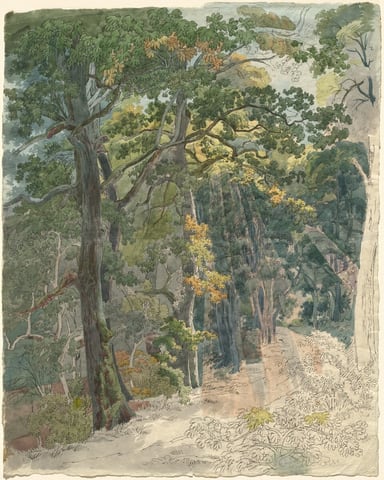
Rays of Sunlight Striking a Woodland PathFriedrich Salathé, c. 1815Courtesy National Gallery of Art, Washington
Second room, south wall
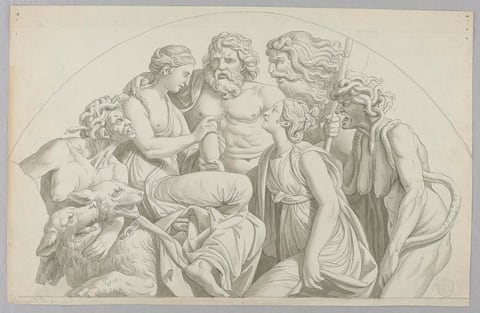
Psyche Asks Proserpine to Put a Little of her Beauty in an Urn for VenusJohann August Nahl The Younger, ca. 1781Courtesy of Cooper Hewitt, Smithsonian Design Museum 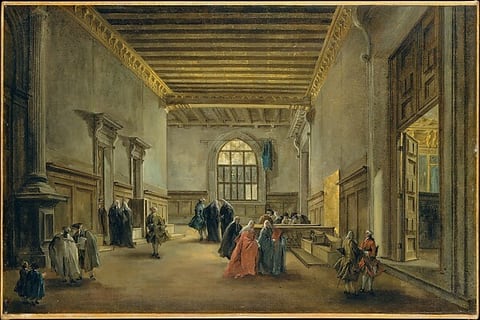
The Antechamber of the Sala del Maggior ConsiglioFrancesco Guardi, ca. 1765–68Courtesy of The Metropolitan Museum of Art 
A Forest with Apollo and DaphneJean-Victor Bertin, 1810Courtesy of the Cleveland Museum of Art 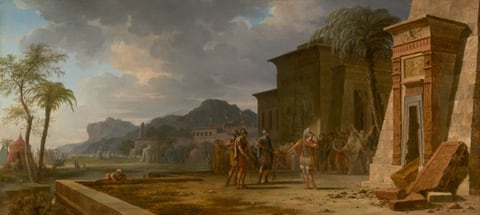
Alexander at the Tomb of Cyrus the GreatPierre Henri de Valenciennes, 1796Courtesy of the Art Institute of Chicago
Second room, north wall
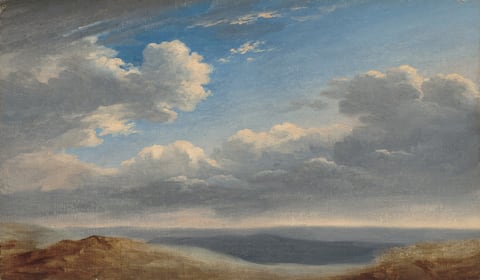
Study of Clouds over the Roman CampagnaPierre Henri de Valenciennes, c. 1782/1785Courtesy National Gallery of Art, Washington 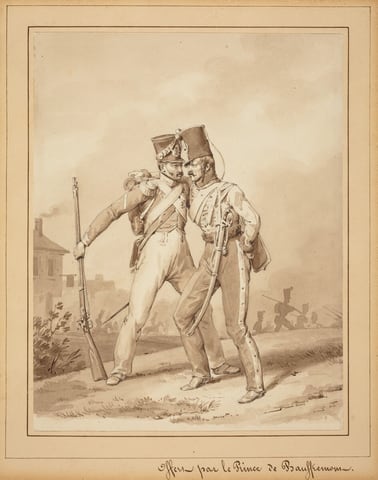
Two GrenadiersVictor AdamCourtesy National Gallery of Art, Washington 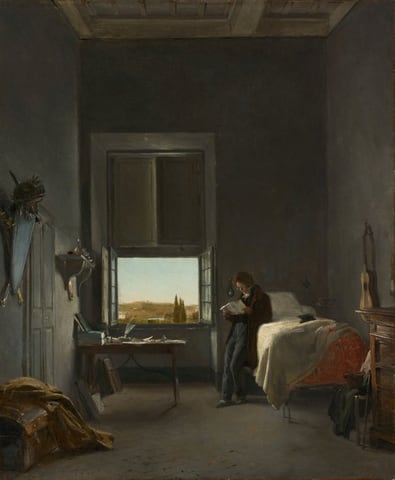
The Artist in His Room at the Villa Medici, RomeLéon Cogniet, 1817Courtesy of the Cleveland Museum of Art 
Portrait of Le Roi MaratViller, c. 1795Courtesy of the Art Institute of Chicago