Skip to content
Ochre Editions
ArtArtistsCollectionsGalleriesDrops
SearchSign inCart (0)
The galleries · Style galleries

Neoclassicism

Europe turns back to Greece and Rome: clear line, calm figures and civic virtue.

109 works · hang 8232 ·

Share Neoclassicism, in the galleries

The rooms are imagined; every work on their walls is real.

Walk this roomRehang this room

First room, north wall

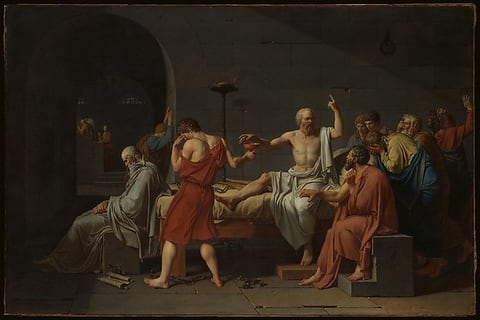
  1. The Death of Socrates, by Jacques-Louis David, 1787
    The Death of SocratesJacques-Louis David, 1787Courtesy of The Metropolitan Museum of Art
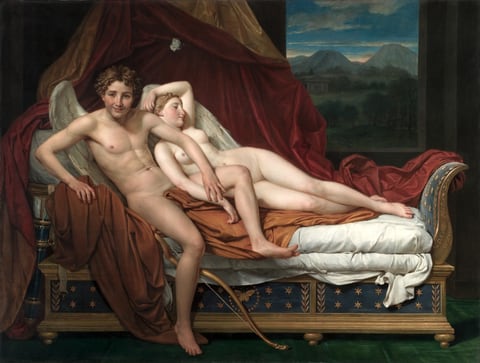
  2. Cupid and Psyche, by Jacques-Louis David, 1817
    Cupid and PsycheJacques-Louis David, 1817Courtesy of the Cleveland Museum of Art

First room, south wall
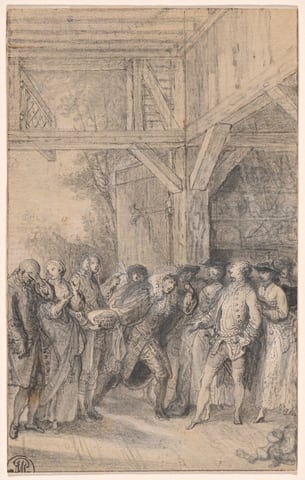
  1. A work made of graphite and pen and black ink, with touches of opaque, white watercolor on cream laid paper.
    Farmer Requesting Permission to Marry a Nobleman's DaughterGabriel de Saint-Aubin, 1761Courtesy of the Art Institute of Chicago
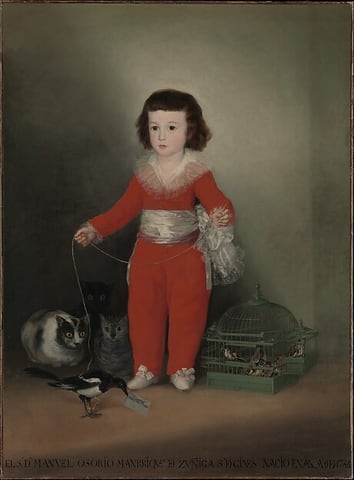
  2. Manuel Osorio Manrique de Zuñiga (1784–1792), by Francisco Goya, 1787–88
    Manuel Osorio Manrique de Zuñiga (1784–1792)Francisco Goya, 1787–88Courtesy of The Metropolitan Museum of Art

  3. We look up through an opening surrounded by a stone ledge, with clusters of people and clouds swirling into a blue sky up and away from us in this vertical, rectangular painting. From a distance, the scene looks like a complete illusion but up close, the people, clouds, and architecture are sketchily painted. The ledge running around the opening has a gold, oval medallion at each corner. Appearing to be carved from white stone, two bearded men with long hair recline against each medallion, flanking them to each side in front of large shells that curve up over the people and frames them. A few architectural structures extend up into the sky, including a pointed obelisk in the lower left corner, a pair of columns at the upper right, and what seems to be the mast of a ship at the top left. Most of the people have pale skin but some have more tan complexions, and a few, including those wearing feather headdresses near the upper left corner, have brown skin. The people wear windswept robes of pale, butter yellow, robin’s egg blue, rose pink, and ivory. The eye may drawn to a few vignettes, such as the man holding a rearing, chestnut-brown horse on the illusionistic ledge near the lower right, a nun wearing a white robe and holding a cross above him in the clouds, and, farthest away, a crowned person sitting on a throne.
    Wealth and Benefits of the Spanish Monarchy under Charles IIIGiovanni Battista Tiepolo, 1762Courtesy National Gallery of Art, Washington

Second room, south wall
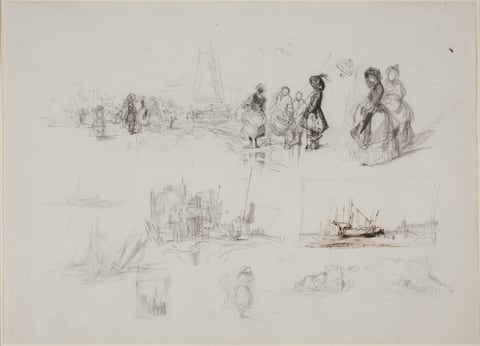
  1. This image is a pencil sketch on paper with a monochrome palette of graphite gray. The viewer sees various scenes without a defined horizon line. The upper section shows figures in period clothing, possibly mid-19th century women's fashion. The middle area has abstract architectural forms. In the lower right corner, a sailing ship or boat is sketched with more detail than the rest. The drawing style consists of quick, expressive strokes. The image conveys multiple narrative or compositional ideas on a single sheet.
    Seaside StudiesEugène Isabey, 1830sCourtesy National Gallery of Art, Washington
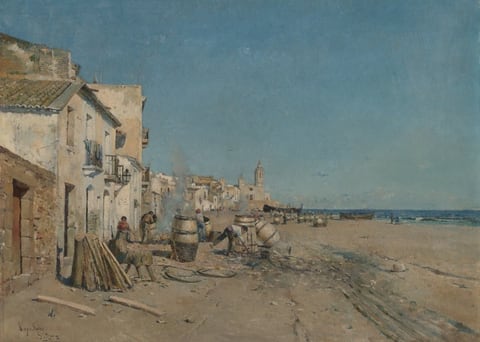
  2. A work made of oil on masonite.
    SitgesJuan Roig y Soler, 19th centuryCourtesy of the Art Institute of Chicago
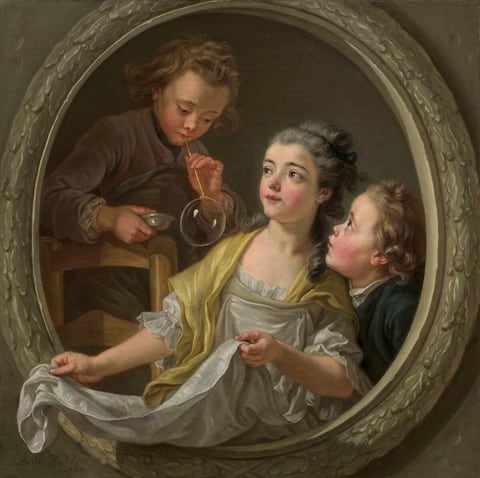
  3. The painting depicts three children within an oval frame, their upper bodies visible. The central child, a young girl, is positioned with her body facing forward and her head turned slightly to the left. She has a fair complexion, with rosy cheeks, pink lips, and wide brown eyes. Her hair is gray and partially pulled back by a blue ribbon. She is dressed in a white garment with a yellow shawl draped over her shoulders. Her arms are outstretched, holding the ends of a cloth that has been pinned on her dress. Her arms and the cloth extend forward beyond the oval frame that encircles the trio, as if the frame is a window or porthole that she is reaching out of. On the right, a boy leans on the girl's shoulder, also facing to the left, seen in profile. He has light brown, curly hair and a fair complexion. He wears a dark blue-green jacket over a white collar, and he is looking upward towards the third child. On the left, another boy, who also has light skin and light brown curly hair, appears to stand on a chair above the other two children. He is holding a long yellow straw up to his lips. At the other end of the straw, a large bubble hangs over the white cloth that the girl holds out. In his other hand is a small white dish. He wears a muted brown outfit with a dark cloth wrapped around him. The background within the frame is plain gray, and the frame that surrounds the children is light gray and appears to be carved with leaf designs. Beyond the oval frame is gray.
    Soap BubblesCharles Amédée Philippe Van Loo, 1764Courtesy National Gallery of Art, Washington

Second room, north wall
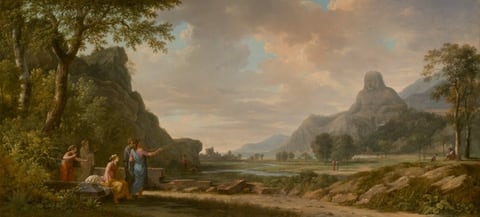
  1. A work made of oil on canvas.
    Mount Athos Carved as a Monument to Alexander the GreatPierre Henri de Valenciennes, 1796Courtesy of the Art Institute of Chicago
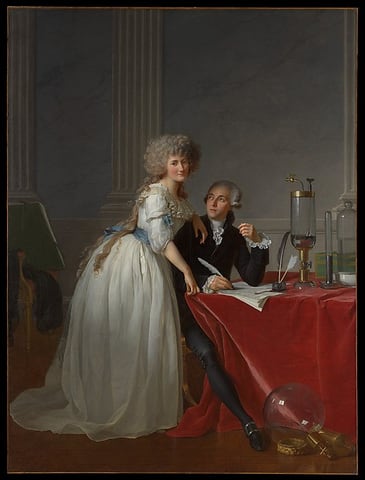
  2. Antoine Laurent Lavoisier (1743–1794) and Marie Anne Lavoisier (Marie Anne Pierrette Paulze, 1758–1836), by Jacques-Louis David, 1788
    Antoine Laurent Lavoisier (1743–1794) and Marie Anne Lavoisier (Marie Anne Pierrette Paulze, 1758–1836)Jacques-Louis David, 1788Courtesy of The Metropolitan Museum of Art
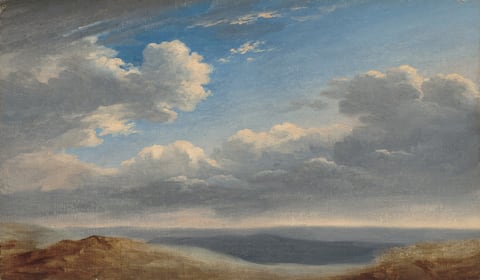
  3. A sliver of land across the bottom of this composition gives way to a procession of puffy gray and white clouds sweeping up across a vivid blue, panoramic sky in this horizontal landscape painting. An area of darker gray beyond the brown land could be a valley, mountain, or shadows from the billowing clouds. About one-fifth of the way up the composition, the horizon glows the faintest peach. The clouds trundle from our left up and to our right. The view is loosely painted, especially in the land.
    Study of Clouds over the Roman CampagnaPierre Henri de Valenciennes, c. 1782/1785Courtesy National Gallery of Art, Washington

Third room, north wall

  1. The engraving depicts a gathering around a woman holding a child in her arms in an indoor setting with stone columns and an arched background. Another woman is next to her, looking towards her while leaning over what appears to be a child or possibly a doll on a small donkey. Surrounding the central woman are several children, some seated and playing on the floor. A dog is resting at the central woman's feet. The image features lush drapery, creating a warm and intimate setting. The style suggests classical or historical fashion, and there is an ornate border with ivy leaves. The text and emblem below likely contain relevant inscriptions.
    L'heureuse féconditéNicolas Delaunay, 1777Courtesy National Gallery of Art, Washington
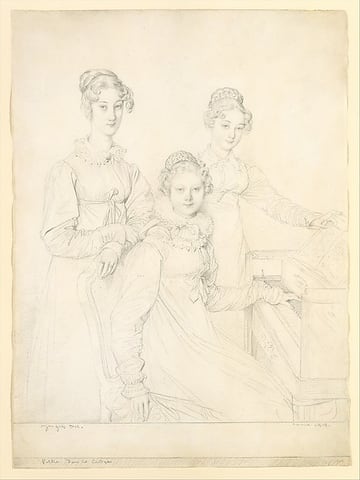
  2. The Kaunitz Sisters (Leopoldine, Caroline, and Ferdinandine), by Jean Auguste Dominique Ingres, 1818
    The Kaunitz Sisters (Leopoldine, Caroline, and Ferdinandine)Jean Auguste Dominique Ingres, 1818Courtesy of The Metropolitan Museum of Art
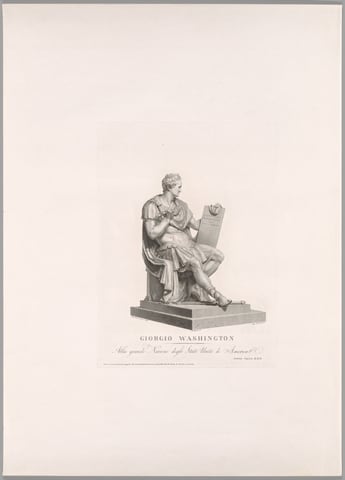
  3. A work made of engraving in black on ivory wove paper.
    George Washington, Front View, from Oeuvre de CanovaAntonio Canova, 1817Courtesy of the Art Institute of Chicago

Third room, south wall
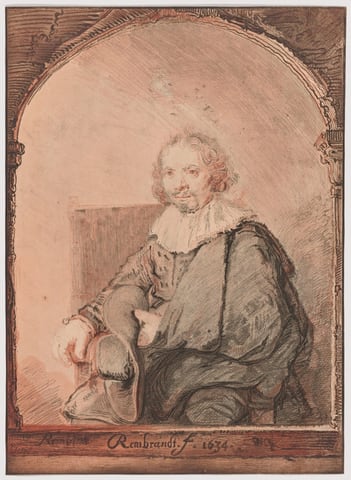
  1. A work made of soft ground etching, hard ground etching, aquatint, and roulette, printed from two plates in red-brown and black, on ivory laid paper.
    Portrait of a Man in an Armchair, from Collection d'imitations de Dessins d'après les Principaux Maîtres Hollandais et FlamandsChristian Josi, 1826Courtesy of the Art Institute of Chicago
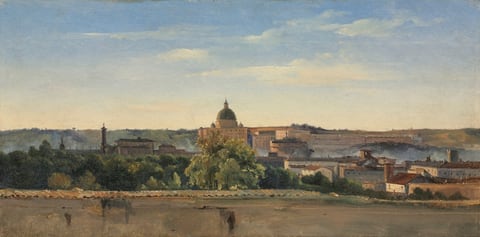
  2. View of Rome, by Pierre Henri de Valenciennes, c. 1782–84
    View of RomePierre Henri de Valenciennes, c. 1782–84Courtesy of the Cleveland Museum of Art

Walk on

  • Neoclassicism, room 2
  • More by Pierre Henri de Valenciennes 4 works
  • 18th-century France 75 works
Ochre Editions

The world's museums, on your wall. Every work here is a reproduction of a public-domain original, credited to the museum that holds it.

Shop

All artCollectionsLimited dropsPrints and framing

Help

Find an orderShippingReturnsVerify a certificate

About

About Ochre EditionsMuseum creditsFor agentsDevelopers

Legal

Terms of UseTerms of SaleLimited Editions and CertificatesPrivacy PolicyCookie PolicyAcceptable Use PolicyAgent & API TermsCopyright and DMCA PolicyPrinting Your Own PhotoVulnerability Disclosure PolicyAccessibility StatementOpen-Access Credits
© 2026 Ochre EditionsPrices in US dollars. Prints ship within the United States.