Neoclassicism
Europe turns back to Greece and Rome: clear line, calm figures and civic virtue.
First room, north wall
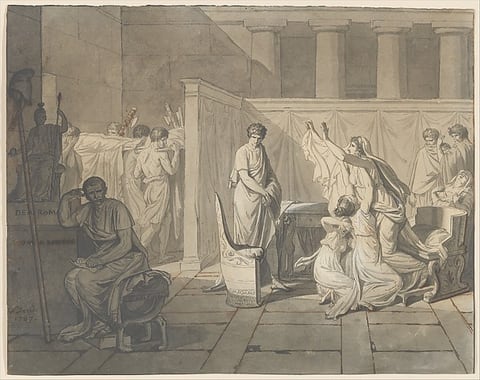
The Lictors Bringing Brutus the Bodies of his SonsJacques-Louis David, 1787Courtesy of The Metropolitan Museum of Art 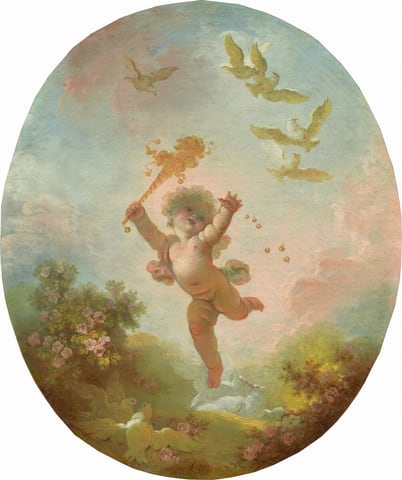
Love as FollyJean Honoré Fragonard, c. 1773/1776Courtesy National Gallery of Art, Washington 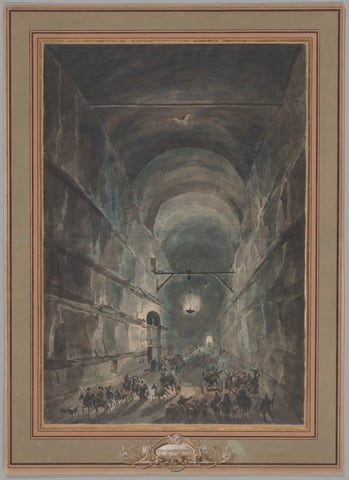
The Grotto of Posillipo (La Grotta di Posillipo)Louis Jean Desprez, 1785/90Courtesy of the Art Institute of Chicago 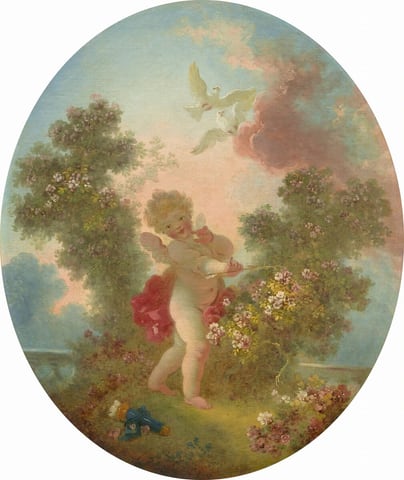
Love the SentinelJean Honoré Fragonard, c. 1773/1776Courtesy National Gallery of Art, Washington
First room, south wall
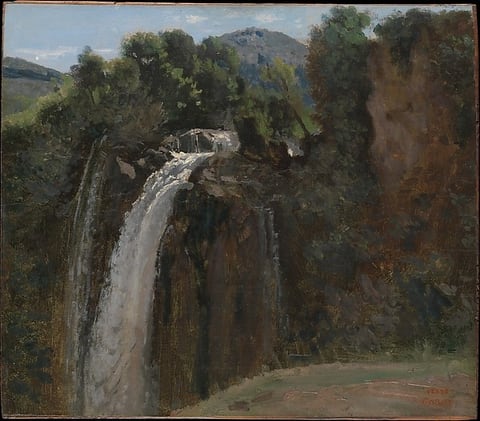
Waterfall at TerniJean Baptiste Camille Corot, 1826Courtesy of The Metropolitan Museum of Art 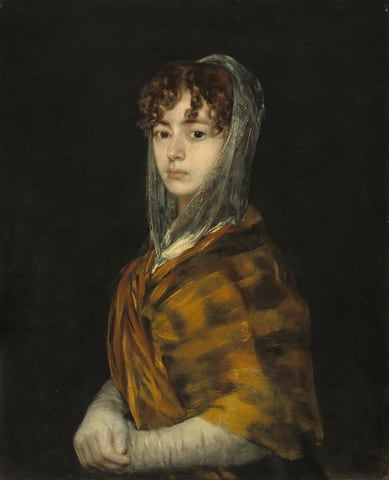
Señora Sabasa GarciaFrancisco Goya, c. 1806/1811Courtesy National Gallery of Art, Washington 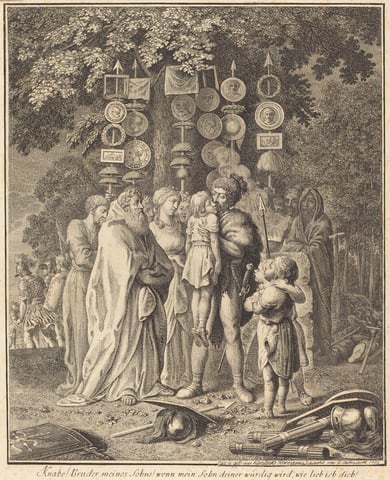
Ancient TeutonsDaniel Nikolaus Chodowiecki, 1782Courtesy National Gallery of Art, Washington
Second room, south wall
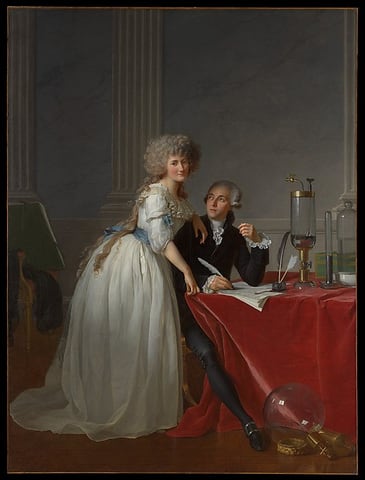
Antoine Laurent Lavoisier (1743–1794) and Marie Anne Lavoisier (Marie Anne Pierrette Paulze, 1758–1836)Jacques-Louis David, 1788Courtesy of The Metropolitan Museum of Art 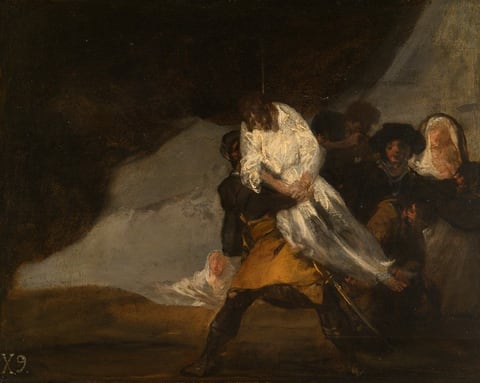
The Hanged MonkFrancisco Goya, c. 1810Courtesy of the Art Institute of Chicago 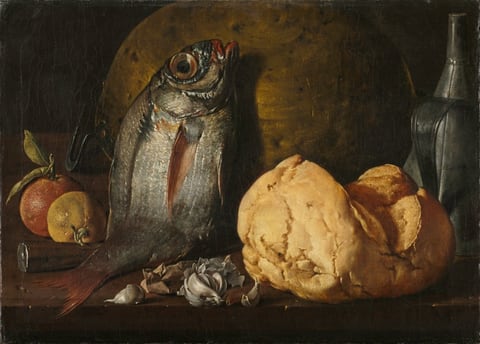
Still Life with Fish, Bread, and KettleLuis Meléndez, c. 1772Courtesy of the Cleveland Museum of Art
Second room, north wall
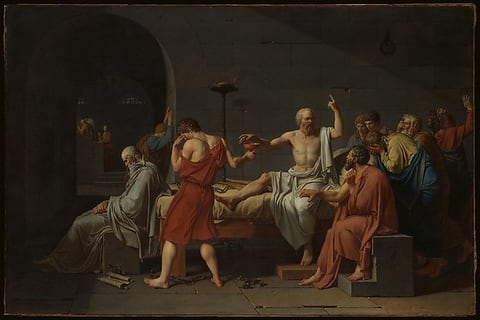
The Death of SocratesJacques-Louis David, 1787Courtesy of The Metropolitan Museum of Art 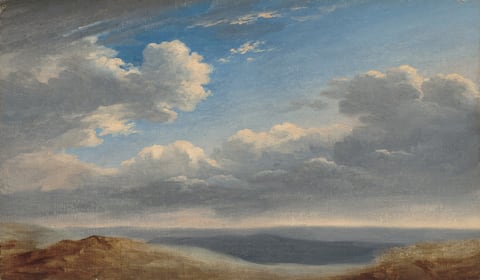
Study of Clouds over the Roman CampagnaPierre Henri de Valenciennes, c. 1782/1785Courtesy National Gallery of Art, Washington 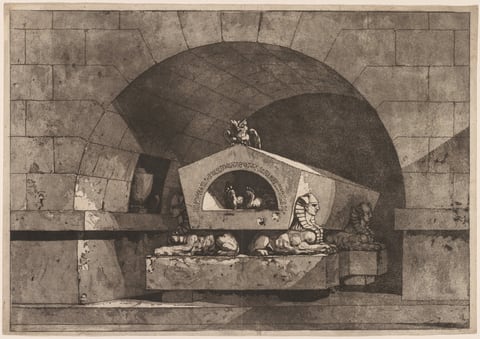
Tomb with Sphinxes and an OwlLouis Jean Desprez, c. 1779–84Courtesy of the Cleveland Museum of Art
Third room, north wall
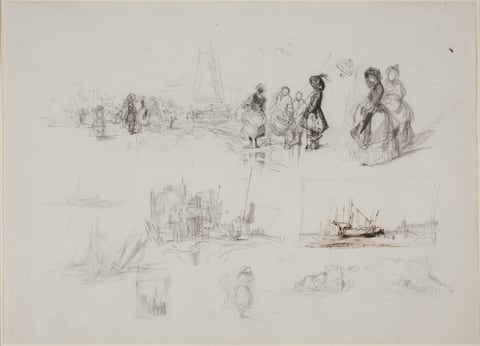
Seaside StudiesEugène Isabey, 1830sCourtesy National Gallery of Art, Washington 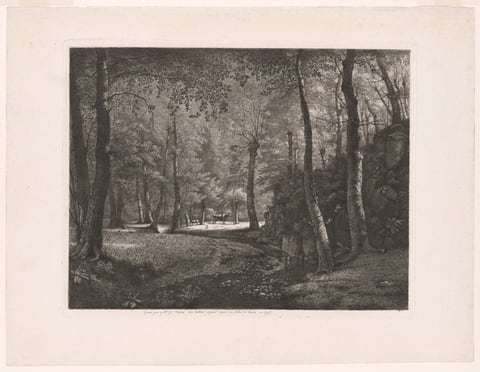
The Forest of RochecardonJean-Michel Grobon, 1800Courtesy of the Art Institute of Chicago 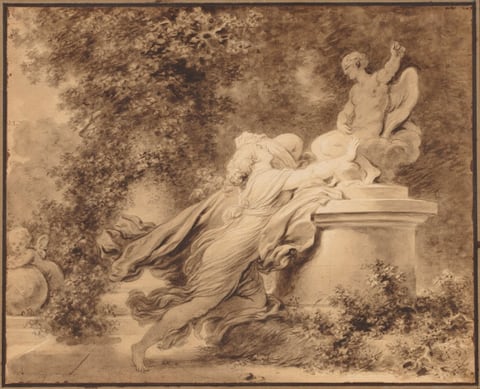
Invocation to LoveJean Honoré Fragonard, c. 1781Courtesy of the Cleveland Museum of Art