Skip to content
Ochre Editions
ArtArtistsCollectionsGalleriesDrops
SearchSign inCart (0)
The galleries · Style galleries

Neoclassicism

Europe turns back to Greece and Rome: clear line, calm figures and civic virtue.

109 works · hang 9691 ·

Share Neoclassicism, in the galleries

The rooms are imagined; every work on their walls is real.

Walk this roomRehang this room

First room, north wall

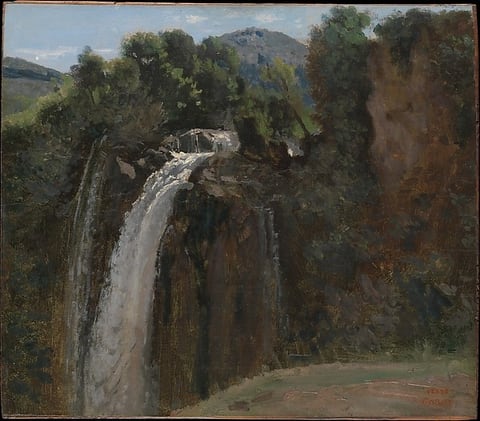
  1. Waterfall at Terni, by Jean Baptiste Camille Corot, 1826
    Waterfall at TerniJean Baptiste Camille Corot, 1826Courtesy of The Metropolitan Museum of Art
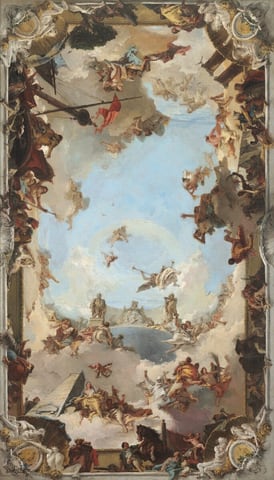
  2. We look up through an opening surrounded by a stone ledge, with clusters of people and clouds swirling into a blue sky up and away from us in this vertical, rectangular painting. From a distance, the scene looks like a complete illusion but up close, the people, clouds, and architecture are sketchily painted. The ledge running around the opening has a gold, oval medallion at each corner. Appearing to be carved from white stone, two bearded men with long hair recline against each medallion, flanking them to each side in front of large shells that curve up over the people and frames them. A few architectural structures extend up into the sky, including a pointed obelisk in the lower left corner, a pair of columns at the upper right, and what seems to be the mast of a ship at the top left. Most of the people have pale skin but some have more tan complexions, and a few, including those wearing feather headdresses near the upper left corner, have brown skin. The people wear windswept robes of pale, butter yellow, robin’s egg blue, rose pink, and ivory. The eye may drawn to a few vignettes, such as the man holding a rearing, chestnut-brown horse on the illusionistic ledge near the lower right, a nun wearing a white robe and holding a cross above him in the clouds, and, farthest away, a crowned person sitting on a throne.
    Wealth and Benefits of the Spanish Monarchy under Charles IIIGiovanni Battista Tiepolo, 1762Courtesy National Gallery of Art, Washington
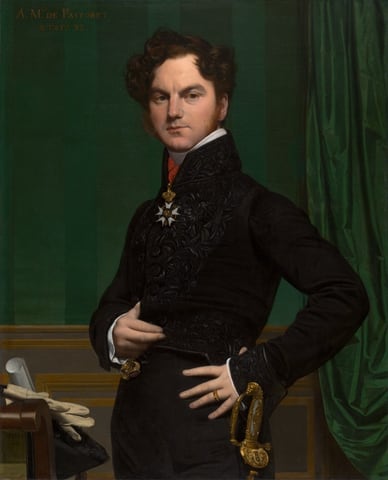
  3. Portrait of white man dressed in all black with medallion and sword.
    Amédée-David, the Comte de PastoretJean Auguste Dominique Ingres, 1823–26Courtesy of the Art Institute of Chicago

First room, south wall
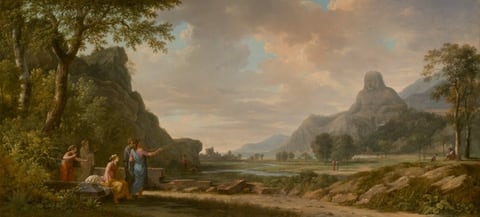
  1. A work made of oil on canvas.
    Mount Athos Carved as a Monument to Alexander the GreatPierre Henri de Valenciennes, 1796Courtesy of the Art Institute of Chicago
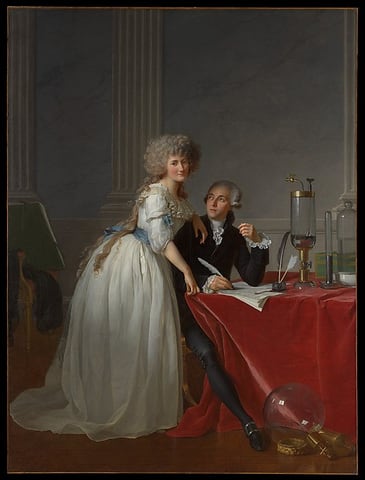
  2. Antoine Laurent Lavoisier (1743–1794) and Marie Anne Lavoisier (Marie Anne Pierrette Paulze, 1758–1836), by Jacques-Louis David, 1788
    Antoine Laurent Lavoisier (1743–1794) and Marie Anne Lavoisier (Marie Anne Pierrette Paulze, 1758–1836)Jacques-Louis David, 1788Courtesy of The Metropolitan Museum of Art
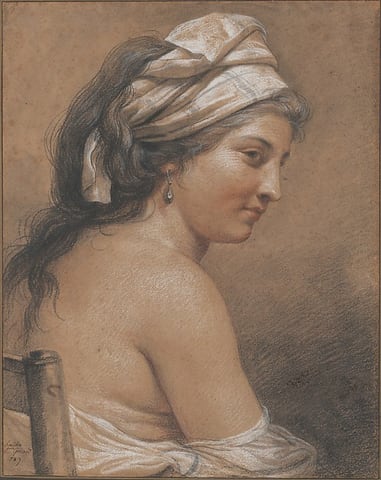
  3. Study of a Seated Woman Seen from Behind (Marie-Gabrielle Capet), by Adélaïde Labille-Guiard, 1789
    Study of a Seated Woman Seen from Behind (Marie-Gabrielle Capet)Adélaïde Labille-Guiard, 1789Courtesy of The Metropolitan Museum of Art

Second room, south wall
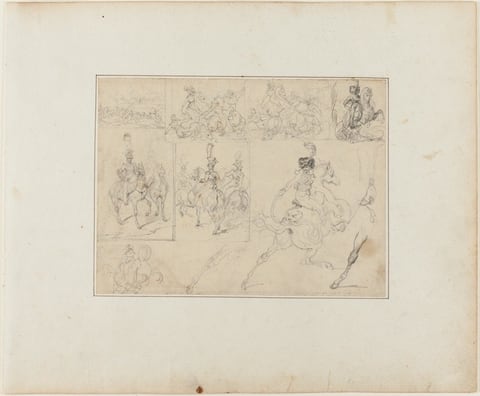
  1. A work made of graphite, on tan wove paper, perimeter mounted on ivory laid paper.
    Sheet of Sketches: Cavalry Battles and Mounted SoldiersJean Louis André Théodore Géricault, 1813/14Courtesy of the Art Institute of Chicago

  2. The Antechamber of the Sala del Maggior Consiglio, by Francesco Guardi, ca. 1765–68
    The Antechamber of the Sala del Maggior ConsiglioFrancesco Guardi, ca. 1765–68Courtesy of The Metropolitan Museum of Art
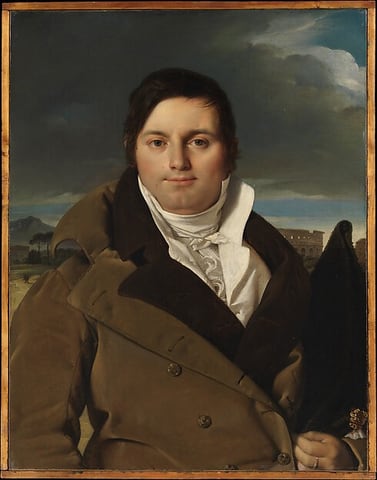
  3. Joseph-Antoine Moltedo (born 1775), by Jean Auguste Dominique Ingres, ca. 1810
    Joseph-Antoine Moltedo (born 1775)Jean Auguste Dominique Ingres, ca. 1810Courtesy of The Metropolitan Museum of Art

Second room, north wall
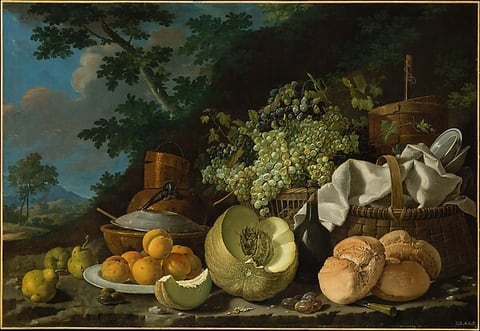
  1. The Afternoon Meal (La Merienda), by Luis Meléndez, ca. 1772
    The Afternoon Meal (La Merienda)Luis Meléndez, ca. 1772Courtesy of The Metropolitan Museum of Art
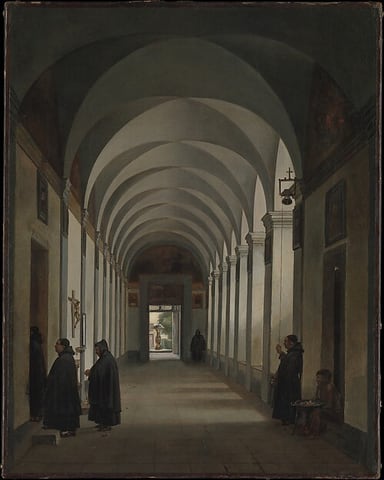
  2. Monks in the Cloister of the Church of Gesù e Maria, Rome, by François Marius Granet, 1808
    Monks in the Cloister of the Church of Gesù e Maria, RomeFrançois Marius Granet, 1808Courtesy of The Metropolitan Museum of Art
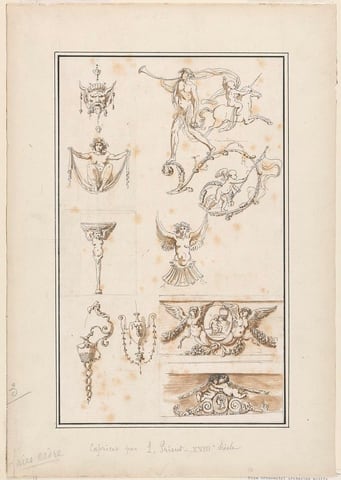
  3. DESIGNS FOR ORNAMENTAL ARABESQUE MOTIFS
    Designs for Ornamental Arabesque MotifsEtienne de Lavallée-Poussin, 1770Courtesy of Cooper Hewitt, Smithsonian Design Museum

Third room, north wall
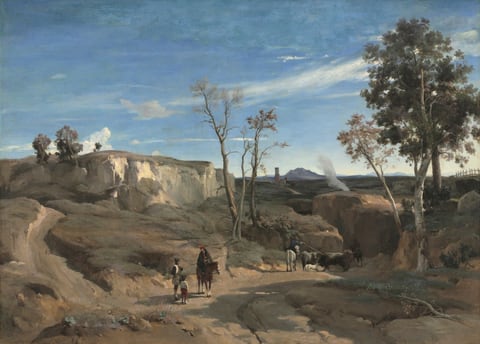
  1. La Cervara, the Roman Campagna, by Jean Baptiste Camille Corot, c. 1830–31
    La Cervara, the Roman CampagnaJean Baptiste Camille Corot, c. 1830–31Courtesy of the Cleveland Museum of Art
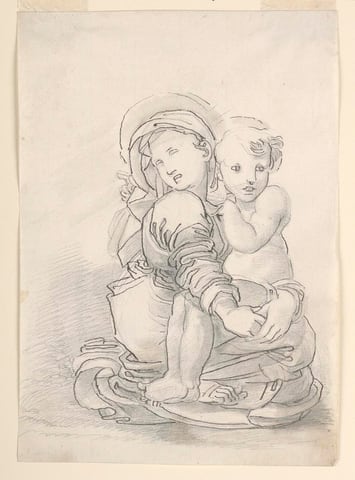
  2. THE VIRGIN WITH THE CHILD
    The Virgin with the ChildFortunato Duranti, 1820–1850Courtesy of Cooper Hewitt, Smithsonian Design Museum
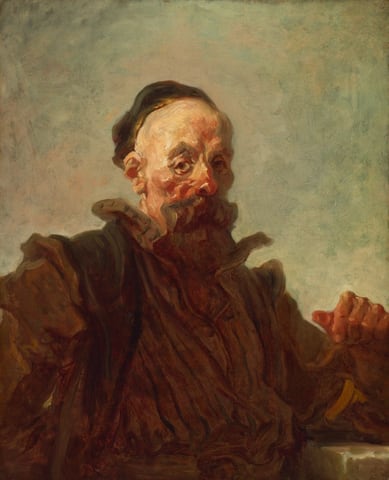
  3. Painting of bearded, ruddy-faced man in eighteenth century style clothing.
    Portrait of a Man in CostumeJean Honoré Fragonard, c. 1767–68Courtesy of the Art Institute of Chicago
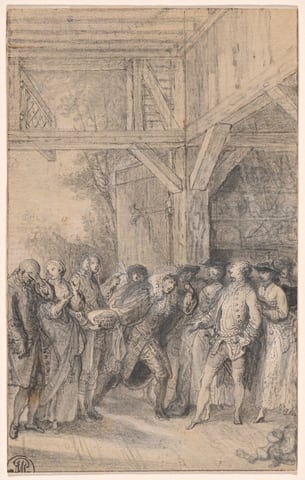
  4. A work made of graphite and pen and black ink, with touches of opaque, white watercolor on cream laid paper.
    Farmer Requesting Permission to Marry a Nobleman's DaughterGabriel de Saint-Aubin, 1761Courtesy of the Art Institute of Chicago

Walk on

  • Neoclassicism, room 2
  • Gabriel de Saint-Aubin's contemporaries 8 works
  • 18th-century France 75 works
Ochre Editions

The world's museums, on your wall. Every work here is a reproduction of a public-domain original, credited to the museum that holds it.

Shop

All artCollectionsLimited dropsPrints and framing

Help

Find an orderShippingReturnsVerify a certificate

About

About Ochre EditionsMuseum creditsFor agentsDevelopers

Legal

Terms of UseTerms of SaleLimited Editions and CertificatesPrivacy PolicyCookie PolicyAcceptable Use PolicyAgent & API TermsCopyright and DMCA PolicyPrinting Your Own PhotoVulnerability Disclosure PolicyAccessibility StatementOpen-Access Credits
© 2026 Ochre EditionsPrices in US dollars. Prints ship within the United States.