Floor plan

Style galleriesPaintings of the 19th century
Paintings of the 19th century
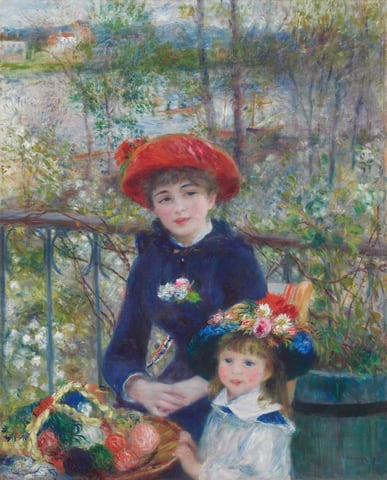
Impressionist painting of two girls on balcony, bright flower hat, knitting basket.
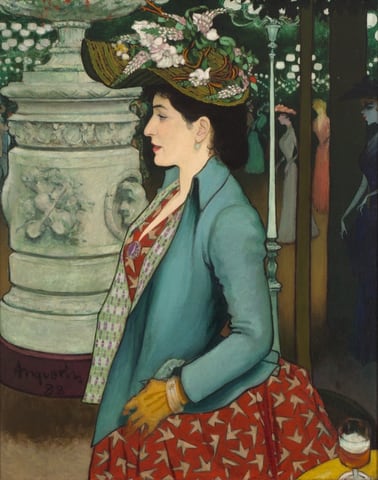
A work made of oil on canvas.
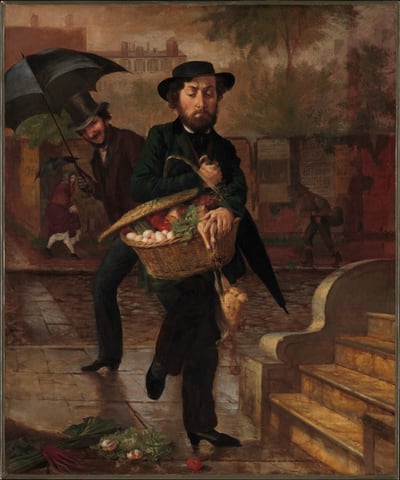
Young Husband: First Marketing, by Lilly Martin Spencer, 1854
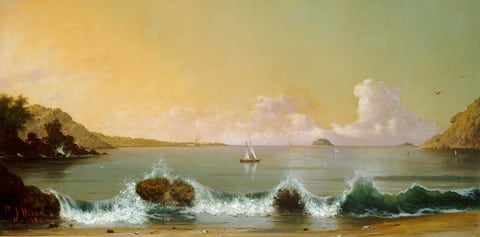
Across a short stretch of sand in front of us, waves of bottle-green water break over two boulders on the shoreline, with sailboats in the water beyond, in this wide, horizontal painting. One boulder is at the left edge of the painting; the other is a short distance away, about a quarter of the way across. The water cascades down between those large rocks. Across the rest of the beach, the waves flare up to break toward us in white, foamy surf. The land curves back into view on both sides of the canvas with muted, sage-green hills and, to our left, dark green trees on more craggy boulders. A more distant finger of land to our left stretches nearly halfway across the horizon, which comes about halfway up the composition. Minuscule in scale there, smoke pours out of a chimney, which is surrounded by pale yellow buildings. A mound emerges from the horizon to our right of center. About ten sailboats float on the water. The closest one to us is near the center of the painting, and the tiny forms of people aboard can just barely be made out. The other boats become smaller as they move back to the horizon, and some are only a touch of white or gray on the canvas. White and pale lavender-purple clouds sweep up from the horizon into the sky, which glows butter yellow along the left edge. The sky cools to mint green in the upper right corner. Several white or brown birds fly across the sky or low over the water. The artist signed and dated the lower left, “M. J. Heade 1864.”
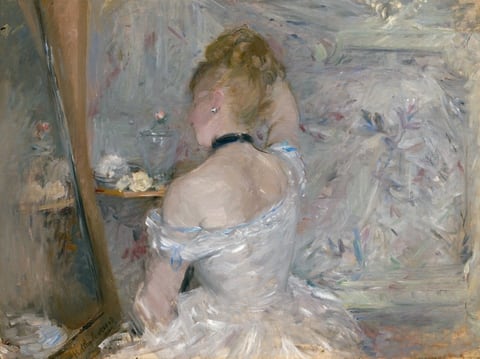
Painted portrait dominated by loose, large brushstrokes of a woman, seen from the back, wearing a gauzy white off-the-shoulder dress and black choker, blond hair swept up, examining herself in a mirror at left. The background is a feathered swirl suggesting floral pattern in cool pale tones of gray, purple, pink, and blue.
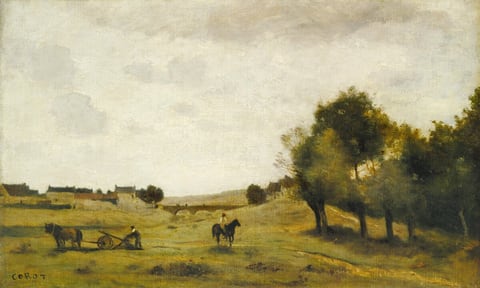
A person at the center of this loosely painted horizontal landscape rides a dark horse across a field as a man to the left works the field behind a horse-drawn plow. The field is carpeted with muted and gold-shaded green, and a grove of trees in the right third of the composition are painted in fern, olive, and dark green. A patch of darker green near us and to left of center is dotted with red and yellow to suggest flowers. The men and horses are small in relation to the composition. The people have brown skin and are painted with a few strokes in dark gray and muted green for the man behind the plow to the left and pale yellow and white and a red cap for the person on horseback. A band of houses with tan or light yellow walls and gray or terracotta red roofs line the far side of the field to the left, and an arched bridge crosses what appears to be a shallow, grassy ravine near the center. The horizon comes about a third of the way up this composition and a few smoke-gray clouds line the upper edge of the otherwise milk-white sky. The artist signed the lower left corner, “COROT.”

The works in this room are listed below.

Works in this room

Paintings made in the 19th century, from every museum.

First room, north wall

  1. Impressionist painting of two girls on balcony, bright flower hat, knitting basket.
    Two Sisters (On the Terrace)Pierre-Auguste Renoir, 1881Courtesy of the Art Institute of Chicago
  2. A work made of oil on canvas.
    A Woman at the Élysée Montmartre (Femme à l’Élysée Montmartre)Louis Anquetin, 1888Courtesy of the Art Institute of Chicago
  3. Young Husband: First Marketing, by Lilly Martin Spencer, 1854
    Young Husband: First MarketingLilly Martin Spencer, 1854Courtesy of The Metropolitan Museum of Art

First room, south wall

  1. Across a short stretch of sand in front of us, waves of bottle-green water break over two boulders on the shoreline, with sailboats in the water beyond, in this wide, horizontal painting. One boulder is at the left edge of the painting; the other is a short distance away, about a quarter of the way across. The water cascades down between those large rocks. Across the rest of the beach, the waves flare up to break toward us in white, foamy surf. The land curves back into view on both sides of the canvas with muted, sage-green hills and, to our left, dark green trees on more craggy boulders. A more distant finger of land to our left stretches nearly halfway across the horizon, which comes about halfway up the composition. Minuscule in scale there, smoke pours out of a chimney, which is surrounded by pale yellow buildings. A mound emerges from the horizon to our right of center. About ten sailboats float on the water. The closest one to us is near the center of the painting, and the tiny forms of people aboard can just barely be made out. The other boats become smaller as they move back to the horizon, and some are only a touch of white or gray on the canvas. White and pale lavender-purple clouds sweep up from the horizon into the sky, which glows butter yellow along the left edge. The sky cools to mint green in the upper right corner. Several white or brown birds fly across the sky or low over the water. The artist signed and dated the lower left, “M. J. Heade 1864.”
    Rio de Janeiro BayMartin Johnson Heade, 1864Courtesy National Gallery of Art, Washington
  2. Painted portrait dominated by loose, large brushstrokes of a woman, seen from the back, wearing a gauzy white off-the-shoulder dress and black choker, blond hair swept up, examining herself in a mirror at left. The background is a feathered swirl suggesting floral pattern in cool pale tones of gray, purple, pink, and blue.
    Woman at Her ToiletteBerthe Morisot, 1875–80Courtesy of the Art Institute of Chicago
  3. A person at the center of this loosely painted horizontal landscape rides a dark horse across a field as a man to the left works the field behind a horse-drawn plow. The field is carpeted with muted and gold-shaded green, and a grove of trees in the right third of the composition are painted in fern, olive, and dark green. A patch of darker green near us and to left of center is dotted with red and yellow to suggest flowers. The men and horses are small in relation to the composition. The people have brown skin and are painted with a few strokes in dark gray and muted green for the man behind the plow to the left and pale yellow and white and a red cap for the person on horseback. A band of houses with tan or light yellow walls and gray or terracotta red roofs line the far side of the field to the left, and an arched bridge crosses what appears to be a shallow, grassy ravine near the center. The horizon comes about a third of the way up this composition and a few smoke-gray clouds line the upper edge of the otherwise milk-white sky. The artist signed the lower left corner, “COROT.”
    View near EpernonJean Baptiste Camille Corot, 1850/1860Courtesy National Gallery of Art, Washington

Second room, south wall
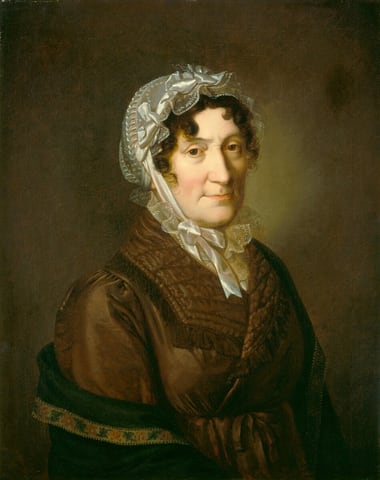
  1. The portrait shows the upper half of a seated woman with a round face, wrinkles, and dark hair. She wears a bonnet, a brown dress with layers, and a shawl or cloak. The background is a muted dark brown.
    Portrait of a LadyUnrecorded maker, probably c. 1820Courtesy National Gallery of Art, Washington
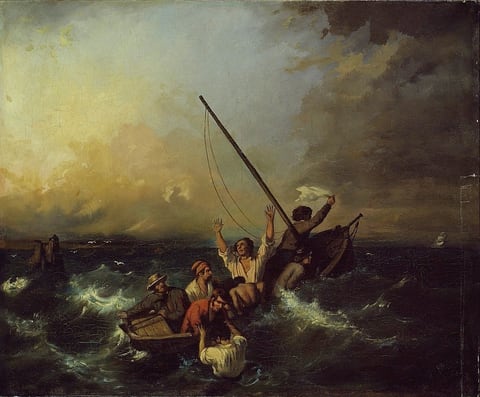
  2. A work made of oil on canvas.
    ShipwreckAfter Eugène Isabey, 19th centuryCourtesy of the Art Institute of Chicago
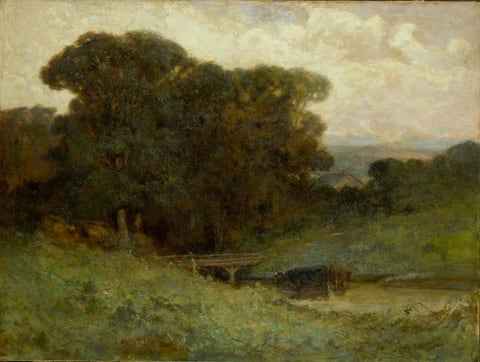
  3. Untitled (forest scene with bridge, cows in stream in foreground), by Edward Mitchell Bannister, 1897
    Untitled (forest scene with bridge, cows in stream in foreground)Edward Mitchell Bannister, 1897Courtesy of the Smithsonian American Art Museum

Second room, north wall
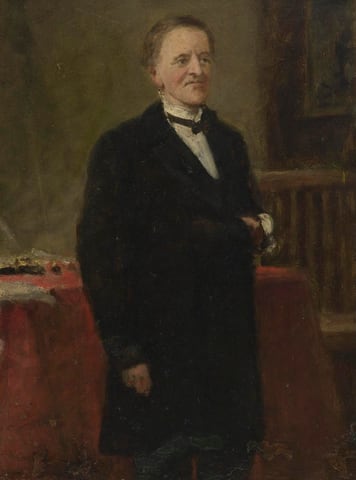
  1. Artist: Thomas Hicks, Sitter: Samuel Jones Tilden, Current owner: National Portrait Gallery, Smithsonian Institution
    Samuel Jones TildenThomas Hicks, c. 1870Courtesy of the National Portrait Gallery, Smithsonian Institution
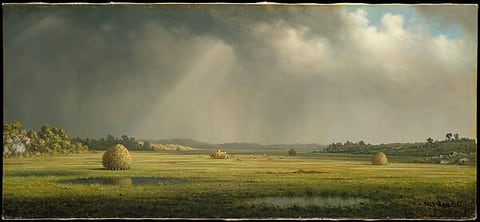
  2. Newburyport Meadows, by Martin Johnson Heade, ca. 1876–81
    Newburyport MeadowsMartin Johnson Heade, ca. 1876–81Courtesy of The Metropolitan Museum of Art
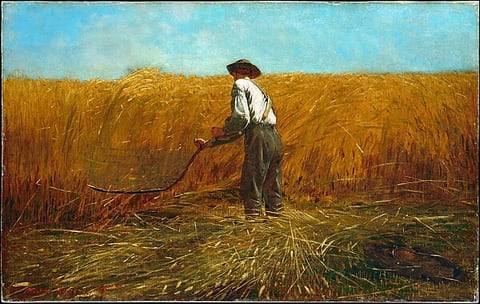
  3. The Veteran in a New Field, by Winslow Homer, 1865
    The Veteran in a New FieldWinslow Homer, 1865Courtesy of The Metropolitan Museum of Art

Third room, north wall
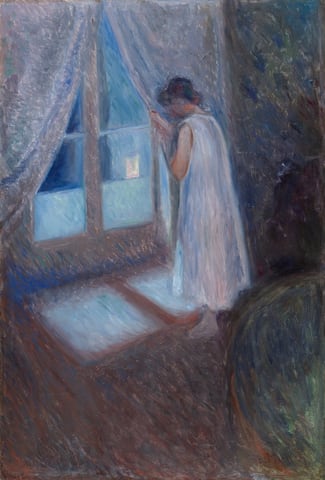
  1. Loosely painted scene of a brown-haired girl in her nightgown standing in a dark room, gazing out a window into a brighter night, her face unseen and her hand drawing back the pale curtain. Light blues and pink whites dominate the girl and the window, while deep browns, blues, and greens color the darkened portions of her room.
    The Girl by the WindowEdvard Munch, 1893Courtesy of the Art Institute of Chicago
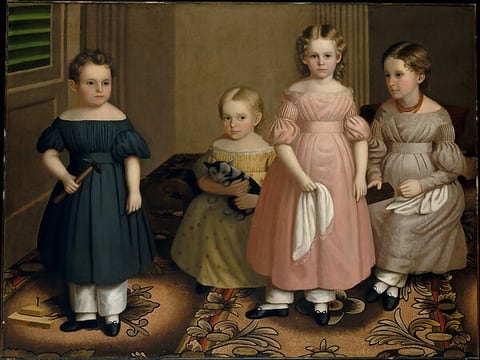
  2. The Alling Children, by Oliver Tarbell Eddy, ca. 1839
    The Alling ChildrenOliver Tarbell Eddy, ca. 1839Courtesy of The Metropolitan Museum of Art

Third room, south wall
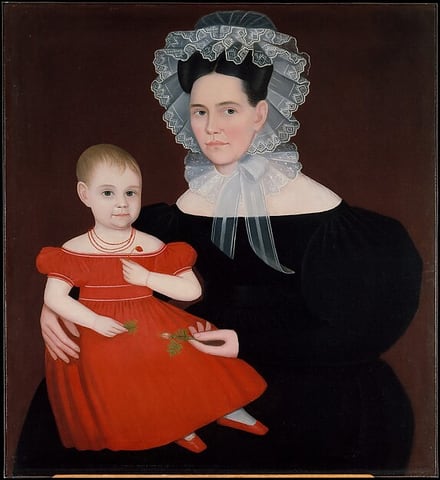
  1. Mrs. Mayer and Daughter, by Ammi Phillips, 1835–40
    Mrs. Mayer and DaughterAmmi Phillips, 1835–40Courtesy of The Metropolitan Museum of Art
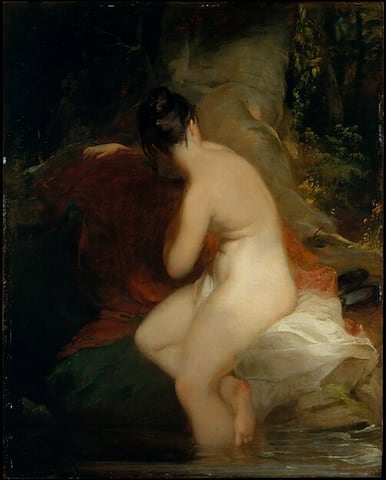
  2. Musidora, by Thomas Sully, 1813–35
    MusidoraThomas Sully, 1813–35Courtesy of The Metropolitan Museum of Art