Post-Impressionism
Works in this room
Artists who kept Impressionism's colour but pushed towards structure, symbol and feeling.
First room, north wall
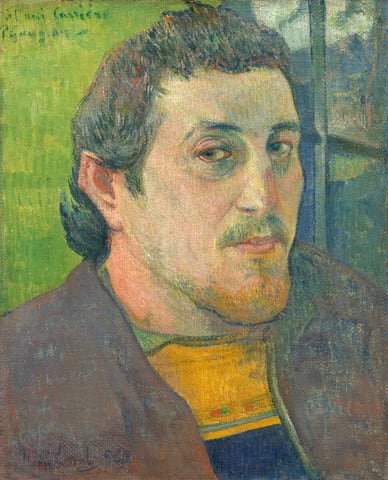
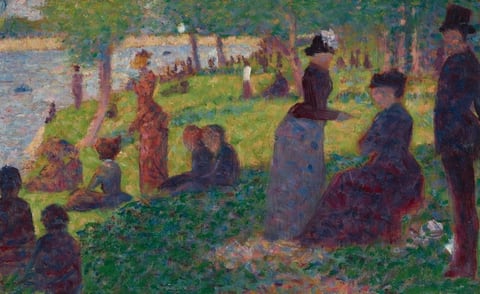
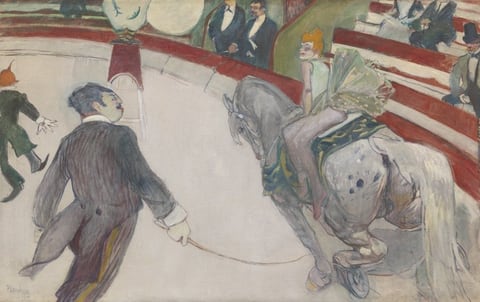
Self-Portrait Dedicated to CarrièrePaul Gauguin, 1888 or 1889Courtesy National Gallery of Art, Washington Oil Sketch for "A Sunday on La Grande Jatte — 1884"Georges Seurat, 1884Courtesy of the Art Institute of Chicago Equestrienne (At the Cirque Fernando)Henri de Toulouse-Lautrec, 1887–88Courtesy of the Art Institute of Chicago
First room, south wall
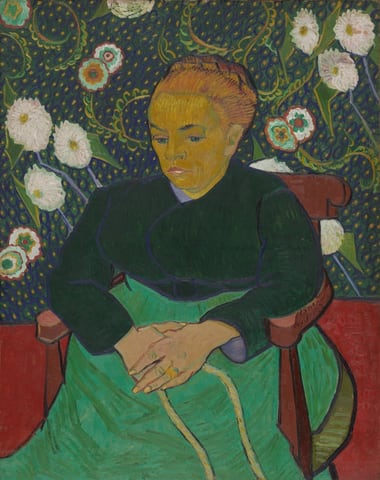
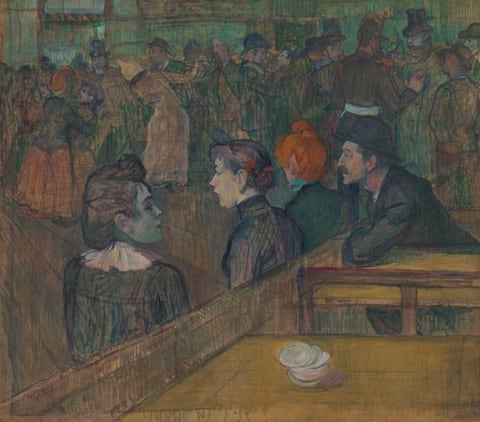
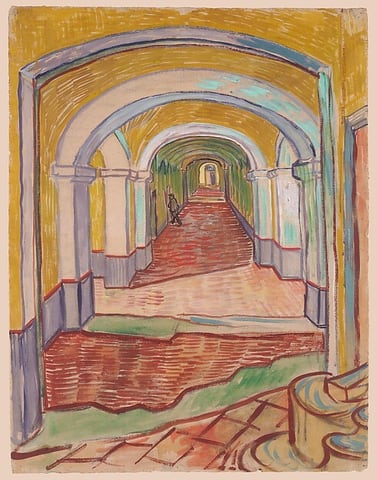
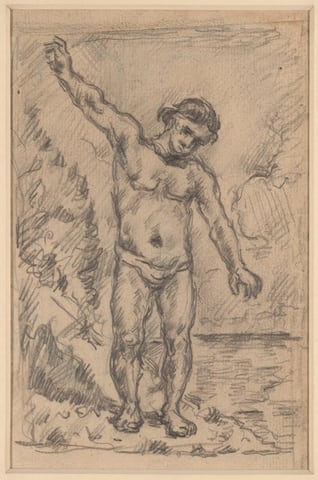
Madame Roulin Rocking the Cradle (La berceuse)Vincent van Gogh, 1889Courtesy of the Art Institute of Chicago Moulin de la GaletteHenri de Toulouse-Lautrec, 1889Courtesy of the Art Institute of Chicago Corridor in the AsylumVincent van Gogh, September 1889Courtesy of The Metropolitan Museum of Art Bather With Outstretched Arms (recto); Study of a Tree (verso)Paul Cézanne, 1874/77Courtesy of the Art Institute of Chicago
Second room, south wall
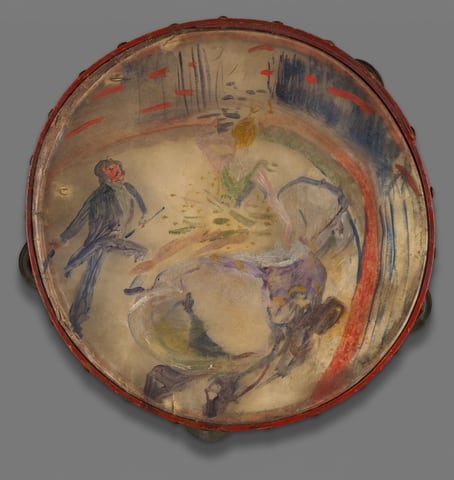
At the Circus: The Bareback Rider (Au Cirque: Écuyère)Henri de Toulouse-Lautrec, 1888Courtesy of the Art Institute of Chicago 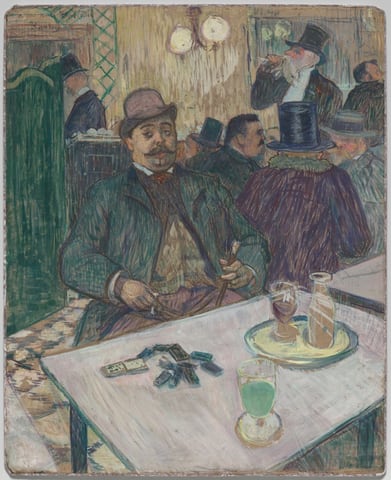
Monsieur Boileau at the CaféHenri de Toulouse-Lautrec, 1893Courtesy of the Cleveland Museum of Art 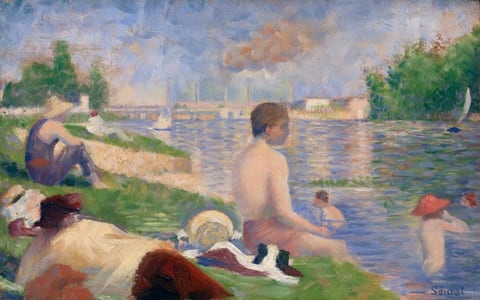
Final Study for "Bathers at Asnières"Georges Seurat, 1883Courtesy of the Art Institute of Chicago 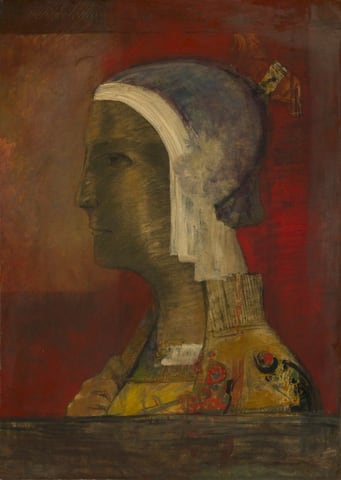
Symbolic HeadOdilon Redon, c. 1890Courtesy of the Cleveland Museum of Art
Second room, north wall
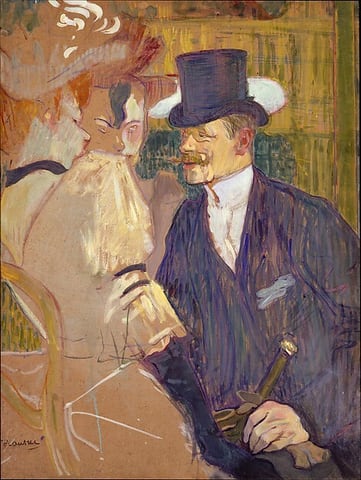
The Englishman (William Tom Warrener, 1861–1934) at the Moulin RougeHenri de Toulouse-Lautrec, 1892Courtesy of The Metropolitan Museum of Art 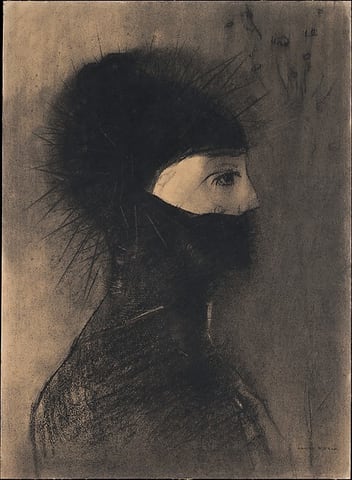
ArmorOdilon Redon, 1891Courtesy of The Metropolitan Museum of Art 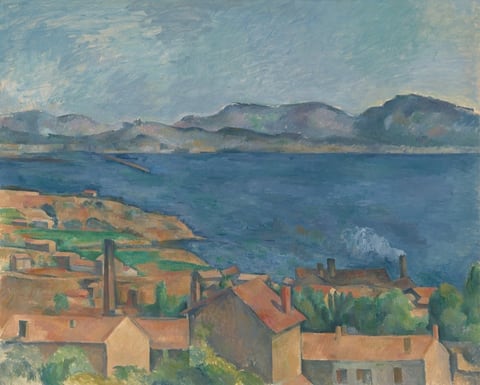
The Bay of Marseille, Seen from L'EstaquePaul Cézanne, c. 1885Courtesy of the Art Institute of Chicago
Third room, north wall
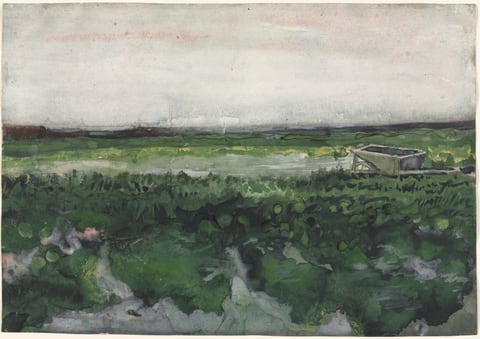
Landscape with WheelbarrowVincent van Gogh, 1883Courtesy of the Cleveland Museum of Art 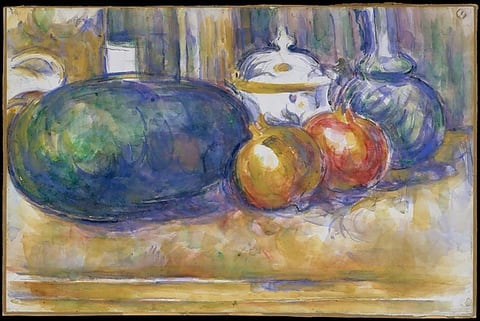
Still-Life with a Watermelon and PomegranatesPaul Cézanne, 1900–1906Courtesy of The Metropolitan Museum of Art