Post-Impressionism
Artists who kept Impressionism's colour but pushed towards structure, symbol and feeling.
First room, north wall
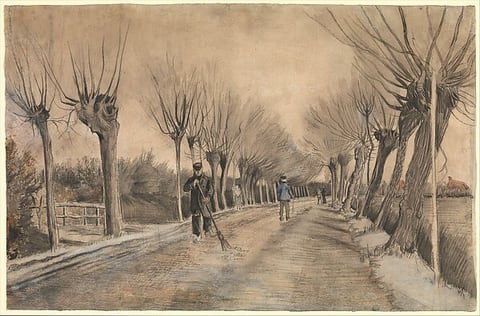
Road in EttenVincent van Gogh, 1881Courtesy of The Metropolitan Museum of Art 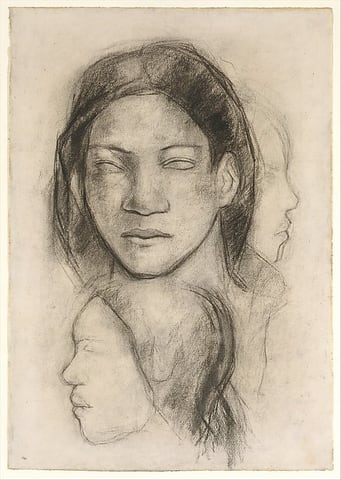
Tahitian Faces (Frontal View and Profiles)Paul Gauguin, ca. 1899Courtesy of The Metropolitan Museum of Art 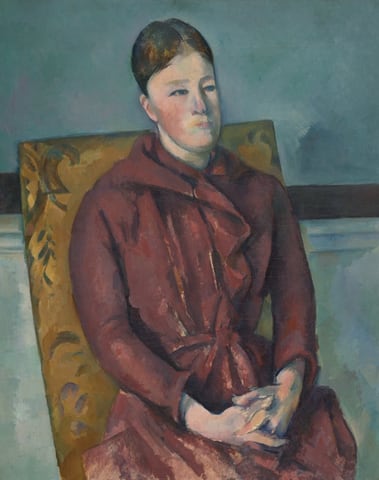
Madame Cezanne in a Yellow ChairPaul Cézanne, 1888–90Courtesy of the Art Institute of Chicago 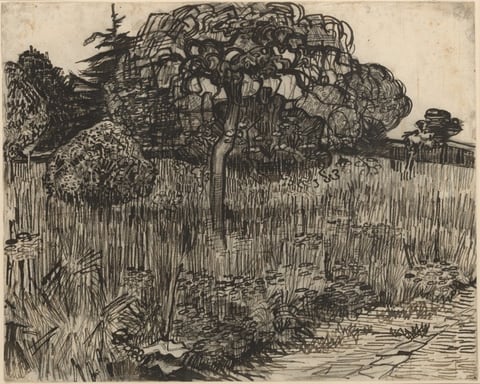
Weeping TreeVincent van Gogh, 1889Courtesy of the Art Institute of Chicago
First room, south wall
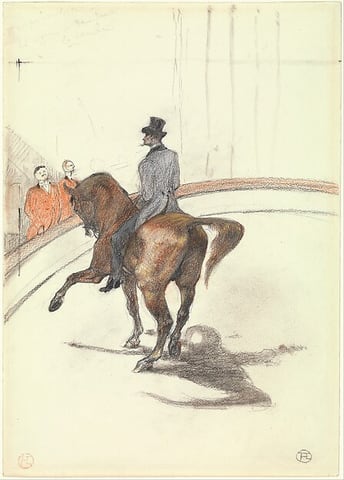
At the Circus: The Spanish Walk (Au Cirque: Le Pas espagnol)Henri de Toulouse-Lautrec, 1899Courtesy of The Metropolitan Museum of Art 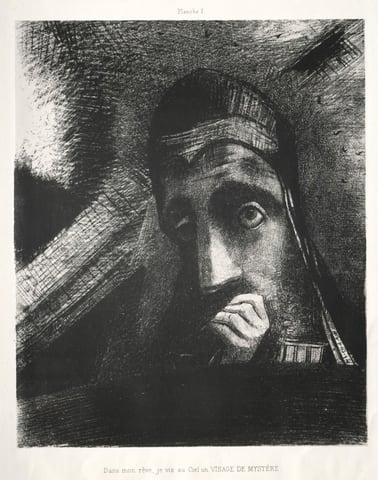
In My Dream I Saw in the Sky a Face of MysteryOdilon Redon, 1885Courtesy of the Cleveland Museum of Art 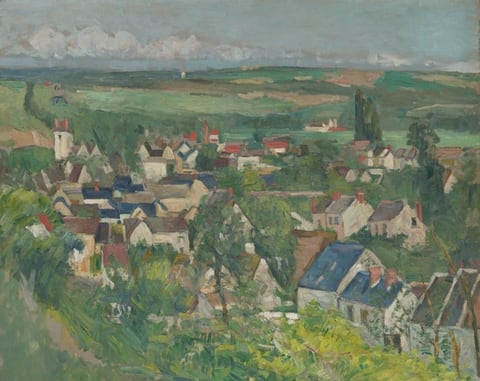
Auvers, Panoramic ViewPaul Cézanne, 1873–75Courtesy of the Art Institute of Chicago 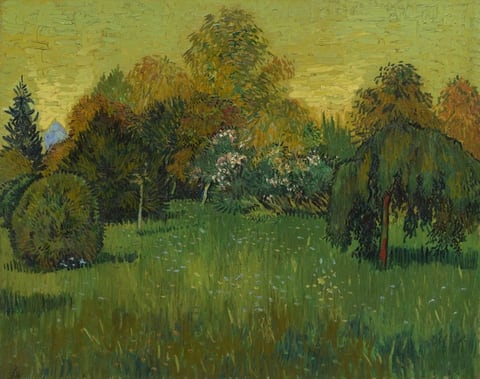
The Poet's GardenVincent van Gogh, 1888Courtesy of the Art Institute of Chicago
Second room, south wall
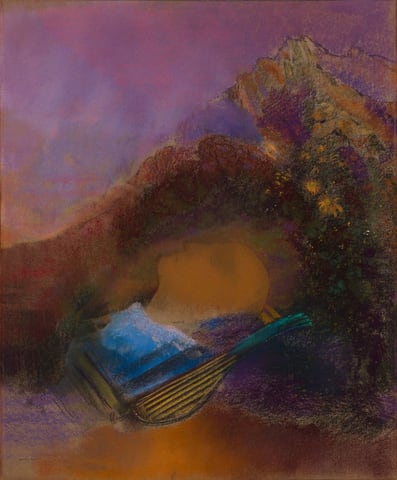
OrpheusOdilon Redon, c. 1903–10Courtesy of the Cleveland Museum of Art 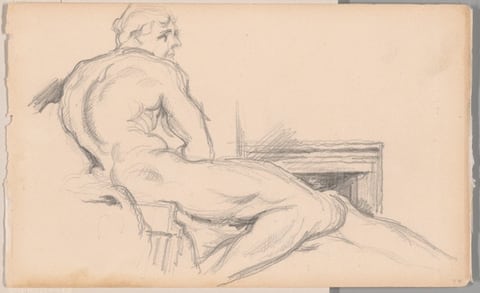
Hercules RestingPaul Cézanne, 1897Courtesy of the Art Institute of Chicago 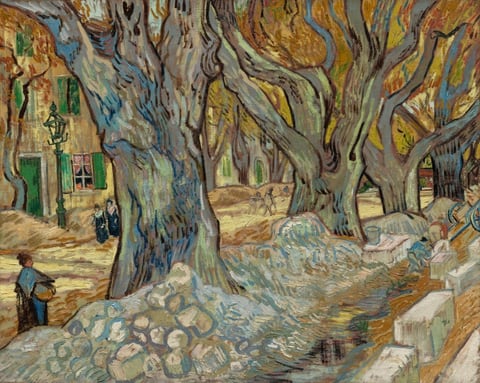
The Large Plane Trees (Road Menders at Saint-Rémy)Vincent van Gogh, 1889Courtesy of the Cleveland Museum of Art
Second room, north wall
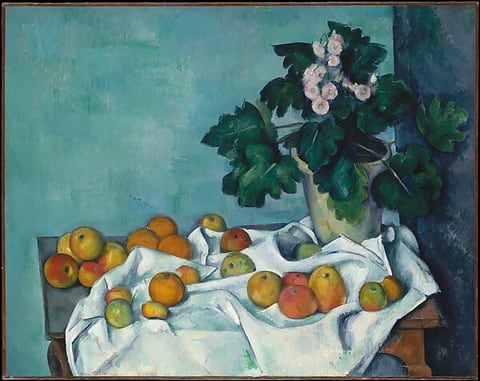
Still Life with Apples and a Pot of PrimrosesPaul Cézanne, ca. 1890Courtesy of The Metropolitan Museum of Art 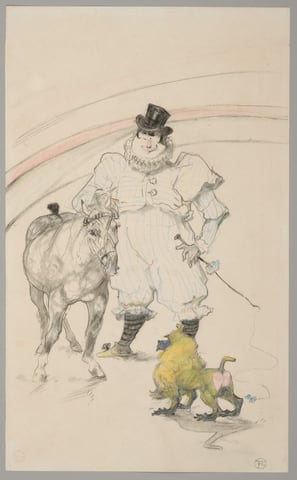
At the Circus: Trained Pony and BaboonHenri de Toulouse-Lautrec, 1899Courtesy of the Art Institute of Chicago 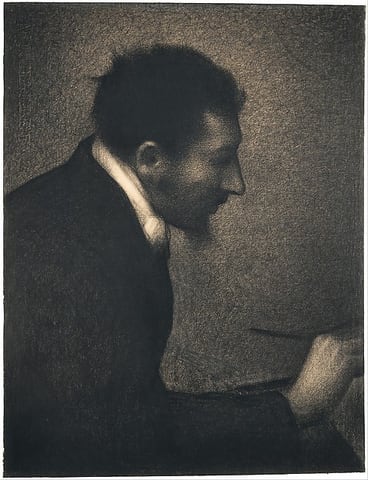
Aman-Jean (Portrait of Edmond François Aman-Jean)Georges Seurat, 1882–83Courtesy of The Metropolitan Museum of Art
Third room, north wall
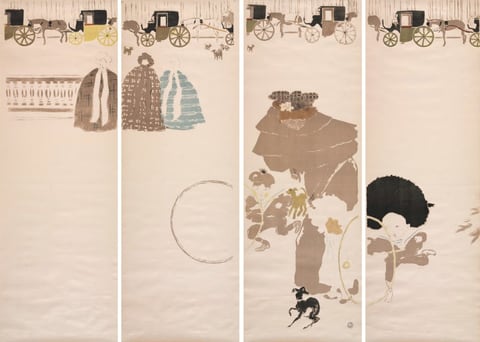
Nursemaids’ Promenade, Frieze of CarriagesPierre Bonnard, 1895Courtesy of the Cleveland Museum of Art 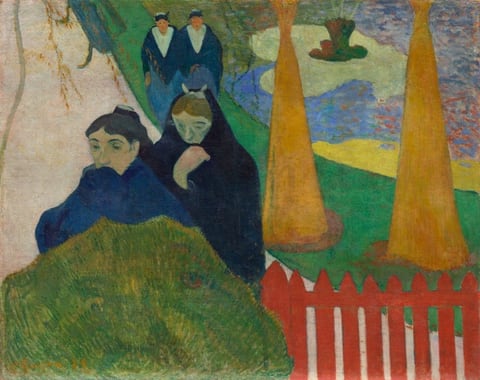
Arlésiennes (Mistral)Paul Gauguin, 1888Courtesy of the Art Institute of Chicago