Post-Impressionism
Artists who kept Impressionism's colour but pushed towards structure, symbol and feeling.
First room, north wall
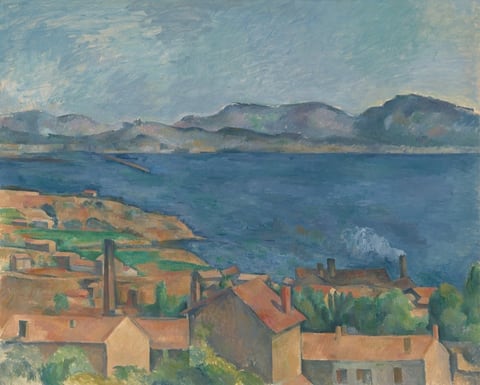
The Bay of Marseille, Seen from L'EstaquePaul Cézanne, c. 1885Courtesy of the Art Institute of Chicago 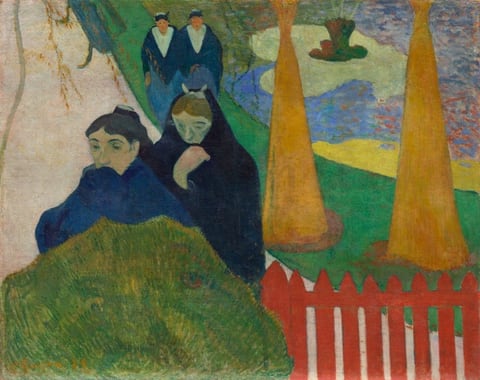
Arlésiennes (Mistral)Paul Gauguin, 1888Courtesy of the Art Institute of Chicago 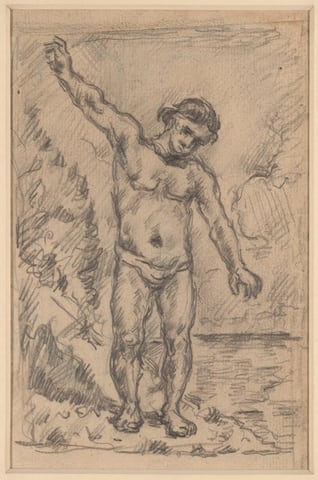
Bather With Outstretched Arms (recto); Study of a Tree (verso)Paul Cézanne, 1874/77Courtesy of the Art Institute of Chicago
First room, south wall
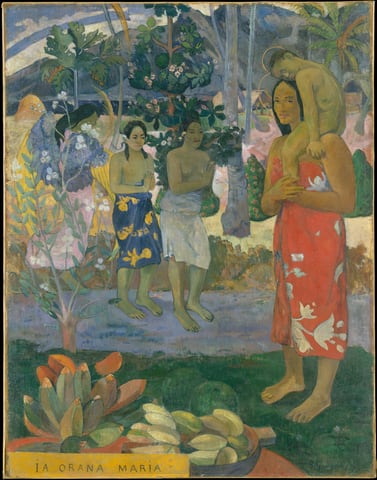
Ia Orana Maria (Hail Mary)Paul Gauguin, 1891Courtesy of The Metropolitan Museum of Art 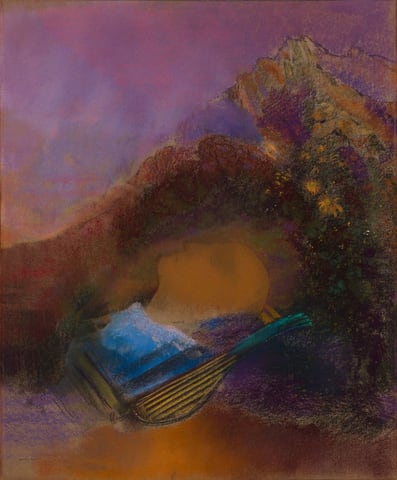
OrpheusOdilon Redon, c. 1903–10Courtesy of the Cleveland Museum of Art 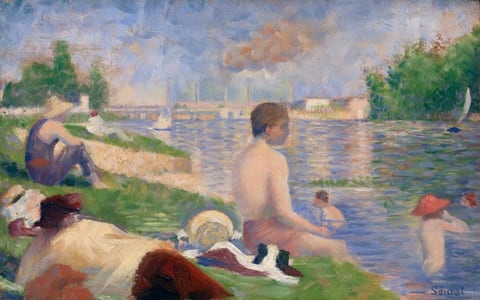
Final Study for "Bathers at Asnières"Georges Seurat, 1883Courtesy of the Art Institute of Chicago 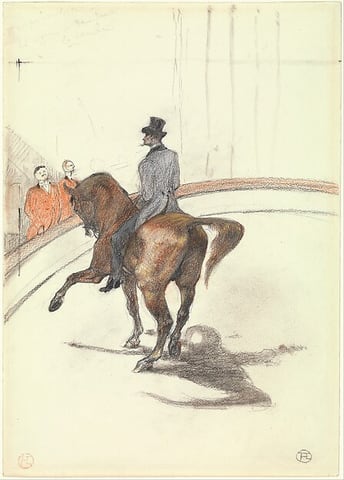
At the Circus: The Spanish Walk (Au Cirque: Le Pas espagnol)Henri de Toulouse-Lautrec, 1899Courtesy of The Metropolitan Museum of Art
Second room, south wall
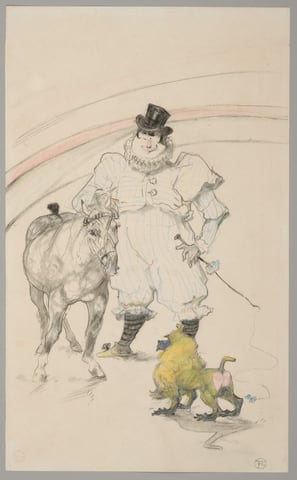
At the Circus: Trained Pony and BaboonHenri de Toulouse-Lautrec, 1899Courtesy of the Art Institute of Chicago 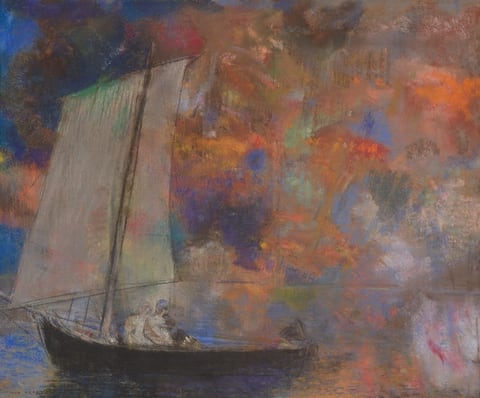
Flower CloudsOdilon Redon, c. 1903Courtesy of the Art Institute of Chicago 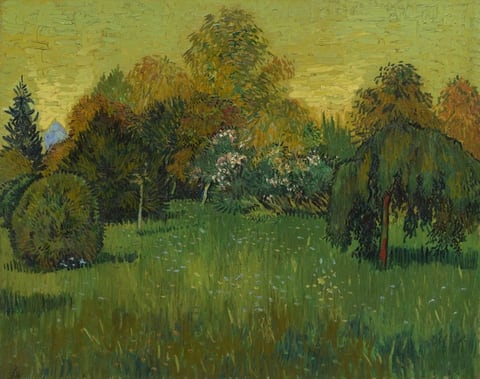
The Poet's GardenVincent van Gogh, 1888Courtesy of the Art Institute of Chicago
Second room, north wall
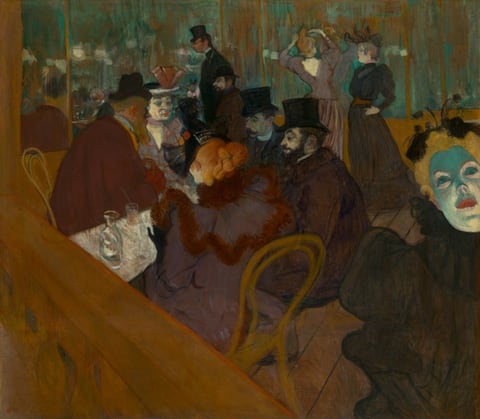
At the Moulin RougeHenri de Toulouse-Lautrec, 1892–95Courtesy of the Art Institute of Chicago 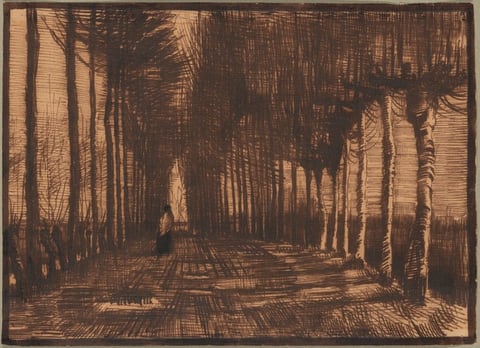
Avenue of Pollard Birches and PoplarsVincent van Gogh, March 1884Courtesy of the Art Institute of Chicago 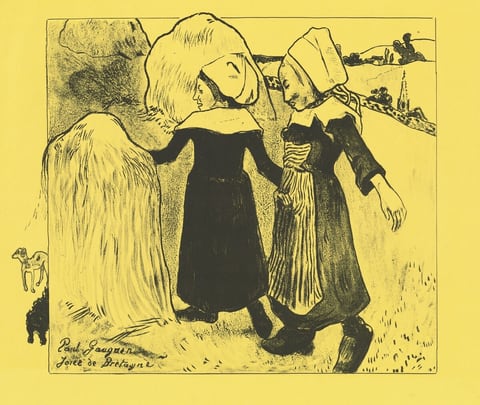
Pleasures of Brittany (Joies de Bretagne)Paul Gauguin, 1889Courtesy National Gallery of Art, Washington
Third room, north wall
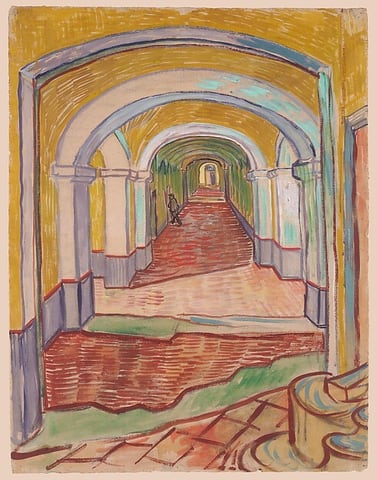
Corridor in the AsylumVincent van Gogh, September 1889Courtesy of The Metropolitan Museum of Art 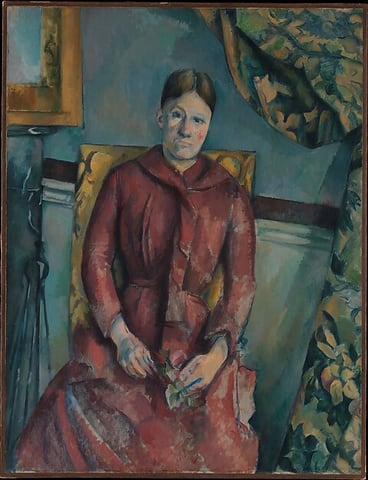
Madame Cézanne (Hortense Fiquet, 1850–1922) in a Red DressPaul Cézanne, 1888–90Courtesy of The Metropolitan Museum of Art 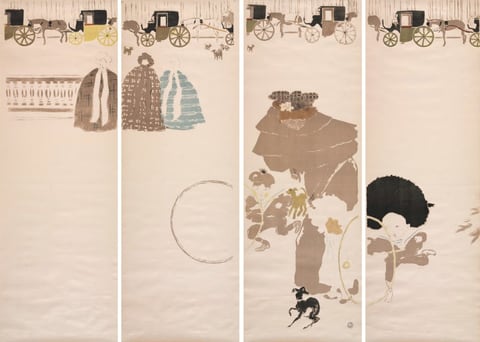
Nursemaids’ Promenade, Frieze of CarriagesPierre Bonnard, 1895Courtesy of the Cleveland Museum of Art