Floor plan

Style galleriesPrints of the 17th century
Prints of the 17th century
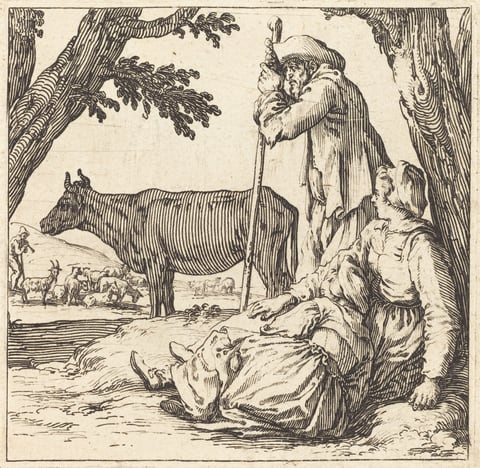
The image has an elevated perspective showing two figures with animals in the scene. One person is leaning against a tree with a stick, while the other is seated on the ground. A cow is between them and other livestock in the middle distance. A person in the distance is tending to the animals. The horizon is low in the image, hidden by rolling hills. The artwork is in monochrome with fine linework, creating texture through hatching and cross-hatching, emphasizing depth and dimensionality.
A work made of woodblock print in black ink and watercolor on cream japanese paper.
Cow, Bull and Calf, by Karel Dujardin
A work made of etching, burin, and drypoint on ivory laid paper.

The works in this room are listed below.

Works in this room

Prints made in the 17th century, from every museum.

Section 1, north wall

  1. The image has an elevated perspective showing two figures with animals in the scene. One person is leaning against a tree with a stick, while the other is seated on the ground. A cow is between them and other livestock in the middle distance. A person in the distance is tending to the animals. The horizon is low in the image, hidden by rolling hills. The artwork is in monochrome with fine linework, creating texture through hatching and cross-hatching, emphasizing depth and dimensionality.
    Peasant Couple with CowJacques Callot, c. 1621Courtesy National Gallery of Art, Washington
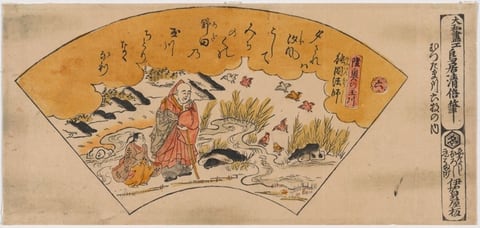
  2. A work made of woodblock print in black ink and watercolor on cream japanese paper.
    The Priest Kobo Daishi at the Tama River in Kii Province from the series The Six Tama RiversTorii Kiyomasu, c. 1725-1735Courtesy of the Art Institute of Chicago

Section 1, south wall

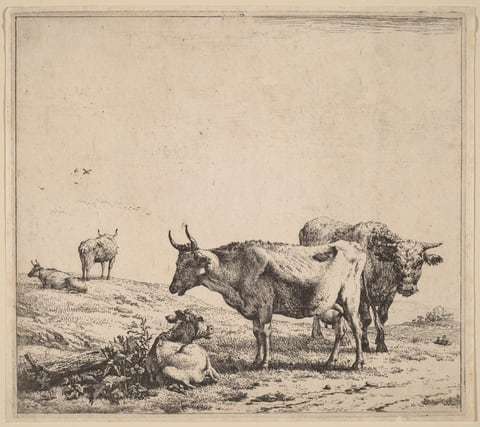
  1. Cow, Bull and Calf, by Karel Dujardin
    Cow, Bull and CalfKarel DujardinCourtesy National Gallery of Art, Washington
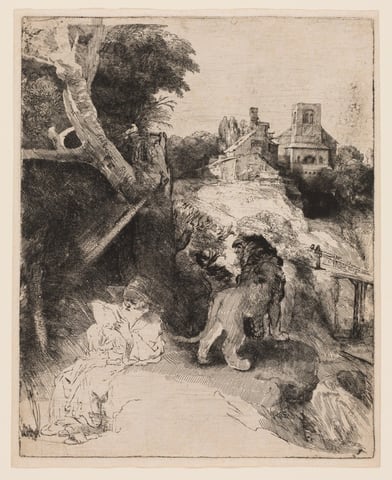
  2. A work made of etching, burin, and drypoint on ivory laid paper.
    Saint Jerome Reading in an Italian LandscapeRembrandt van Rijn, c. 1653Courtesy of the Art Institute of Chicago

Section 2, south wall
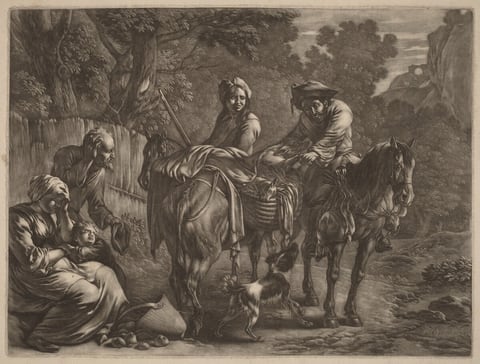
  1. This is a drawing of a rural scene with horses and figures. The image shows an interaction between several figures and two horses within a pastoral setting. In the foreground, two individuals are seated on the ground, accompanied by a small child. Nearby, a figure atop a horse reaches towards another figure who leads a laden horse. A dog is present, standing alert at the horse's hooves. The backdrop showcases lush trees and distant hills, suggesting a serene countryside environment. The attention to detail and shading creates a realistic depiction of this rustic scene.
    Robbers on HorsebackJan van Huchtenburgh, late 17th/early 18th centuryCourtesy National Gallery of Art, Washington
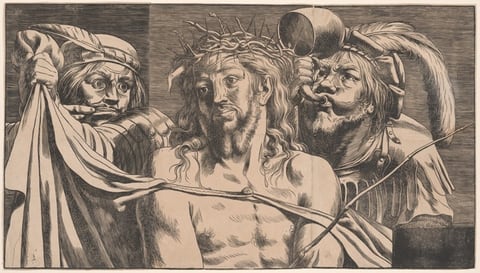
  2. A work made of woodcut on three joined sheets of ivory laid paper.
    The Mocking of ChristWerner van den Valckert, c. 1620Courtesy of the Art Institute of Chicago

Section 2, north wall
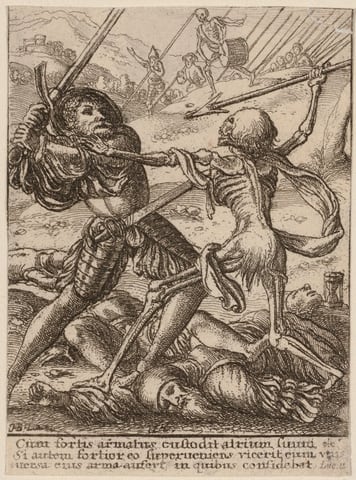
  1. A work made of etching in black on ivory wove paper.
    The Knight and Death, from The Dance of DeathWenceslaus Hollar, 1651Courtesy of the Art Institute of Chicago
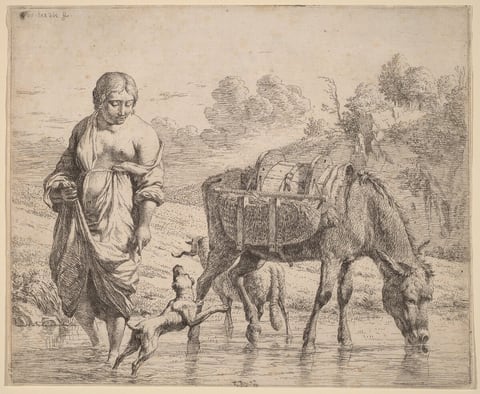
  2. The image shows a woman standing close to us, slightly turned to the side, looking down, with a hand supporting her draped attire and the other grasping a stick. Next to her, a donkey drinks from a shallow stream, carrying a large wicker basket with barrels inside. A dog is splashing in the water beside them. The horizon is low, meeting a rise of land with trees and shrubs, leading the eye to a distant pathway where a couple of small figures can be seen. The sky above has sketchily rendered clouds. The style involves fine, detailed linework, characteristic of etching, emphasizing textures such as the fur of the donkey and the folds of the fabric. The color palette is monochromatic, relying on various intensities of ink and line density to render shadows and highlights.
    Woman Crossing a StreamKarel Dujardin, 1662Courtesy National Gallery of Art, Washington
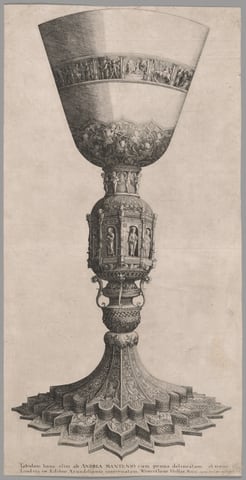
  3. A work made of etching on ivory laid paper.
    A ChaliceWenceslaus Hollar, 1640Courtesy of the Art Institute of Chicago

Section 3, north wall
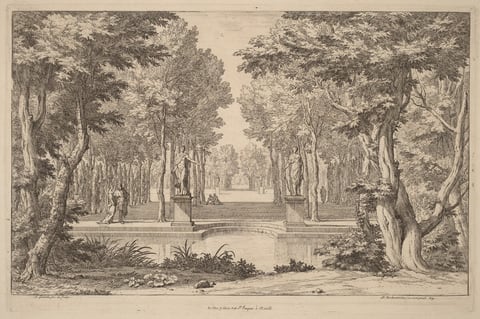
  1. The image shows a formal garden or park with a symmetrical view. It is taken from a slightly elevated position, revealing the vast space beyond a foreground of foliage and low-growing plants. The horizon line is positioned near the midpoint, where a tree-lined pathway extends into the distance. Flanking the pathway are two statues on pedestals under leafy trees. The scene is detailed with intricate line work emphasizing textures and forms. The color palette is monochromatic in various shades of brown, creating a classic appearance. Paved steps and a bridge over a small body of water add to the ordered elegance of the garden.
    The Two StatuesAbraham Genoels IICourtesy National Gallery of Art, Washington
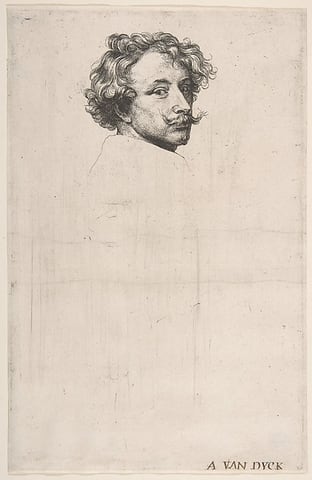
  2. Self-Portrait, from "The Iconography", by Anthony van Dyck, ca. 1640
    Self-Portrait, from "The Iconography"Anthony van Dyck, ca. 1640Courtesy of The Metropolitan Museum of Art
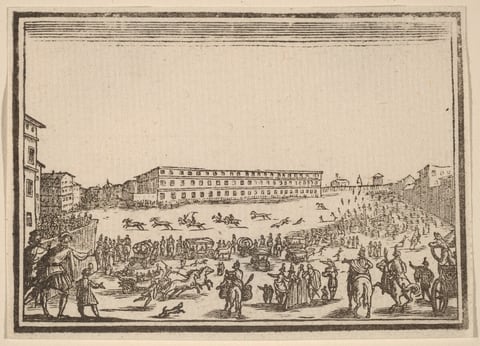
  3. The image shows a wide aerial view of a public gathering. Buildings line the horizon overlooking the scene below. The detailed illustration features various individuals and animals in motion, including groups of people, horse riders, and carts. The monochromatic color palette contributes to a classic aesthetic.
    Piazza Presso alla Porta al PratoEdouard Eckman, 1621Courtesy National Gallery of Art, Washington

Section 3, south wall
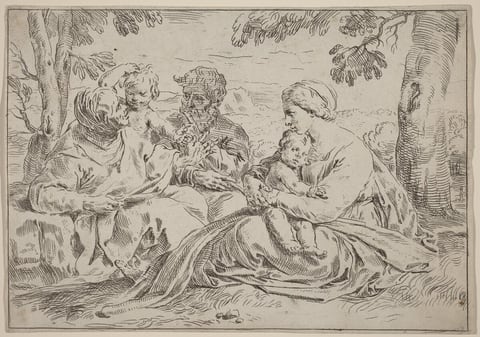
  1. The artwork depicts four human figures, two males and two females, seated. One woman holds a baby, while one man holds a young child. The figures have different hairstyles and clothing, sitting in a natural setting with trees and hills in the background. The scene is drawn in a sketch-like style, focusing on lines and expressions.
    The Holy FamilySimone CantariniCourtesy National Gallery of Art, Washington
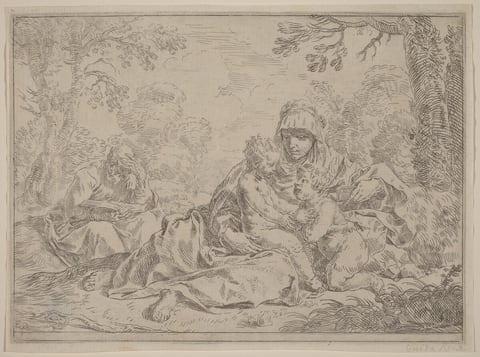
  2. The image shows an etching of four individuals, two adults, and two children. The main adult is sitting with a child on each knee. This person is wearing a hooded cloak with soft facial features. The children have curly hair and are reaching towards each other. The second adult is seated behind them, wearing a loose robe and appears to be holding something, possibly a book. The background features trees, bushes, foliage, and a calm sky.
    The Holy FamilySimone CantariniCourtesy National Gallery of Art, Washington

Section 4, south wall
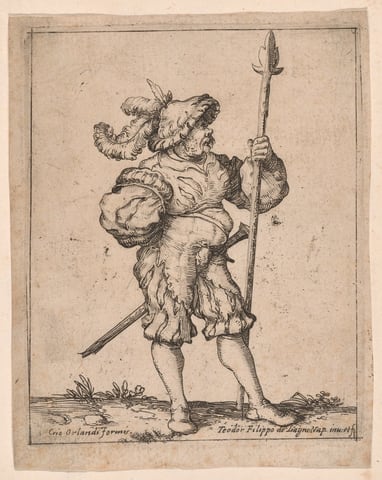
  1. A work made of etching in black on cream laid paper.
    Soldier in Profile Holding a Pike, from Capricci e habiti militariFilippo Napoletano, 1610/29Courtesy of the Art Institute of Chicago
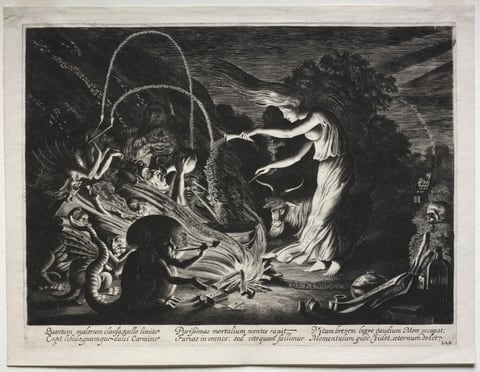
  2. The Witch (Night Piece), by Jan van de Velde II, 1626
    The Witch (Night Piece)Jan van de Velde II, 1626Courtesy of the Cleveland Museum of Art