Floor plan

Style galleriesPrints of the 17th century
Prints of the 17th century
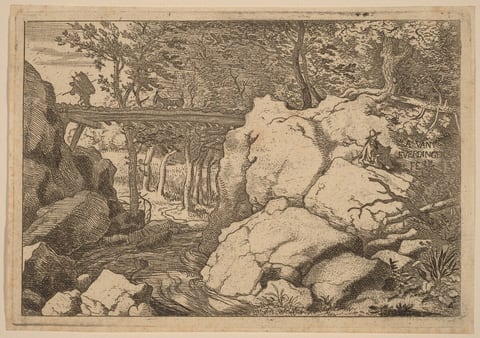
The image shows a landscape with rocky terrain, trees, and a stream. In the foreground, there is a bridge with a traveler and a dog crossing over the stream. The scene features detailed linework and cross-hatching to depict texture. The color palette is monochrome brown, resembling an etching or drawing style.
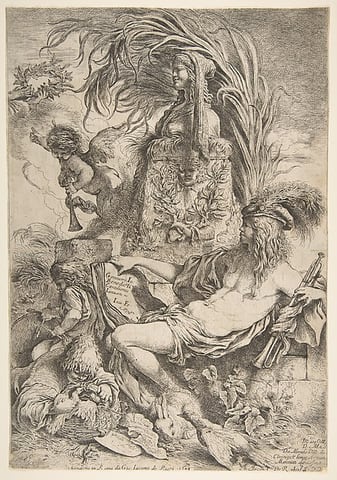
The Genius of Castiglione, by Giovanni Benedetto Castiglione, ca. 1645–47 (published 1648)
A work made of etching on ivory laid paper.
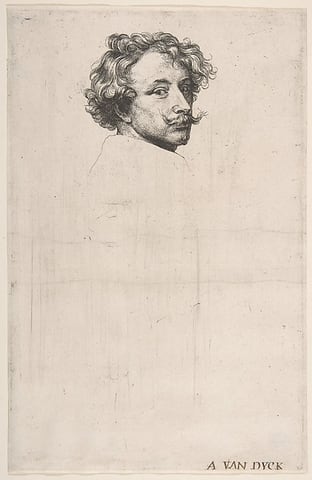
Self-Portrait, from "The Iconography", by Anthony van Dyck, ca. 1640
A work made of etching on ivory laid paper.
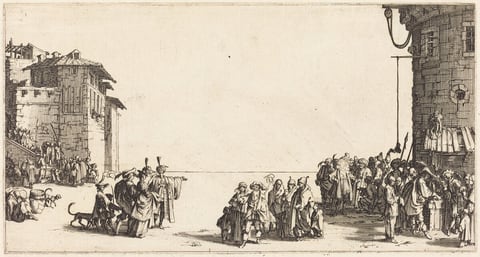
This is a drawing of a busy street scene with architectural structures and various figures. It depicts a large open area bordered by a grand building to the left and a rounded tower or structure to the right. The left side of the scene is lined with stairs leading up to an elevated walkway or platform, where people are gathered. In the middle and to the right, a crowd has formed, encompassing the space in front of the tower. Various individuals, some wearing distinctive headgear, are seen mingling and gesturing. The architectural details in the background, such as the windows and brickwork of the tower, frame the scene below. A hand-operated apparatus extends from the tower, possibly for lifting goods or supplies. The drawing captures a dynamic urban moment.

The works in this room are listed below.

Works in this room

Prints made in the 17th century, from every museum.

Section 1, north wall

  1. The image shows a landscape with rocky terrain, trees, and a stream. In the foreground, there is a bridge with a traveler and a dog crossing over the stream. The scene features detailed linework and cross-hatching to depict texture. The color palette is monochrome brown, resembling an etching or drawing style.
    Goat on a small BridgeAllart van Everdingen, probably c. 1645/1656Courtesy National Gallery of Art, Washington
  2. The Genius of Castiglione, by Giovanni Benedetto Castiglione, ca. 1645–47 (published 1648)
    The Genius of CastiglioneGiovanni Benedetto Castiglione, ca. 1645–47 (published 1648)Courtesy of The Metropolitan Museum of Art
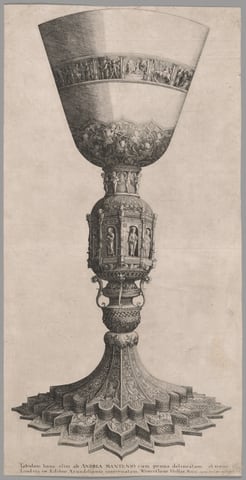
  3. A work made of etching on ivory laid paper.
    A ChaliceWenceslaus Hollar, 1640Courtesy of the Art Institute of Chicago

Section 1, south wall

  1. Self-Portrait, from "The Iconography", by Anthony van Dyck, ca. 1640
    Self-Portrait, from "The Iconography"Anthony van Dyck, ca. 1640Courtesy of The Metropolitan Museum of Art
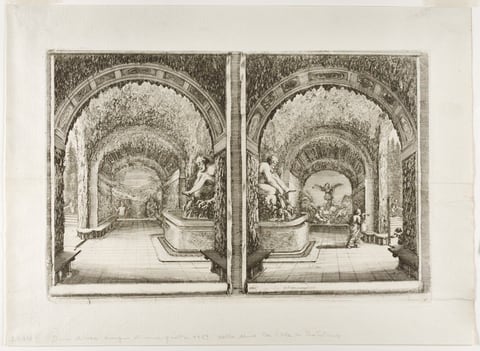
  2. A work made of etching on ivory laid paper.
    The Grotto of Pan and FameStefano della Bella, 1653/55Courtesy of the Art Institute of Chicago
  3. This is a drawing of a busy street scene with architectural structures and various figures. It depicts a large open area bordered by a grand building to the left and a rounded tower or structure to the right. The left side of the scene is lined with stairs leading up to an elevated walkway or platform, where people are gathered. In the middle and to the right, a crowd has formed, encompassing the space in front of the tower. Various individuals, some wearing distinctive headgear, are seen mingling and gesturing. The architectural details in the background, such as the windows and brickwork of the tower, frame the scene below. A hand-operated apparatus extends from the tower, possibly for lifting goods or supplies. The drawing captures a dynamic urban moment.
    The Slave MarketJacques Callot, 1620Courtesy National Gallery of Art, Washington

Section 2, south wall
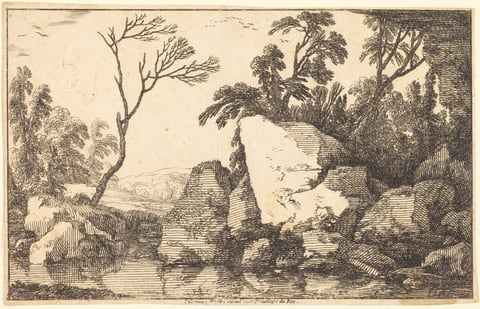
  1. The image is a landscape view with a natural scene depicted in fine etching. The horizon is situated towards the middle of the composition, where the land gently rises, and a subtle outline of distant hills is visible. Large rocks and foliage are depicted close to us, with a lone, barren tree extending upwards on the left side. The etching features intricate and well-defined brushstrokes, including thin lines and cross-hatching to create texture and depth. The color palette is monochromatic, with dark tones against a lighter background. In the distance, additional clusters of trees can be seen, rendered with similar linework to convey movement and detail.
    A Rocky PondLaurent de La Hyre, 1640Courtesy National Gallery of Art, Washington
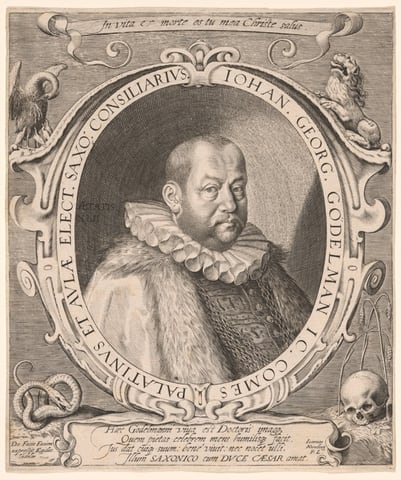
  2. A work made of engraving on paper.
    Johann Georg von Gödelmann, Law Professor, DiplomatAegidius Sadeler, II, c. 1601Courtesy of the Art Institute of Chicago
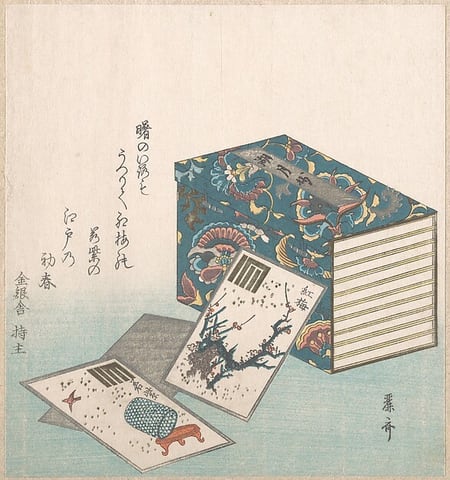
  3. Books and Cards, by Reisai, 18th–19th century
    Books and CardsReisai, 18th–19th centuryCourtesy of The Metropolitan Museum of Art

Section 2, north wall
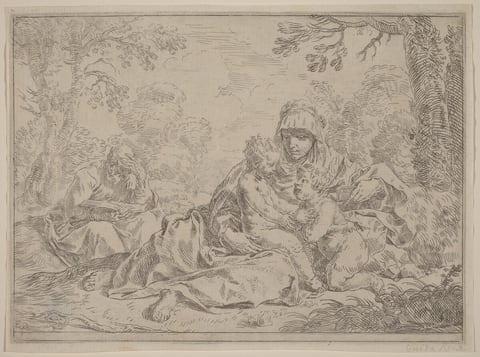
  1. The image shows an etching of four individuals, two adults, and two children. The main adult is sitting with a child on each knee. This person is wearing a hooded cloak with soft facial features. The children have curly hair and are reaching towards each other. The second adult is seated behind them, wearing a loose robe and appears to be holding something, possibly a book. The background features trees, bushes, foliage, and a calm sky.
    The Holy FamilySimone CantariniCourtesy National Gallery of Art, Washington
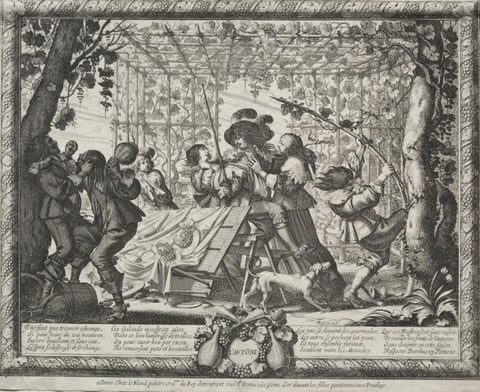
  2. The Four Seasons: Autumn, by Abraham Bosse, 1635
    The Four Seasons: AutumnAbraham Bosse, 1635Courtesy of the Cleveland Museum of Art

Section 3, north wall
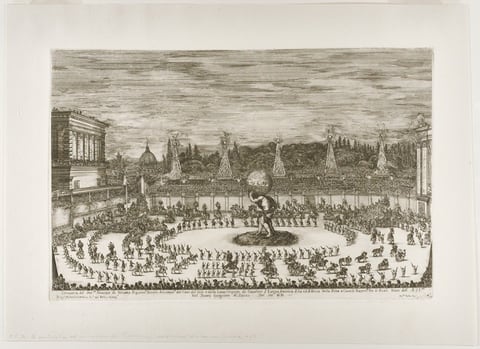
  1. A work made of etching on ivory laid paper.
    Equestrian Ballet in the Amphitheater of the Boboli GardensStefano della Bella, 1661Courtesy of the Art Institute of Chicago
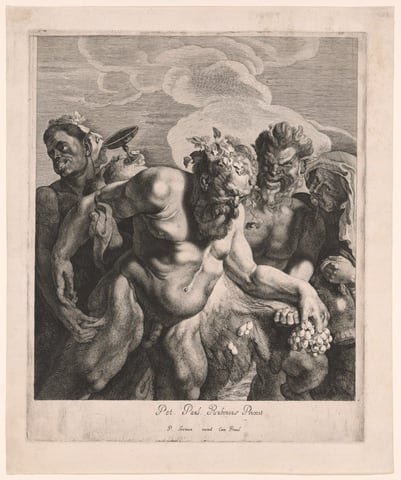
  2. A work made of engraving in black on cream laid paper.
    Drunken SilenusJonas Suyderhoef, 1642Courtesy of the Art Institute of Chicago

Section 3, south wall
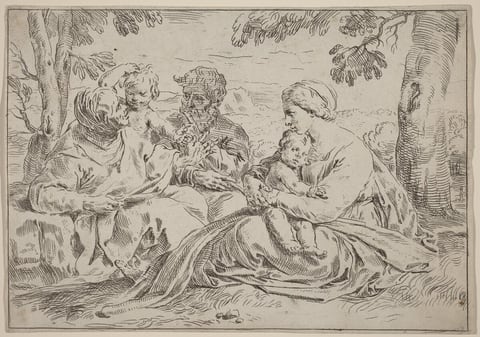
  1. The artwork depicts four human figures, two males and two females, seated. One woman holds a baby, while one man holds a young child. The figures have different hairstyles and clothing, sitting in a natural setting with trees and hills in the background. The scene is drawn in a sketch-like style, focusing on lines and expressions.
    The Holy FamilySimone CantariniCourtesy National Gallery of Art, Washington
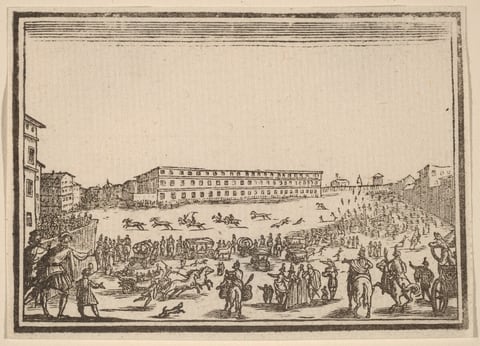
  2. The image shows a wide aerial view of a public gathering. Buildings line the horizon overlooking the scene below. The detailed illustration features various individuals and animals in motion, including groups of people, horse riders, and carts. The monochromatic color palette contributes to a classic aesthetic.
    Piazza Presso alla Porta al PratoEdouard Eckman, 1621Courtesy National Gallery of Art, Washington
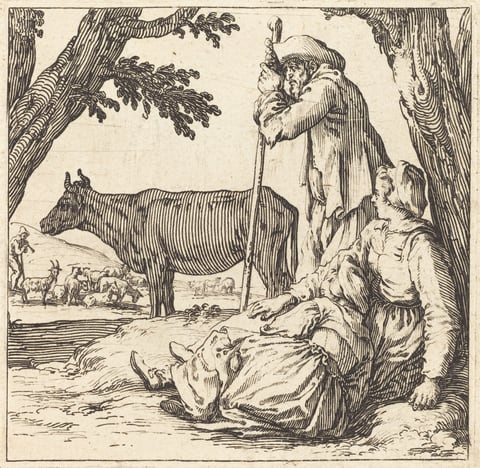
  3. The image has an elevated perspective showing two figures with animals in the scene. One person is leaning against a tree with a stick, while the other is seated on the ground. A cow is between them and other livestock in the middle distance. A person in the distance is tending to the animals. The horizon is low in the image, hidden by rolling hills. The artwork is in monochrome with fine linework, creating texture through hatching and cross-hatching, emphasizing depth and dimensionality.
    Peasant Couple with CowJacques Callot, c. 1621Courtesy National Gallery of Art, Washington