Floor plan

Style galleriesPrints of the 17th century
Prints of the 17th century
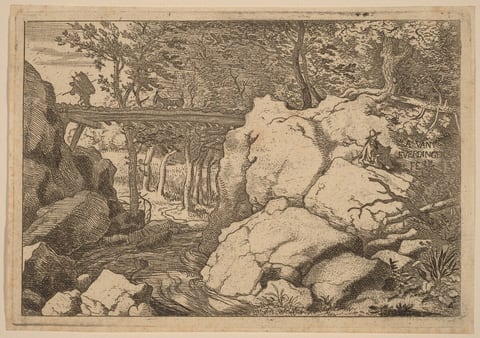
The image shows a landscape with rocky terrain, trees, and a stream. In the foreground, there is a bridge with a traveler and a dog crossing over the stream. The scene features detailed linework and cross-hatching to depict texture. The color palette is monochrome brown, resembling an etching or drawing style.
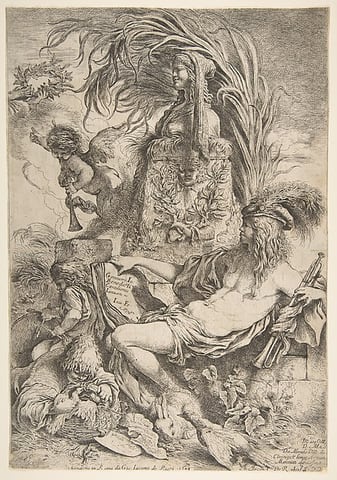
The Genius of Castiglione, by Giovanni Benedetto Castiglione, ca. 1645–47 (published 1648)
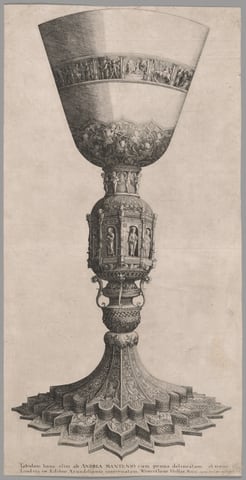
A work made of etching on ivory laid paper.
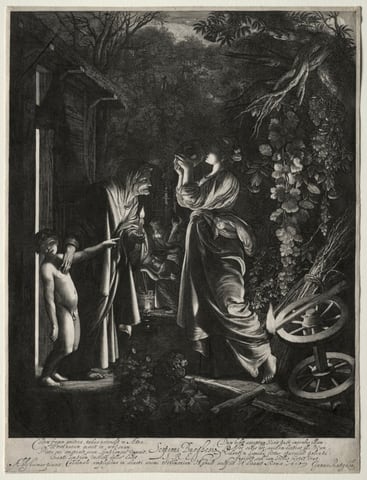
The Mocking of Ceres, by Hendrik Goudt, 1610
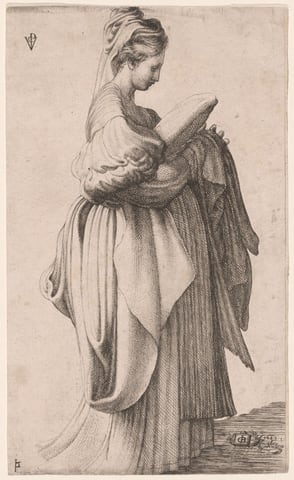
A work made of etching in black ink on cream laid paper.
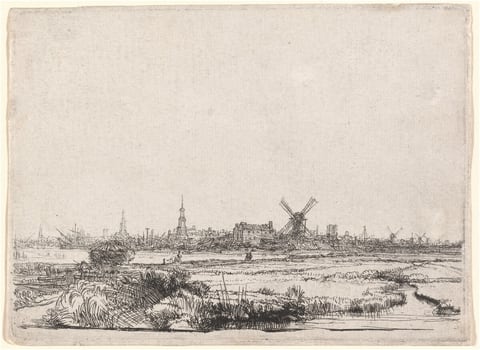
View of Amsterdam from the Northwest, by Rembrandt van Rijn, c. 1640

The works in this room are listed below.

Works in this room

Prints made in the 17th century, from every museum.

Section 1, north wall

  1. The image shows a landscape with rocky terrain, trees, and a stream. In the foreground, there is a bridge with a traveler and a dog crossing over the stream. The scene features detailed linework and cross-hatching to depict texture. The color palette is monochrome brown, resembling an etching or drawing style.
    Goat on a small BridgeAllart van Everdingen, probably c. 1645/1656Courtesy National Gallery of Art, Washington
  2. The Genius of Castiglione, by Giovanni Benedetto Castiglione, ca. 1645–47 (published 1648)
    The Genius of CastiglioneGiovanni Benedetto Castiglione, ca. 1645–47 (published 1648)Courtesy of The Metropolitan Museum of Art
  3. A work made of etching on ivory laid paper.
    A ChaliceWenceslaus Hollar, 1640Courtesy of the Art Institute of Chicago

Section 1, south wall

  1. The Mocking of Ceres, by Hendrik Goudt, 1610
    The Mocking of CeresHendrik Goudt, 1610Courtesy of the Cleveland Museum of Art
  2. A work made of etching in black ink on cream laid paper.
    A Young Woman Holding a CushionMonogrammist VCP, 1643Courtesy of the Art Institute of Chicago
  3. View of Amsterdam from the Northwest, by Rembrandt van Rijn, c. 1640
    View of Amsterdam from the NorthwestRembrandt van Rijn, c. 1640Courtesy National Gallery of Art, Washington

Section 2, south wall
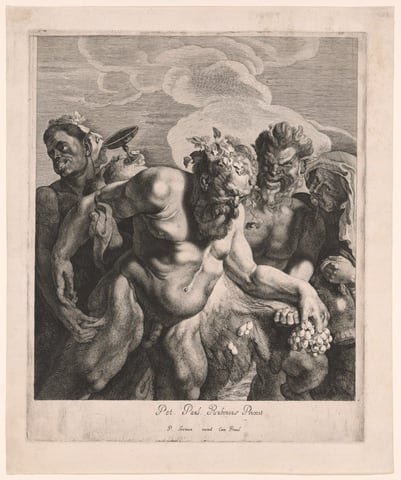
  1. A work made of engraving in black on cream laid paper.
    Drunken SilenusJonas Suyderhoef, 1642Courtesy of the Art Institute of Chicago
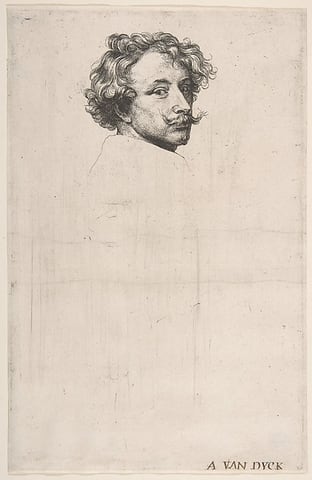
  2. Self-Portrait, from "The Iconography", by Anthony van Dyck, ca. 1640
    Self-Portrait, from "The Iconography"Anthony van Dyck, ca. 1640Courtesy of The Metropolitan Museum of Art
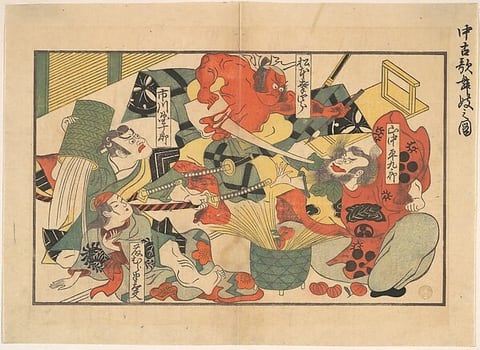
  3. The Advent of a Demon; Scene from a Performance in an old Kabuki Theatre
    The Advent of a Demon; Scene from a Performance in an old Kabuki TheatreUnrecorded Japanese makerCourtesy of The Metropolitan Museum of Art

Section 2, north wall
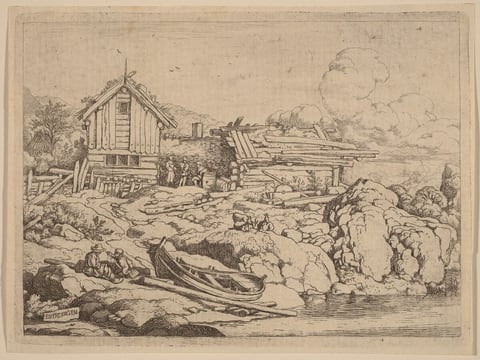
  1. The image shows a landscape with figures near a body of water. There are buildings made of logs, people gathered near a structure, and trees in the background. The style is detailed with precise linework, shading, and hatching. The color palette is monochrome, emphasizing light and shadow.
    Boat at a River Bank with Three GoatsAllart van Everdingen, probably c. 1645/1656Courtesy National Gallery of Art, Washington
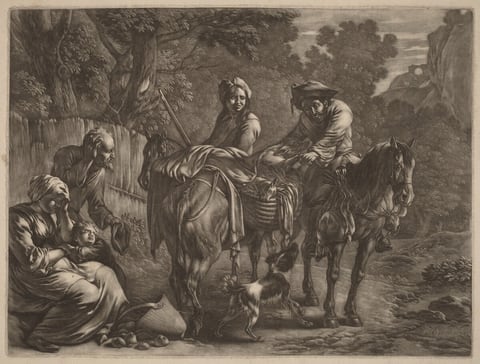
  2. This is a drawing of a rural scene with horses and figures. The image shows an interaction between several figures and two horses within a pastoral setting. In the foreground, two individuals are seated on the ground, accompanied by a small child. Nearby, a figure atop a horse reaches towards another figure who leads a laden horse. A dog is present, standing alert at the horse's hooves. The backdrop showcases lush trees and distant hills, suggesting a serene countryside environment. The attention to detail and shading creates a realistic depiction of this rustic scene.
    Robbers on HorsebackJan van Huchtenburgh, late 17th/early 18th centuryCourtesy National Gallery of Art, Washington

Section 3, north wall
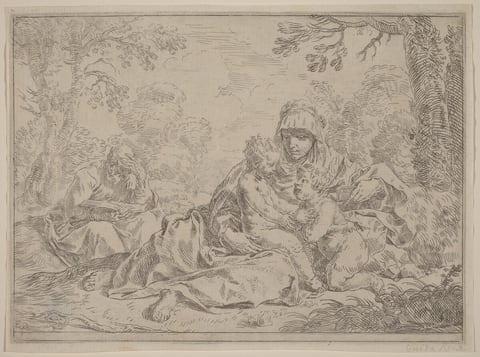
  1. The image shows an etching of four individuals, two adults, and two children. The main adult is sitting with a child on each knee. This person is wearing a hooded cloak with soft facial features. The children have curly hair and are reaching towards each other. The second adult is seated behind them, wearing a loose robe and appears to be holding something, possibly a book. The background features trees, bushes, foliage, and a calm sky.
    The Holy FamilySimone CantariniCourtesy National Gallery of Art, Washington
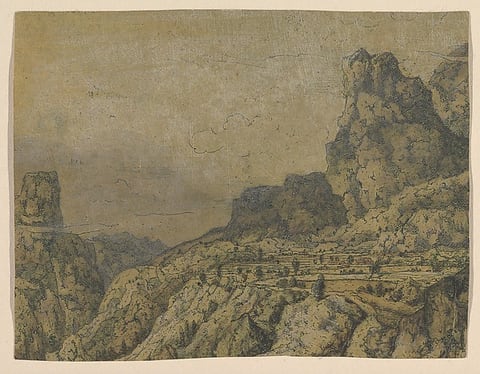
  2. Mountain Valley with a Plateau, by Hercules Segers, ca. 1625–30
    Mountain Valley with a PlateauHercules Segers, ca. 1625–30Courtesy of The Metropolitan Museum of Art

Section 3, south wall
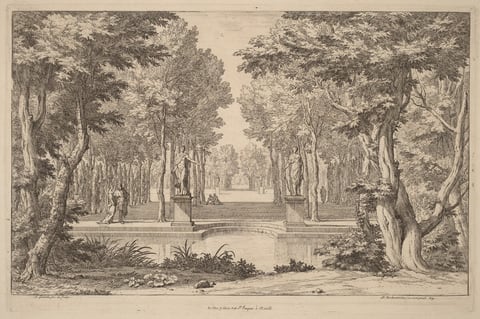
  1. The image shows a formal garden or park with a symmetrical view. It is taken from a slightly elevated position, revealing the vast space beyond a foreground of foliage and low-growing plants. The horizon line is positioned near the midpoint, where a tree-lined pathway extends into the distance. Flanking the pathway are two statues on pedestals under leafy trees. The scene is detailed with intricate line work emphasizing textures and forms. The color palette is monochromatic in various shades of brown, creating a classic appearance. Paved steps and a bridge over a small body of water add to the ordered elegance of the garden.
    The Two StatuesAbraham Genoels IICourtesy National Gallery of Art, Washington
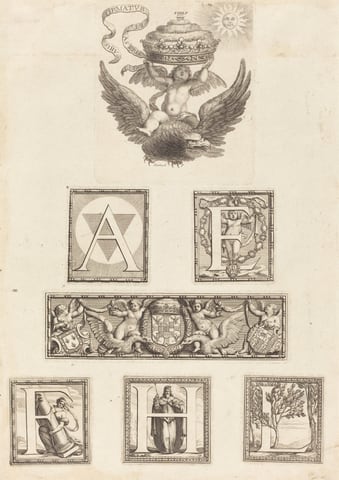
  2. This image features intricately designed ornate letters of the alphabet surrounded by elaborate illustrations. The top of the composition shows a cherub riding on an eagle, holding a crown above their head. A ribbon with inscriptions unfurls around the crown, and a sun with a human face is visible in the corner. The letters "A," "F," "D," "H," and another "H" are decorated with classical elements like putti, garlands, and mythological figures. The central panel is adorned with heraldic symbols, angelic figures, and coats of arms. The overall style of the artwork reflects baroque or renaissance decorative artistry, known for its ornamental details and classical themes.
    PendantRobert NanteuilCourtesy National Gallery of Art, Washington
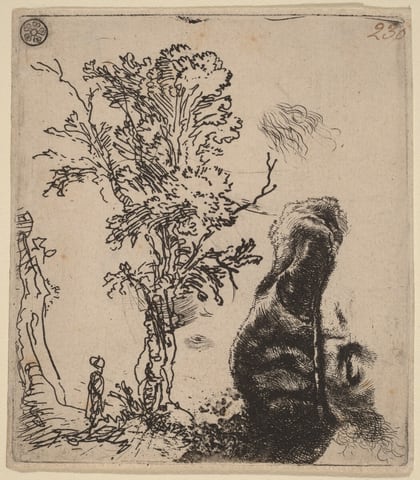
  3. The image displays intricate, swirling lines and textured shading to create an abstract scene. On the left side are fine lines resembling branches and leaves, with a small figure nearby. On the right side is a large, densely shaded form reminiscent of mountains or a rock formation. The elements come together to suggest landscapes and nature through imaginative shapes and line work.
    Sheet with Two Studies: a Tree, and the Upper Part of a Head of the Artist Wearing a Velvet CapRembrandt van Rijn, c. 1642Courtesy National Gallery of Art, Washington