Floor plan

Style galleriesPrints of the 18th century
Prints of the 18th century
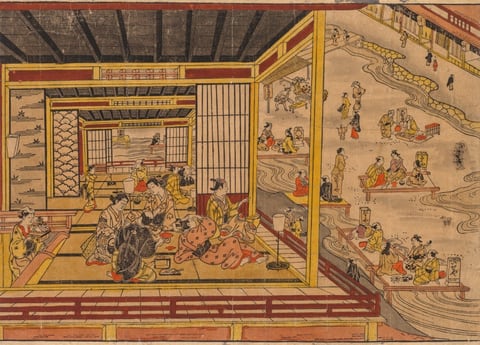
Tea House Beside the Kamo River in Kyoto, by Nishimura Shigenaga (Japanese, 1697(?)-1756), 1740s
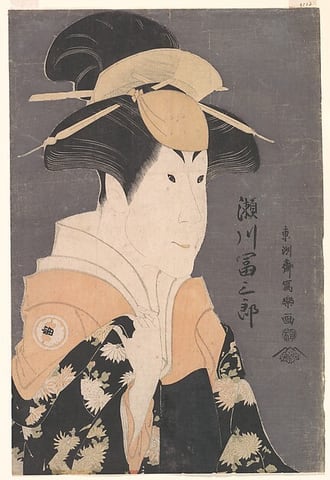
Segawa Tomisaburō II as Yadorigi in the Play "Hana Ayame Bunroku Soga", by Tōshūsai Sharaku, 1794
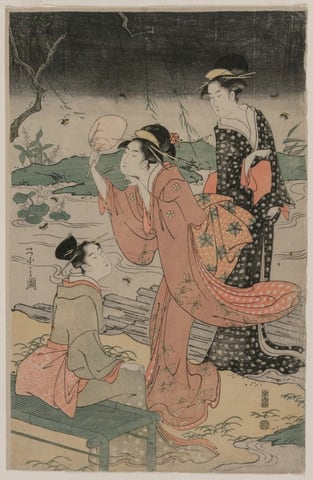
Women Beside a Stream Chasing Fireflies, by Chôbunsai Eishi, c. 1796–97
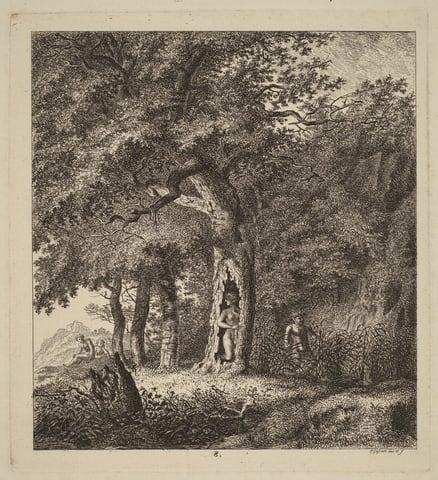
The image shows an etching of a forest scene with towering trees dominating the upper half. The horizon is not clearly visible due to dense foliage, but a line of trees and rocky outcrops in the distance provide a boundary. The fine lines and cross-hatching technique create detailed textures in the tree bark and foliage. The color palette is monochromatic, in shades of black and white emphasizing light and shadow. A large tree with a partially hollow trunk and figures scattered throughout the scene give a sense of scale and activity within the forest setting.
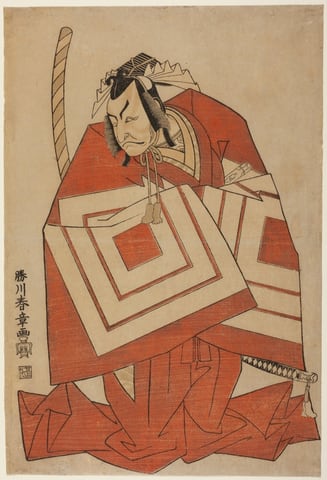
A work made of color woodblock print; oban.
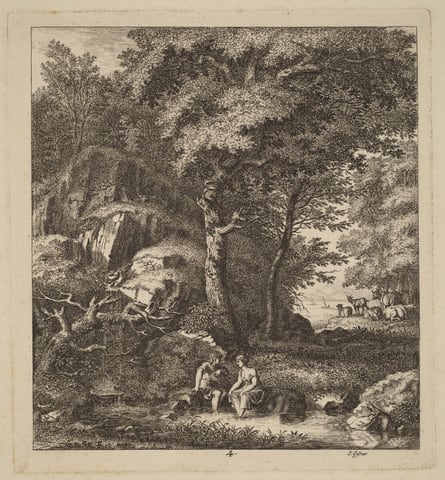
The image depicts a forest scene with large trees dominating the right side, two figures seated by a stream, rocky formations on the left, grazing animals in the distance, and a monochrome color palette of brown and espresso tones.

The works in this room are listed below.

Works in this room

Prints made in the 18th century, from every museum.

Section 1, north wall

  1. Tea House Beside the Kamo River in Kyoto, by Nishimura Shigenaga (Japanese, 1697(?)-1756), 1740s
    Tea House Beside the Kamo River in KyotoNishimura Shigenaga (Japanese, 1697(?)-1756), 1740sCourtesy of the Cleveland Museum of Art
  2. Segawa Tomisaburō II as Yadorigi in the Play "Hana Ayame Bunroku Soga", by Tōshūsai Sharaku, 1794
    Segawa Tomisaburō II as Yadorigi in the Play "Hana Ayame Bunroku Soga"Tōshūsai Sharaku, 1794Courtesy of The Metropolitan Museum of Art
  3. Women Beside a Stream Chasing Fireflies, by Chôbunsai Eishi, c. 1796–97
    Women Beside a Stream Chasing FirefliesChôbunsai Eishi, c. 1796–97Courtesy of the Cleveland Museum of Art

Section 1, south wall

  1. The image shows an etching of a forest scene with towering trees dominating the upper half. The horizon is not clearly visible due to dense foliage, but a line of trees and rocky outcrops in the distance provide a boundary. The fine lines and cross-hatching technique create detailed textures in the tree bark and foliage. The color palette is monochromatic, in shades of black and white emphasizing light and shadow. A large tree with a partially hollow trunk and figures scattered throughout the scene give a sense of scale and activity within the forest setting.
    Wooded Landscape with a Nymph and a SatyrSalomon Gessner, 1764Courtesy National Gallery of Art, Washington
  2. A work made of color woodblock print; oban.
    The Actor Ichikawa Danjuro IV in a "Shibaraku" Role, Possibly from the Play Ima o Sakari Suehiro Genji (The Genji Clan Now at Its Zenith), Performed at the Nakamura Theater from the First Day of the Eleventh Month, 1768Katsukawa Shunshō, c. 1768Courtesy of the Art Institute of Chicago
  3. The image depicts a forest scene with large trees dominating the right side, two figures seated by a stream, rocky formations on the left, grazing animals in the distance, and a monochrome color palette of brown and espresso tones.
    A Shepherd and a Young Woman With Their Feet in a BrookSalomon Gessner, 1764Courtesy National Gallery of Art, Washington

Section 2, south wall
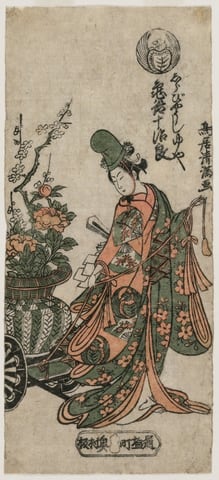
  1. Kametani Jujiro as the Shirabyoshi Dancer Yuya, by Torii Kiyomitsu, c. early 1760s
    Kametani Jujiro as the Shirabyoshi Dancer YuyaTorii Kiyomitsu, c. early 1760sCourtesy of the Cleveland Museum of Art
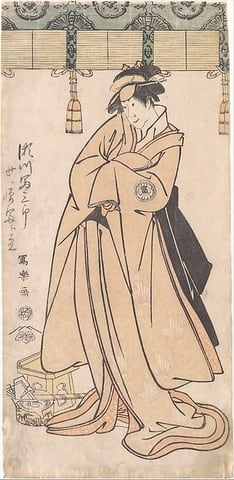
  2. The Actor Segawa Tomisaburo II as the Otomos' Maid Wakakusa, Actually Prince Korehito, by Tōshūsai Sharaku, 1794–75
    The Actor Segawa Tomisaburo II as the Otomos' Maid Wakakusa, Actually Prince KorehitoTōshūsai Sharaku, 1794–75Courtesy of The Metropolitan Museum of Art

  3. The image shows three figures. Two of them are embracing in the foreground, kneeling on the ground and facing each other in a kiss. The person on the left has curly hair and appears to be wearing a coat-like garment, while the person on the right has long hair tied back and is dressed in a long robe. The third figure emerges from the bushes in the background, with shoulder-length hair, wearing a dress with a sash and a light shawl or scarf over their head. The setting includes tall trees, shrubs, and a structure with columns and arches on the right side, suggesting a garden or courtyard. Rolling hills and cloudy skies are in the distant background.
    The Fortunate RescueDaniel Nikolaus Chodowiecki, 1791Courtesy National Gallery of Art, Washington

Section 2, north wall
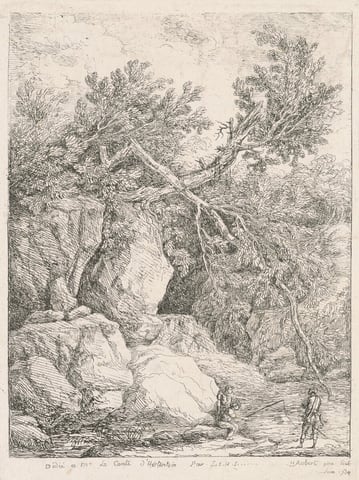
  1. The image shows an illustration of a rocky terrain with towering stone formations and dense foliage. The sky is textured and the scene is created using an etching technique with intricate linework. There are two figures in the scene, one appearing to climb or position near a rock, while the other observes. The color palette is monochromatic, using black on a white background to depict depth and dimension in the artwork.
    Landscape with a Fallen Tree (Paysage à l'arbre cassé)Hubert Robert, 1764Courtesy National Gallery of Art, Washington
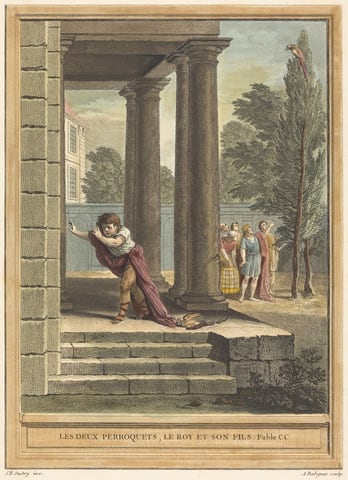
  2. This painting depicts a classical architectural scene with a bird and multiple individuals. It is done in the style of Jean-Baptiste Oudry. The image includes a large building with stone columns and stairs. A parrot is perched on a tree, catching attention with its colorful feathers. In the foreground, a person in classical clothing appears to be in motion. In the background, a group of people are gathered with varied expressions and gestures directed towards the person in the foreground. The architectural elements and foliage add depth and context to the scene.
    Les deux perroquets, le roi et son fils (Two Parrots, the King, and His Son)Antoine Radigues, published 1759Courtesy National Gallery of Art, Washington
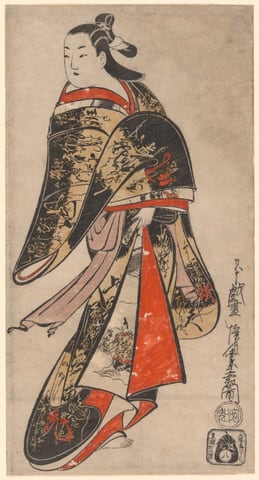
  3. A work made of hand-colored woodblock print; tan-e, vertical o-oban.
    Courtesan WalkingKaigetsudo Anchi, c. 1714Courtesy of the Art Institute of Chicago

Section 3, north wall
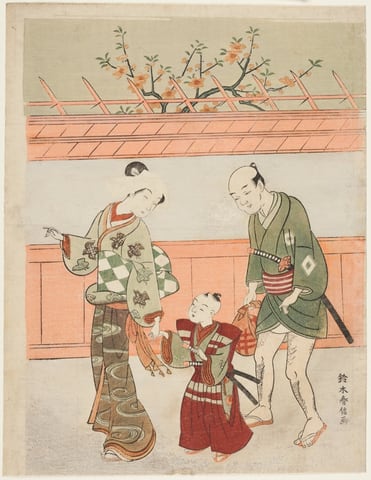
  1. A work made of color woodblock print; chuban.
    A Spring OutingSuzuki Harunobu, c. 1768Courtesy of the Art Institute of Chicago
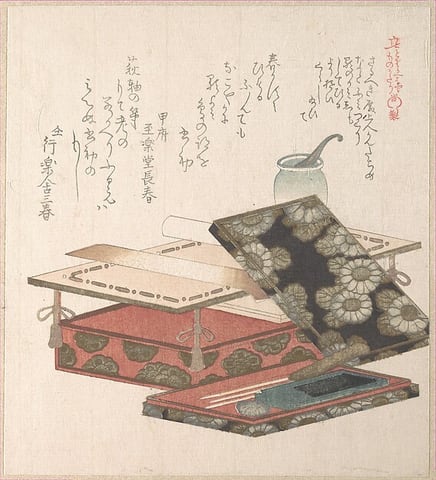
  2. Table and Writing Set, by Kubo Shunman, 19th century
    Table and Writing SetKubo Shunman, 19th centuryCourtesy of The Metropolitan Museum of Art

Section 3, south wall
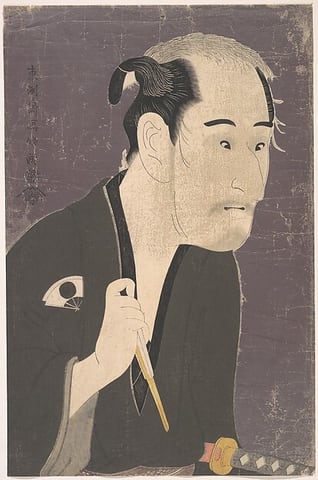
  1. The Actor Onoye Matsusuke as a Ronin, by Tōshūsai Sharaku
    The Actor Onoye Matsusuke as a RoninTōshūsai SharakuCourtesy of The Metropolitan Museum of Art
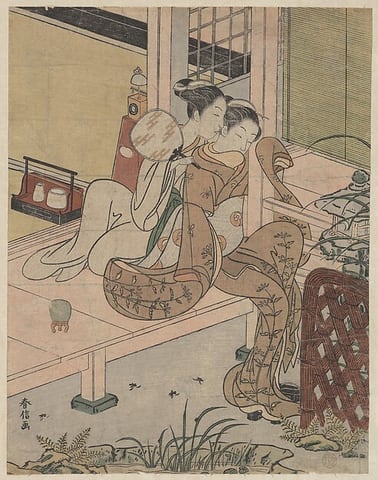
  2. The Gossips, by Suzuki Harunobu, ca. 1767
    The GossipsSuzuki Harunobu, ca. 1767Courtesy of The Metropolitan Museum of Art