Floor plan

Style galleriesPrints of the 18th century
Prints of the 18th century
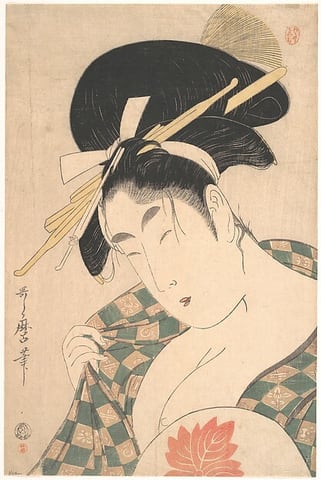
A Courtesan, by Kitagawa Utamaro
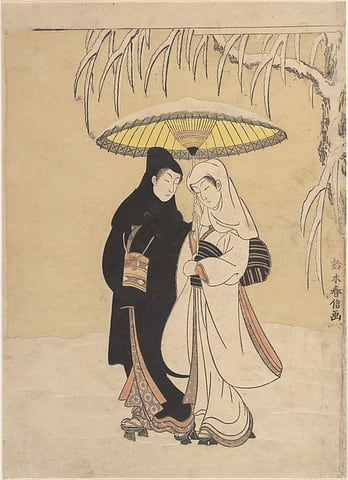
Lovers Walking in the Snow (Crow and Heron), by Suzuki Harunobu, 1764–72
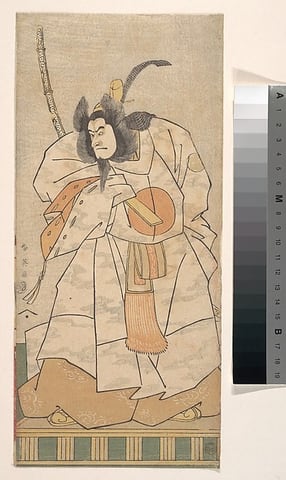
The Actor Morita Kanya VIII as Tatsugorō, by Katsukawa Shun'ei, 1794 (Kansei 6)
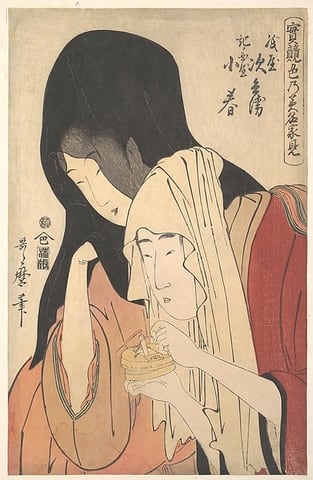
Jihei of Kamiya Eloping with the Geisha Koharu of Kinokuniya, from the series “True Feelings Compared: The Founts of Love” (Jitsu kurabe iro no Minakami), by Kitagawa Utamaro, ca. 1798–99
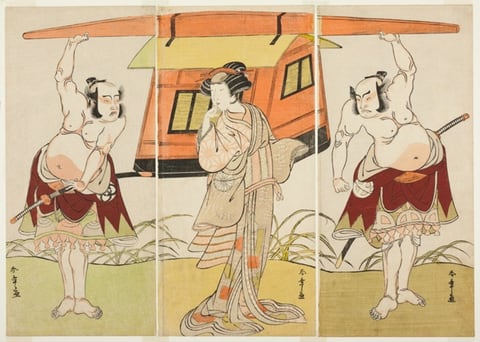
A work made of color woodblock print; hosoban; triptych.
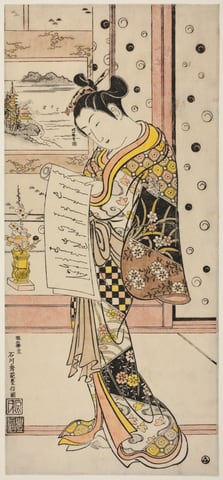
A work made of hand-colored woodblock print; toku-oban, urushi-e.

The works in this room are listed below.

Works in this room

Prints made in the 18th century, from every museum.

Section 1, north wall

  1. A Courtesan, by Kitagawa Utamaro
    A CourtesanKitagawa UtamaroCourtesy of The Metropolitan Museum of Art
  2. Lovers Walking in the Snow (Crow and Heron), by Suzuki Harunobu, 1764–72
    Lovers Walking in the Snow (Crow and Heron)Suzuki Harunobu, 1764–72Courtesy of The Metropolitan Museum of Art
  3. The Actor Morita Kanya VIII as Tatsugorō, by Katsukawa Shun'ei, 1794 (Kansei 6)
    The Actor Morita Kanya VIII as TatsugorōKatsukawa Shun'ei, 1794 (Kansei 6)Courtesy of The Metropolitan Museum of Art

Section 1, south wall

  1. Jihei of Kamiya Eloping with the Geisha Koharu of Kinokuniya, from the series “True Feelings Compared: The Founts of Love” (Jitsu kurabe iro no Minakami), by Kitagawa Utamaro, ca. 1798–99
    Jihei of Kamiya Eloping with the Geisha Koharu of Kinokuniya, from the series “True Feelings Compared: The Founts of Love” (Jitsu kurabe iro no Minakami)Kitagawa Utamaro, ca. 1798–99Courtesy of The Metropolitan Museum of Art
  2. A work made of color woodblock print; hosoban; triptych.
    The Actors Otani Hiroji III as Yokambei (right), Nakamura Tomijuro I as Kuzunoha (center), and Bando Mitsugoro I as Yakambei (left), in the Last Scene from the Play Shinodazuma (The Wife from Shinoda Forest), Performed as a Supplement to the Play Kikyo-zome Onna Urakata (Female Diviner in Deep Violet), at the Morita Theater from the Ninth Day of the Ninth Month, 1776Katsukawa Shunshō, c. 1776Courtesy of the Art Institute of Chicago
  3. A work made of hand-colored woodblock print; toku-oban, urushi-e.
    Courtesan Reading a LetterIshikawa Toyonobu, c. 1745Courtesy of the Art Institute of Chicago

Section 2, south wall
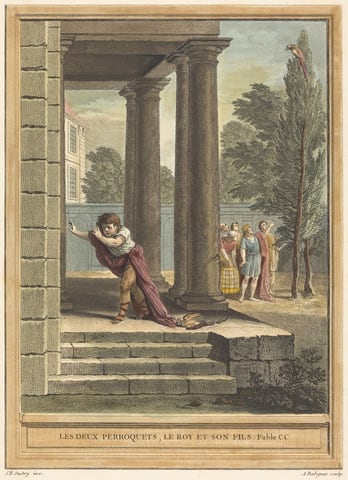
  1. This painting depicts a classical architectural scene with a bird and multiple individuals. It is done in the style of Jean-Baptiste Oudry. The image includes a large building with stone columns and stairs. A parrot is perched on a tree, catching attention with its colorful feathers. In the foreground, a person in classical clothing appears to be in motion. In the background, a group of people are gathered with varied expressions and gestures directed towards the person in the foreground. The architectural elements and foliage add depth and context to the scene.
    Les deux perroquets, le roi et son fils (Two Parrots, the King, and His Son)Antoine Radigues, published 1759Courtesy National Gallery of Art, Washington
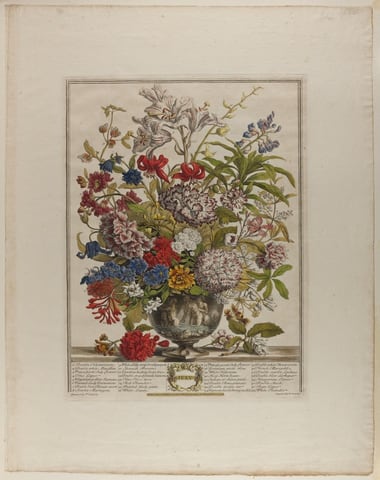
  2. A work made of engraving in black ink with opaque and translucent watercolor on cream laid paper.
    July, from Twelve Months of FlowersHenry Fletcher, n.d.Courtesy of the Art Institute of Chicago
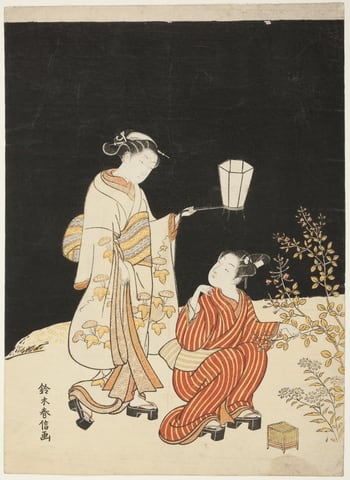
  3. A work made of color woodblock print; chūban.
    Searching for FirefliesSuzuki Harunobu, 1768Courtesy of the Art Institute of Chicago

Section 2, north wall
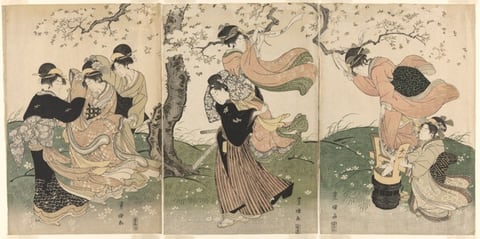
  1. A work made of color woodblock prints; oban triptych.
    A Windy Day under the Cherry TreesUtagawa Toyokuni, c. 1797Courtesy of the Art Institute of Chicago
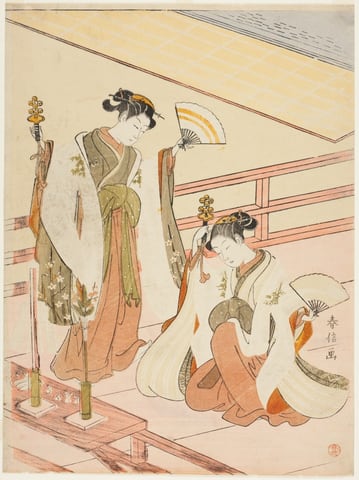
  2. A work made of color woodblock print; chuban.
    The Dance of the Shrine Maidens Ohatsu and OnamiSuzuki Harunobu, c. 1769Courtesy of the Art Institute of Chicago
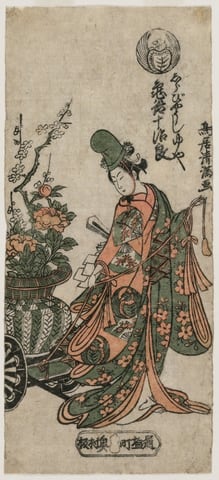
  3. Kametani Jujiro as the Shirabyoshi Dancer Yuya, by Torii Kiyomitsu, c. early 1760s
    Kametani Jujiro as the Shirabyoshi Dancer YuyaTorii Kiyomitsu, c. early 1760sCourtesy of the Cleveland Museum of Art

Section 3, north wall

  1. The engraving depicts a gathering around a woman holding a child in her arms in an indoor setting with stone columns and an arched background. Another woman is next to her, looking towards her while leaning over what appears to be a child or possibly a doll on a small donkey. Surrounding the central woman are several children, some seated and playing on the floor. A dog is resting at the central woman's feet. The image features lush drapery, creating a warm and intimate setting. The style suggests classical or historical fashion, and there is an ornate border with ivy leaves. The text and emblem below likely contain relevant inscriptions.
    L'heureuse féconditéNicolas Delaunay, 1777Courtesy National Gallery of Art, Washington
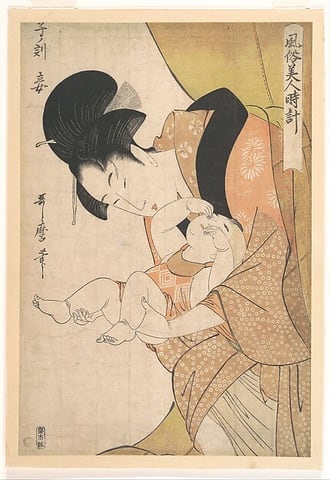
  2. “Hour of the Rat: Mistress,” from the series Women’s Daily Customs (Fuzoku bijin tokei), by Kitagawa Utamaro, 1790
    “Hour of the Rat: Mistress,” from the series Women’s Daily Customs (Fuzoku bijin tokei)Kitagawa Utamaro, 1790Courtesy of The Metropolitan Museum of Art

Section 3, south wall
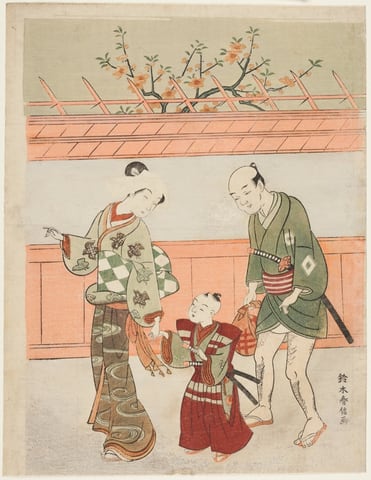
  1. A work made of color woodblock print; chuban.
    A Spring OutingSuzuki Harunobu, c. 1768Courtesy of the Art Institute of Chicago
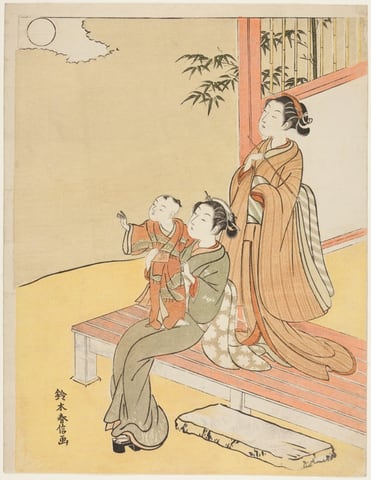
  2. A work made of color woodblock print; chuban.
    Viewing the MoonSuzuki Harunobu, c. 1767/68Courtesy of the Art Institute of Chicago