Floor plan

Style galleriesPrints of the 18th century
Prints of the 18th century
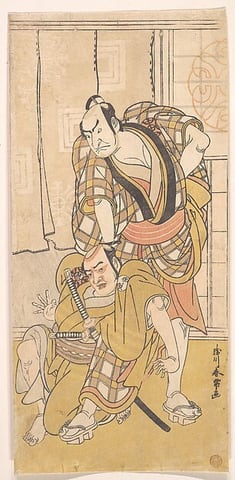
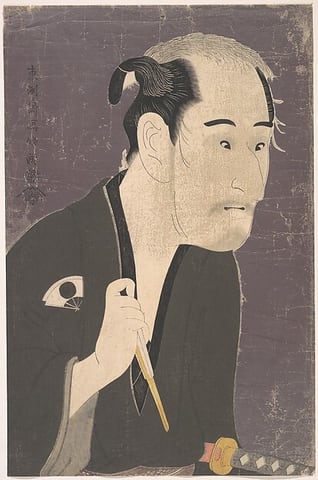
The Actor Onoye Matsusuke as a Ronin, by Tōshūsai Sharaku
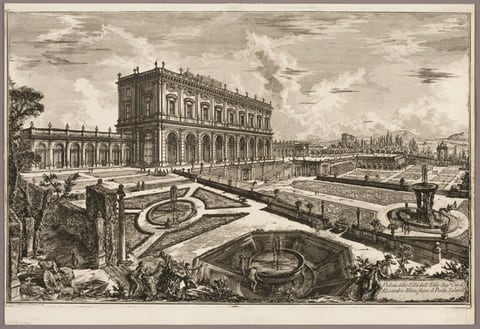
A work made of etching on ivory laid paper.
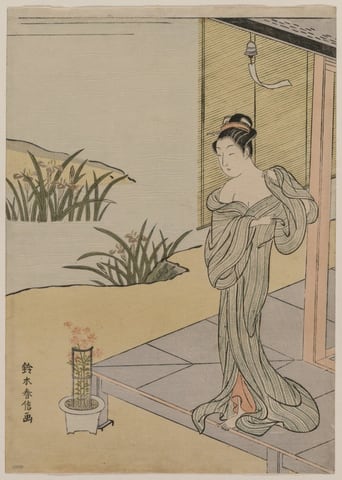
Young Woman Looking at a Pot of Pinks, by Suzuki Harunobu, c. 1767
Scene from a Play, by Katsukawa Shunjō, ca. 1780
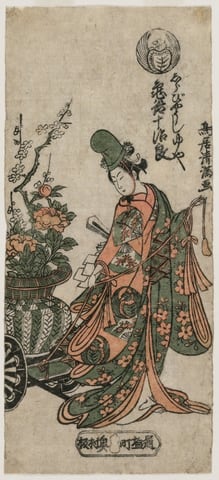
Kametani Jujiro as the Shirabyoshi Dancer Yuya, by Torii Kiyomitsu, c. early 1760s

The works in this room are listed below.

Works in this room

Prints made in the 18th century, from every museum.

Section 1, north wall

  1. The Actor Onoye Matsusuke as a Ronin, by Tōshūsai Sharaku
    The Actor Onoye Matsusuke as a RoninTōshūsai SharakuCourtesy of The Metropolitan Museum of Art
  2. A work made of etching on ivory laid paper.
    View of the Villa of His Eminence Cardinal Alessandro Albani, outside Porta Salaria, from Views of RomeGiovanni Battista Piranesi, 1769, published 1800–07Courtesy of the Art Institute of Chicago

Section 1, south wall

  1. Young Woman Looking at a Pot of Pinks, by Suzuki Harunobu, c. 1767
    Young Woman Looking at a Pot of PinksSuzuki Harunobu, c. 1767Courtesy of the Cleveland Museum of Art
  2. Scene from a Play, by Katsukawa Shunjō, ca. 1780
    Scene from a PlayKatsukawa Shunjō, ca. 1780Courtesy of The Metropolitan Museum of Art
  3. Kametani Jujiro as the Shirabyoshi Dancer Yuya, by Torii Kiyomitsu, c. early 1760s
    Kametani Jujiro as the Shirabyoshi Dancer YuyaTorii Kiyomitsu, c. early 1760sCourtesy of the Cleveland Museum of Art

Section 2, south wall
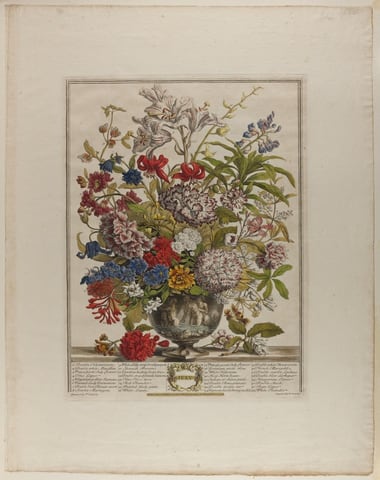
  1. A work made of engraving in black ink with opaque and translucent watercolor on cream laid paper.
    July, from Twelve Months of FlowersHenry Fletcher, n.d.Courtesy of the Art Institute of Chicago
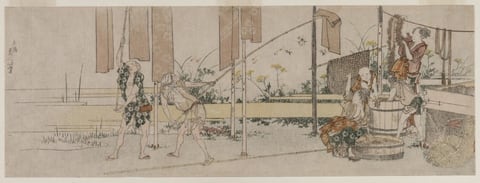
  2. Dyers at Work, by Katsushika Hokusai, c. 1800
    Dyers at WorkKatsushika Hokusai, c. 1800Courtesy of the Cleveland Museum of Art
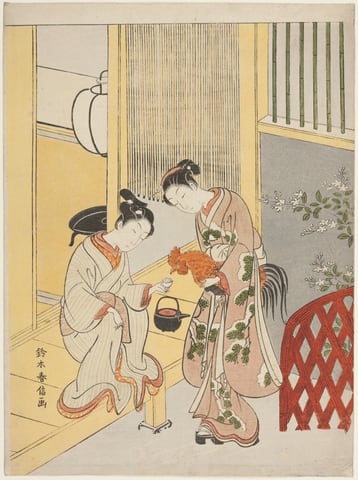
  3. A work made of color woodblock print; chuban.
    Delaying the announcement of dawnSuzuki Harunobu, c. 1767/68Courtesy of the Art Institute of Chicago

Section 2, north wall
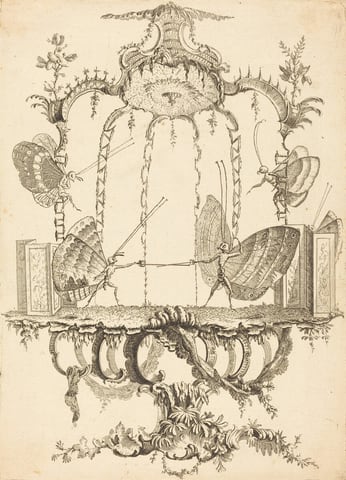
  1. This is a drawing of anthropomorphic butterflies engaged in a duel with fencing swords. The butterflies have human-like bodies with wings resembling cloaks or capes. They stand on an ornate structure featuring decorative architectural elements like columns with floral and leaf motifs. Above them are arches, canopies, and hanging vines, creating a theatrical setting. The drawing combines fantasy and nature elements, showcasing elegance and imagination.
    Le Duel (The Duel)Charles Germain de Saint-Aubin, in or after 1756Courtesy National Gallery of Art, Washington
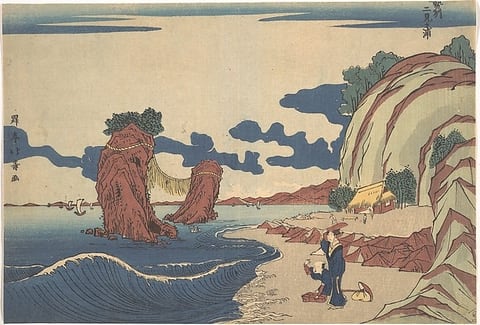
  2. View of Futami Beach at Ise, by Shōtei Hokuju, ca. 1810–1820
    View of Futami Beach at IseShōtei Hokuju, ca. 1810–1820Courtesy of The Metropolitan Museum of Art
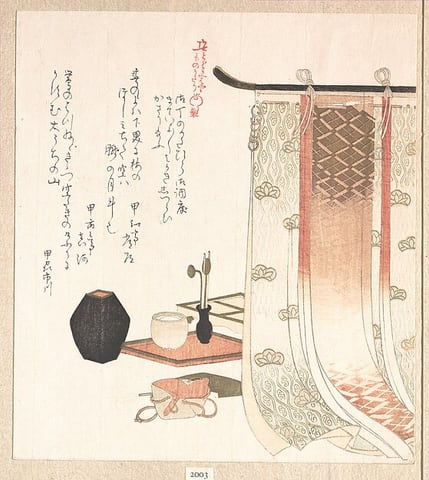
  3. Screen and Utensils for the Incense Ceremony, by Kubo Shunman, 19th century
    Screen and Utensils for the Incense CeremonyKubo Shunman, 19th centuryCourtesy of The Metropolitan Museum of Art

Section 3, north wall
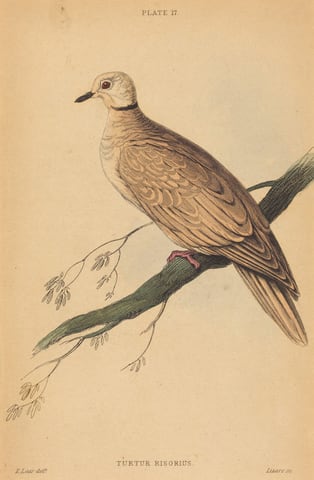
  1. This is a drawing of a bird perched on a branch. The bird is detailed and identified as "Turtur Risorius." It rests on a green textured branch against a plain background. The bird has a black ring around its neck, soft brown plumage with intricate feather patterns, and light pink legs. Its eye is prominent and outlined within its head design. The branch is minimalist with small buds and thin twigs.
    Turtur RisoriusWilliam Home LizarsCourtesy National Gallery of Art, Washington
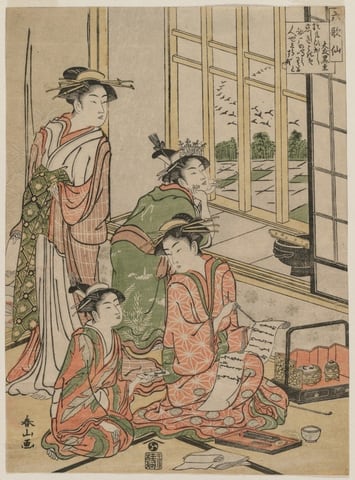
  2. Courtesans at Leisure from the series The Six Immortal Poets, by Katsukawa Shunzan, early 1780s
    Courtesans at Leisure from the series The Six Immortal PoetsKatsukawa Shunzan, early 1780sCourtesy of the Cleveland Museum of Art
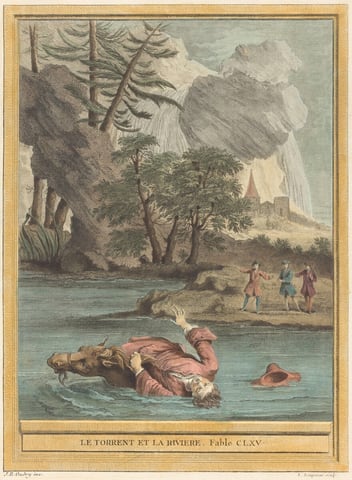
  3. The image shows a man in a red coat in a river, holding on to a horse. A hat floats nearby. Three figures in 18th-century clothing stand on a rocky riverbank looking concerned. In the background, there are trees, a castle-like structure, and large clouds. The brushstrokes are detailed, capturing movement and textures. The color palette includes muted tones like earthy browns, greens, soft blue, and subtle reds.
    Le torrent et la riviere (The Torrent and theRiver)Louis-Simon Lempereur, published 1756Courtesy National Gallery of Art, Washington

Section 3, south wall
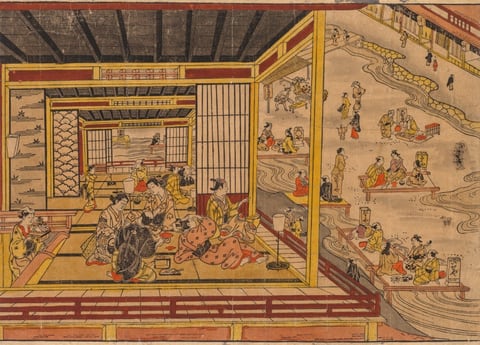
  1. Tea House Beside the Kamo River in Kyoto, by Nishimura Shigenaga (Japanese, 1697(?)-1756), 1740s
    Tea House Beside the Kamo River in KyotoNishimura Shigenaga (Japanese, 1697(?)-1756), 1740sCourtesy of the Cleveland Museum of Art
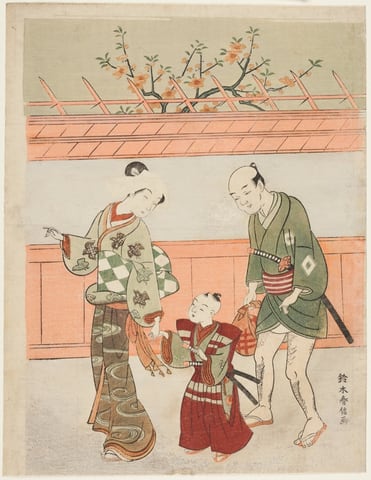
  2. A work made of color woodblock print; chuban.
    A Spring OutingSuzuki Harunobu, c. 1768Courtesy of the Art Institute of Chicago