Floor plan

Style galleriesPrints of the 18th century
Prints of the 18th century
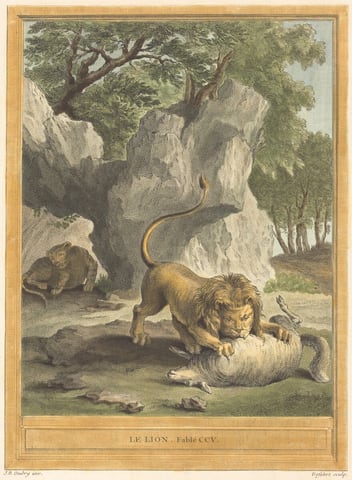
This is a drawing of a lion in a forested rocky landscape. The lion is seen standing over a defeated animal. In the background, a forest with dense trees frames the scene. One monkey is visible among the rocks watching the lion. The setting conveys a wild, rugged terrain with rocky formations and scattered vegetation. Light and shadow emphasize textures in the lion's mane and the surrounding rocks. The composition focuses on the lion and its prey.
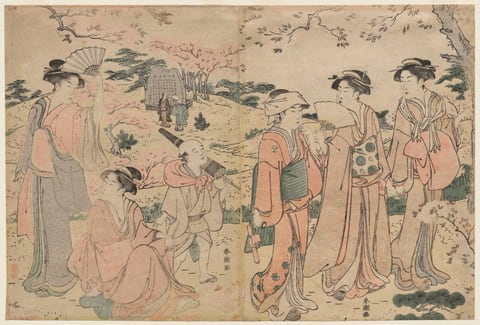
Women Viewing Cherry Blossoms at Asukayama, by Katsukawa Shunchô, 1780s
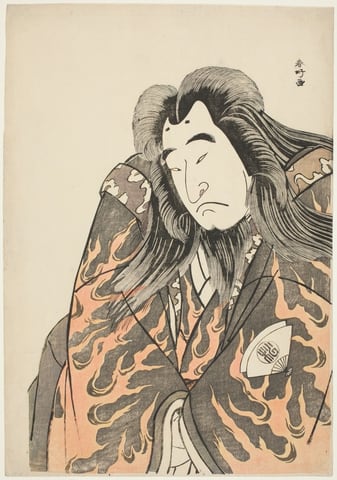
A work made of color woodblock print.
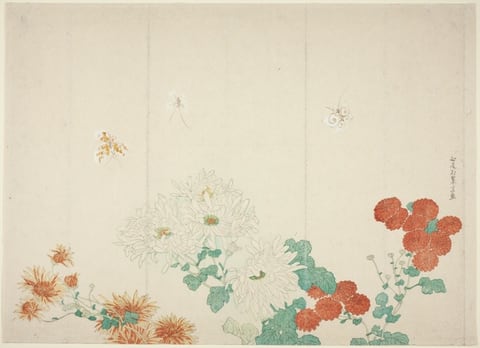
A work made of color woodblock print; surimono.
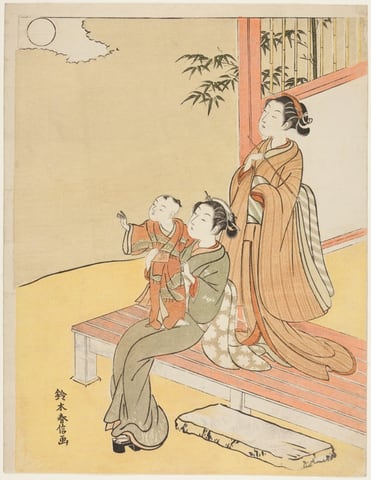
A work made of color woodblock print; chuban.
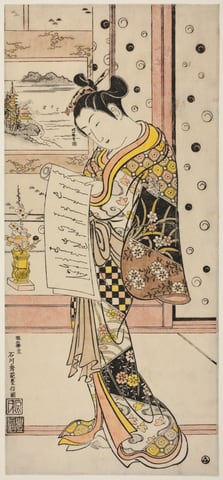
A work made of hand-colored woodblock print; toku-oban, urushi-e.

The works in this room are listed below.

Works in this room

Prints made in the 18th century, from every museum.

Section 1, north wall

  1. This is a drawing of a lion in a forested rocky landscape. The lion is seen standing over a defeated animal. In the background, a forest with dense trees frames the scene. One monkey is visible among the rocks watching the lion. The setting conveys a wild, rugged terrain with rocky formations and scattered vegetation. Light and shadow emphasize textures in the lion's mane and the surrounding rocks. The composition focuses on the lion and its prey.
    Le lion (The Lion)A.-J. de Fehrt, published 1759Courtesy National Gallery of Art, Washington
  2. Women Viewing Cherry Blossoms at Asukayama, by Katsukawa Shunchô, 1780s
    Women Viewing Cherry Blossoms at AsukayamaKatsukawa Shunchô, 1780sCourtesy of the Cleveland Museum of Art
  3. A work made of color woodblock print.
    Actor Onoe Matsusuke I as Retired Emperor SutokuKatsukawa Shunkо̄, About 1780Courtesy of the Art Institute of Chicago

Section 1, south wall

  1. A work made of color woodblock print; surimono.
    Three Types of ChrysanthemumsKitao Shigemasa, c. 1790Courtesy of the Art Institute of Chicago
  2. A work made of color woodblock print; chuban.
    Viewing the MoonSuzuki Harunobu, c. 1767/68Courtesy of the Art Institute of Chicago
  3. A work made of hand-colored woodblock print; toku-oban, urushi-e.
    Courtesan Reading a LetterIshikawa Toyonobu, c. 1745Courtesy of the Art Institute of Chicago

Section 2, south wall
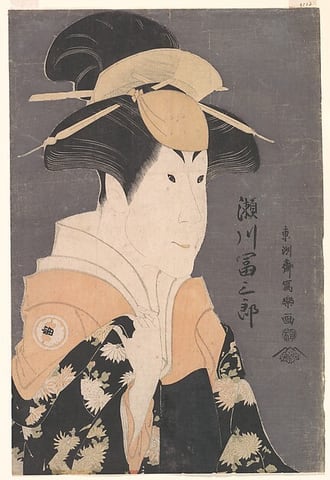
  1. Segawa Tomisaburō II as Yadorigi in the Play "Hana Ayame Bunroku Soga", by Tōshūsai Sharaku, 1794
    Segawa Tomisaburō II as Yadorigi in the Play "Hana Ayame Bunroku Soga"Tōshūsai Sharaku, 1794Courtesy of The Metropolitan Museum of Art
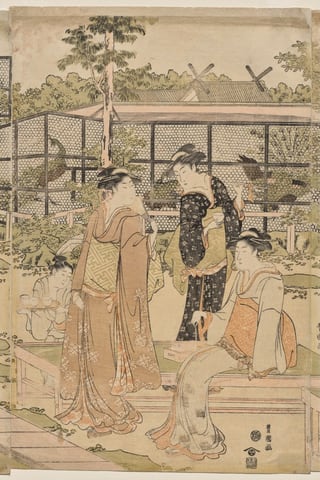
  2. The Shika Teahouse, by Utagawa Toyokuni, early 1790s
    The Shika TeahouseUtagawa Toyokuni, early 1790sCourtesy of the Cleveland Museum of Art
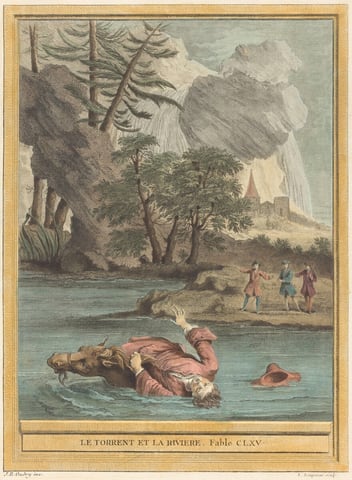
  3. The image shows a man in a red coat in a river, holding on to a horse. A hat floats nearby. Three figures in 18th-century clothing stand on a rocky riverbank looking concerned. In the background, there are trees, a castle-like structure, and large clouds. The brushstrokes are detailed, capturing movement and textures. The color palette includes muted tones like earthy browns, greens, soft blue, and subtle reds.
    Le torrent et la riviere (The Torrent and theRiver)Louis-Simon Lempereur, published 1756Courtesy National Gallery of Art, Washington

Section 2, north wall
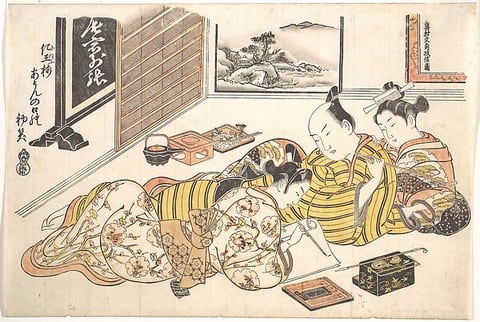
  1. Plate from the Erotic Book Mounds of Dyed Colors: A Pattern Book for the Boudoir (Someiro no yama neya no hinagata), First Month, by Okumura Masanobu, ca. 1736–44
    Plate from the Erotic Book Mounds of Dyed Colors: A Pattern Book for the Boudoir (Someiro no yama neya no hinagata), First MonthOkumura Masanobu, ca. 1736–44Courtesy of The Metropolitan Museum of Art
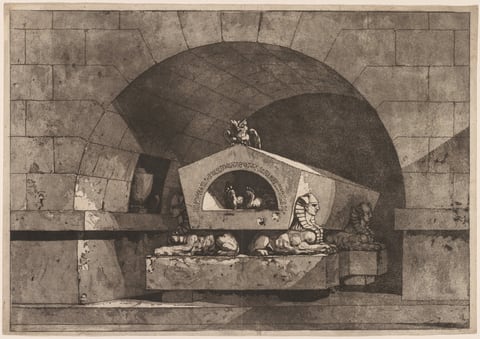
  2. Tomb with Sphinxes and an Owl, by Louis Jean Desprez, c. 1779–84
    Tomb with Sphinxes and an OwlLouis Jean Desprez, c. 1779–84Courtesy of the Cleveland Museum of Art

Section 3, north wall
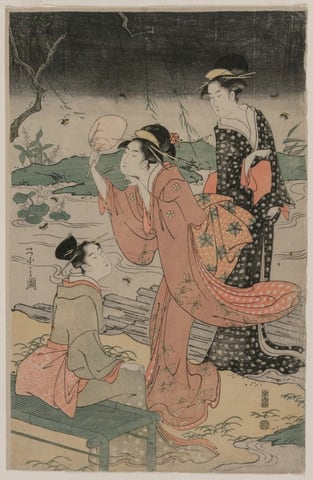
  1. Women Beside a Stream Chasing Fireflies, by Chôbunsai Eishi, c. 1796–97
    Women Beside a Stream Chasing FirefliesChôbunsai Eishi, c. 1796–97Courtesy of the Cleveland Museum of Art
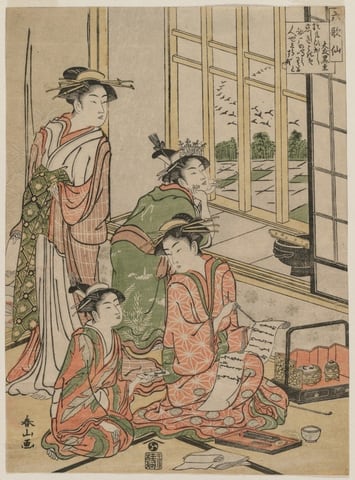
  2. Courtesans at Leisure from the series The Six Immortal Poets, by Katsukawa Shunzan, early 1780s
    Courtesans at Leisure from the series The Six Immortal PoetsKatsukawa Shunzan, early 1780sCourtesy of the Cleveland Museum of Art
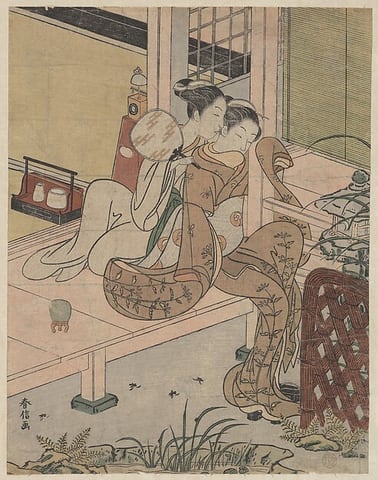
  3. The Gossips, by Suzuki Harunobu, ca. 1767
    The GossipsSuzuki Harunobu, ca. 1767Courtesy of The Metropolitan Museum of Art

Section 3, south wall
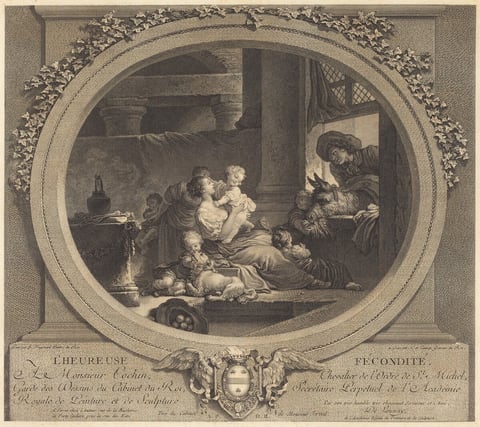
  1. The engraving depicts a gathering around a woman holding a child in her arms in an indoor setting with stone columns and an arched background. Another woman is next to her, looking towards her while leaning over what appears to be a child or possibly a doll on a small donkey. Surrounding the central woman are several children, some seated and playing on the floor. A dog is resting at the central woman's feet. The image features lush drapery, creating a warm and intimate setting. The style suggests classical or historical fashion, and there is an ornate border with ivy leaves. The text and emblem below likely contain relevant inscriptions.
    L'heureuse féconditéNicolas Delaunay, 1777Courtesy National Gallery of Art, Washington
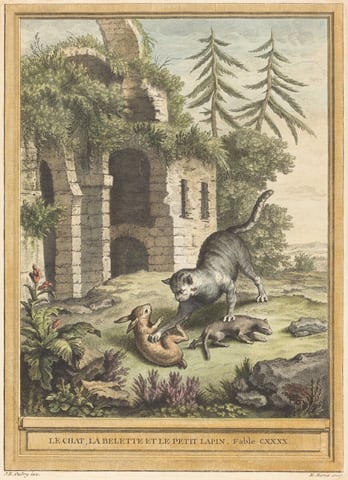
  2. This is a painting of animals in front of a ruined structure. The painting features a cat, a weasel, and a small rabbit gathered on a patch of grass. The cat has its paw over the rabbit, with the weasel observing. They are in front of an ancient stone structure surrounded by vegetation. In the background are trees against a sky. The foreground has detailed foliage and flowers.
    Le chat, la balette et le petit lapin (The Cat, the Weasel, and the Rabbit)Martin Marvie, published 1756Courtesy National Gallery of Art, Washington