Floor plan

Style galleriesPrints of the 18th century
Prints of the 18th century
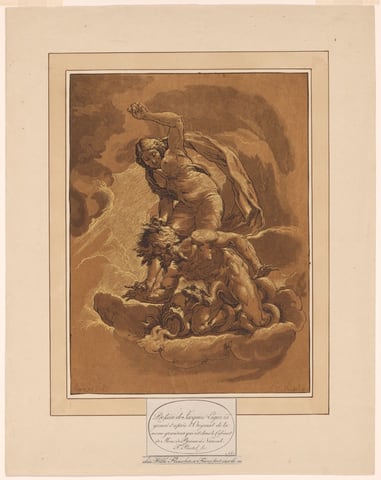
A work made of etching and aquatint, from three plates, in brown and black, with metallic gold, on ivory laid paper.
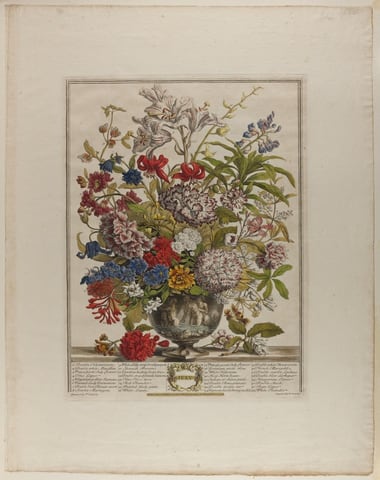
A work made of engraving in black ink with opaque and translucent watercolor on cream laid paper.
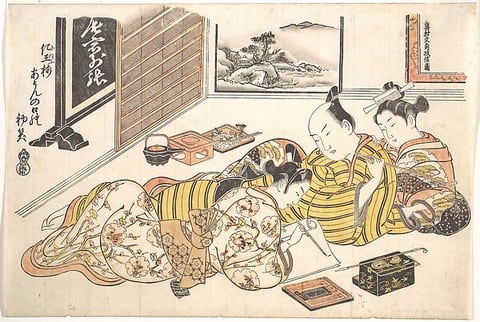
Plate from the Erotic Book Mounds of Dyed Colors: A Pattern Book for the Boudoir (Someiro no yama neya no hinagata), First Month, by Okumura Masanobu, ca. 1736–44
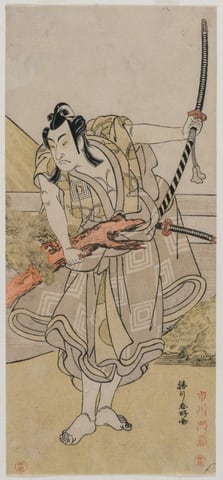
Ichikawa Monnosuke II as Soga no Gorō, by Katsukawa Shunkō, 1779
A work made of color woodblock print.
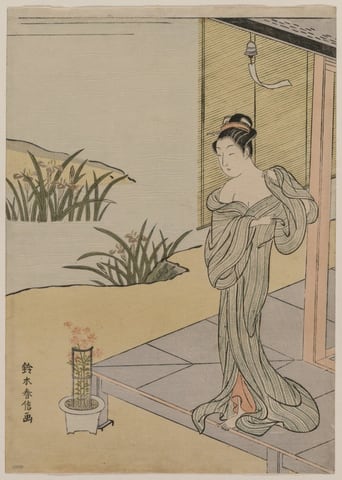
Young Woman Looking at a Pot of Pinks, by Suzuki Harunobu, c. 1767

The works in this room are listed below.

Works in this room

Prints made in the 18th century, from every museum.

Section 1, north wall

  1. A work made of etching and aquatint, from three plates, in brown and black, with metallic gold, on ivory laid paper.
    The Triumph of Truth over EnvyMaria Katharina Prestel, 1781Courtesy of the Art Institute of Chicago
  2. A work made of engraving in black ink with opaque and translucent watercolor on cream laid paper.
    July, from Twelve Months of FlowersHenry Fletcher, n.d.Courtesy of the Art Institute of Chicago
  3. Plate from the Erotic Book Mounds of Dyed Colors: A Pattern Book for the Boudoir (Someiro no yama neya no hinagata), First Month, by Okumura Masanobu, ca. 1736–44
    Plate from the Erotic Book Mounds of Dyed Colors: A Pattern Book for the Boudoir (Someiro no yama neya no hinagata), First MonthOkumura Masanobu, ca. 1736–44Courtesy of The Metropolitan Museum of Art

Section 1, south wall

  1. Ichikawa Monnosuke II as Soga no Gorō, by Katsukawa Shunkō, 1779
    Ichikawa Monnosuke II as Soga no GorōKatsukawa Shunkō, 1779Courtesy of the Cleveland Museum of Art
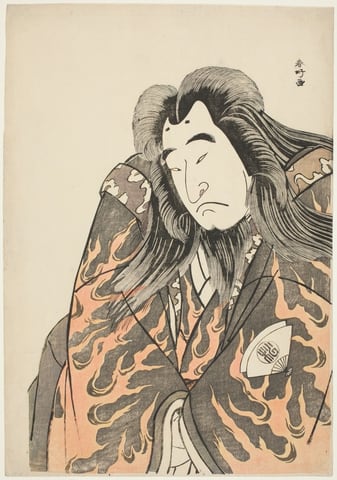
  2. A work made of color woodblock print.
    Actor Onoe Matsusuke I as Retired Emperor SutokuKatsukawa Shunkо̄, About 1780Courtesy of the Art Institute of Chicago
  3. Young Woman Looking at a Pot of Pinks, by Suzuki Harunobu, c. 1767
    Young Woman Looking at a Pot of PinksSuzuki Harunobu, c. 1767Courtesy of the Cleveland Museum of Art

Section 2, south wall
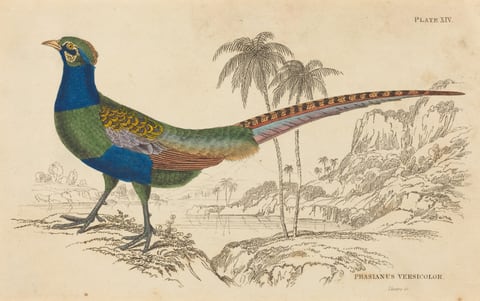
  1. The image shows a pheasant with vivid green and blue plumage and intricate golden patterns on its wings. The bird has long, patterned tail feathers extended to the right. The background includes palm trees, rocky outcrops, and distant hills.
    Phasianus VersicolorWilliam Home LizarsCourtesy National Gallery of Art, Washington

  2. The Actor Segawa Tomisaburo II as the Otomos' Maid Wakakusa, Actually Prince Korehito, by Tōshūsai Sharaku, 1794–75
    The Actor Segawa Tomisaburo II as the Otomos' Maid Wakakusa, Actually Prince KorehitoTōshūsai Sharaku, 1794–75Courtesy of The Metropolitan Museum of Art
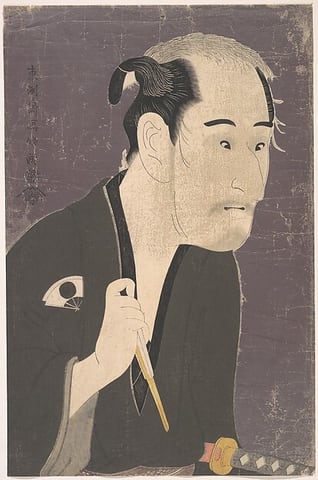
  3. The Actor Onoye Matsusuke as a Ronin, by Tōshūsai Sharaku
    The Actor Onoye Matsusuke as a RoninTōshūsai SharakuCourtesy of The Metropolitan Museum of Art

Section 2, north wall
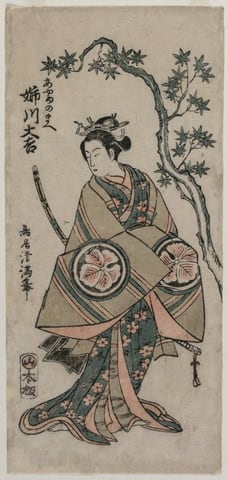
  1. Anekawa Daisuke as Ayame-no-mae, by Torii Kiyomitsu, 1760
    Anekawa Daisuke as Ayame-no-maeTorii Kiyomitsu, 1760Courtesy of the Cleveland Museum of Art
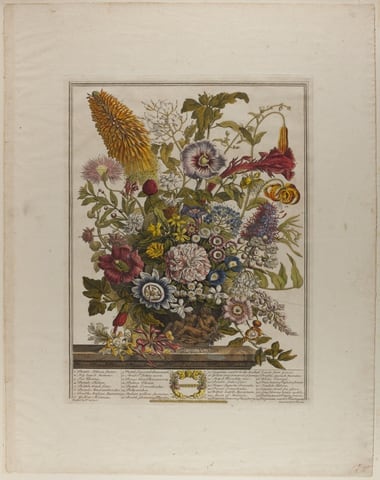
  2. A work made of engraving in black ink with opaque and translucent watercolor on cream laid paper.
    August, from Twelve Months of FlowersHenry Fletcher, n.d.Courtesy of the Art Institute of Chicago
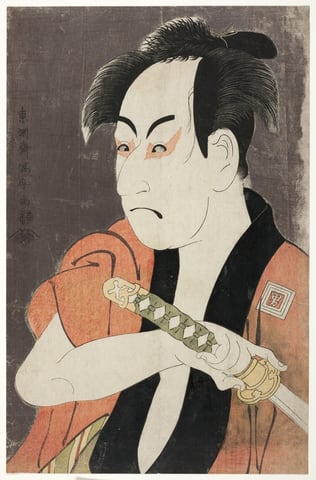
  3. A work made of color woodblock print; oban.
    The actor Ichikawa Omezo as the manservant IppeiTōshūsai Sharaku, 1794Courtesy of the Art Institute of Chicago

Section 3, north wall
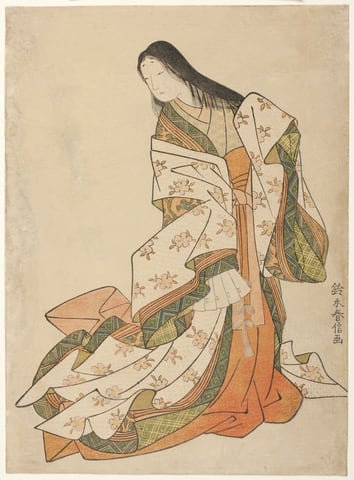
  1. A work made of color woodblock print; chuban.
    The Poetess Ono no KomachiSuzuki Harunobu, Edo period (1615–1868), 1767/68Courtesy of the Art Institute of Chicago

  2. The image shows three figures. Two of them are embracing in the foreground, kneeling on the ground and facing each other in a kiss. The person on the left has curly hair and appears to be wearing a coat-like garment, while the person on the right has long hair tied back and is dressed in a long robe. The third figure emerges from the bushes in the background, with shoulder-length hair, wearing a dress with a sash and a light shawl or scarf over their head. The setting includes tall trees, shrubs, and a structure with columns and arches on the right side, suggesting a garden or courtyard. Rolling hills and cloudy skies are in the distant background.
    The Fortunate RescueDaniel Nikolaus Chodowiecki, 1791Courtesy National Gallery of Art, Washington

Section 3, south wall
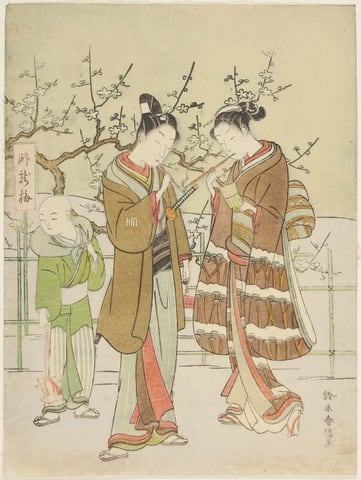
  1. A work made of color woodblock print; chuban.
    Giving a Light by the Garyubai Plum TreeSuzuki Harunobu, c. 1767/68Courtesy of the Art Institute of Chicago
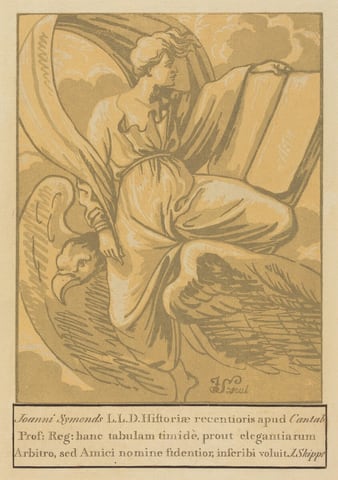
  2. This is a drawing of a winged figure seated on a bird. The image depicts a figure with flowing robes, wings outstretched, holding an open book in one hand. The figure appears to be looking off to the side, with a serene expression. The lower part of the image includes a bird upon which the figure is seated. The bird's head is turned slightly upwards, following the direction in which the figure is gazing. The image is rendered in a warm, monochromatic palette. In the lower section of the image, there is some text, likely Latin.
    Saint John the EvangelistJohn Skippe, 1771Courtesy National Gallery of Art, Washington