Floor plan

Style galleriesPrints of the 18th century
Prints of the 18th century
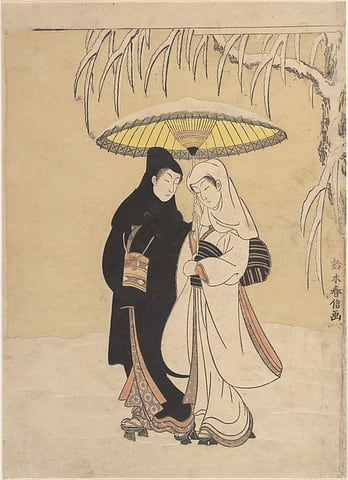
Lovers Walking in the Snow (Crow and Heron), by Suzuki Harunobu, 1764–72
A work made of woodblock print; sumizuri-e, kakemono-e.
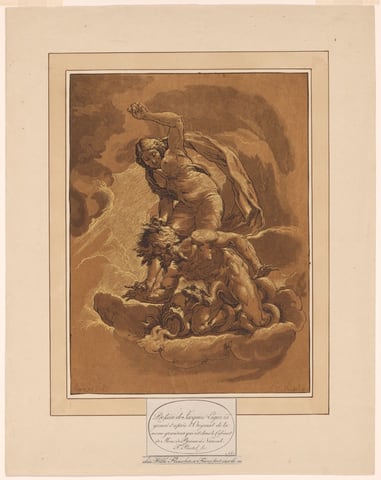
A work made of etching and aquatint, from three plates, in brown and black, with metallic gold, on ivory laid paper.
Chushingura: Act I (from the series Perspective Pictures for The Treasure House of Loyalty), by Kitao Masayoshi, c. 1790s
Perspective Pictures for The Treasure House of Loyalty, by Kitao Masayoshi, c. 1790s

The works in this room are listed below.

Works in this room

Prints made in the 18th century, from every museum.

Section 1, north wall

  1. Lovers Walking in the Snow (Crow and Heron), by Suzuki Harunobu, 1764–72
    Lovers Walking in the Snow (Crow and Heron)Suzuki Harunobu, 1764–72Courtesy of The Metropolitan Museum of Art
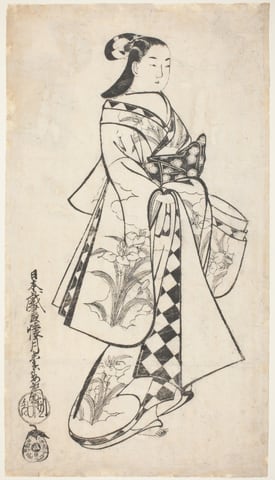
  2. A work made of woodblock print; sumizuri-e, kakemono-e.
    Standing BeautyKaigetsudo Anchi, About 1714Courtesy of the Art Institute of Chicago
  3. A work made of etching and aquatint, from three plates, in brown and black, with metallic gold, on ivory laid paper.
    The Triumph of Truth over EnvyMaria Katharina Prestel, 1781Courtesy of the Art Institute of Chicago

Section 1, south wall

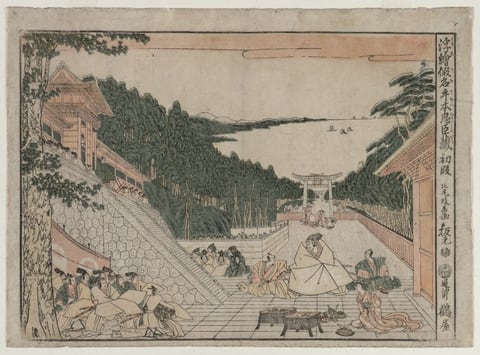
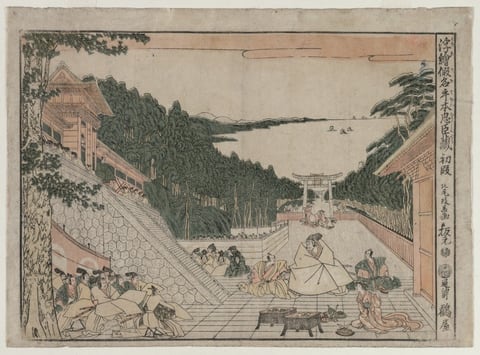
  1. Chushingura: Act I (from the series Perspective Pictures for The Treasure House of Loyalty), by Kitao Masayoshi, c. 1790s
    Chushingura: Act I (from the series Perspective Pictures for The Treasure House of Loyalty)Kitao Masayoshi, c. 1790sCourtesy of the Cleveland Museum of Art
  2. Perspective Pictures for The Treasure House of Loyalty, by Kitao Masayoshi, c. 1790s
    Perspective Pictures for The Treasure House of LoyaltyKitao Masayoshi, c. 1790sCourtesy of the Cleveland Museum of Art

Section 2, south wall
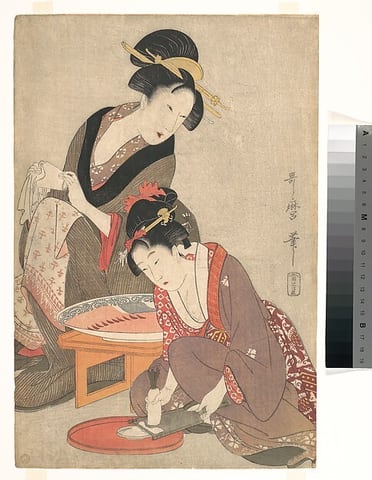
  1. Women Grating Radish for Sashimi, by Kitagawa Utamaro, ca. 1798–99
    Women Grating Radish for SashimiKitagawa Utamaro, ca. 1798–99Courtesy of The Metropolitan Museum of Art
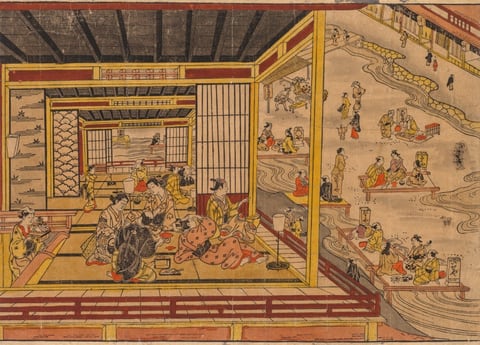
  2. Tea House Beside the Kamo River in Kyoto, by Nishimura Shigenaga (Japanese, 1697(?)-1756), 1740s
    Tea House Beside the Kamo River in KyotoNishimura Shigenaga (Japanese, 1697(?)-1756), 1740sCourtesy of the Cleveland Museum of Art
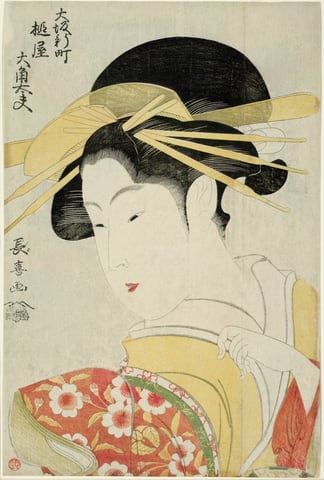
  3. A work made of color woodblock print; oban.
    Osumi, a Tayu of the Tsuchiya in the Shinmachi Quarter in OsakaEishosai Choki, c. 1796/97Courtesy of the Art Institute of Chicago

Section 2, north wall
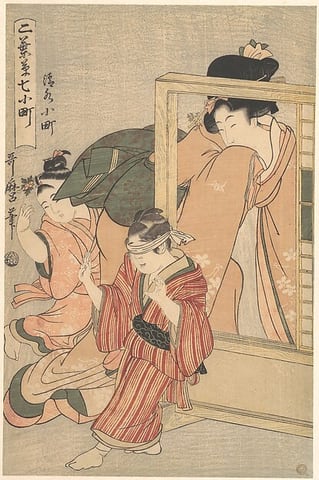
  1. Kiyomizu Komachi, from the series Futabagusa nana Komachi, by Kitagawa Utamaro, 1790s
    Kiyomizu Komachi, from the series Futabagusa nana KomachiKitagawa Utamaro, 1790sCourtesy of The Metropolitan Museum of Art
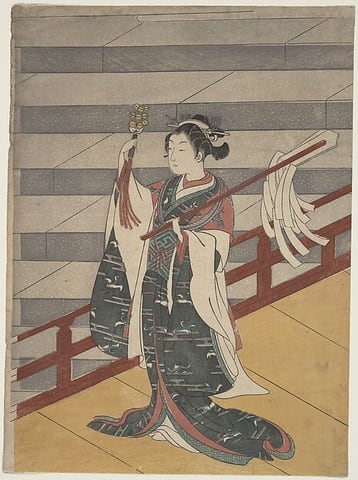
  2. Girl on Balcony above Stone Stairway, by Suzuki Harunobu, ca. 1768
    Girl on Balcony above Stone StairwaySuzuki Harunobu, ca. 1768Courtesy of The Metropolitan Museum of Art

Section 3, north wall
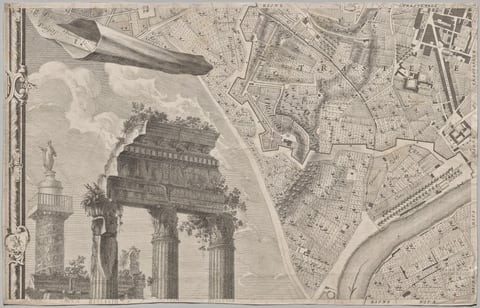
  1. Nuova pianta di Roma data in luce da Giambattista Nolli l’anno MDCCXLVII, known as La Pianta Grande di Roma, by Giovanni Battista Nolli, 1748
    Nuova pianta di Roma data in luce da Giambattista Nolli l’anno MDCCXLVII, known as La Pianta Grande di RomaGiovanni Battista Nolli, 1748Courtesy of the Cleveland Museum of Art
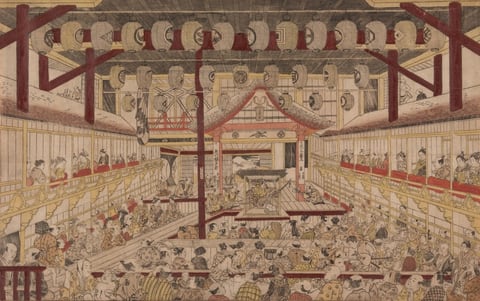
  2. Perspective View of the Interior of the Nakamura Theater with Ichikawa Ebizo II as Yanone Goro, by Okumura Masanobu, 1740
    Perspective View of the Interior of the Nakamura Theater with Ichikawa Ebizo II as Yanone GoroOkumura Masanobu, 1740Courtesy of the Cleveland Museum of Art

Section 3, south wall
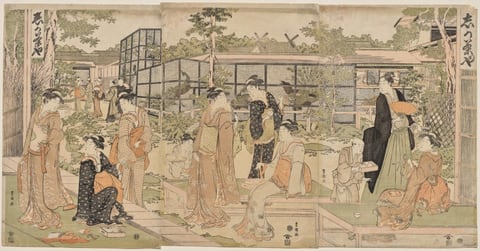
  1. The Shika Teahouse, by Utagawa Toyokuni, early 1790s
    The Shika TeahouseUtagawa Toyokuni, early 1790sCourtesy of the Cleveland Museum of Art
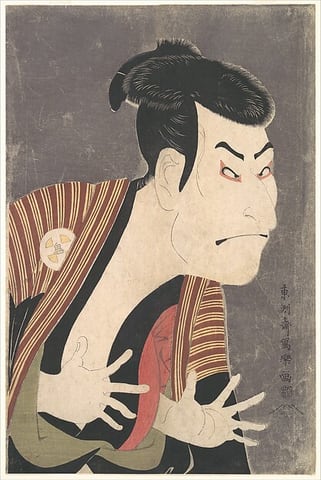
  2. Kabuki Actor Ōtani Oniji III as Yakko Edobei, by Tōshūsai Sharaku, 1794
    Kabuki Actor Ōtani Oniji III as Yakko EdobeiTōshūsai Sharaku, 1794Courtesy of The Metropolitan Museum of Art

Section 4, south wall
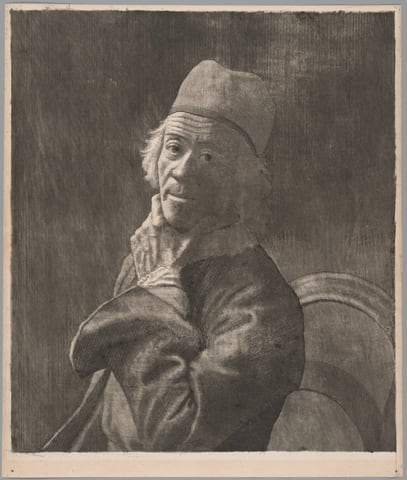
  1. A work made of etching, roulette, and mezzotint in black on cream laid paper.
    The Large Self-PortraitJean Etienne Liotard, 1778/81Courtesy of the Art Institute of Chicago
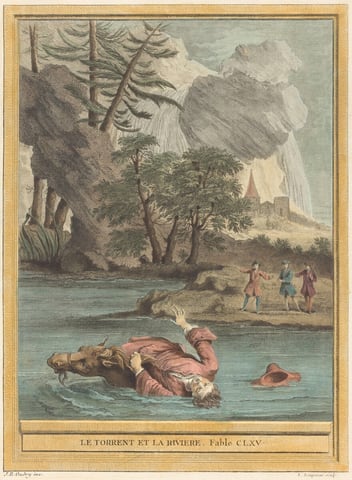
  2. The image shows a man in a red coat in a river, holding on to a horse. A hat floats nearby. Three figures in 18th-century clothing stand on a rocky riverbank looking concerned. In the background, there are trees, a castle-like structure, and large clouds. The brushstrokes are detailed, capturing movement and textures. The color palette includes muted tones like earthy browns, greens, soft blue, and subtle reds.
    Le torrent et la riviere (The Torrent and theRiver)Louis-Simon Lempereur, published 1756Courtesy National Gallery of Art, Washington