Floor plan

Style galleriesPrints of the 18th century

Prints of the 18th century
The image shows an illustration of a rocky terrain with towering stone formations and dense foliage. The sky is textured and the scene is created using an etching technique with intricate linework. There are two figures in the scene, one appearing to climb or position near a rock, while the other observes. The color palette is monochromatic, using black on a white background to depict depth and dimension in the artwork.
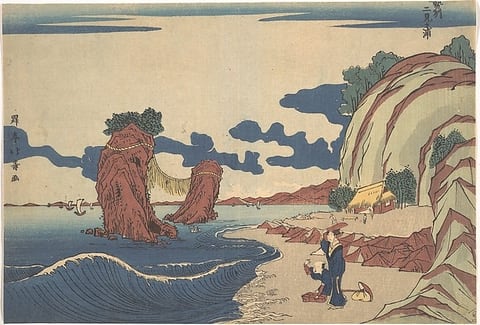
View of Futami Beach at Ise, by Shōtei Hokuju, ca. 1810–1820
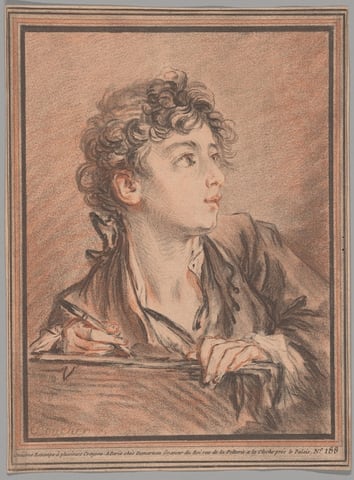
A work made of crayon manner engraving in red and black on cream laid paper.
A work made of color woodblock print.
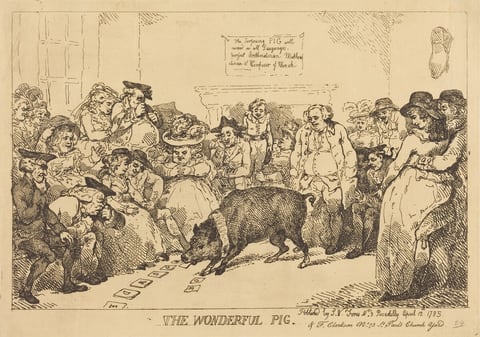
This is a drawing showing a pig performing a trick for an audience. It depicts a group of people watching the pig interacting with cards on the floor. The detailed image shows the varied facial expressions of the audience members. There is text at the top of the image suggesting the pig has a unique ability, possibly related to languages. The drawing captures a moment of entertainment in a satirical style, with lines and cross-hatching used to emphasize the humor.
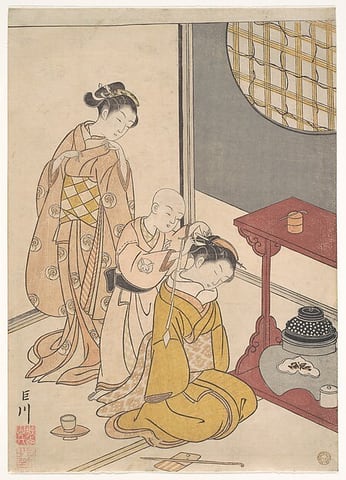
Night Rain at the Double-Shelf Stand, from the series Eight Parlor Views (Zashiki hakkei), by Suzuki Harunobu, ca. 1766

The works in this room are listed below.

Works in this room

Prints made in the 18th century, from every museum.

Section 1, north wall

  1. The image shows an illustration of a rocky terrain with towering stone formations and dense foliage. The sky is textured and the scene is created using an etching technique with intricate linework. There are two figures in the scene, one appearing to climb or position near a rock, while the other observes. The color palette is monochromatic, using black on a white background to depict depth and dimension in the artwork.
    Landscape with a Fallen Tree (Paysage à l'arbre cassé)Hubert Robert, 1764Courtesy National Gallery of Art, Washington
  2. View of Futami Beach at Ise, by Shōtei Hokuju, ca. 1810–1820
    View of Futami Beach at IseShōtei Hokuju, ca. 1810–1820Courtesy of The Metropolitan Museum of Art
  3. A work made of crayon manner engraving in red and black on cream laid paper.
    The Young DraftsmanGilles Demarteau, 1750/70Courtesy of the Art Institute of Chicago

Section 1, south wall

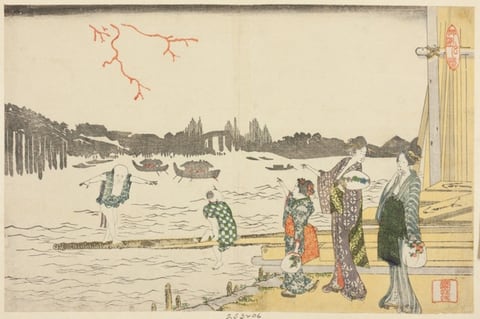
  1. A work made of color woodblock print.
    Women and Children Viewing the FireworksKatsushika Hokusai, c. 1798Courtesy of the Art Institute of Chicago
  2. This is a drawing showing a pig performing a trick for an audience. It depicts a group of people watching the pig interacting with cards on the floor. The detailed image shows the varied facial expressions of the audience members. There is text at the top of the image suggesting the pig has a unique ability, possibly related to languages. The drawing captures a moment of entertainment in a satirical style, with lines and cross-hatching used to emphasize the humor.
    The Wonderful PigThomas Rowlandson, 1785Courtesy National Gallery of Art, Washington
  3. Night Rain at the Double-Shelf Stand, from the series Eight Parlor Views (Zashiki hakkei), by Suzuki Harunobu, ca. 1766
    Night Rain at the Double-Shelf Stand, from the series Eight Parlor Views (Zashiki hakkei)Suzuki Harunobu, ca. 1766Courtesy of The Metropolitan Museum of Art

Section 2, south wall
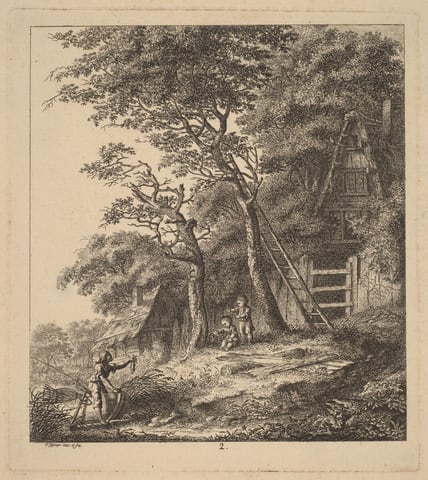
  1. The image shows a rustic scene with a house, trees, and a figure washing near a stream. Two children stand in the middle distance next to a ladder. In the background are two thatched houses among trees. The drawing style is detailed with fine lines and cross-hatching, creating texture. The color palette is monochromatic in shades of black and gray, emphasizing light and shadow.
    A Fisherman and Two Children in a Landscape with Thatched CottagesSalomon Gessner, 1764Courtesy National Gallery of Art, Washington
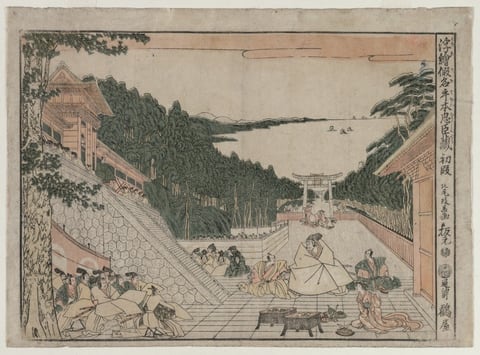
  2. Perspective Pictures for The Treasure House of Loyalty, by Kitao Masayoshi, c. 1790s
    Perspective Pictures for The Treasure House of LoyaltyKitao Masayoshi, c. 1790sCourtesy of the Cleveland Museum of Art
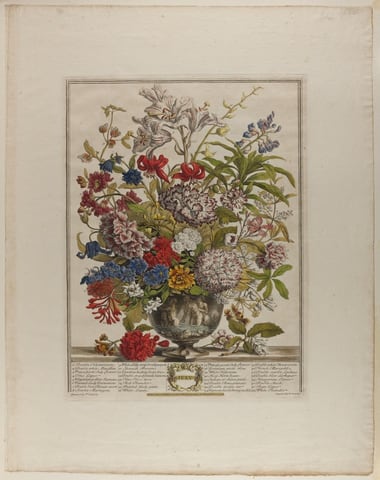
  3. A work made of engraving in black ink with opaque and translucent watercolor on cream laid paper.
    July, from Twelve Months of FlowersHenry Fletcher, n.d.Courtesy of the Art Institute of Chicago

Section 2, north wall
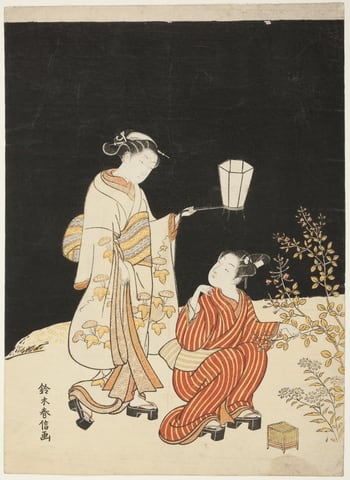
  1. A work made of color woodblock print; chūban.
    Searching for FirefliesSuzuki Harunobu, 1768Courtesy of the Art Institute of Chicago
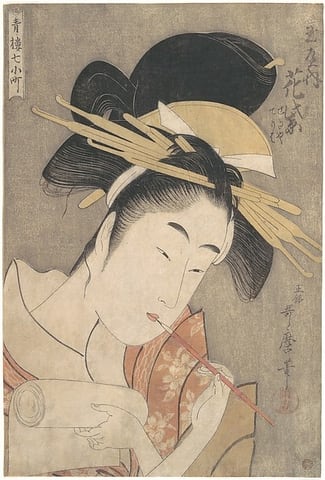
  2. “Hanamurasaki of the Tamaya,” from the series Seven Komachi of the Pleasure Quarters (Seirō Nana Komachi), by Kitagawa Utamaro, ca. 1790
    “Hanamurasaki of the Tamaya,” from the series Seven Komachi of the Pleasure Quarters (Seirō Nana Komachi)Kitagawa Utamaro, ca. 1790Courtesy of The Metropolitan Museum of Art
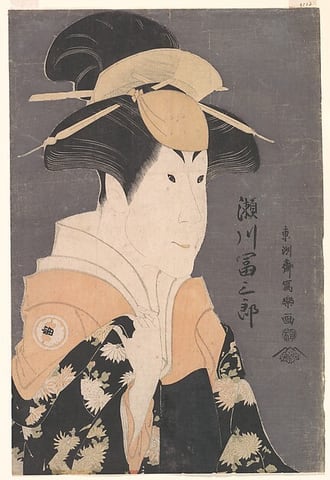
  3. Segawa Tomisaburō II as Yadorigi in the Play "Hana Ayame Bunroku Soga", by Tōshūsai Sharaku, 1794
    Segawa Tomisaburō II as Yadorigi in the Play "Hana Ayame Bunroku Soga"Tōshūsai Sharaku, 1794Courtesy of The Metropolitan Museum of Art

Section 3, north wall
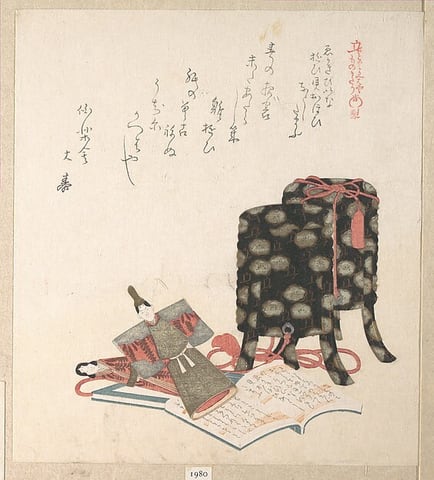
  1. The Doll Festival, Third Day of the Third Month, by Kubo Shunman, 19th century
    The Doll Festival, Third Day of the Third MonthKubo Shunman, 19th centuryCourtesy of The Metropolitan Museum of Art
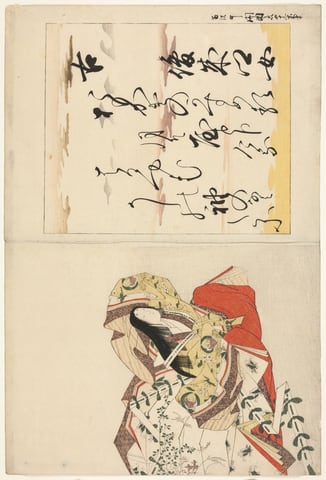
  2. A work made of page from a color woodblock-printed volume.
    The Poetess Shunzei no Musume, from the series The Thirty-six Immortal Women Poets (Nishikizuri onna sanjurokkasen)Chôbunsai Eishi, Edo period (1615–1868), 1801Courtesy of the Art Institute of Chicago

Section 3, south wall
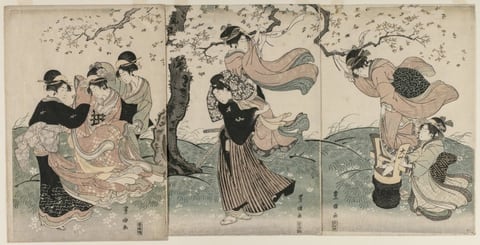
  1. Cherry Blossoms in the Wind, by Utagawa Toyokuni, late 1790s
    Cherry Blossoms in the WindUtagawa Toyokuni, late 1790sCourtesy of the Cleveland Museum of Art
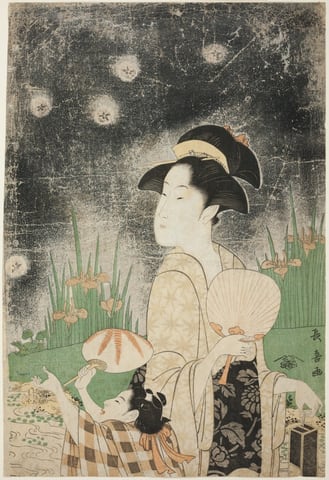
  2. A work made of color woodblock print; ōban.
    Catching FirefliesEishosai Choki, c.1790sCourtesy of the Art Institute of Chicago