Floor plan

Style galleriesPrints of the 18th century
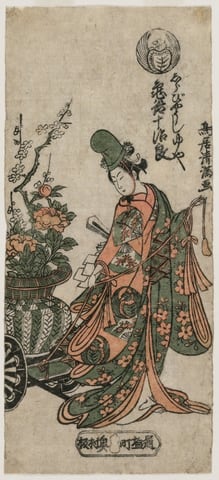
Prints of the 18th century
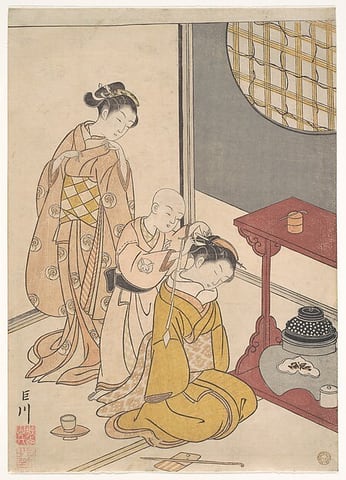
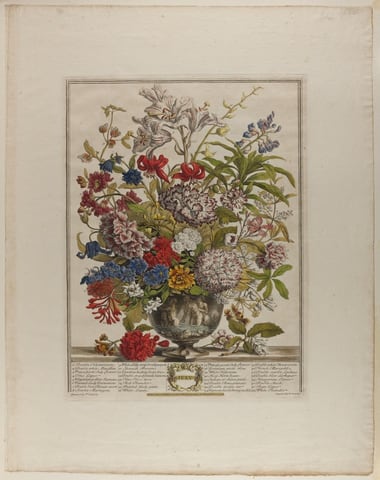
A work made of engraving in black ink with opaque and translucent watercolor on cream laid paper.
Kametani Jujiro as the Shirabyoshi Dancer Yuya, by Torii Kiyomitsu, c. early 1760s
Night Rain at the Double-Shelf Stand, from the series Eight Parlor Views (Zashiki hakkei), by Suzuki Harunobu, ca. 1766
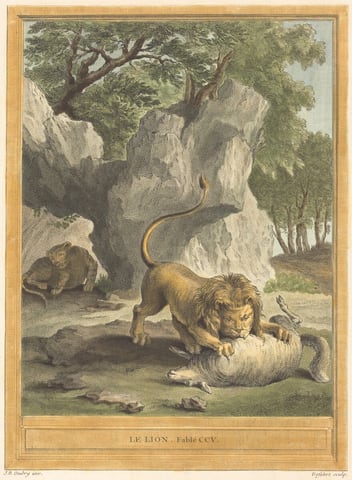
This is a drawing of a lion in a forested rocky landscape. The lion is seen standing over a defeated animal. In the background, a forest with dense trees frames the scene. One monkey is visible among the rocks watching the lion. The setting conveys a wild, rugged terrain with rocky formations and scattered vegetation. Light and shadow emphasize textures in the lion's mane and the surrounding rocks. The composition focuses on the lion and its prey.
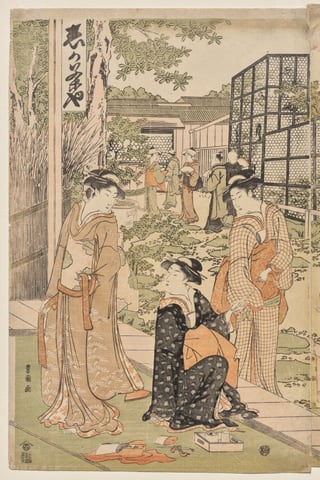
The Shika Teahouse, by Utagawa Toyokuni, early 1790s
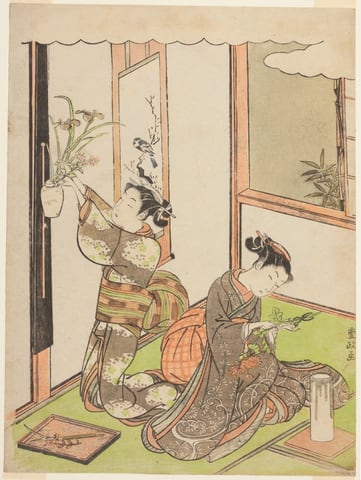
A work made of color woodblock print; chuban.

The works in this room are listed below.

Works in this room

Prints made in the 18th century, from every museum.

Section 1, north wall

  1. A work made of engraving in black ink with opaque and translucent watercolor on cream laid paper.
    July, from Twelve Months of FlowersHenry Fletcher, n.d.Courtesy of the Art Institute of Chicago
  2. Kametani Jujiro as the Shirabyoshi Dancer Yuya, by Torii Kiyomitsu, c. early 1760s
    Kametani Jujiro as the Shirabyoshi Dancer YuyaTorii Kiyomitsu, c. early 1760sCourtesy of the Cleveland Museum of Art
  3. Night Rain at the Double-Shelf Stand, from the series Eight Parlor Views (Zashiki hakkei), by Suzuki Harunobu, ca. 1766
    Night Rain at the Double-Shelf Stand, from the series Eight Parlor Views (Zashiki hakkei)Suzuki Harunobu, ca. 1766Courtesy of The Metropolitan Museum of Art

Section 1, south wall

  1. This is a drawing of a lion in a forested rocky landscape. The lion is seen standing over a defeated animal. In the background, a forest with dense trees frames the scene. One monkey is visible among the rocks watching the lion. The setting conveys a wild, rugged terrain with rocky formations and scattered vegetation. Light and shadow emphasize textures in the lion's mane and the surrounding rocks. The composition focuses on the lion and its prey.
    Le lion (The Lion)A.-J. de Fehrt, published 1759Courtesy National Gallery of Art, Washington
  2. The Shika Teahouse, by Utagawa Toyokuni, early 1790s
    The Shika TeahouseUtagawa Toyokuni, early 1790sCourtesy of the Cleveland Museum of Art
  3. A work made of color woodblock print; chuban.
    Flower ArrangingKitao Shigemasa, c. 1769Courtesy of the Art Institute of Chicago

Section 2, south wall
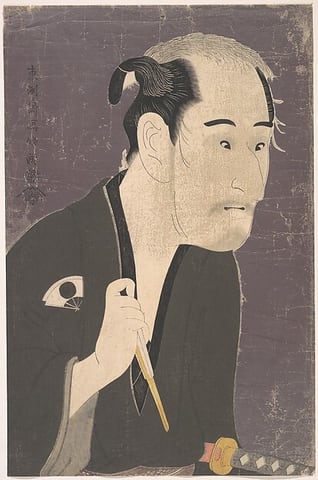
  1. The Actor Onoye Matsusuke as a Ronin, by Tōshūsai Sharaku
    The Actor Onoye Matsusuke as a RoninTōshūsai SharakuCourtesy of The Metropolitan Museum of Art
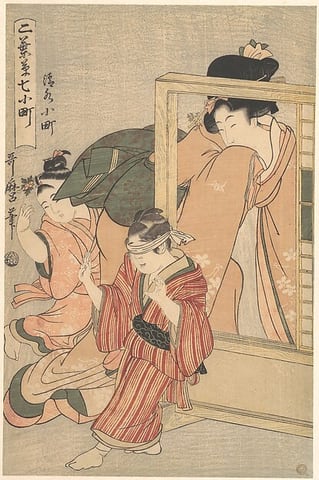
  2. Kiyomizu Komachi, from the series Futabagusa nana Komachi, by Kitagawa Utamaro, 1790s
    Kiyomizu Komachi, from the series Futabagusa nana KomachiKitagawa Utamaro, 1790sCourtesy of The Metropolitan Museum of Art
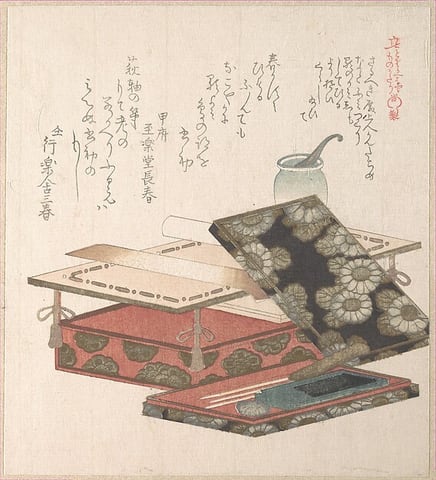
  3. Table and Writing Set, by Kubo Shunman, 19th century
    Table and Writing SetKubo Shunman, 19th centuryCourtesy of The Metropolitan Museum of Art

Section 2, north wall
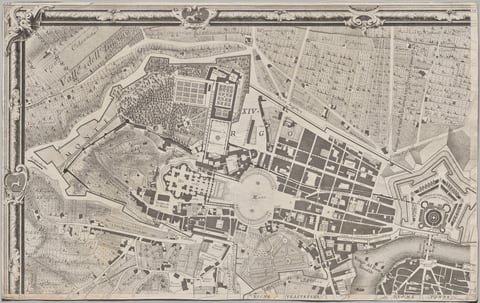
  1. Nuova pianta di Roma data in luce da Giambattista Nolli l’anno MDCCXLVII, known as La Pianta Grande di Roma, by Giovanni Battista Nolli, 1748
    Nuova pianta di Roma data in luce da Giambattista Nolli l’anno MDCCXLVII, known as La Pianta Grande di RomaGiovanni Battista Nolli, 1748Courtesy of the Cleveland Museum of Art
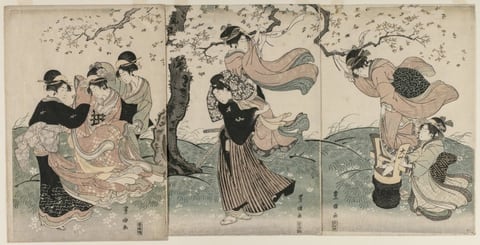
  2. Cherry Blossoms in the Wind, by Utagawa Toyokuni, late 1790s
    Cherry Blossoms in the WindUtagawa Toyokuni, late 1790sCourtesy of the Cleveland Museum of Art

Section 3, north wall
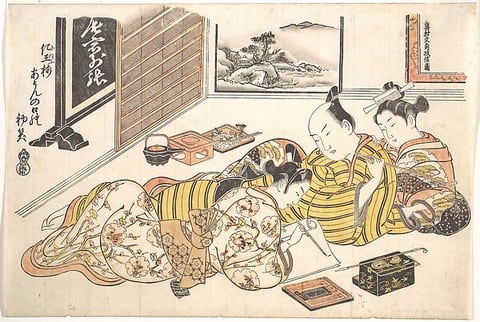
  1. Plate from the Erotic Book Mounds of Dyed Colors: A Pattern Book for the Boudoir (Someiro no yama neya no hinagata), First Month, by Okumura Masanobu, ca. 1736–44
    Plate from the Erotic Book Mounds of Dyed Colors: A Pattern Book for the Boudoir (Someiro no yama neya no hinagata), First MonthOkumura Masanobu, ca. 1736–44Courtesy of The Metropolitan Museum of Art
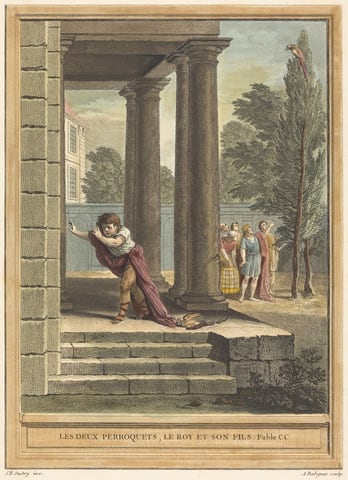
  2. This painting depicts a classical architectural scene with a bird and multiple individuals. It is done in the style of Jean-Baptiste Oudry. The image includes a large building with stone columns and stairs. A parrot is perched on a tree, catching attention with its colorful feathers. In the foreground, a person in classical clothing appears to be in motion. In the background, a group of people are gathered with varied expressions and gestures directed towards the person in the foreground. The architectural elements and foliage add depth and context to the scene.
    Les deux perroquets, le roi et son fils (Two Parrots, the King, and His Son)Antoine Radigues, published 1759Courtesy National Gallery of Art, Washington
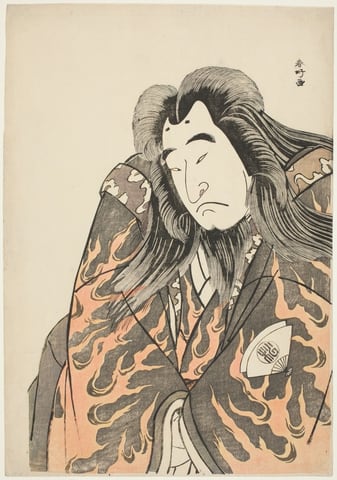
  3. A work made of color woodblock print.
    Actor Onoe Matsusuke I as Retired Emperor SutokuKatsukawa Shunkо̄, About 1780Courtesy of the Art Institute of Chicago

Section 3, south wall
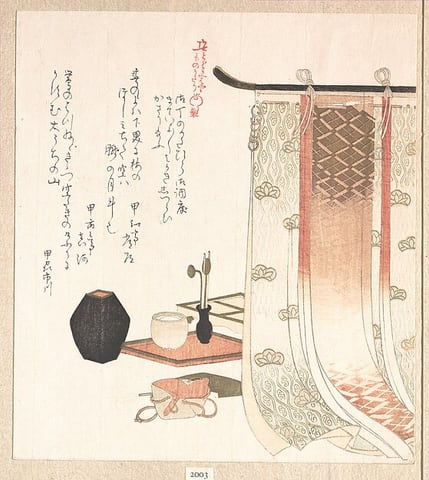
  1. Screen and Utensils for the Incense Ceremony, by Kubo Shunman, 19th century
    Screen and Utensils for the Incense CeremonyKubo Shunman, 19th centuryCourtesy of The Metropolitan Museum of Art
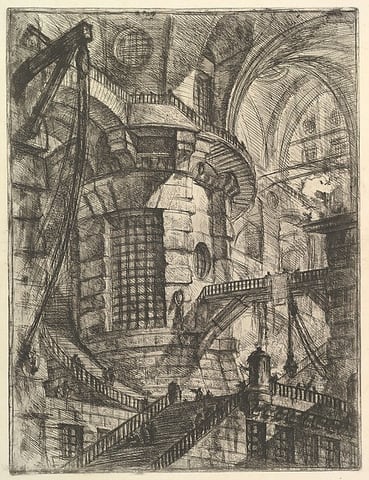
  2. The Round Tower, from "Carceri d'invenzione" (Imaginary Prisons), by Giovanni Battista Piranesi, ca. 1749–50
    The Round Tower, from "Carceri d'invenzione" (Imaginary Prisons)Giovanni Battista Piranesi, ca. 1749–50Courtesy of The Metropolitan Museum of Art