Floor plan

Style galleriesPrints of the 18th century
Prints of the 18th century
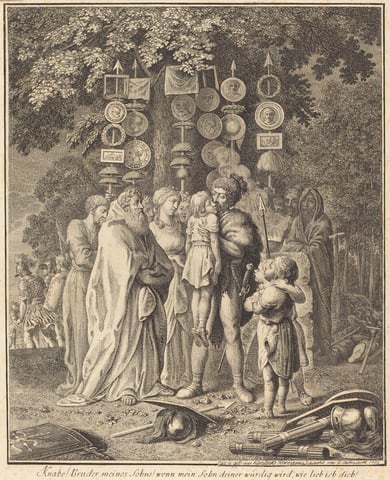
The image depicts a group of people in varying poses and outfits. A central figure, possibly a child, is being held up by a man. Those around them are positioned differently, some standing closely. The figures have detailed faces and wear garments resembling classical attire. Shields and banners decorated with symbols are present in the background. Armor and helmets are scattered on the ground. Trees and a group of people in the distance are part of the background.
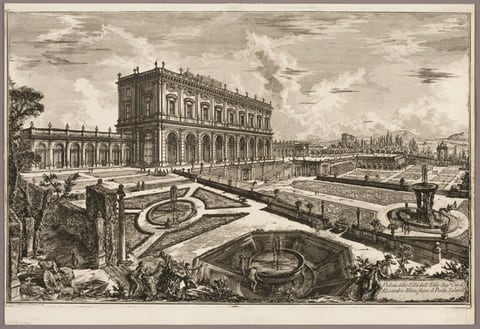
A work made of etching on ivory laid paper.
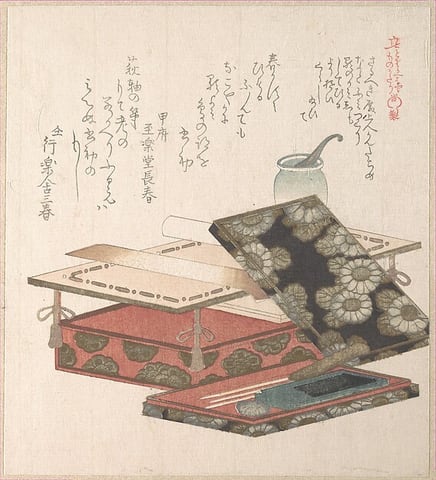
Table and Writing Set, by Kubo Shunman, 19th century
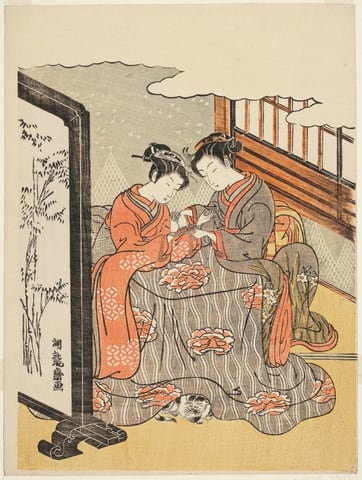
A work made of color woodblock print; chuban.
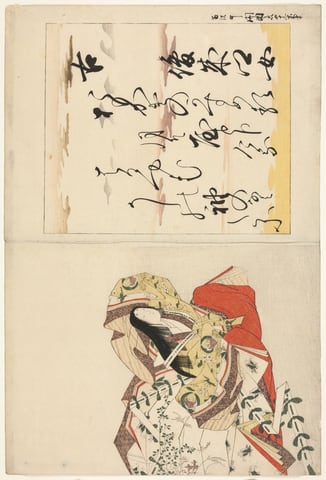
A work made of page from a color woodblock-printed volume.

The works in this room are listed below.

Works in this room

Prints made in the 18th century, from every museum.

Section 1, north wall

  1. The image depicts a group of people in varying poses and outfits. A central figure, possibly a child, is being held up by a man. Those around them are positioned differently, some standing closely. The figures have detailed faces and wear garments resembling classical attire. Shields and banners decorated with symbols are present in the background. Armor and helmets are scattered on the ground. Trees and a group of people in the distance are part of the background.
    Ancient TeutonsDaniel Nikolaus Chodowiecki, 1782Courtesy National Gallery of Art, Washington
  2. A work made of etching on ivory laid paper.
    View of the Villa of His Eminence Cardinal Alessandro Albani, outside Porta Salaria, from Views of RomeGiovanni Battista Piranesi, 1769, published 1800–07Courtesy of the Art Institute of Chicago

Section 1, south wall

  1. Table and Writing Set, by Kubo Shunman, 19th century
    Table and Writing SetKubo Shunman, 19th centuryCourtesy of The Metropolitan Museum of Art
  2. A work made of color woodblock print; chuban.
    Two Young Women Playing Cat's CradleIsoda Koryusai, c. 1769Courtesy of the Art Institute of Chicago
  3. A work made of page from a color woodblock-printed volume.
    The Poetess Shunzei no Musume, from the series The Thirty-six Immortal Women Poets (Nishikizuri onna sanjurokkasen)Chôbunsai Eishi, Edo period (1615–1868), 1801Courtesy of the Art Institute of Chicago

Section 2, south wall
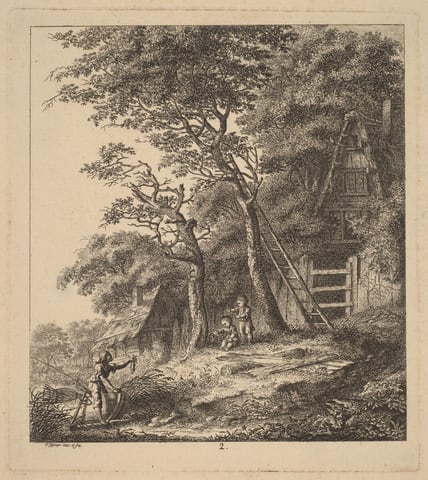
  1. The image shows a rustic scene with a house, trees, and a figure washing near a stream. Two children stand in the middle distance next to a ladder. In the background are two thatched houses among trees. The drawing style is detailed with fine lines and cross-hatching, creating texture. The color palette is monochromatic in shades of black and gray, emphasizing light and shadow.
    A Fisherman and Two Children in a Landscape with Thatched CottagesSalomon Gessner, 1764Courtesy National Gallery of Art, Washington
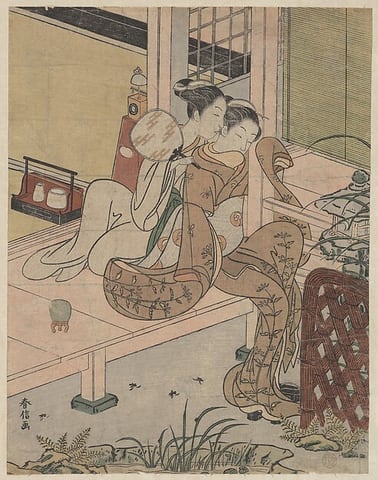
  2. The Gossips, by Suzuki Harunobu, ca. 1767
    The GossipsSuzuki Harunobu, ca. 1767Courtesy of The Metropolitan Museum of Art
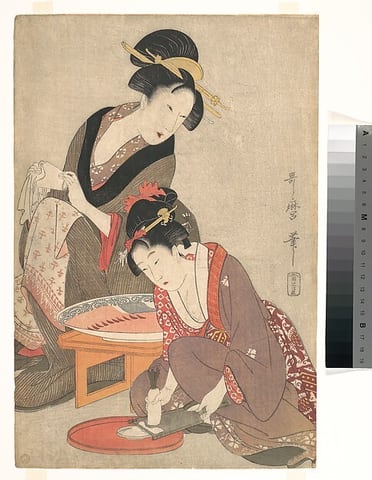
  3. Women Grating Radish for Sashimi, by Kitagawa Utamaro, ca. 1798–99
    Women Grating Radish for SashimiKitagawa Utamaro, ca. 1798–99Courtesy of The Metropolitan Museum of Art

Section 2, north wall
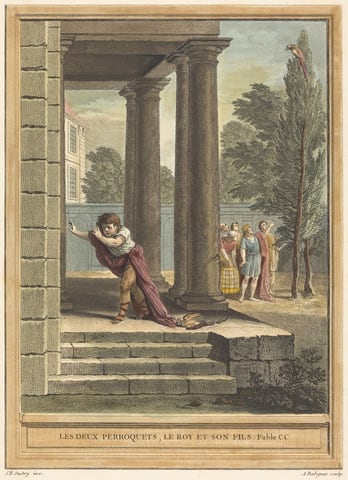
  1. This painting depicts a classical architectural scene with a bird and multiple individuals. It is done in the style of Jean-Baptiste Oudry. The image includes a large building with stone columns and stairs. A parrot is perched on a tree, catching attention with its colorful feathers. In the foreground, a person in classical clothing appears to be in motion. In the background, a group of people are gathered with varied expressions and gestures directed towards the person in the foreground. The architectural elements and foliage add depth and context to the scene.
    Les deux perroquets, le roi et son fils (Two Parrots, the King, and His Son)Antoine Radigues, published 1759Courtesy National Gallery of Art, Washington

  2. A work made of etching with roulette in black on ivory wove paper.
    The Forest of RochecardonJean-Michel Grobon, 1800Courtesy of the Art Institute of Chicago

Section 3, north wall

  1. The image shows three figures. Two of them are embracing in the foreground, kneeling on the ground and facing each other in a kiss. The person on the left has curly hair and appears to be wearing a coat-like garment, while the person on the right has long hair tied back and is dressed in a long robe. The third figure emerges from the bushes in the background, with shoulder-length hair, wearing a dress with a sash and a light shawl or scarf over their head. The setting includes tall trees, shrubs, and a structure with columns and arches on the right side, suggesting a garden or courtyard. Rolling hills and cloudy skies are in the distant background.
    The Fortunate RescueDaniel Nikolaus Chodowiecki, 1791Courtesy National Gallery of Art, Washington
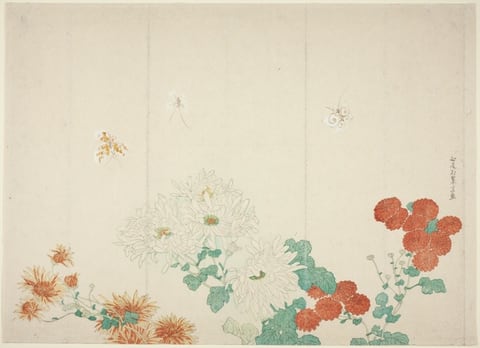
  2. A work made of color woodblock print; surimono.
    Three Types of ChrysanthemumsKitao Shigemasa, c. 1790Courtesy of the Art Institute of Chicago

Section 3, south wall
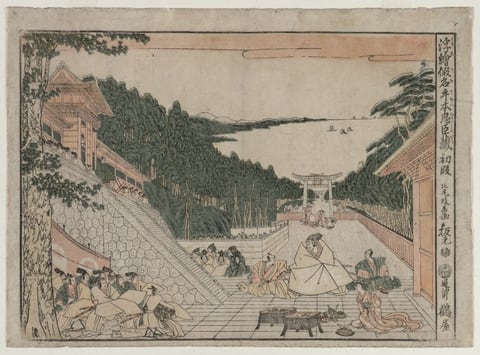
  1. Chushingura: Act I (from the series Perspective Pictures for The Treasure House of Loyalty), by Kitao Masayoshi, c. 1790s
    Chushingura: Act I (from the series Perspective Pictures for The Treasure House of Loyalty)Kitao Masayoshi, c. 1790sCourtesy of the Cleveland Museum of Art
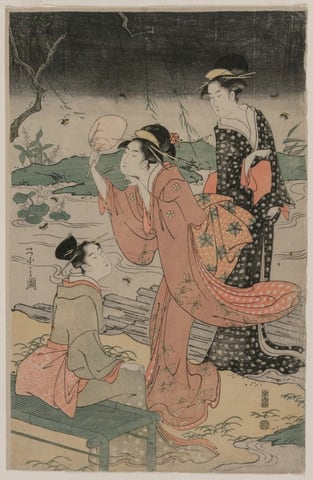
  2. Women Beside a Stream Chasing Fireflies, by Chôbunsai Eishi, c. 1796–97
    Women Beside a Stream Chasing FirefliesChôbunsai Eishi, c. 1796–97Courtesy of the Cleveland Museum of Art

Section 4, south wall
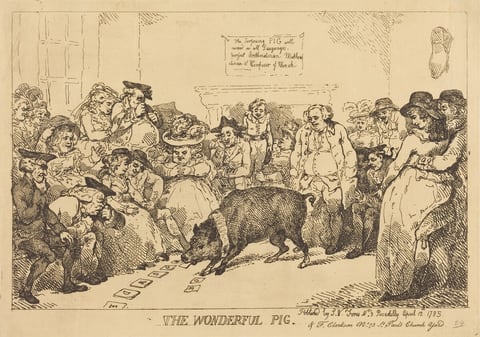
  1. This is a drawing showing a pig performing a trick for an audience. It depicts a group of people watching the pig interacting with cards on the floor. The detailed image shows the varied facial expressions of the audience members. There is text at the top of the image suggesting the pig has a unique ability, possibly related to languages. The drawing captures a moment of entertainment in a satirical style, with lines and cross-hatching used to emphasize the humor.
    The Wonderful PigThomas Rowlandson, 1785Courtesy National Gallery of Art, Washington
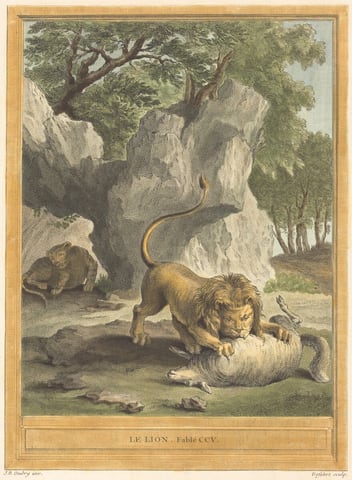
  2. This is a drawing of a lion in a forested rocky landscape. The lion is seen standing over a defeated animal. In the background, a forest with dense trees frames the scene. One monkey is visible among the rocks watching the lion. The setting conveys a wild, rugged terrain with rocky formations and scattered vegetation. Light and shadow emphasize textures in the lion's mane and the surrounding rocks. The composition focuses on the lion and its prey.
    Le lion (The Lion)A.-J. de Fehrt, published 1759Courtesy National Gallery of Art, Washington