Floor plan

Style galleriesPrints of the 18th century
Prints of the 18th century
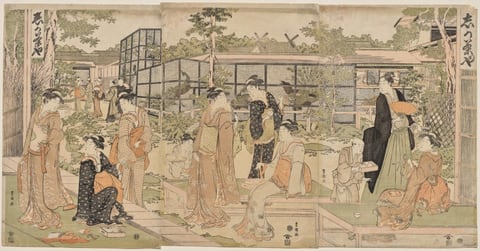
The Shika Teahouse, by Utagawa Toyokuni, early 1790s
A work made of color woodblock print; oban triptych.
Two Girls on a Veranda beside a Stream with the Moon, by Suzuki Harunobu
A work made of color woodblock prints; oban triptych.
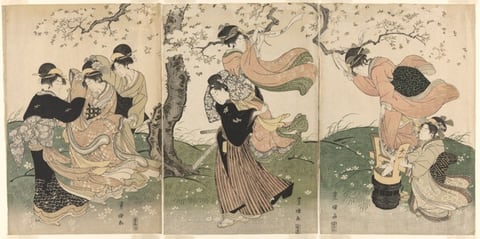
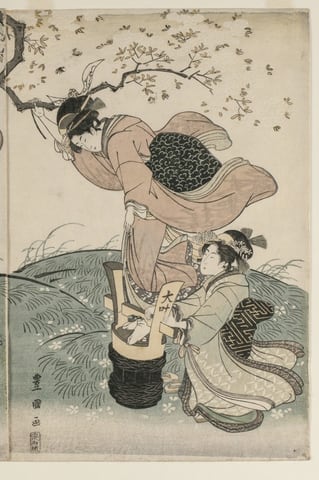
Cherry Blossoms in the Wind, by Utagawa Toyokuni, late 1790s

The works in this room are listed below.

Works in this room

Prints made in the 18th century, from every museum.

Section 1, north wall

  1. The Shika Teahouse, by Utagawa Toyokuni, early 1790s
    The Shika TeahouseUtagawa Toyokuni, early 1790sCourtesy of the Cleveland Museum of Art
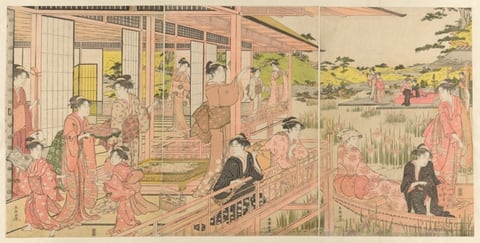
  2. A work made of color woodblock print; oban triptych.
    Iris GardenKatsukawa Shunchô, c. 1781/89Courtesy of the Art Institute of Chicago
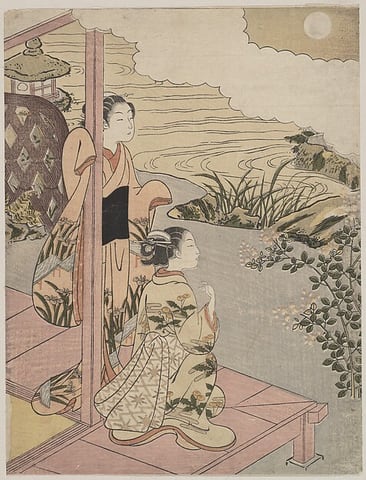
  3. Two Girls on a Veranda beside a Stream with the Moon, by Suzuki Harunobu
    Two Girls on a Veranda beside a Stream with the MoonSuzuki HarunobuCourtesy of The Metropolitan Museum of Art

Section 1, south wall

  1. A work made of color woodblock prints; oban triptych.
    A Windy Day under the Cherry TreesUtagawa Toyokuni, c. 1797Courtesy of the Art Institute of Chicago
  2. Cherry Blossoms in the Wind, by Utagawa Toyokuni, late 1790s
    Cherry Blossoms in the WindUtagawa Toyokuni, late 1790sCourtesy of the Cleveland Museum of Art

Section 2, south wall
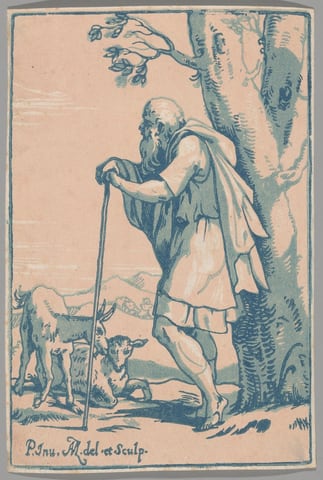
  1. A work made of chiaroscuro woodcut, from three blocks in pink, dark blue, and light blue, on cream laid paper.
    The Old ShepherdConte Antonio Maria Zanetti, the Elder, 1722Courtesy of the Art Institute of Chicago
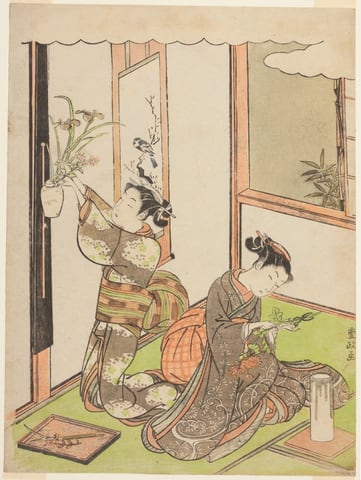
  2. A work made of color woodblock print; chuban.
    Flower ArrangingKitao Shigemasa, c. 1769Courtesy of the Art Institute of Chicago
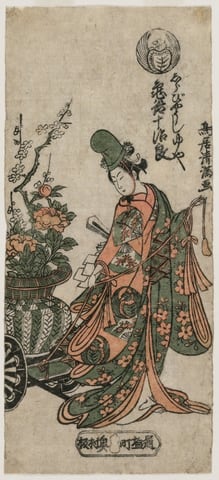
  3. Kametani Jujiro as the Shirabyoshi Dancer Yuya, by Torii Kiyomitsu, c. early 1760s
    Kametani Jujiro as the Shirabyoshi Dancer YuyaTorii Kiyomitsu, c. early 1760sCourtesy of the Cleveland Museum of Art

Section 2, north wall
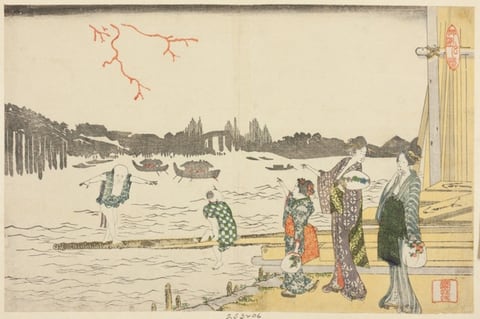
  1. A work made of color woodblock print.
    Women and Children Viewing the FireworksKatsushika Hokusai, c. 1798Courtesy of the Art Institute of Chicago
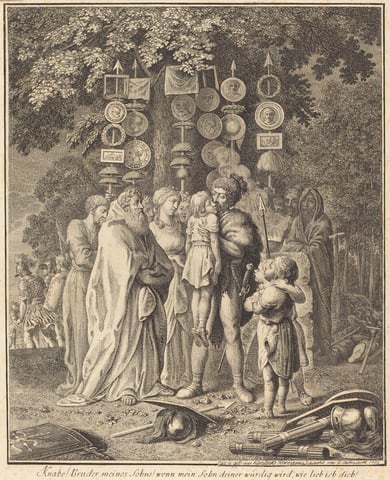
  2. The image depicts a group of people in varying poses and outfits. A central figure, possibly a child, is being held up by a man. Those around them are positioned differently, some standing closely. The figures have detailed faces and wear garments resembling classical attire. Shields and banners decorated with symbols are present in the background. Armor and helmets are scattered on the ground. Trees and a group of people in the distance are part of the background.
    Ancient TeutonsDaniel Nikolaus Chodowiecki, 1782Courtesy National Gallery of Art, Washington

Section 3, north wall
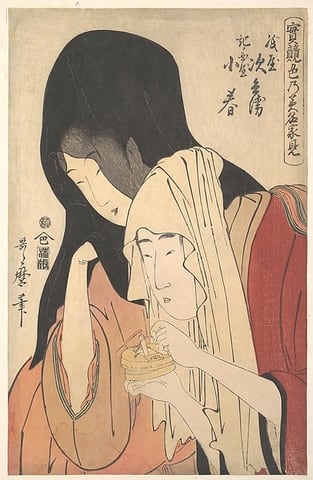
  1. Jihei of Kamiya Eloping with the Geisha Koharu of Kinokuniya, from the series “True Feelings Compared: The Founts of Love” (Jitsu kurabe iro no Minakami), by Kitagawa Utamaro, ca. 1798–99
    Jihei of Kamiya Eloping with the Geisha Koharu of Kinokuniya, from the series “True Feelings Compared: The Founts of Love” (Jitsu kurabe iro no Minakami)Kitagawa Utamaro, ca. 1798–99Courtesy of The Metropolitan Museum of Art
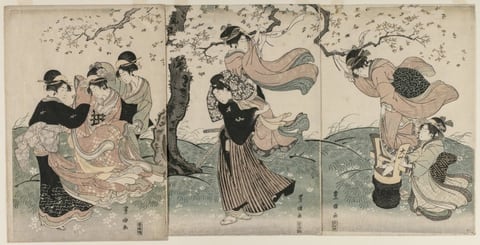
  2. Cherry Blossoms in the Wind, by Utagawa Toyokuni, late 1790s
    Cherry Blossoms in the WindUtagawa Toyokuni, late 1790sCourtesy of the Cleveland Museum of Art

Section 3, south wall
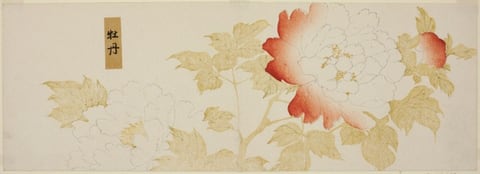
  1. A work made of color woodblock print; surimono.
    PeoniesKitagawa Utamaro, n.d.Courtesy of the Art Institute of Chicago
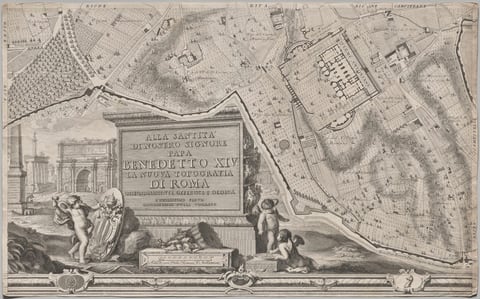
  2. Nuova pianta di Roma data in luce da Giambattista Nolli l’anno MDCCXLVII, known as La Pianta Grande di Roma, by Giovanni Battista Nolli, 1748
    Nuova pianta di Roma data in luce da Giambattista Nolli l’anno MDCCXLVII, known as La Pianta Grande di RomaGiovanni Battista Nolli, 1748Courtesy of the Cleveland Museum of Art

Section 4, south wall
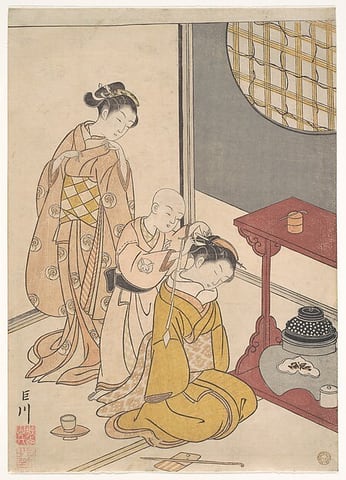
  1. Night Rain at the Double-Shelf Stand, from the series Eight Parlor Views (Zashiki hakkei), by Suzuki Harunobu, ca. 1766
    Night Rain at the Double-Shelf Stand, from the series Eight Parlor Views (Zashiki hakkei)Suzuki Harunobu, ca. 1766Courtesy of The Metropolitan Museum of Art
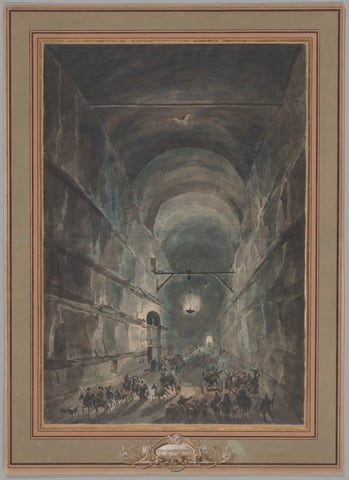
  2. A work made of handcolored etching in black on cream laid paper.
    The Grotto of Posillipo (La Grotta di Posillipo)Louis Jean Desprez, 1785/90Courtesy of the Art Institute of Chicago