Floor plan

Style galleriesRomanticism

Romanticism

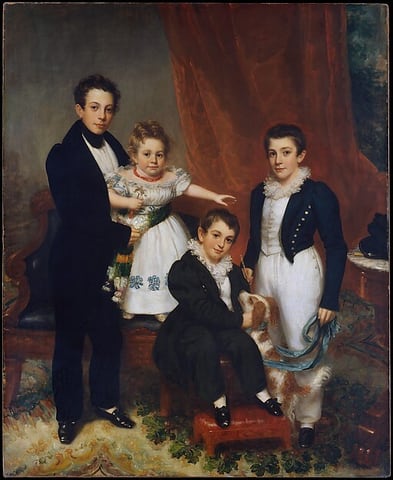
The Knapp Children, by Samuel Lovett Waldo, ca. 1833–34
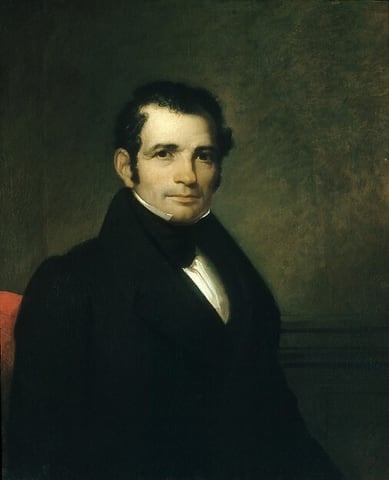
Luman Reed, by Asher Brown Durand, 1835
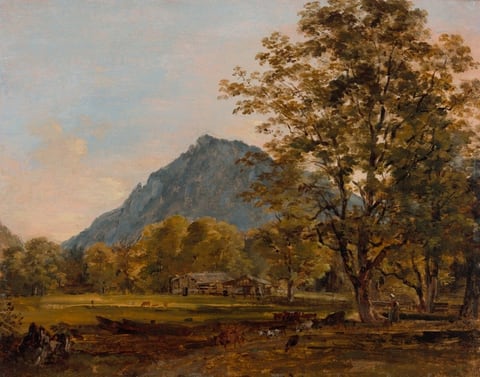
A work made of oil on paper, laid onto cardboard.
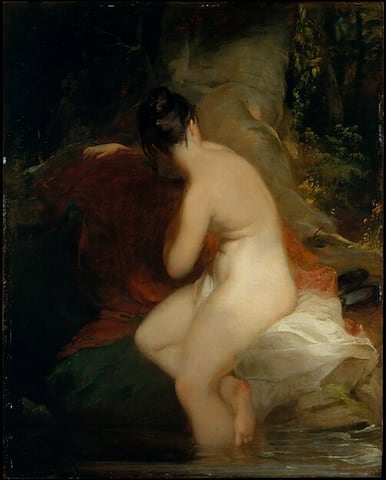
Musidora, by Thomas Sully, 1813–35
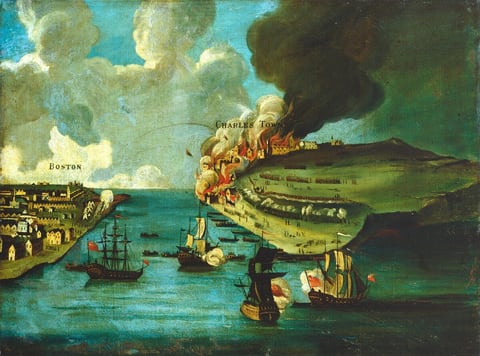
We look across and down at a channel of water separating two landmasses labeled "Boston" and "Charles Town" in this horizontal landscape painting. Four three-masted ships are in the aquamarine-blue harbor between us and the land. Three of them have their sails unfurled and smoke billows from the broad, starboard side of each. Tidy rows of brown houses line the area of Boston. A puff of white smoke rises from the farthest point. Two arrow-shaped missiles, perhaps projectiles on fire, arc toward Charles Town, where billowing gray plumes of smoke rise from vivid orange fire on the far side of the landmass. Rowboats bring soldiers to the shore of Charles Town, close to where hundreds of soldiers line up and fire at each other. Much of the rest of Charles Town is a hill leading to sheer cliffs to our right. Tan and gray-colored smoke mixes among bright white clouds against a pale blue sky on the top half of the painting.
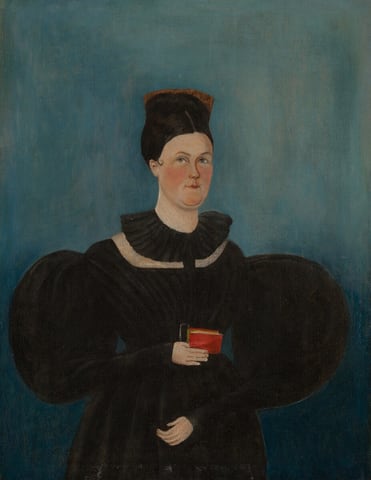
The image shows a woman standing upright with a small red book in her right hand. She has a fair complexion, neutral expression, slightly arched eyebrows, and small, rounded lips. Her dark brown hair is styled in an updo with a black accessory. She wears a high-necked dark dress with puffed sleeves and a white collar. The background is plain blue. The woman is not wearing any visible jewelry, and the setting is minimalistic with only the book present.
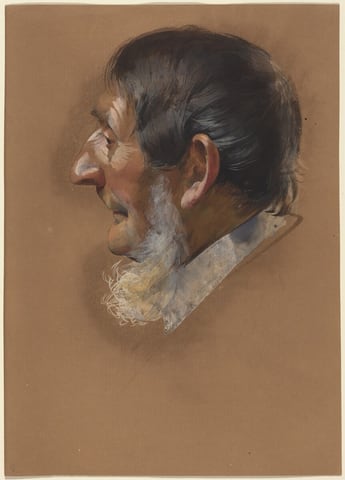
The image shows a man's head and part of his neck in profile view. The man is looking to the left, showcasing his facial features. He has a prominent nose, cheekbones, dark hair with hints of gray at the sides, and a white beard under his chin. He is wearing a gray collar that is partially visible. The background is a plain, muted brown color. There are no objects or jewelry visible in the image.
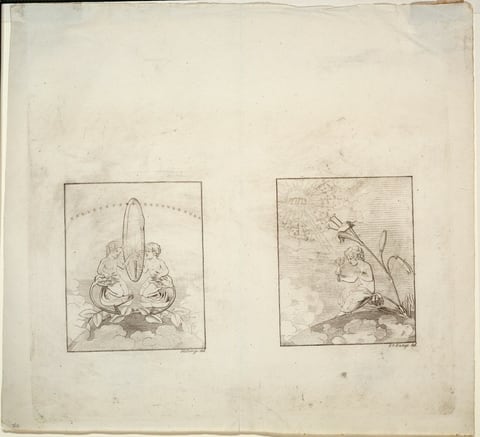
A work made of etching on ivory wove paper.

The works in this room are listed below.

Works in this room

Sublime landscapes, storms and feeling, from about 1780 to 1850.

Section 1, north wall

  1. The Knapp Children, by Samuel Lovett Waldo, ca. 1833–34
    The Knapp ChildrenSamuel Lovett Waldo, ca. 1833–34Courtesy of The Metropolitan Museum of Art
  2. Luman Reed, by Asher Brown Durand, 1835
    Luman ReedAsher Brown Durand, 1835Courtesy of The Metropolitan Museum of Art
  3. A work made of oil on paper, laid onto cardboard.
    A Farmhouse in the Bavarian AlpsJohann Georg von Dillis, c. 1825Courtesy of the Art Institute of Chicago
  4. Musidora, by Thomas Sully, 1813–35
    MusidoraThomas Sully, 1813–35Courtesy of The Metropolitan Museum of Art

Section 1, south wall

  1. We look across and down at a channel of water separating two landmasses labeled "Boston" and "Charles Town" in this horizontal landscape painting. Four three-masted ships are in the aquamarine-blue harbor between us and the land. Three of them have their sails unfurled and smoke billows from the broad, starboard side of each. Tidy rows of brown houses line the area of Boston. A puff of white smoke rises from the farthest point. Two arrow-shaped missiles, perhaps projectiles on fire, arc toward Charles Town, where billowing gray plumes of smoke rise from vivid orange fire on the far side of the landmass. Rowboats bring soldiers to the shore of Charles Town, close to where hundreds of soldiers line up and fire at each other. Much of the rest of Charles Town is a hill leading to sheer cliffs to our right. Tan and gray-colored smoke mixes among bright white clouds against a pale blue sky on the top half of the painting.
    Attack on Bunker's Hill, with the Burning of Charles TownUnrecorded American maker, 1783 or afterCourtesy National Gallery of Art, Washington
  2. The image shows a woman standing upright with a small red book in her right hand. She has a fair complexion, neutral expression, slightly arched eyebrows, and small, rounded lips. Her dark brown hair is styled in an updo with a black accessory. She wears a high-necked dark dress with puffed sleeves and a white collar. The background is plain blue. The woman is not wearing any visible jewelry, and the setting is minimalistic with only the book present.
    Anonymous WomanUnrecorded American maker, c. 1830Courtesy National Gallery of Art, Washington
  3. The image shows a man's head and part of his neck in profile view. The man is looking to the left, showcasing his facial features. He has a prominent nose, cheekbones, dark hair with hints of gray at the sides, and a white beard under his chin. He is wearing a gray collar that is partially visible. The background is a plain, muted brown color. There are no objects or jewelry visible in the image.
    Profile of a Man with SidewhiskersUnrecorded German maker, c. 1850Courtesy National Gallery of Art, Washington
  4. A work made of etching on ivory wove paper.
    Child with RosebudPhillip Otto Runge, n.d.Courtesy of the Art Institute of Chicago

Section 2, south wall
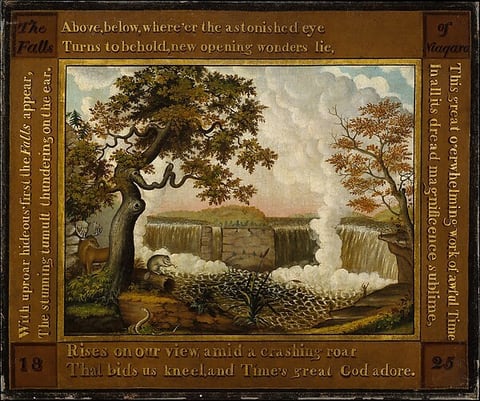
  1. The Falls of Niagara, by Edward Hicks, ca. 1825
    The Falls of NiagaraEdward Hicks, ca. 1825Courtesy of The Metropolitan Museum of Art
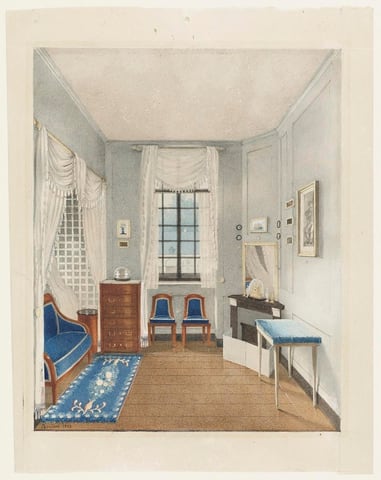
  2. A FRENCH RESTORATION BEDROOM
    A French Restoration BedroomBouilhet, French, 1823Courtesy of Cooper Hewitt, Smithsonian Design Museum
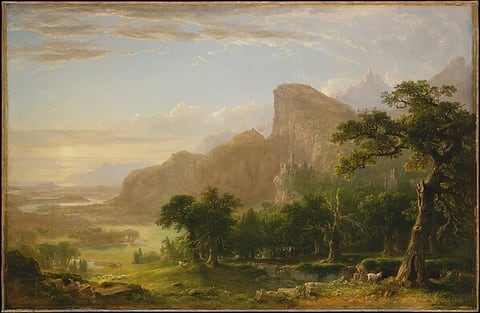
  3. Landscape—Scene from "Thanatopsis", by Asher Brown Durand, 1850
    Landscape—Scene from "Thanatopsis"Asher Brown Durand, 1850Courtesy of The Metropolitan Museum of Art

Section 2, north wall
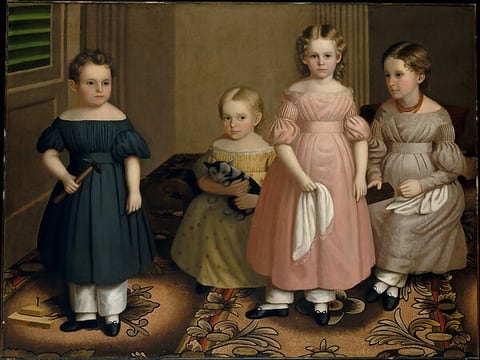
  1. The Alling Children, by Oliver Tarbell Eddy, ca. 1839
    The Alling ChildrenOliver Tarbell Eddy, ca. 1839Courtesy of The Metropolitan Museum of Art
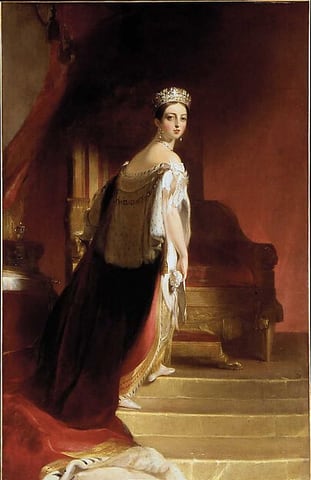
  2. Queen Victoria, by Thomas Sully, 1838
    Queen VictoriaThomas Sully, 1838Courtesy of The Metropolitan Museum of Art

Section 3, north wall
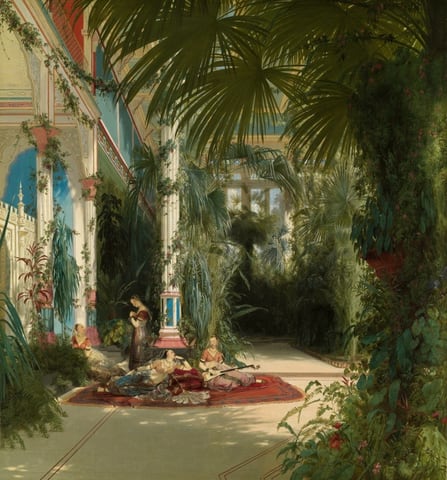
  1. Four women with musical instruments lounge in a massive garden courtyard.
    The Interior of the Palm House on the Pfaueninsel Near PotsdamCarl Blechen, 1834Courtesy of the Art Institute of Chicago
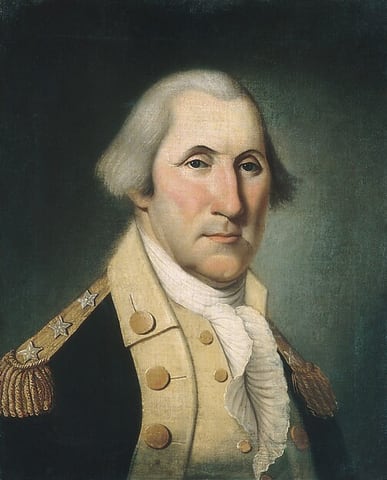
  2. George Washington, by Charles Peale Polk, ca. 1790
    George WashingtonCharles Peale Polk, ca. 1790Courtesy of The Metropolitan Museum of Art
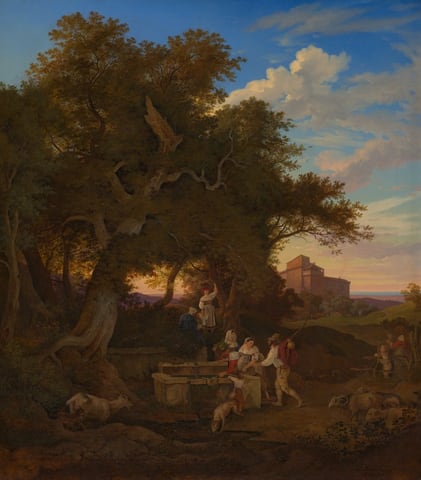
  3. A work made of oil on canvas.
    The Fountain at GrottaferrataAdrian Ludwig (Ludwig) Richter, 1832Courtesy of the Art Institute of Chicago