Floor plan

Style galleriesRomanticism

Romanticism

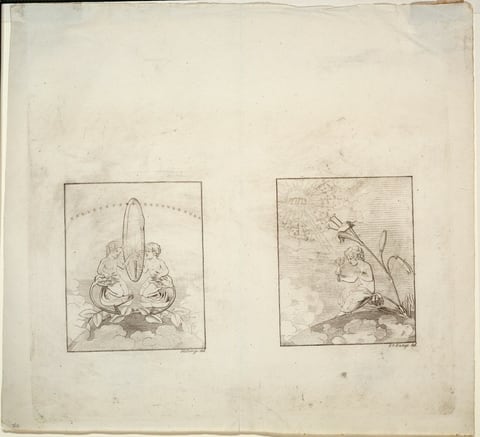
A work made of etching on ivory wove paper.
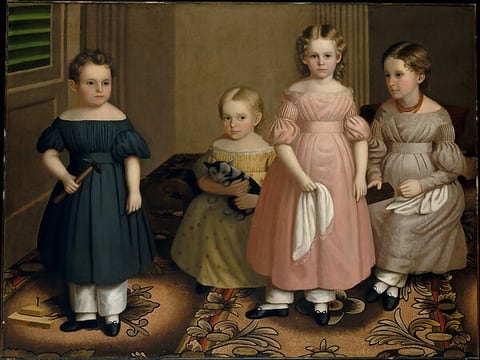
The Alling Children, by Oliver Tarbell Eddy, ca. 1839
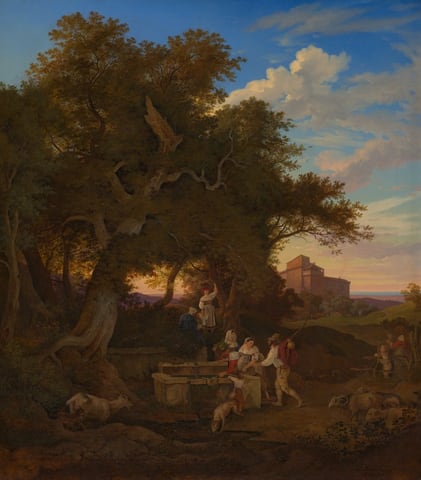
A work made of oil on canvas.
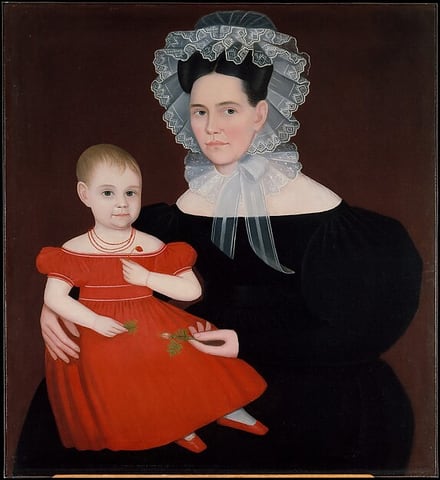
Mrs. Mayer and Daughter, by Ammi Phillips, 1835–40
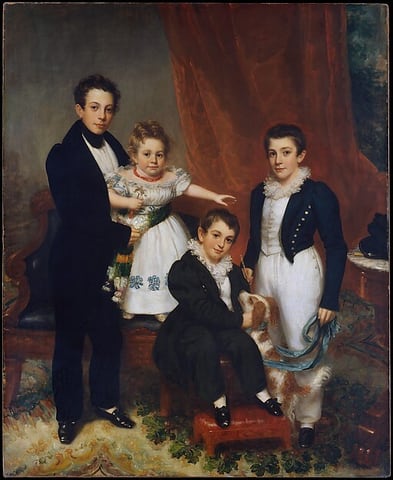
The Knapp Children, by Samuel Lovett Waldo, ca. 1833–34

The works in this room are listed below.

Works in this room

Sublime landscapes, storms and feeling, from about 1780 to 1850.

Section 1, north wall

  1. A work made of etching on ivory wove paper.
    Child with RosebudPhillip Otto Runge, n.d.Courtesy of the Art Institute of Chicago
  2. The Alling Children, by Oliver Tarbell Eddy, ca. 1839
    The Alling ChildrenOliver Tarbell Eddy, ca. 1839Courtesy of The Metropolitan Museum of Art
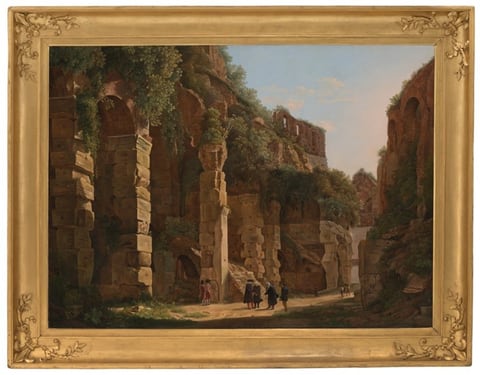
  3. A work made of oil on canvas.
    Inside the ColosseumFranz Ludwig Catel, c. 1823Courtesy of the Art Institute of Chicago

Section 1, south wall

  1. A work made of oil on canvas.
    The Fountain at GrottaferrataAdrian Ludwig (Ludwig) Richter, 1832Courtesy of the Art Institute of Chicago
  2. Mrs. Mayer and Daughter, by Ammi Phillips, 1835–40
    Mrs. Mayer and DaughterAmmi Phillips, 1835–40Courtesy of The Metropolitan Museum of Art
  3. The Knapp Children, by Samuel Lovett Waldo, ca. 1833–34
    The Knapp ChildrenSamuel Lovett Waldo, ca. 1833–34Courtesy of The Metropolitan Museum of Art

Section 2, south wall
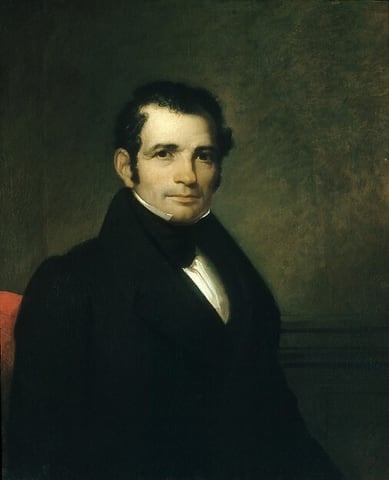
  1. Luman Reed, by Asher Brown Durand, 1835
    Luman ReedAsher Brown Durand, 1835Courtesy of The Metropolitan Museum of Art
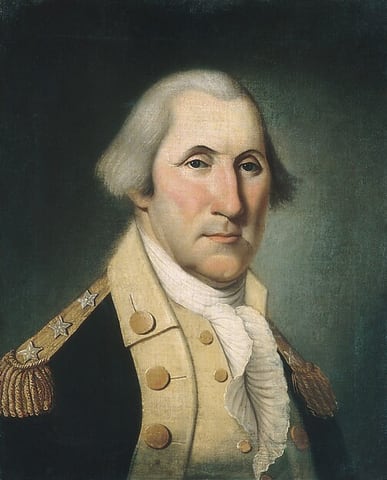
  2. George Washington, by Charles Peale Polk, ca. 1790
    George WashingtonCharles Peale Polk, ca. 1790Courtesy of The Metropolitan Museum of Art
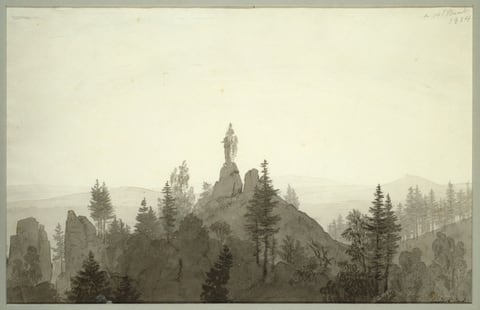
  3. Black ink drawing of forested landscape, statue of woman holding child at pinnacle of mountain.
    Statue of the Madonna in the MountainsCaspar David Friedrich, 1804Courtesy of the Art Institute of Chicago
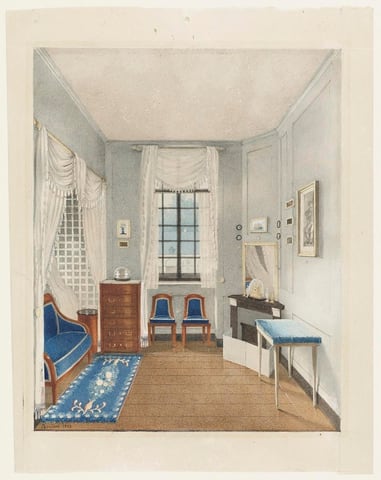
  4. A FRENCH RESTORATION BEDROOM
    A French Restoration BedroomBouilhet, French, 1823Courtesy of Cooper Hewitt, Smithsonian Design Museum

Section 2, north wall
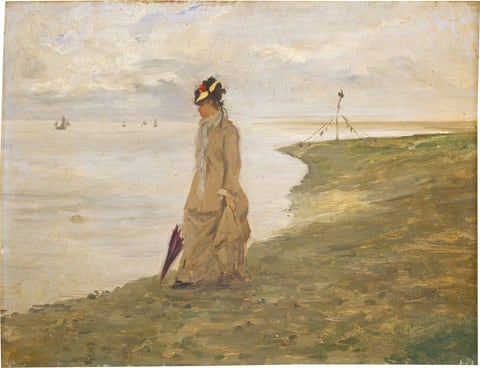
  1. This painting shows a woman in a tan dress and a tan hat with red flowers, walking on a grassy shoreline, holding a dark purple umbrella. The woman is positioned in the center of the painting, and she faces the left, standing at the edge of the water, looking downward. She has light skin and dark hair put up under her hat. The horizon is high in the painting, where the blue-gray sky and water meet. Small ships are visible in the distance, floating on the horizon. On the right side of the painting, the yellow and green ground curves, sloping slightly downward to meet the water. The painting has loose, visible brushstrokes.
    Woman by the SeasideUnrecorded French maker, 19th centuryCourtesy National Gallery of Art, Washington
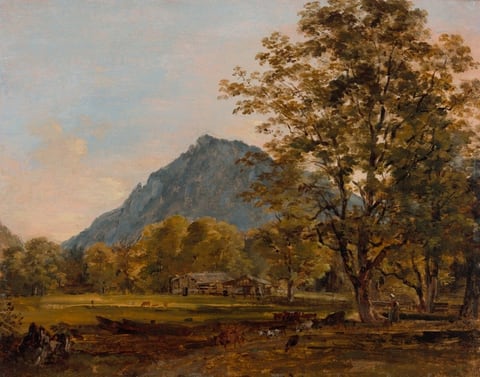
  2. A work made of oil on paper, laid onto cardboard.
    A Farmhouse in the Bavarian AlpsJohann Georg von Dillis, c. 1825Courtesy of the Art Institute of Chicago
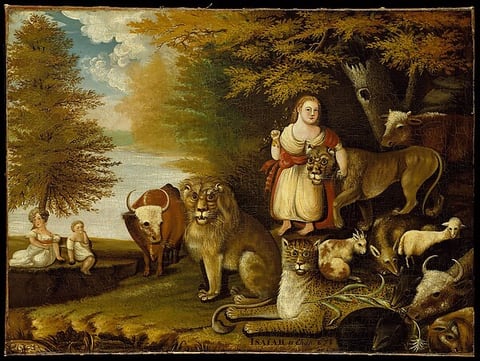
  3. Peaceable Kingdom, by Edward Hicks, ca. 1830–32
    Peaceable KingdomEdward Hicks, ca. 1830–32Courtesy of The Metropolitan Museum of Art
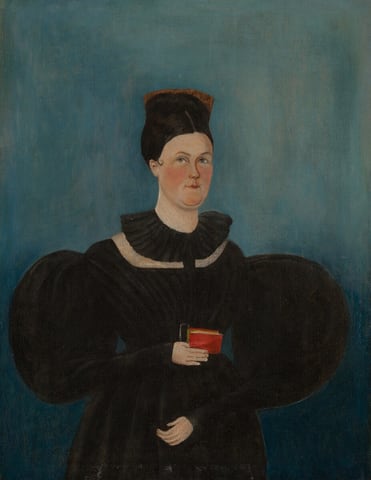
  4. The image shows a woman standing upright with a small red book in her right hand. She has a fair complexion, neutral expression, slightly arched eyebrows, and small, rounded lips. Her dark brown hair is styled in an updo with a black accessory. She wears a high-necked dark dress with puffed sleeves and a white collar. The background is plain blue. The woman is not wearing any visible jewelry, and the setting is minimalistic with only the book present.
    Anonymous WomanUnrecorded American maker, c. 1830Courtesy National Gallery of Art, Washington

Section 3, north wall
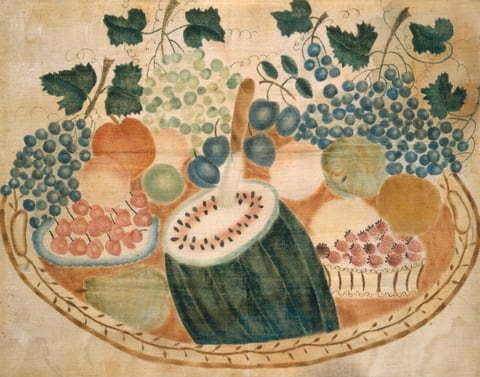
  1. The image shows a large cut watermelon in a woven basket surrounded by various fruits including grapes, peaches, and small round red fruits. The color palette includes greens, blues, oranges, and browns. The basket takes up most of the space and is filled with fruits, with grape clusters hanging above it.
    Fruit on a TrayUnrecorded American maker, c. 1840Courtesy National Gallery of Art, Washington

  2. Fur Traders Descending the Missouri, by George Caleb Bingham, 1845
    Fur Traders Descending the MissouriGeorge Caleb Bingham, 1845Courtesy of The Metropolitan Museum of Art