Ukiyo-e
Works in this room
Japanese woodblock prints of the floating world: actors, courtesans, landscapes and the sea.
Section 1, north wall
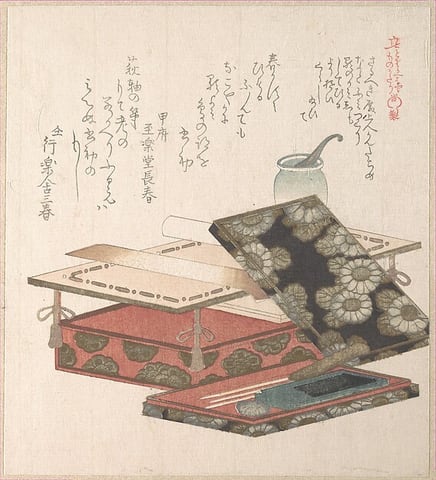
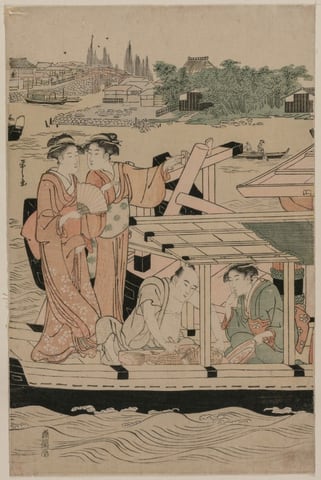
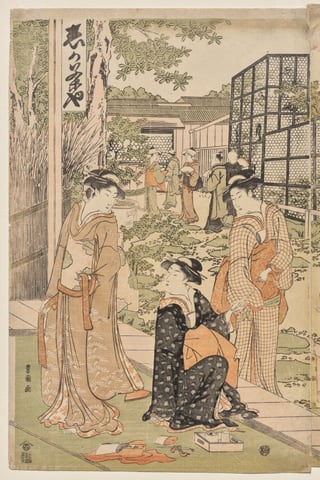
Table and Writing SetKubo Shunman, 19th centuryCourtesy of The Metropolitan Museum of Art Leftmost Print from Pleasure Boats on the Sumida River beneath Shin-Ōhashi BridgeChôbunsai Eishi, c. 1792Courtesy of the Cleveland Museum of Art The Shika TeahouseUtagawa Toyokuni, early 1790sCourtesy of the Cleveland Museum of Art
Section 1, south wall
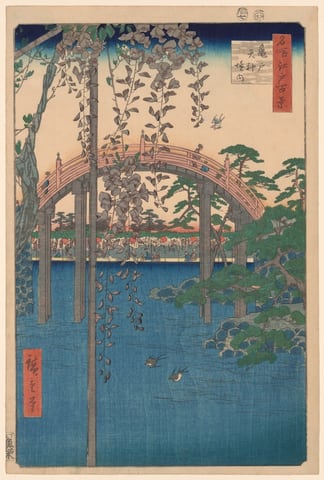
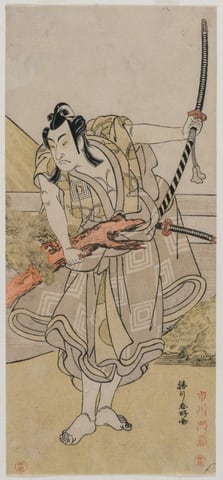
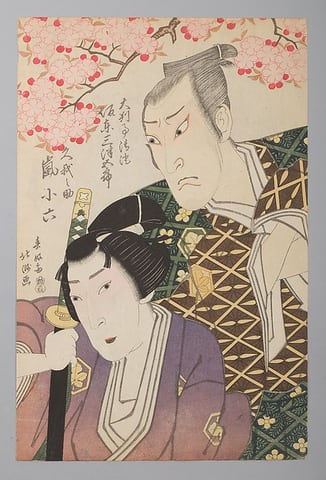
Precincts of Kameido Tenjin Shrine (Kameido Tenjin keidai), from the series "One Hundred Famous Views of Edo (Meisho Edo hyakkei)"Utagawa Hiroshige, 1856Courtesy of the Art Institute of Chicago Ichikawa Monnosuke II as Soga no GorōKatsukawa Shunkō, 1779Courtesy of the Cleveland Museum of Art Bandō Mitsugorō III as Daihanji Kiyozumi and Arashi Koroku IV as KoganosukeShunkōsai Hokushū, 1821Courtesy of The Metropolitan Museum of Art
Section 2, south wall
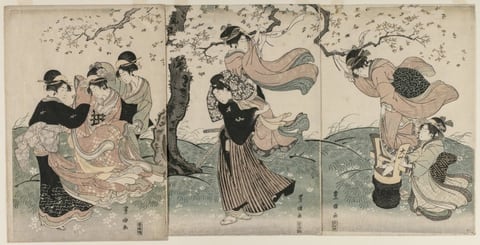
Cherry Blossoms in the WindUtagawa Toyokuni, late 1790sCourtesy of the Cleveland Museum of Art 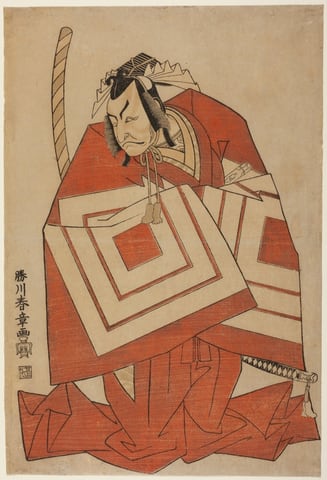
The Actor Ichikawa Danjuro IV in a "Shibaraku" Role, Possibly from the Play Ima o Sakari Suehiro Genji (The Genji Clan Now at Its Zenith), Performed at the Nakamura Theater from the First Day of the Eleventh Month, 1768Katsukawa Shunshō, c. 1768Courtesy of the Art Institute of Chicago
Section 2, north wall
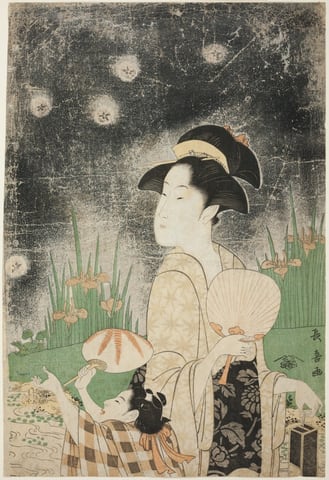
Catching FirefliesEishosai Choki, c.1790sCourtesy of the Art Institute of Chicago 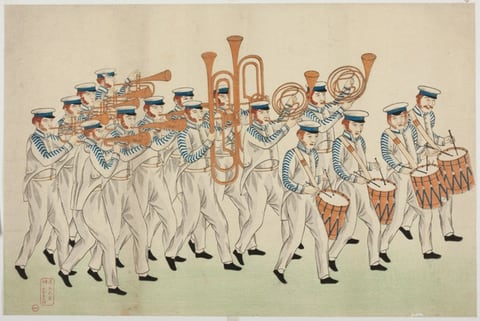
Procession of Russian Marching Band, from the Album of seven prints of Russian Army and Warship (Roshia seigi shashin kan), 1853Keiga, 1853Courtesy of the Art Institute of Chicago
Section 3, north wall
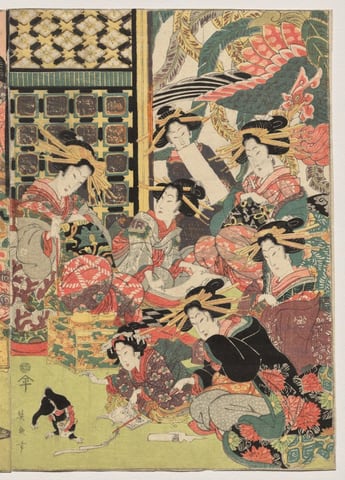
A Picture of the Viewing in the Pleasure QuartersKikukawa Eizan, 1810sCourtesy of the Cleveland Museum of Art 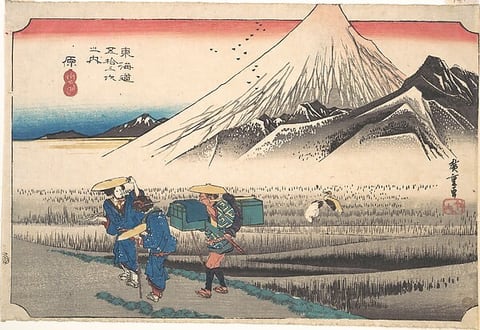
Hara: Mount Fuji in the Morning (Hara, Asa no Fuji), from the series Fifty-Three Stations of the Tōkaidō Road (Tōkaidō gojūsan tsugi), also known as the First Tōkaidō or Great TōkaidōUtagawa Hiroshige, ca. 1833–34Courtesy of The Metropolitan Museum of Art 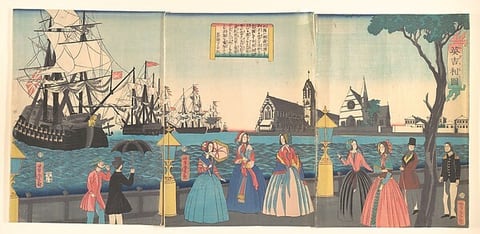
England (Igirisukoku)Utagawa Yoshitora, 2nd month, 1865Courtesy of The Metropolitan Museum of Art
Section 3, south wall
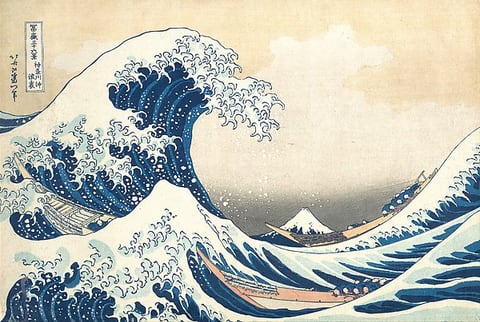
Under the Wave off Kanagawa (Kanagawa oki nami ura), also known as The Great Wave, from the series Thirty-six Views of Mount Fuji (Fugaku sanjūrokkei)Katsushika Hokusai, ca. 1830–32Courtesy of The Metropolitan Museum of Art 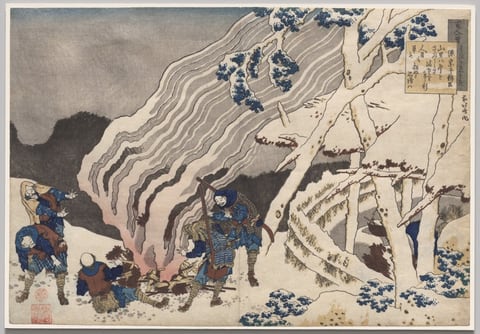
Poem by Minamoto no Muneyuki from the series One Hundred Poems by One Hundred Poets Explained by the NurseKatsushika Hokusai, 1835–36Courtesy of the Cleveland Museum of Art 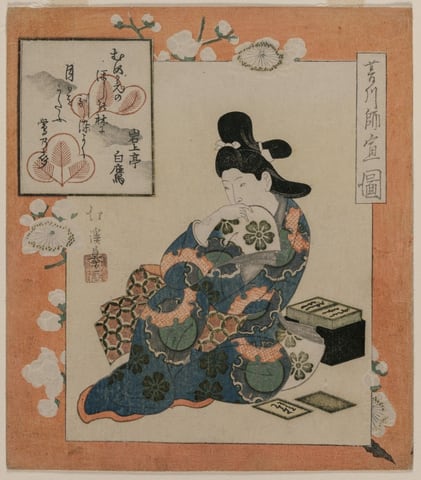
A Picture by Hishikawa Moronobu: Woman with a Set of Poem CardsTotoya Hokkei, mid 1820sCourtesy of the Cleveland Museum of Art