Ukiyo-e
Works in this room
Japanese woodblock prints of the floating world: actors, courtesans, landscapes and the sea.
Section 1, north wall
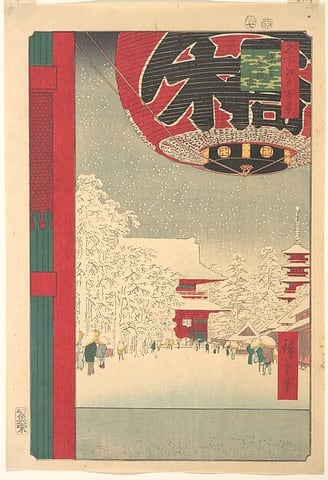
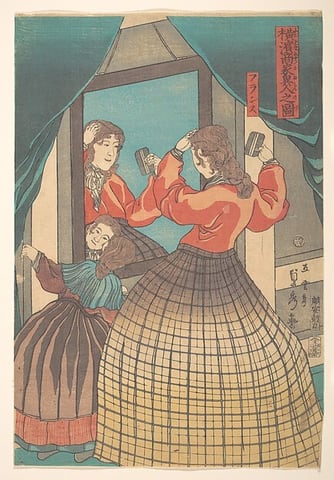
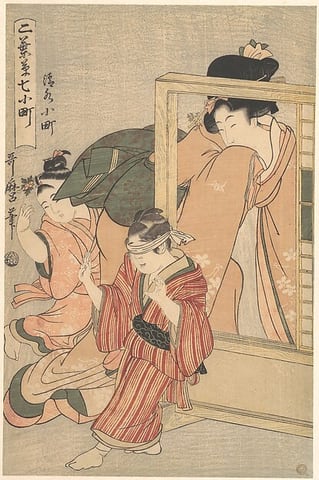
Kinryūsan Temple at Asakusa, from the series "One Hundred Famous Views of Edo"Utagawa Hiroshige, 1856Courtesy of The Metropolitan Museum of Art French Woman and Girl, from the series Foreign Merchants in Yokohama (Yokohama shōka ijin no zu)Utagawa (Gountei) Sadahide, 1st month, 1861Courtesy of The Metropolitan Museum of Art Kiyomizu Komachi, from the series Futabagusa nana KomachiKitagawa Utamaro, 1790sCourtesy of The Metropolitan Museum of Art
Section 1, south wall
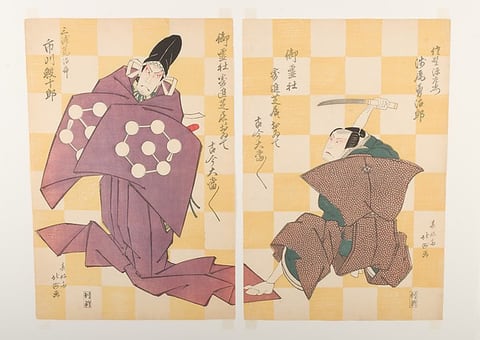
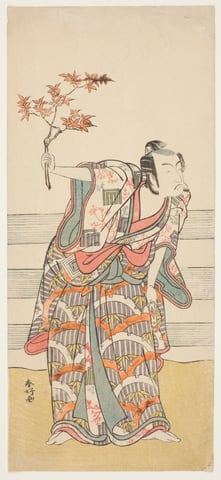
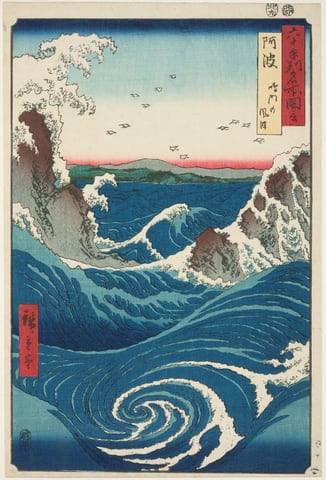
Kabuki Actors Asao Yūjirō as Sano Genzaemon and Ichikawa Ebijūrō I as Miura Arajirō, in the play Keisei Sano no FunabashiShunkōsai Hokushū, 1822Courtesy of The Metropolitan Museum of Art Actor Ichikawa Monnosuke II in an Unidentified RoleKatsukawa Shunkо̄, About 1785Courtesy of the Art Institute of Chicago Awa Province: Naruto Whirlpools (Awa, Naruto no fūha), from the series Famous Places in the Sixty-Odd Provinces (Rokujūyoshmeisho zue)Utagawa Hiroshige, 1855Courtesy of the Art Institute of Chicago
Section 2, south wall
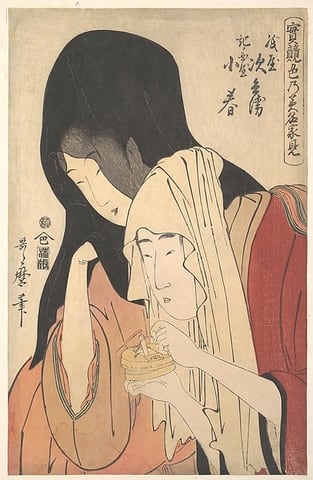
Jihei of Kamiya Eloping with the Geisha Koharu of Kinokuniya, from the series “True Feelings Compared: The Founts of Love” (Jitsu kurabe iro no Minakami)Kitagawa Utamaro, ca. 1798–99Courtesy of The Metropolitan Museum of Art 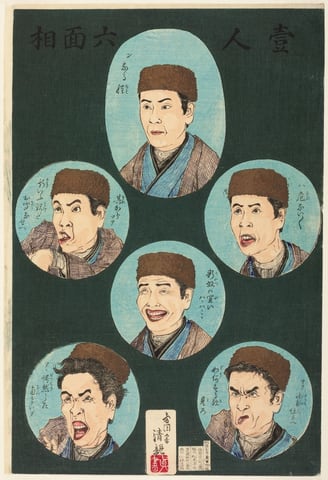
One Person, Six Expressions (Hitori rokumenso)Kobayashi Kiyochika, 1884Courtesy of the Art Institute of Chicago 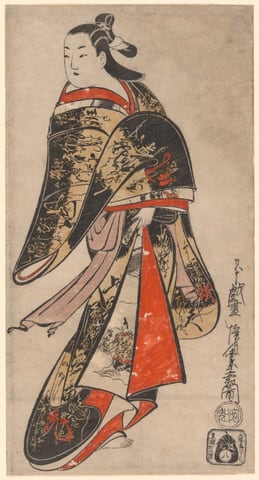
Courtesan WalkingKaigetsudo Anchi, c. 1714Courtesy of the Art Institute of Chicago
Section 2, north wall
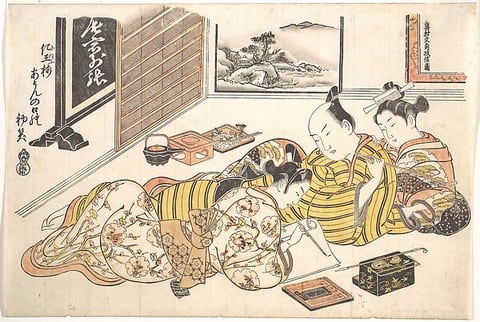
Plate from the Erotic Book Mounds of Dyed Colors: A Pattern Book for the Boudoir (Someiro no yama neya no hinagata), First MonthOkumura Masanobu, ca. 1736–44Courtesy of The Metropolitan Museum of Art 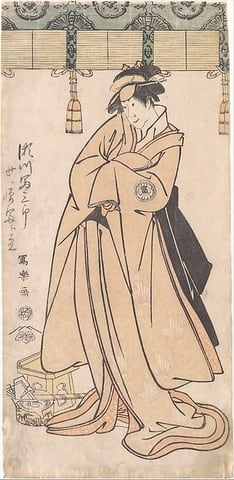
The Actor Segawa Tomisaburo II as the Otomos' Maid Wakakusa, Actually Prince KorehitoTōshūsai Sharaku, 1794–75Courtesy of The Metropolitan Museum of Art 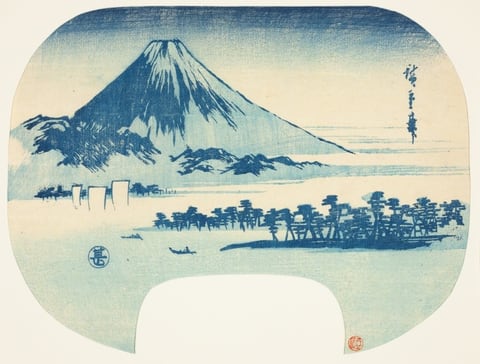
Mount Fuji Rising beyond Miho BeachUtagawa Hiroshige, c. 1838/42Courtesy of the Art Institute of Chicago
Section 3, north wall
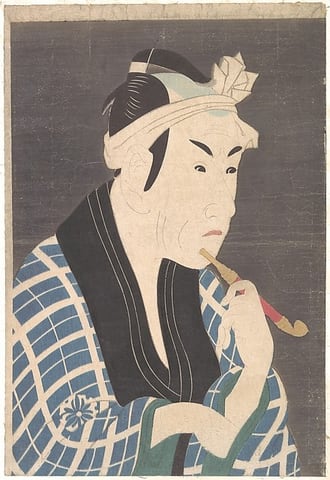
Matsumoto Koshiro IV as the Fish Peddler GorobeiTōshūsai Sharaku, Probably late 1880s or early 1890sCourtesy of The Metropolitan Museum of Art 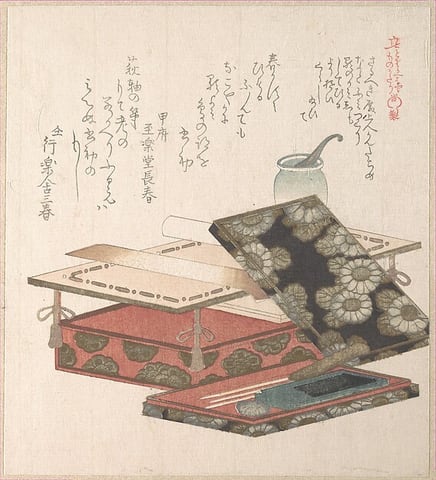
Table and Writing SetKubo Shunman, 19th centuryCourtesy of The Metropolitan Museum of Art
Section 3, south wall
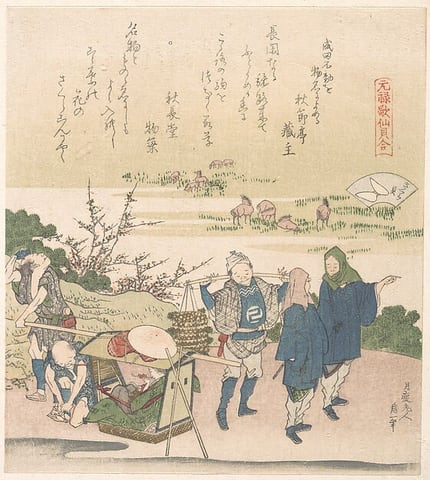
Cherry Shell, from the series Genroku Poetry Shell GamesKatsushika Hokusai, probably 1821Courtesy of The Metropolitan Museum of Art 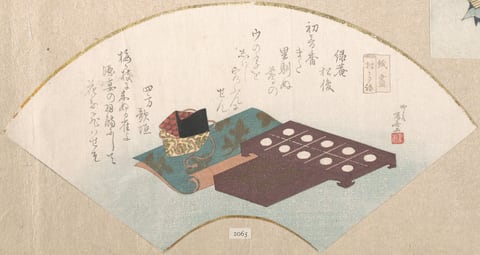
Outfit for the Game of IncenseRyūryūkyo Shinsai, 19th centuryCourtesy of The Metropolitan Museum of Art