Ukiyo-e
Works in this room
Japanese woodblock prints of the floating world: actors, courtesans, landscapes and the sea.
Section 1, north wall
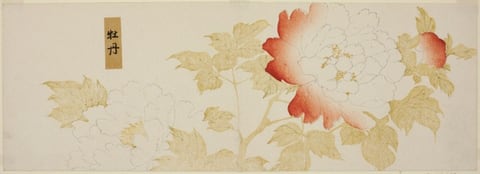
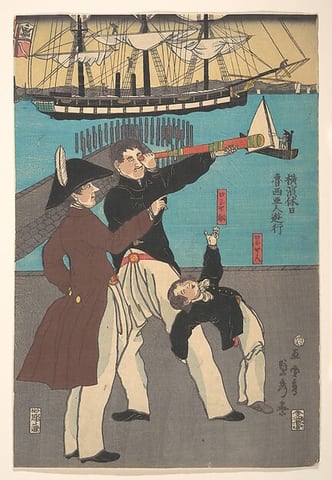
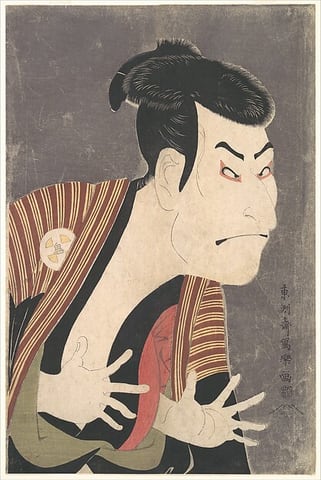
PeoniesKitagawa Utamaro, n.d.Courtesy of the Art Institute of Chicago Russians Enjoying a Holiday in Yokohama (Yokohama kyūjitsu Roshiajin yūkō)Utagawa (Gountei) Sadahide, 1861Courtesy of The Metropolitan Museum of Art Kabuki Actor Ōtani Oniji III as Yakko EdobeiTōshūsai Sharaku, 1794Courtesy of The Metropolitan Museum of Art
Section 1, south wall
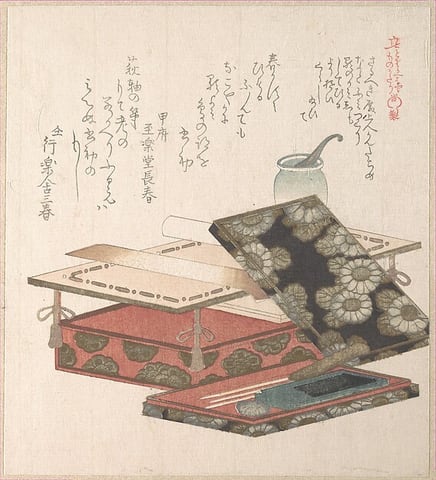
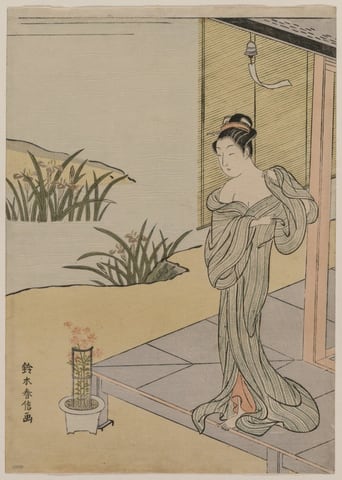
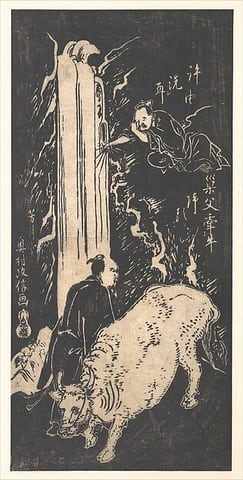
Table and Writing SetKubo Shunman, 19th centuryCourtesy of The Metropolitan Museum of Art Young Woman Looking at a Pot of PinksSuzuki Harunobu, c. 1767Courtesy of the Cleveland Museum of Art Xu You and Chao FuOkumura Masanobu, 18th centuryCourtesy of The Metropolitan Museum of Art
Section 2, south wall
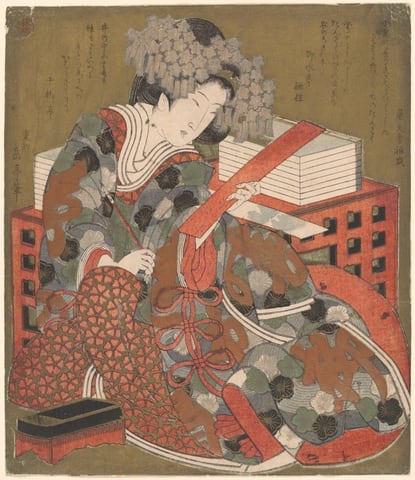
Woman About to Write a PoemYashima Gakutei, c. 1824Courtesy of the Art Institute of Chicago 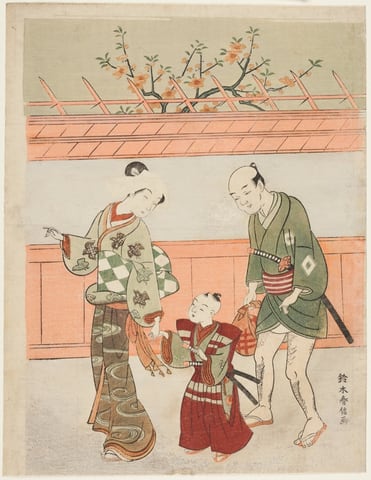
A Spring OutingSuzuki Harunobu, c. 1768Courtesy of the Art Institute of Chicago 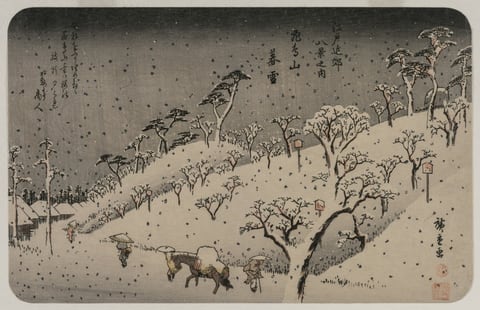
Evening Snow at Asuka Hill, from the series Eight Views of the Environs of EdoUtagawa Hiroshige, c. 1837–38Courtesy of the Cleveland Museum of Art
Section 2, north wall
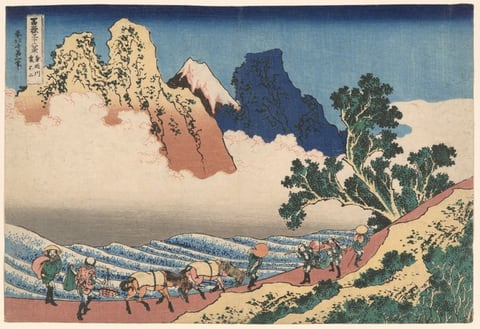
The Back of Mount Fuji Seen from Minobu River (Minobugawa Urafuji), from the series Thirty-Six Views of Mount Fuji (Fugaku sanjūrokkei)Katsushika Hokusai, 1830-33Courtesy of the Art Institute of Chicago 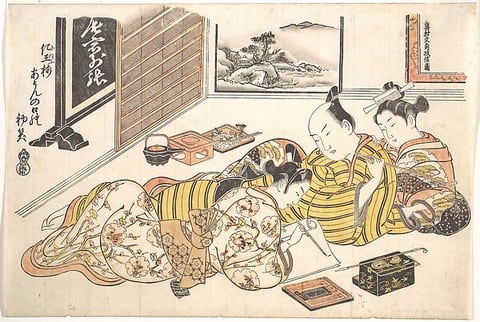
Plate from the Erotic Book Mounds of Dyed Colors: A Pattern Book for the Boudoir (Someiro no yama neya no hinagata), First MonthOkumura Masanobu, ca. 1736–44Courtesy of The Metropolitan Museum of Art 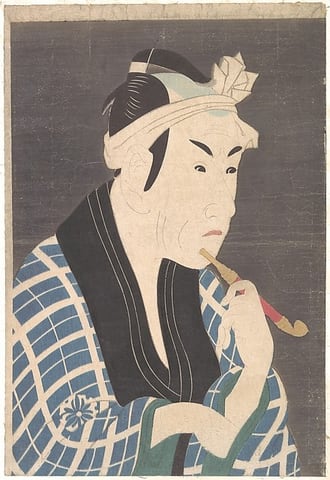
Matsumoto Koshiro IV as the Fish Peddler GorobeiTōshūsai Sharaku, Probably late 1880s or early 1890sCourtesy of The Metropolitan Museum of Art
Section 3, north wall
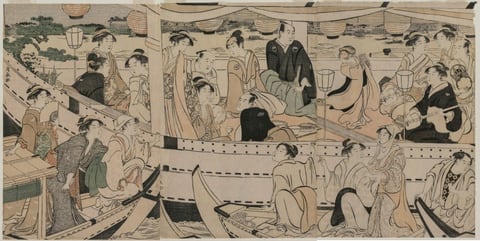
Boating Party on the Sumida RiverTorii Kiyonaga, 1789Courtesy of the Cleveland Museum of Art 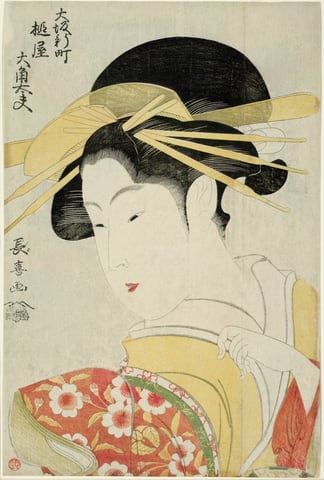
Osumi, a Tayu of the Tsuchiya in the Shinmachi Quarter in OsakaEishosai Choki, c. 1796/97Courtesy of the Art Institute of Chicago
Section 3, south wall
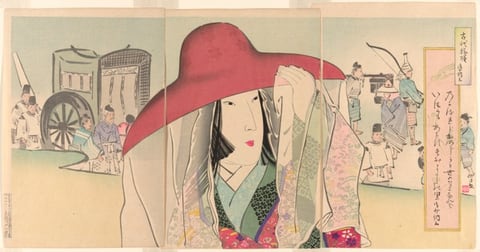
Sei Shonagon, from the series Ancient Patterns (Kodai moyo)Kobayashi Kiyochika, Meiji period (1896–1912), 1896Courtesy of the Art Institute of Chicago 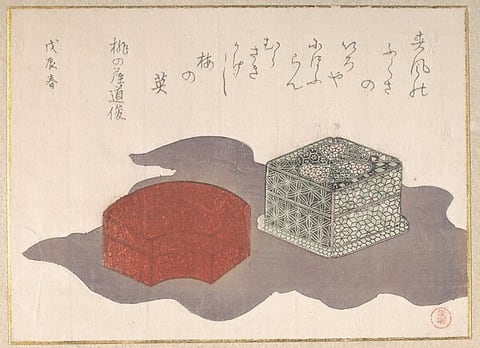
Incense Boxes with a Wrapping ClothKubo Shunman, 1808Courtesy of The Metropolitan Museum of Art