Ukiyo-e
Works in this room
Japanese woodblock prints of the floating world: actors, courtesans, landscapes and the sea.
Section 1, north wall
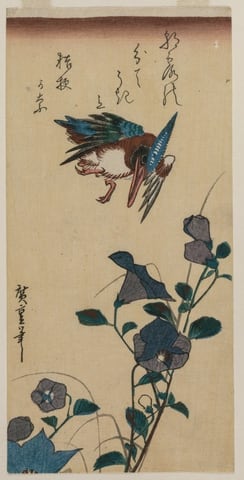
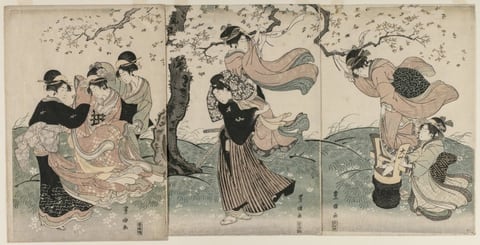
Kingfisher and Chinese BellflowersUtagawa Hiroshige, early or mid-1830sCourtesy of the Cleveland Museum of Art Cherry Blossoms in the WindUtagawa Toyokuni, late 1790sCourtesy of the Cleveland Museum of Art
Section 1, south wall
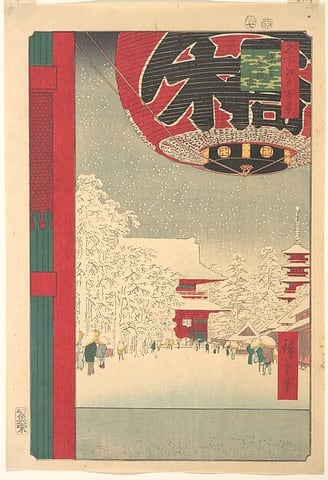
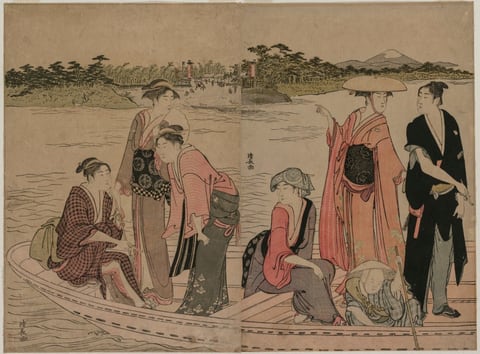
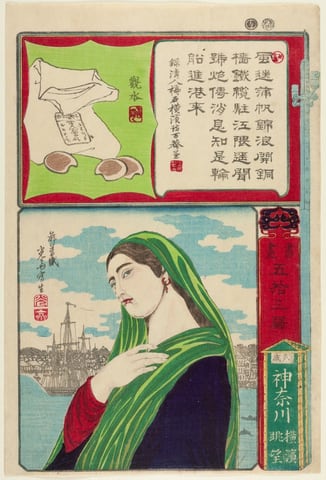
Kinryūsan Temple at Asakusa, from the series "One Hundred Famous Views of Edo"Utagawa Hiroshige, 1856Courtesy of The Metropolitan Museum of Art Passengers in a Ferry Boat on the Sumida RiverTorii Kiyonaga, 1784Courtesy of the Cleveland Museum of Art Kanagawa in Musashi Province: Distant View of Yokohama (Yokohama enbo), from the series Calligraphy and Pictures for the Fifty-three Stations of the Tokaido (Shoga gojusan eki)Utagawa Yoshimori, 1982Courtesy of the Art Institute of Chicago
Section 2, south wall
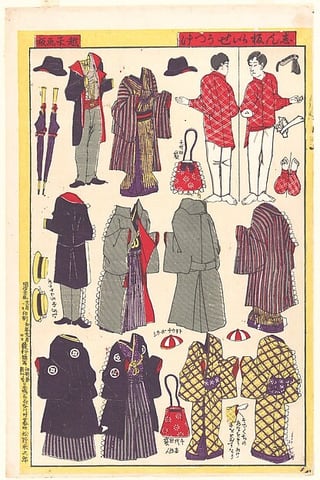
Paper Doll ClothingUnrecorded Japanese maker, 1897–98Courtesy of The Metropolitan Museum of Art 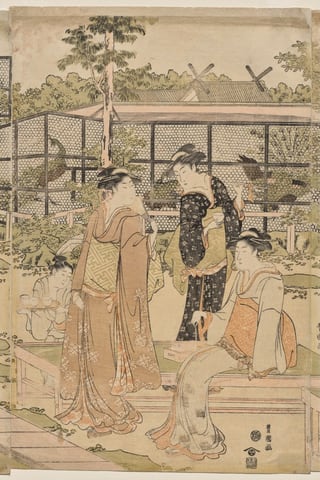
The Shika TeahouseUtagawa Toyokuni, early 1790sCourtesy of the Cleveland Museum of Art 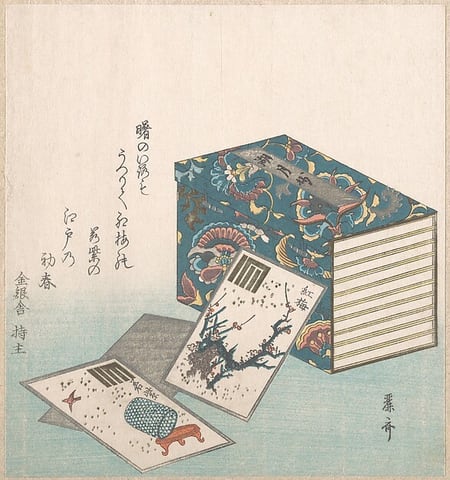
Books and CardsReisai, 18th–19th centuryCourtesy of The Metropolitan Museum of Art
Section 2, north wall
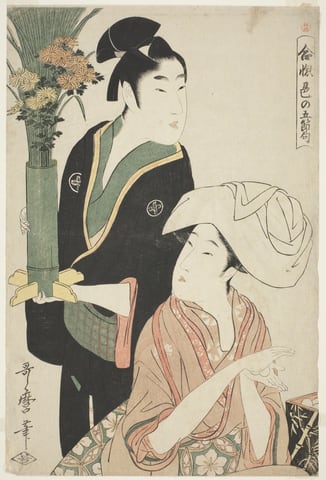
The Ninth Month, from the series Five Amorous Festivals of Love (Aibore iro no gosekku)Kitagawa Utamaro, 1801Courtesy of the Art Institute of Chicago 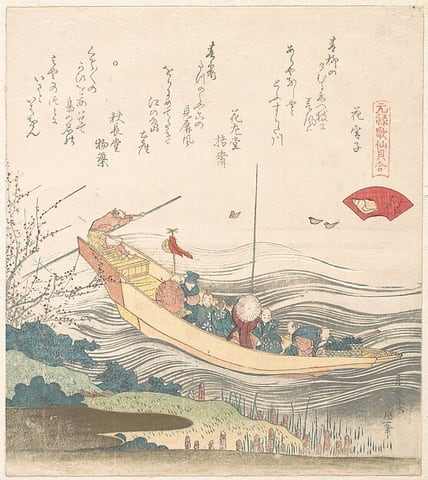
Miyako ShellKatsushika Hokusai, probably 1821Courtesy of The Metropolitan Museum of Art 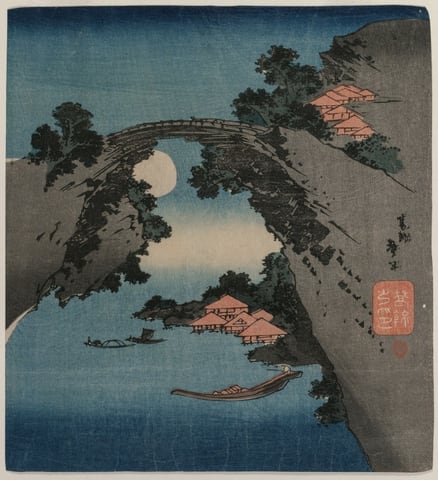
The Monkey BridgeKatsushika Taito II, early 1830sCourtesy of the Cleveland Museum of Art
Section 3, north wall
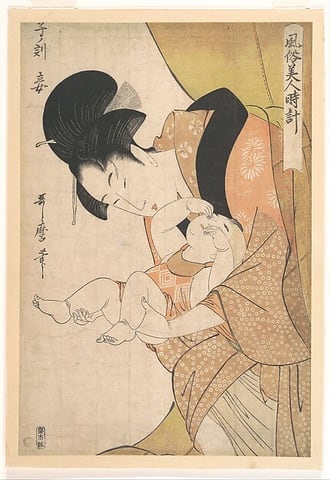
“Hour of the Rat: Mistress,” from the series Women’s Daily Customs (Fuzoku bijin tokei)Kitagawa Utamaro, 1790Courtesy of The Metropolitan Museum of Art 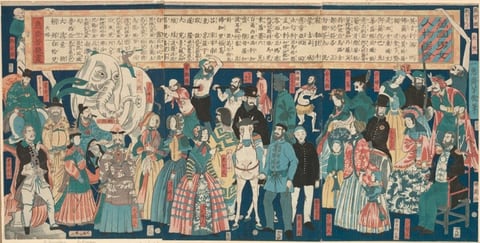
Picture of Men and Women from Many Countries (Bankoku danjo jinbutsu zue)Utagawa Yoshiiku, 1861Courtesy of the Art Institute of Chicago
Section 3, south wall
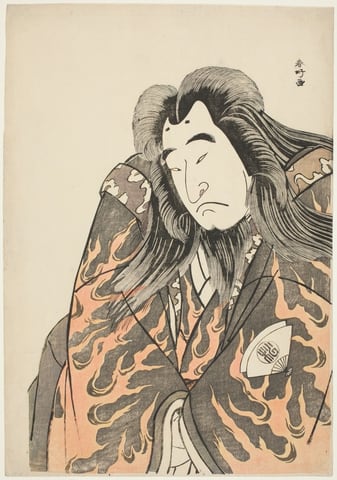
Actor Onoe Matsusuke I as Retired Emperor SutokuKatsukawa Shunkо̄, About 1780Courtesy of the Art Institute of Chicago 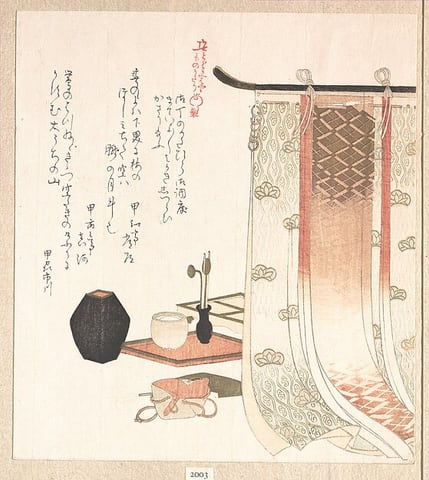
Screen and Utensils for the Incense CeremonyKubo Shunman, 19th centuryCourtesy of The Metropolitan Museum of Art 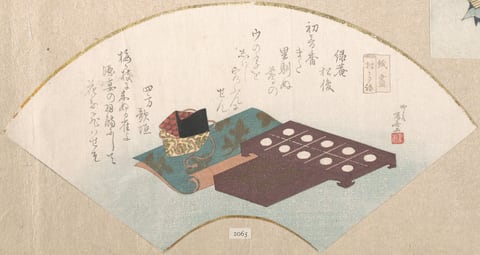
Outfit for the Game of IncenseRyūryūkyo Shinsai, 19th centuryCourtesy of The Metropolitan Museum of Art