Ukiyo-e
Japanese woodblock prints of the floating world: actors, courtesans, landscapes and the sea.
Section 1, north wall
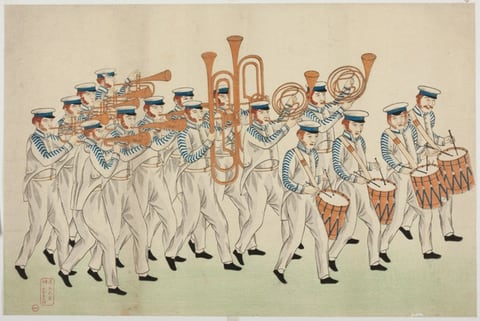
Procession of Russian Marching Band, from the Album of seven prints of Russian Army and Warship (Roshia seigi shashin kan), 1853Keiga, 1853Courtesy of the Art Institute of Chicago 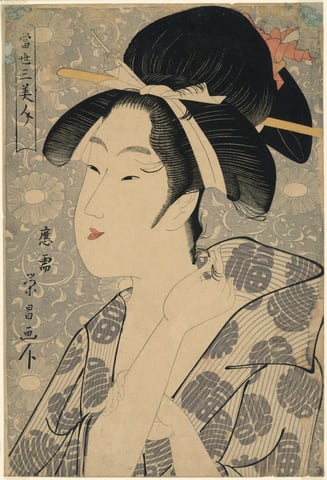
Three Beauties of Our Time (Tosei san bijin)Chokosai Eisho, n.d.Courtesy of the Art Institute of Chicago
Section 1, south wall
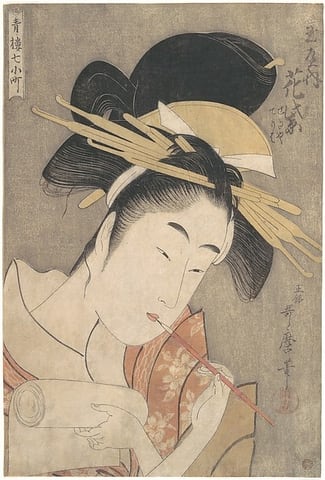
“Hanamurasaki of the Tamaya,” from the series Seven Komachi of the Pleasure Quarters (Seirō Nana Komachi)Kitagawa Utamaro, ca. 1790Courtesy of The Metropolitan Museum of Art 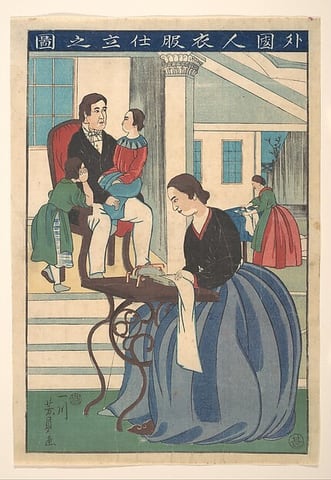
Foreign Family with Wife Making Clothes (Gaikokujin ifuku shitate no zu)Utagawa Yoshikazu, 1860Courtesy of The Metropolitan Museum of Art 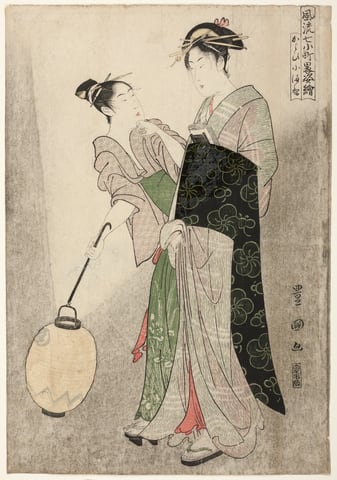
Courting Komachi (Kayoi Komachi), from the series Seven Fashionable Figures of Ono no Komachi (Furyu nana Komachi yatushi sugata-e)Utagawa Toyokuni, Edo period (1615–1868), about 1792Courtesy of the Art Institute of Chicago
Section 2, south wall
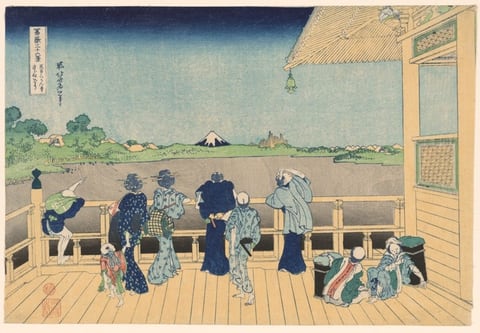
Sazai Hall at the Temple of the Five Hundred Arhats (Gohyakurakanji Sazaido), from the series "Thirty-six Views of Mount Fuji (Fugaku sanjurokkei)"Katsushika Hokusai, c. 1830/33Courtesy of the Art Institute of Chicago 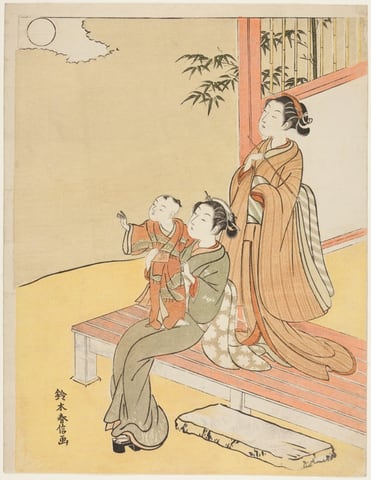
Viewing the MoonSuzuki Harunobu, c. 1767/68Courtesy of the Art Institute of Chicago
Section 2, north wall
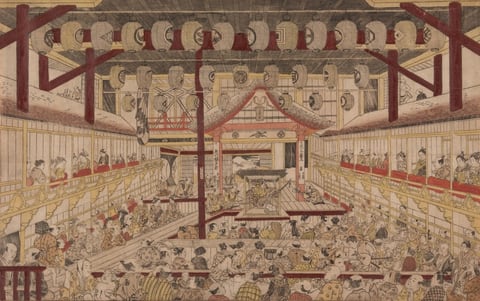
Perspective View of the Interior of the Nakamura Theater with Ichikawa Ebizo II as Yanone GoroOkumura Masanobu, 1740Courtesy of the Cleveland Museum of Art 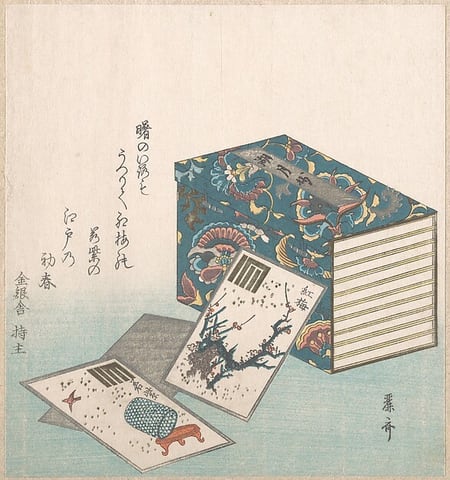
Books and CardsReisai, 18th–19th centuryCourtesy of The Metropolitan Museum of Art
Section 3, north wall
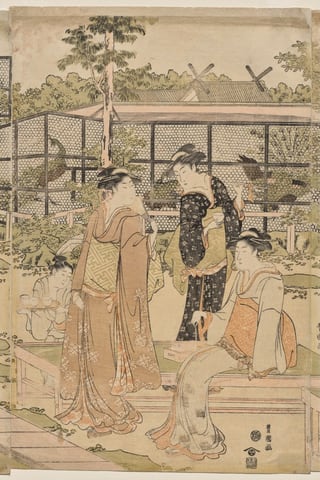
The Shika TeahouseUtagawa Toyokuni, early 1790sCourtesy of the Cleveland Museum of Art 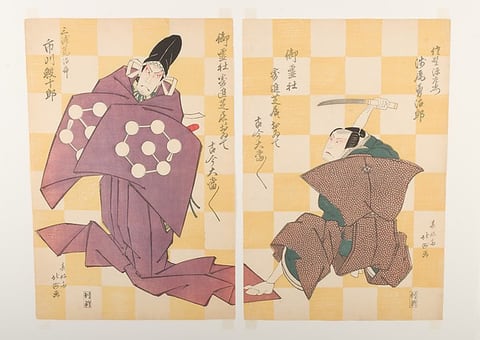
Kabuki Actors Asao Yūjirō as Sano Genzaemon and Ichikawa Ebijūrō I as Miura Arajirō, in the play Keisei Sano no FunabashiShunkōsai Hokushū, 1822Courtesy of The Metropolitan Museum of Art 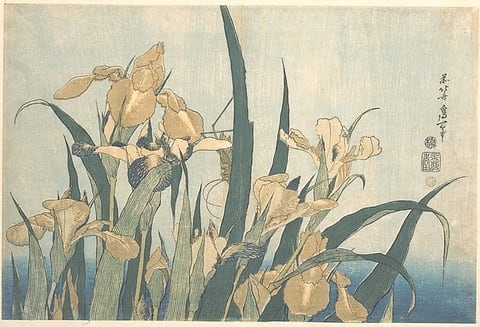
Grasshopper and IrisKatsushika Hokusai, late 1820sCourtesy of The Metropolitan Museum of Art
Section 3, south wall
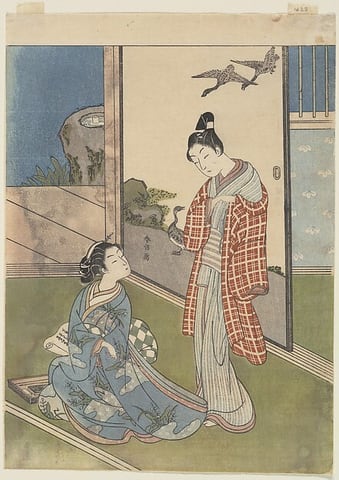
A Girl Writing a LetterSuzuki Harunobu, 18th centuryCourtesy of The Metropolitan Museum of Art 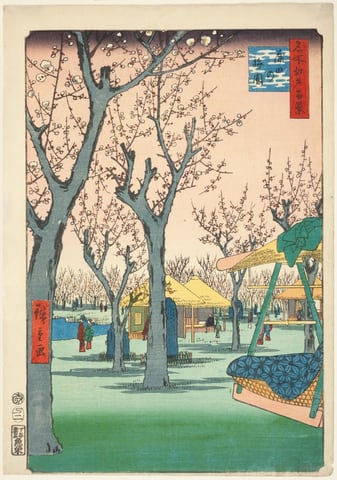
The Plum Orchard at Kamata (Kamata no umezono), from the series "One Hundred Famous Views of Edo (Meisho Edo hyakkei)"Utagawa Hiroshige, 1857Courtesy of the Art Institute of Chicago
Section 4, south wall
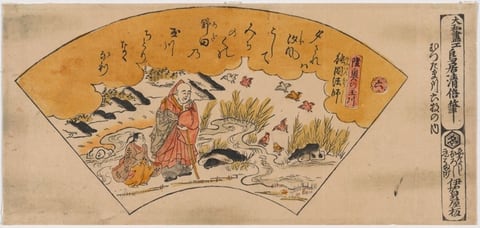
The Priest Kobo Daishi at the Tama River in Kii Province from the series The Six Tama RiversTorii Kiyomasu, c. 1725-1735Courtesy of the Art Institute of Chicago 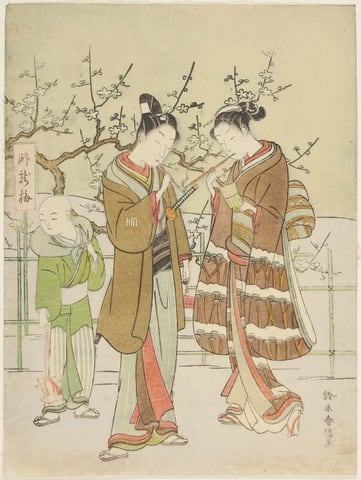
Giving a Light by the Garyubai Plum TreeSuzuki Harunobu, c. 1767/68Courtesy of the Art Institute of Chicago