Ukiyo-e
Works in this room
Japanese woodblock prints of the floating world: actors, courtesans, landscapes and the sea.
Section 1, north wall
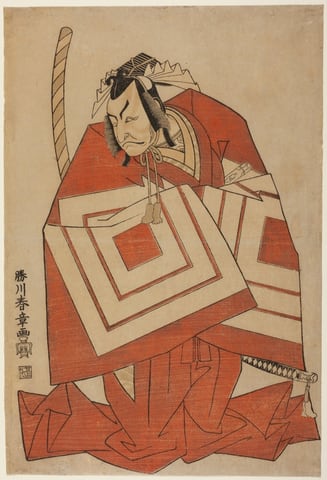
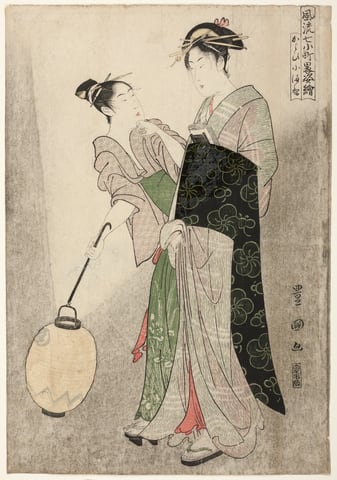
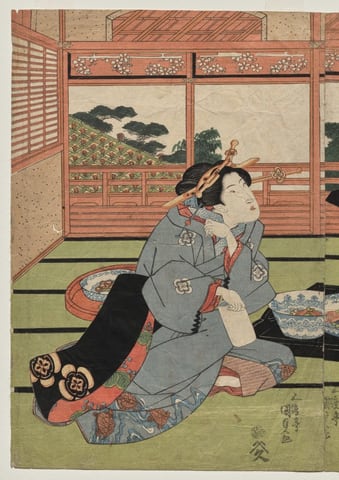
The Actor Ichikawa Danjuro IV in a "Shibaraku" Role, Possibly from the Play Ima o Sakari Suehiro Genji (The Genji Clan Now at Its Zenith), Performed at the Nakamura Theater from the First Day of the Eleventh Month, 1768Katsukawa Shunshō, c. 1768Courtesy of the Art Institute of Chicago Courting Komachi (Kayoi Komachi), from the series Seven Fashionable Figures of Ono no Komachi (Furyu nana Komachi yatushi sugata-e)Utagawa Toyokuni, Edo period (1615–1868), about 1792Courtesy of the Art Institute of Chicago A View of the Large New Room at SakuraiUtagawa Kunisada, early or mid 1830sCourtesy of the Cleveland Museum of Art
Section 1, south wall
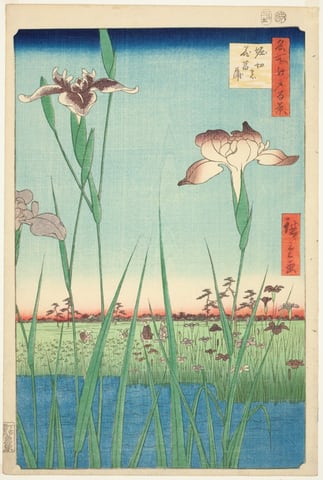
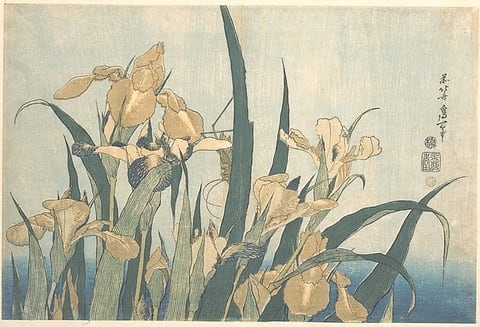
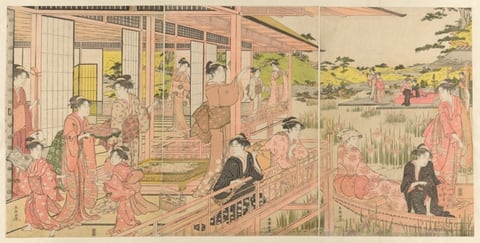
Irises at Horikiri (Horikiri no hanashobu), from the series "One Hundred Famous Views of Edo (Meisho Edo hyakkei)"Utagawa Hiroshige, 1857Courtesy of the Art Institute of Chicago Grasshopper and IrisKatsushika Hokusai, late 1820sCourtesy of The Metropolitan Museum of Art Iris GardenKatsukawa Shunchô, c. 1781/89Courtesy of the Art Institute of Chicago
Section 2, south wall
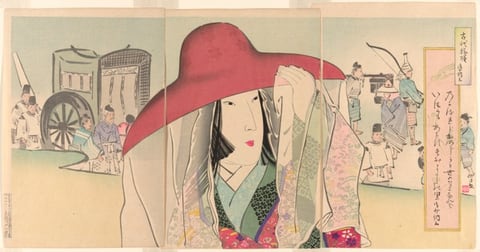
Sei Shonagon, from the series Ancient Patterns (Kodai moyo)Kobayashi Kiyochika, Meiji period (1896–1912), 1896Courtesy of the Art Institute of Chicago 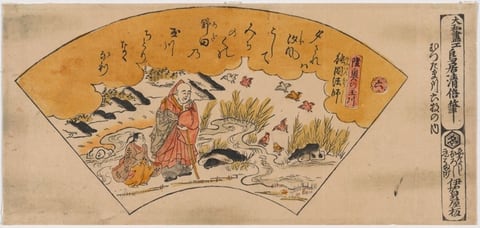
The Priest Kobo Daishi at the Tama River in Kii Province from the series The Six Tama RiversTorii Kiyomasu, c. 1725-1735Courtesy of the Art Institute of Chicago 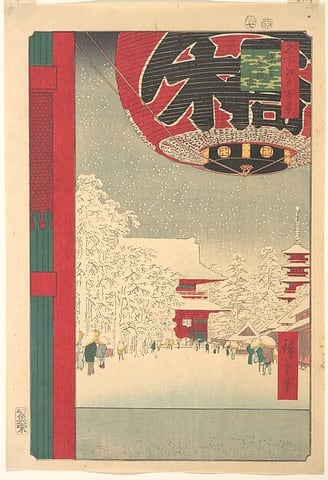
Kinryūsan Temple at Asakusa, from the series "One Hundred Famous Views of Edo"Utagawa Hiroshige, 1856Courtesy of The Metropolitan Museum of Art
Section 2, north wall
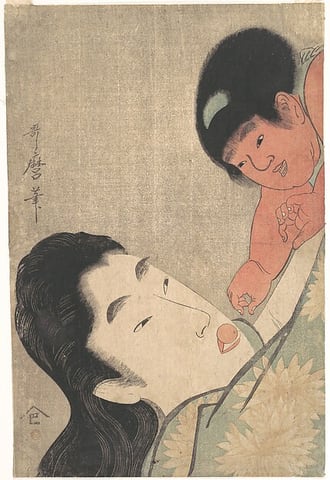
Yamauba and Kintarō Playing with a CherryKitagawa Utamaro, ca. 1795Courtesy of The Metropolitan Museum of Art 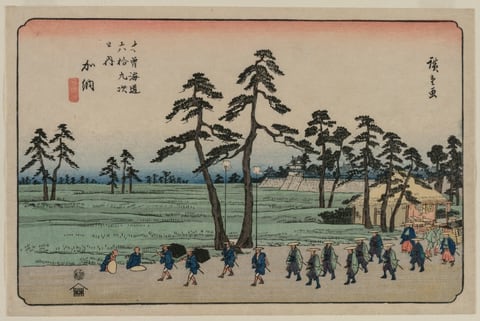
Kanō, from the series Sixty-nine Stations of the KisokaidōUtagawa Hiroshige, c. 1835–37Courtesy of the Cleveland Museum of Art 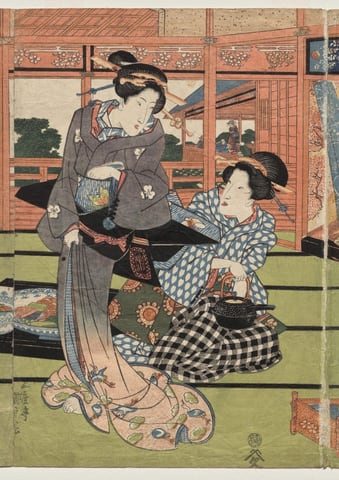
A View of the Large New Room at SakuraiUtagawa Kunisada, early or mid 1830sCourtesy of the Cleveland Museum of Art
Section 3, north wall
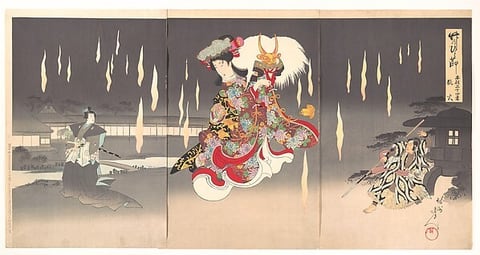
Scene of Foxfire (Kitsunebi) from the Play Honchō nijūshikōYōshū (Hashimoto) Chikanobu, 1898Courtesy of The Metropolitan Museum of Art 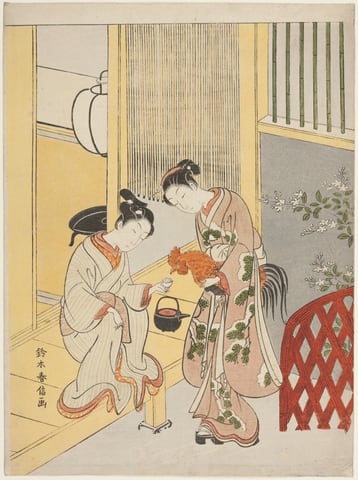
Delaying the announcement of dawnSuzuki Harunobu, c. 1767/68Courtesy of the Art Institute of Chicago
Section 3, south wall
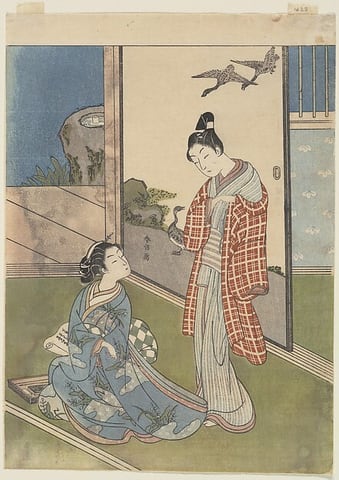
A Girl Writing a LetterSuzuki Harunobu, 18th centuryCourtesy of The Metropolitan Museum of Art 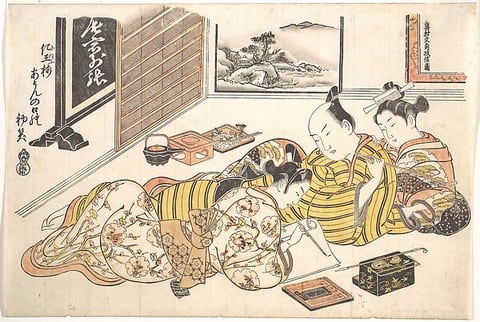
Plate from the Erotic Book Mounds of Dyed Colors: A Pattern Book for the Boudoir (Someiro no yama neya no hinagata), First MonthOkumura Masanobu, ca. 1736–44Courtesy of The Metropolitan Museum of Art