The Floating World
Works in this room
Japanese woodblock prints of the floating world: actors, courtesans, landscapes and the sea.
Section 1, north wall
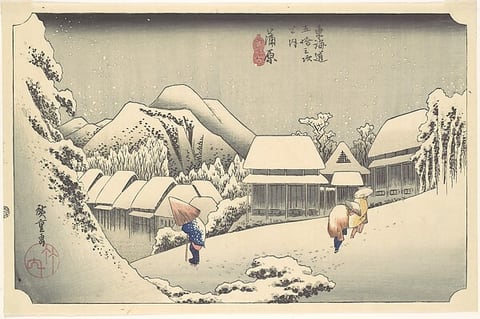
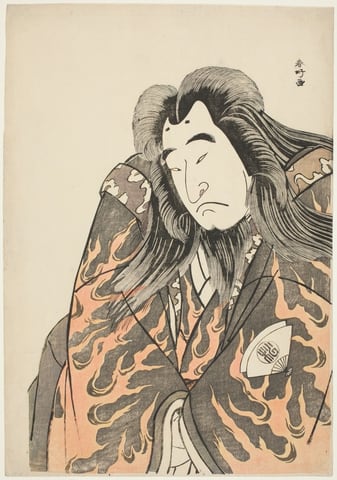
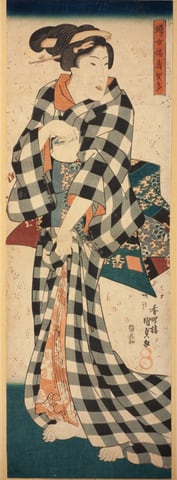
Evening Snow at Kanbara, from the series "Fifty-three Stations of the Tōkaidō"Utagawa Hiroshige, ca. 1833–34Courtesy of The Metropolitan Museum of Art Actor Onoe Matsusuke I as Retired Emperor SutokuKatsukawa Shunkо̄, About 1780Courtesy of the Art Institute of Chicago Image of a Japanese Woman (Fujo Yamato sugata)Utagawa Kunisada I (Toyokuni III), c. 1830/35Courtesy of the Art Institute of Chicago
Section 1, south wall
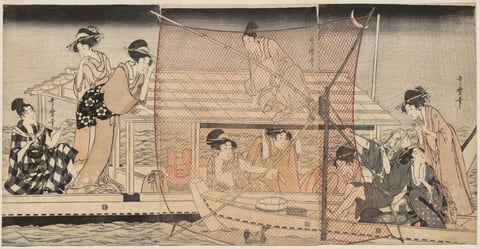
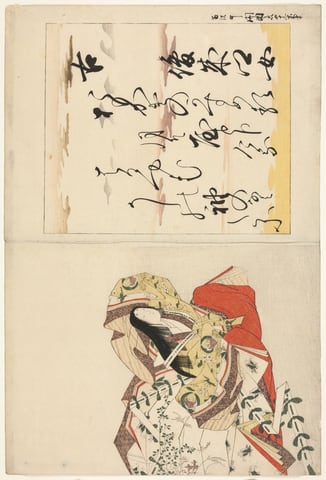
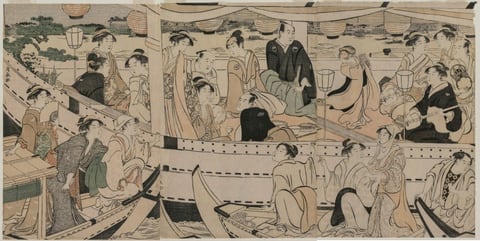
Net Fishing at Night on the Sumida RiverKitagawa Utamaro, c. 1800Courtesy of the Cleveland Museum of Art The Poetess Shunzei no Musume, from the series The Thirty-six Immortal Women Poets (Nishikizuri onna sanjurokkasen)Chôbunsai Eishi, Edo period (1615–1868), 1801Courtesy of the Art Institute of Chicago Boating Party on the Sumida RiverTorii Kiyonaga, 1789Courtesy of the Cleveland Museum of Art
Section 2, south wall
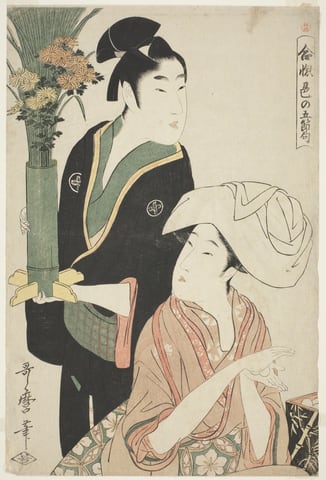
The Ninth Month, from the series Five Amorous Festivals of Love (Aibore iro no gosekku)Kitagawa Utamaro, 1801Courtesy of the Art Institute of Chicago 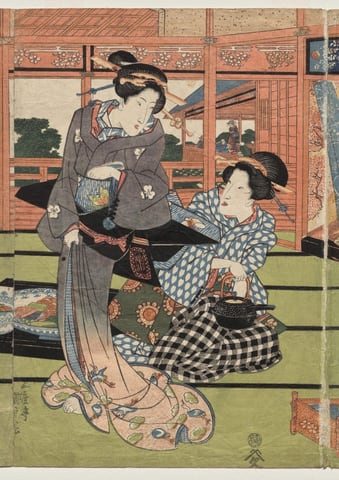
A View of the Large New Room at SakuraiUtagawa Kunisada, early or mid 1830sCourtesy of the Cleveland Museum of Art 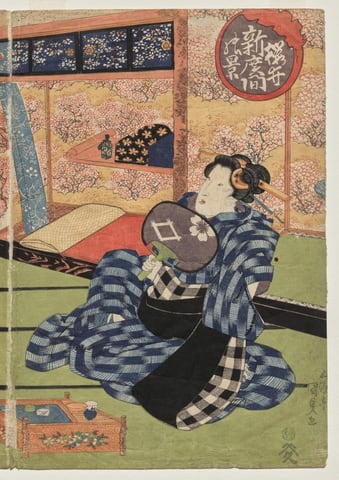
A View of the Large New Room at SakuraiUtagawa Kunisada, early or mid 1830sCourtesy of the Cleveland Museum of Art
Section 2, north wall
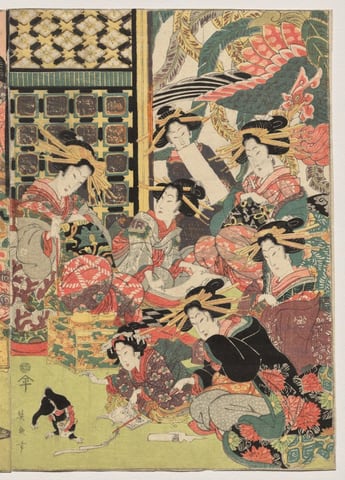
A Picture of the Viewing in the Pleasure QuartersKikukawa Eizan, 1810sCourtesy of the Cleveland Museum of Art 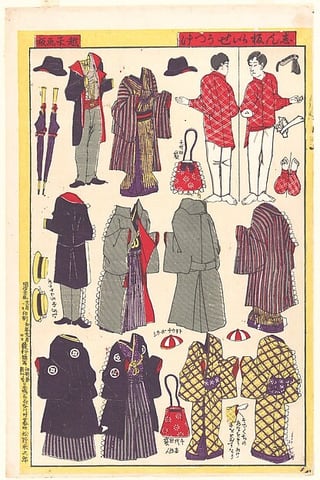
Paper Doll ClothingUnrecorded Japanese maker, 1897–98Courtesy of The Metropolitan Museum of Art 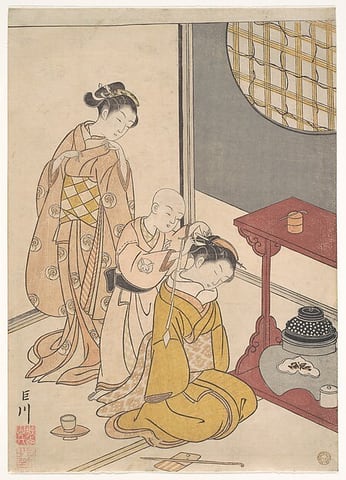
Night Rain at the Double-Shelf Stand, from the series Eight Parlor Views (Zashiki hakkei)Suzuki Harunobu, ca. 1766Courtesy of The Metropolitan Museum of Art
Section 3, north wall
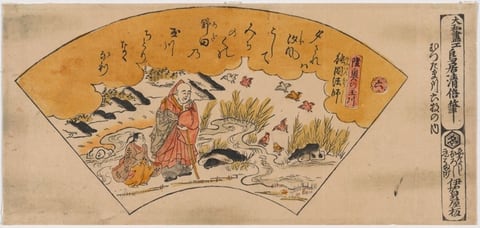
The Priest Kobo Daishi at the Tama River in Kii Province from the series The Six Tama RiversTorii Kiyomasu, c. 1725-1735Courtesy of the Art Institute of Chicago 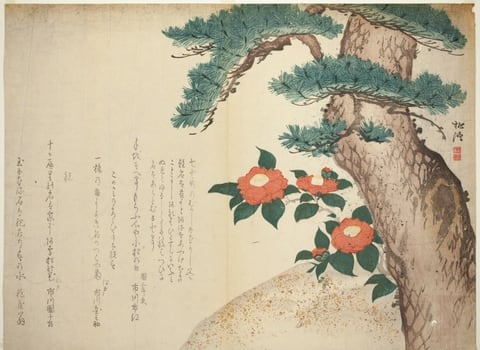
A Pine Tree and CamelliasNiwa Tokei, 1840Courtesy of the Art Institute of Chicago
Section 3, south wall
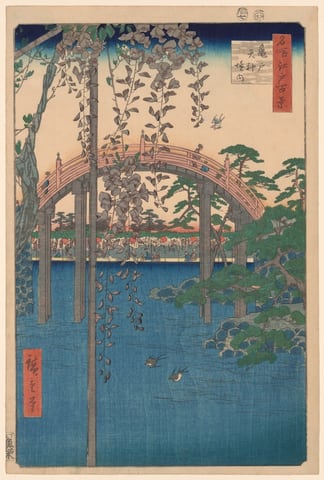
Precincts of Kameido Tenjin Shrine (Kameido Tenjin keidai), from the series "One Hundred Famous Views of Edo (Meisho Edo hyakkei)"Utagawa Hiroshige, 1856Courtesy of the Art Institute of Chicago 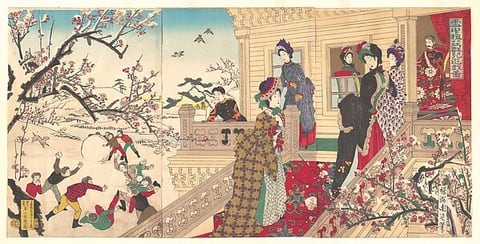
Children Playing in the Snow under Plum Trees in Bloom (Secchū baisō gunji yūgi zu)Yōshū (Hashimoto) Chikanobu, November 1887Courtesy of The Metropolitan Museum of Art