The Floating World
Works in this room
Japanese woodblock prints of the floating world: actors, courtesans, landscapes and the sea.
Section 1, north wall
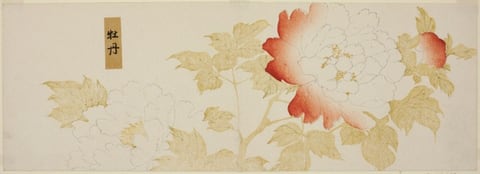
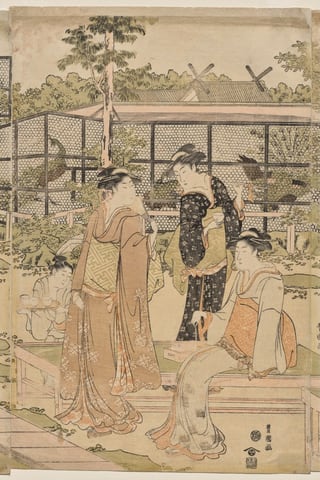
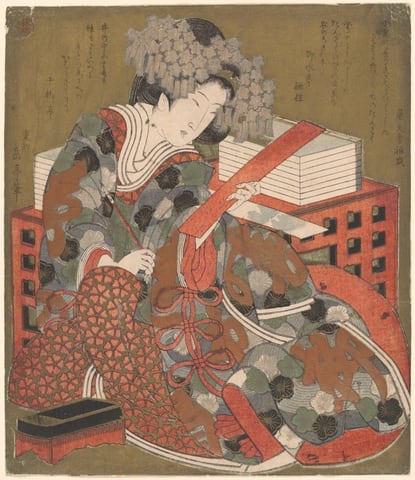
PeoniesKitagawa Utamaro, n.d.Courtesy of the Art Institute of Chicago The Shika TeahouseUtagawa Toyokuni, early 1790sCourtesy of the Cleveland Museum of Art Woman About to Write a PoemYashima Gakutei, c. 1824Courtesy of the Art Institute of Chicago
Section 1, south wall
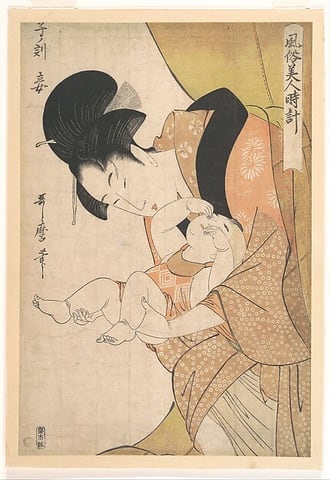
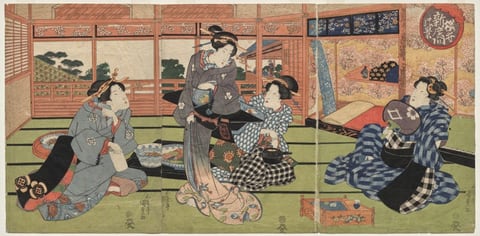
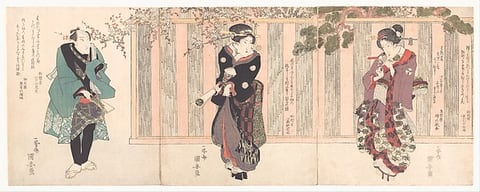
“Hour of the Rat: Mistress,” from the series Women’s Daily Customs (Fuzoku bijin tokei)Kitagawa Utamaro, 1790Courtesy of The Metropolitan Museum of Art A View of the Large New Room at SakuraiUtagawa Kunisada, early or mid 1830sCourtesy of the Cleveland Museum of Art Three Kabuki Actors Playing HanetsukiUtagawa Kuniyasu, ca. 1823Courtesy of The Metropolitan Museum of Art
Section 2, south wall
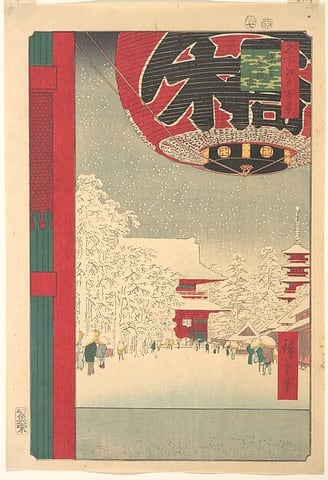
Kinryūsan Temple at Asakusa, from the series "One Hundred Famous Views of Edo"Utagawa Hiroshige, 1856Courtesy of The Metropolitan Museum of Art 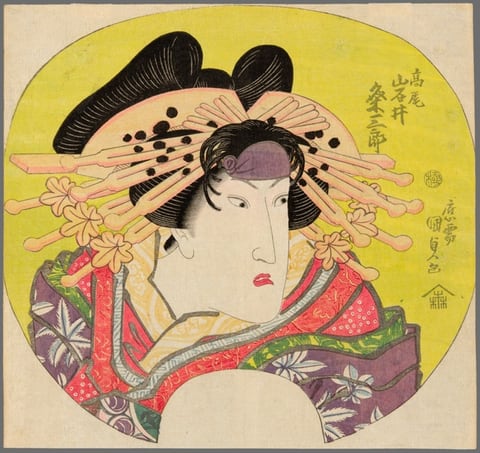
Iwai Kumesaburo II as the Courtesan Takao in Banzei Okuni KabukiUtagawa Kunisada, c. 1827Courtesy of the Art Institute of Chicago 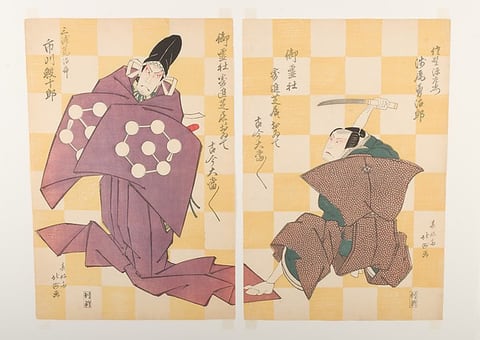
Kabuki Actors Asao Yūjirō as Sano Genzaemon and Ichikawa Ebijūrō I as Miura Arajirō, in the play Keisei Sano no FunabashiShunkōsai Hokushū, 1822Courtesy of The Metropolitan Museum of Art
Section 2, north wall
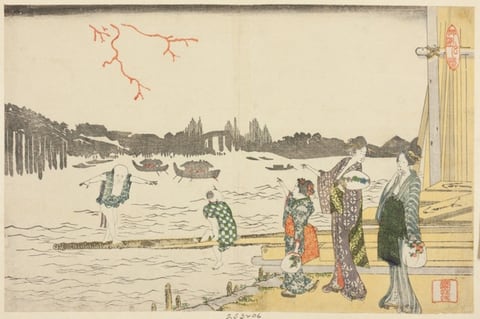
Women and Children Viewing the FireworksKatsushika Hokusai, c. 1798Courtesy of the Art Institute of Chicago 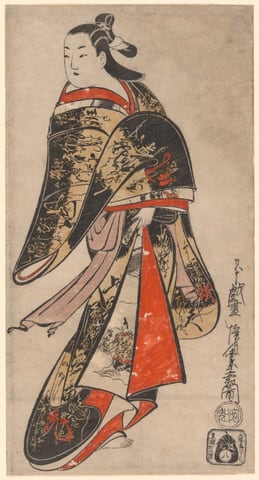
Courtesan WalkingKaigetsudo Anchi, c. 1714Courtesy of the Art Institute of Chicago
Section 3, north wall
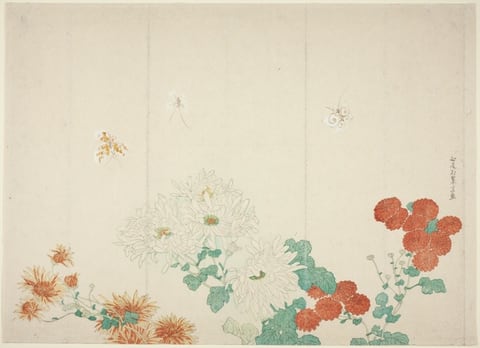
Three Types of ChrysanthemumsKitao Shigemasa, c. 1790Courtesy of the Art Institute of Chicago 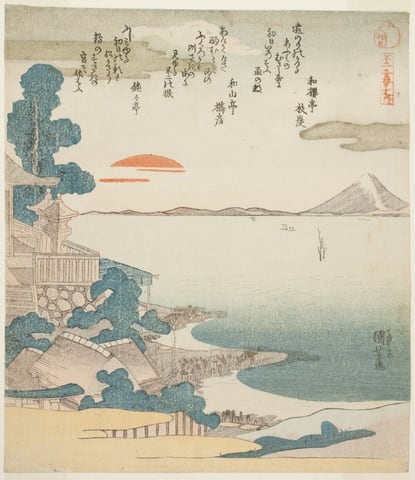
Dawn over Mout Fuji and Susaki, from the series "Five Views of Mount Fuji (Fuji goban no uchi)"Utagawa Kuniyoshi, c. 1827/29Courtesy of the Art Institute of Chicago 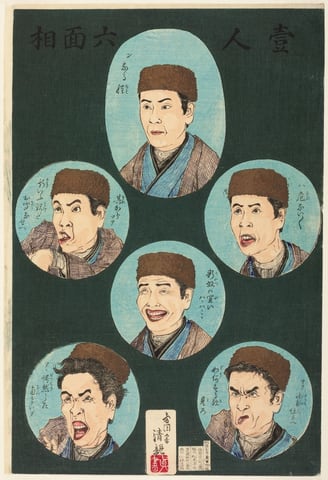
One Person, Six Expressions (Hitori rokumenso)Kobayashi Kiyochika, 1884Courtesy of the Art Institute of Chicago
Section 3, south wall

The Actor Segawa Tomisaburo II as the Otomos' Maid Wakakusa, Actually Prince KorehitoTōshūsai Sharaku, 1794–75Courtesy of The Metropolitan Museum of Art 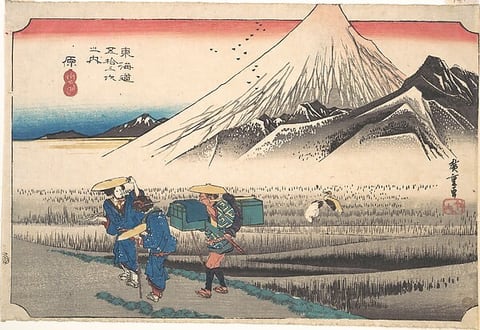
Hara: Mount Fuji in the Morning (Hara, Asa no Fuji), from the series Fifty-Three Stations of the Tōkaidō Road (Tōkaidō gojūsan tsugi), also known as the First Tōkaidō or Great TōkaidōUtagawa Hiroshige, ca. 1833–34Courtesy of The Metropolitan Museum of Art