The Floating World
Works in this room
Japanese woodblock prints of the floating world: actors, courtesans, landscapes and the sea.
Section 1, north wall
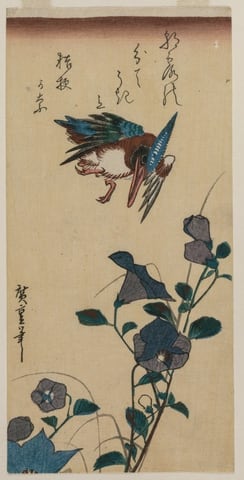
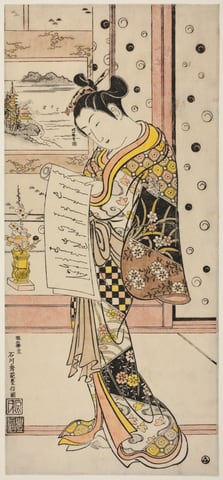
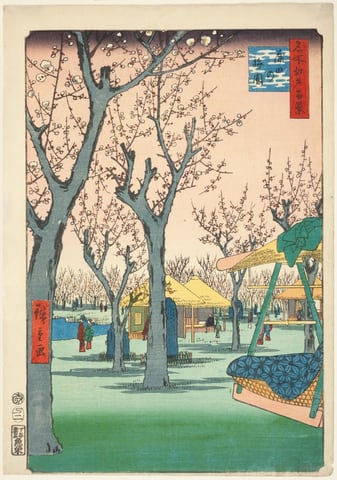
Kingfisher and Chinese BellflowersUtagawa Hiroshige, early or mid-1830sCourtesy of the Cleveland Museum of Art Courtesan Reading a LetterIshikawa Toyonobu, c. 1745Courtesy of the Art Institute of Chicago The Plum Orchard at Kamata (Kamata no umezono), from the series "One Hundred Famous Views of Edo (Meisho Edo hyakkei)"Utagawa Hiroshige, 1857Courtesy of the Art Institute of Chicago
Section 1, south wall
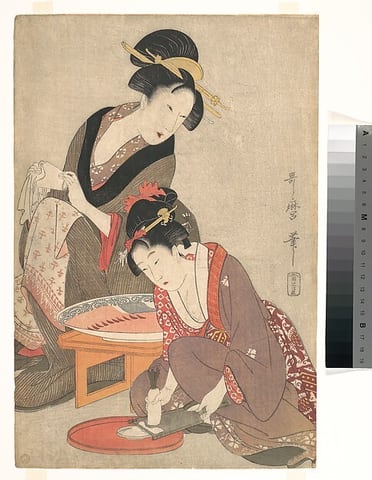
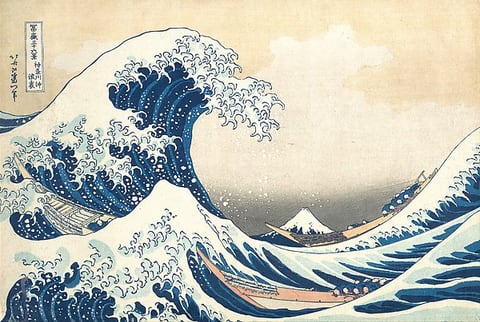
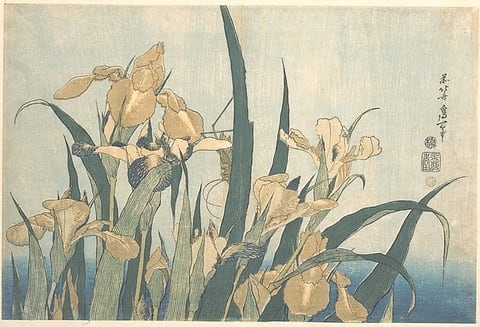
Women Grating Radish for SashimiKitagawa Utamaro, ca. 1798–99Courtesy of The Metropolitan Museum of Art Under the Wave off Kanagawa (Kanagawa oki nami ura), also known as The Great Wave, from the series Thirty-six Views of Mount Fuji (Fugaku sanjūrokkei)Katsushika Hokusai, ca. 1830–32Courtesy of The Metropolitan Museum of Art Grasshopper and IrisKatsushika Hokusai, late 1820sCourtesy of The Metropolitan Museum of Art
Section 2, south wall
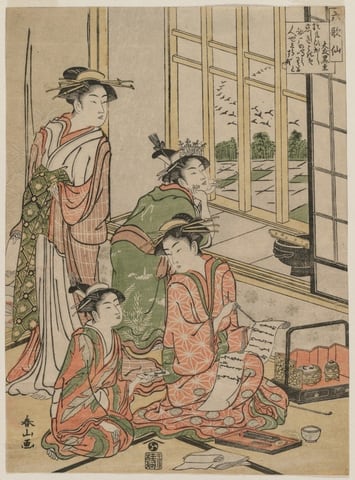
Courtesans at Leisure from the series The Six Immortal PoetsKatsukawa Shunzan, early 1780sCourtesy of the Cleveland Museum of Art 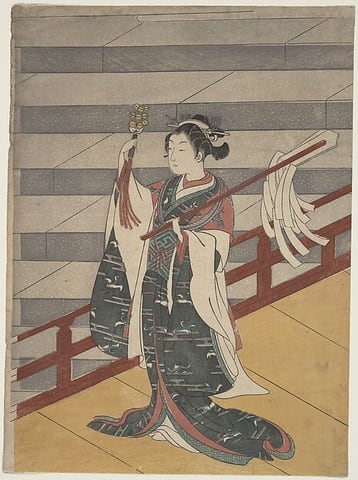
Girl on Balcony above Stone StairwaySuzuki Harunobu, ca. 1768Courtesy of The Metropolitan Museum of Art 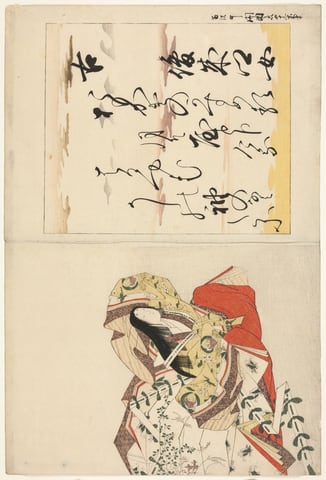
The Poetess Shunzei no Musume, from the series The Thirty-six Immortal Women Poets (Nishikizuri onna sanjurokkasen)Chôbunsai Eishi, Edo period (1615–1868), 1801Courtesy of the Art Institute of Chicago
Section 2, north wall
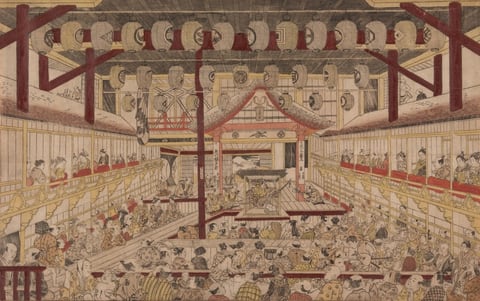
Perspective View of the Interior of the Nakamura Theater with Ichikawa Ebizo II as Yanone GoroOkumura Masanobu, 1740Courtesy of the Cleveland Museum of Art 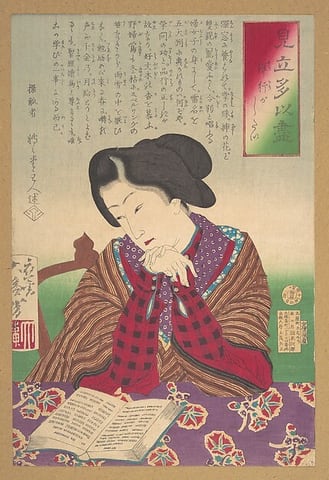
Collection of Desires, Wish for Foreign Travel (Mitate Tai zukushi-yōkō ga shitai)Tsukioka Yoshitoshi, January, 1878Courtesy of The Metropolitan Museum of Art
Section 3, north wall
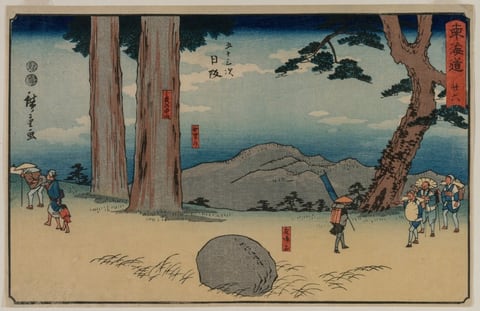
Nissaka: The Night-Weeping Stone at Sayo no Nakayama, from the series The Fifty-Three Stations of the TōkaidōUtagawa Hiroshige, c. 1848–50Courtesy of the Cleveland Museum of Art 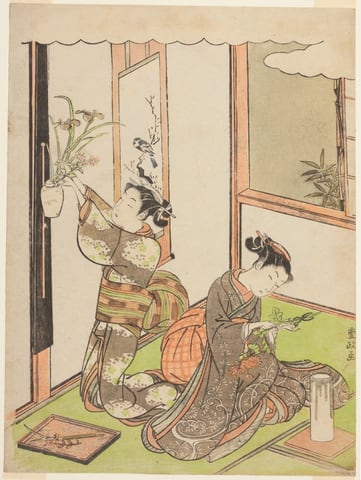
Flower ArrangingKitao Shigemasa, c. 1769Courtesy of the Art Institute of Chicago 
The Actor Segawa Tomisaburo II as the Otomos' Maid Wakakusa, Actually Prince KorehitoTōshūsai Sharaku, 1794–75Courtesy of The Metropolitan Museum of Art
Section 3, south wall
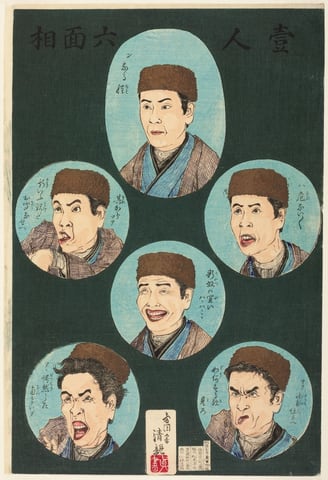
One Person, Six Expressions (Hitori rokumenso)Kobayashi Kiyochika, 1884Courtesy of the Art Institute of Chicago 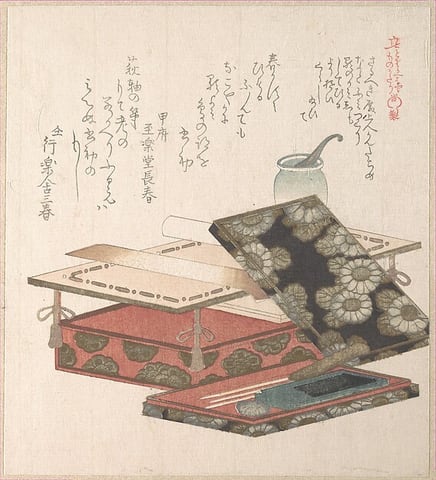
Table and Writing SetKubo Shunman, 19th centuryCourtesy of The Metropolitan Museum of Art