The Floating World

Works in this room
Japanese woodblock prints of the floating world: actors, courtesans, landscapes and the sea.
Section 1, north wall
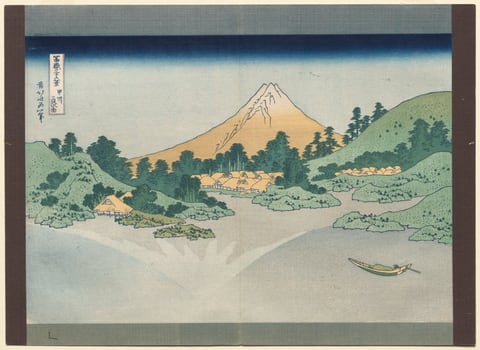
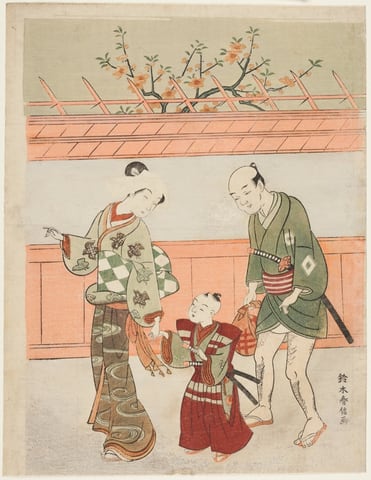
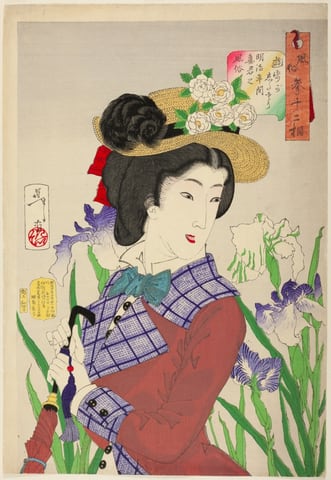
Thirty-Six Views of Mt. Fuji: The Surface of Lake Misaka in Kai ProvinceKatsushika Hokusai, early 1830sCourtesy of the Cleveland Museum of Art A Spring OutingSuzuki Harunobu, c. 1768Courtesy of the Art Institute of Chicago In The Mood for a Walk (Yuho ga shitaso), from the series "Thirty-two Aspects of Women (Fuzoku sanjuniso)"Tsukioka Yoshitoshi, 1888Courtesy of the Art Institute of Chicago
Section 1, south wall
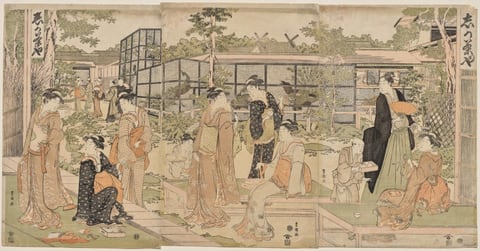
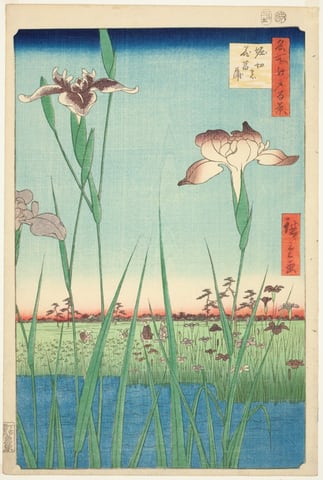
The Actor Segawa Tomisaburo II as the Otomos' Maid Wakakusa, Actually Prince KorehitoTōshūsai Sharaku, 1794–75Courtesy of The Metropolitan Museum of Art The Shika TeahouseUtagawa Toyokuni, early 1790sCourtesy of the Cleveland Museum of Art Irises at Horikiri (Horikiri no hanashobu), from the series "One Hundred Famous Views of Edo (Meisho Edo hyakkei)"Utagawa Hiroshige, 1857Courtesy of the Art Institute of Chicago
Section 2, south wall
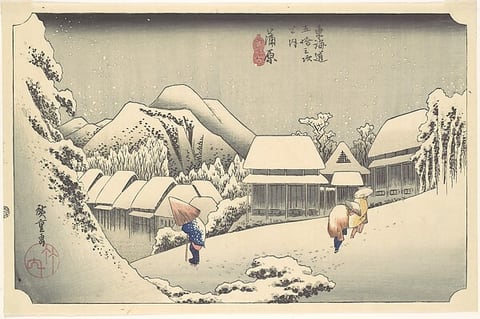
Evening Snow at Kanbara, from the series "Fifty-three Stations of the Tōkaidō"Utagawa Hiroshige, ca. 1833–34Courtesy of The Metropolitan Museum of Art 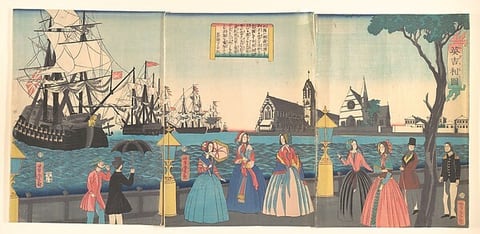
England (Igirisukoku)Utagawa Yoshitora, 2nd month, 1865Courtesy of The Metropolitan Museum of Art 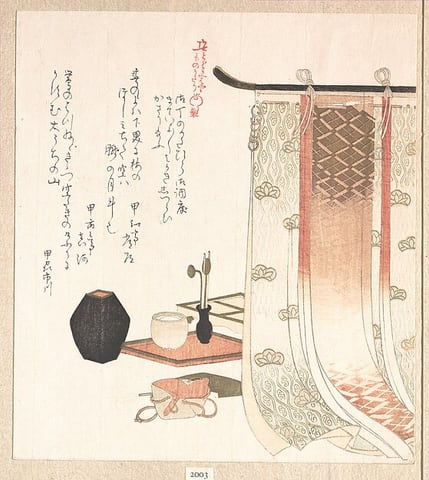
Screen and Utensils for the Incense CeremonyKubo Shunman, 19th centuryCourtesy of The Metropolitan Museum of Art
Section 2, north wall
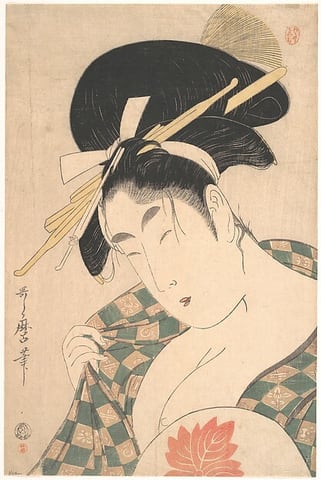
A CourtesanKitagawa UtamaroCourtesy of The Metropolitan Museum of Art 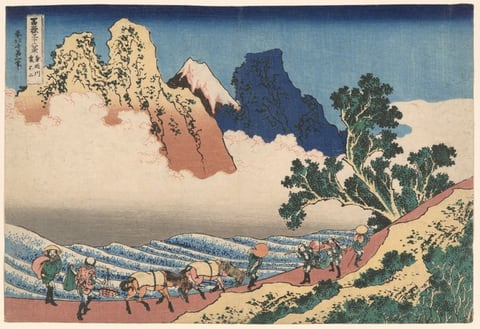
The Back of Mount Fuji Seen from Minobu River (Minobugawa Urafuji), from the series Thirty-Six Views of Mount Fuji (Fugaku sanjūrokkei)Katsushika Hokusai, 1830-33Courtesy of the Art Institute of Chicago
Section 3, north wall
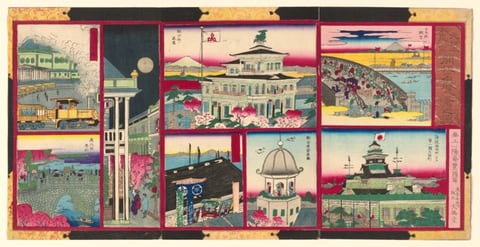
Eight Modern Views of Famous Places in Tokyo of Great Japan (Dai Nippon Tokyo kaika meisho hakkei no zu)Utagawa Kunisada II (Kunimasa III, Toyokuni IV), 1875Courtesy of the Art Institute of Chicago 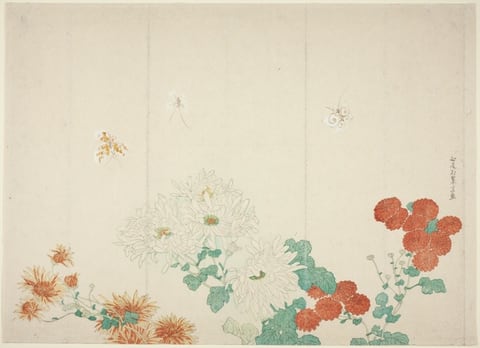
Three Types of ChrysanthemumsKitao Shigemasa, c. 1790Courtesy of the Art Institute of Chicago
Section 3, south wall
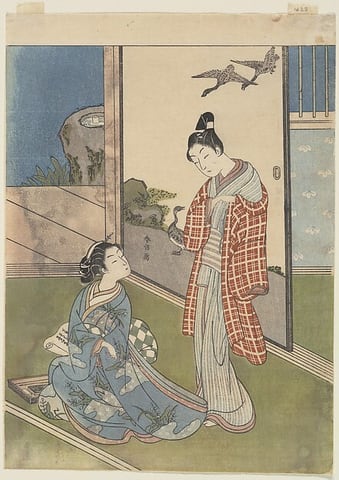
A Girl Writing a LetterSuzuki Harunobu, 18th centuryCourtesy of The Metropolitan Museum of Art 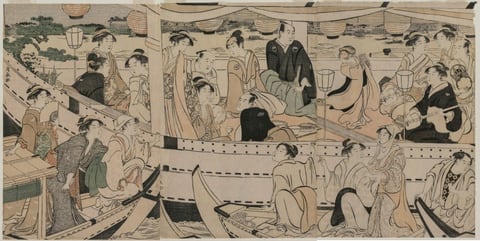
Boating Party on the Sumida RiverTorii Kiyonaga, 1789Courtesy of the Cleveland Museum of Art 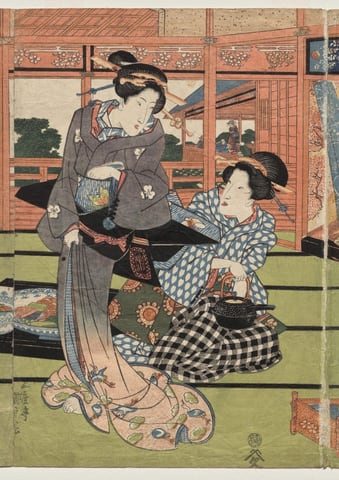
A View of the Large New Room at SakuraiUtagawa Kunisada, early or mid 1830sCourtesy of the Cleveland Museum of Art