The Floating World
Works in this room
Japanese woodblock prints of the floating world: actors, courtesans, landscapes and the sea.
Section 1, north wall
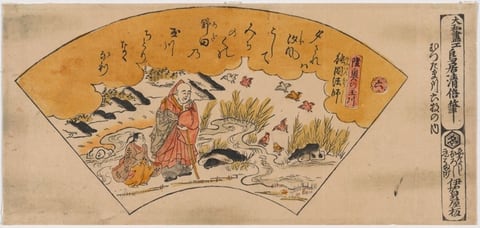
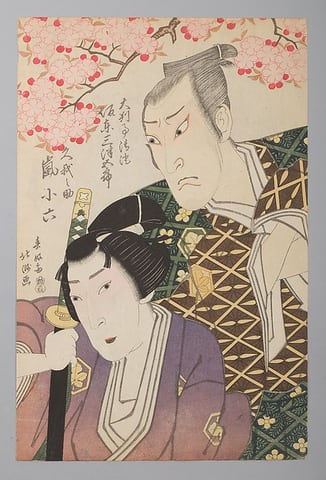
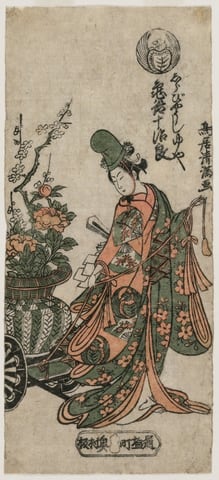
The Priest Kobo Daishi at the Tama River in Kii Province from the series The Six Tama RiversTorii Kiyomasu, c. 1725-1735Courtesy of the Art Institute of Chicago Bandō Mitsugorō III as Daihanji Kiyozumi and Arashi Koroku IV as KoganosukeShunkōsai Hokushū, 1821Courtesy of The Metropolitan Museum of Art Kametani Jujiro as the Shirabyoshi Dancer YuyaTorii Kiyomitsu, c. early 1760sCourtesy of the Cleveland Museum of Art
Section 1, south wall
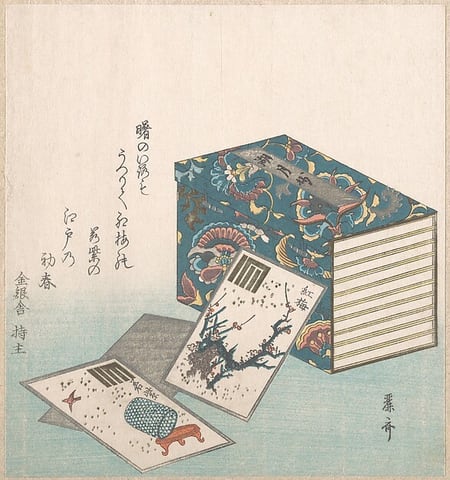
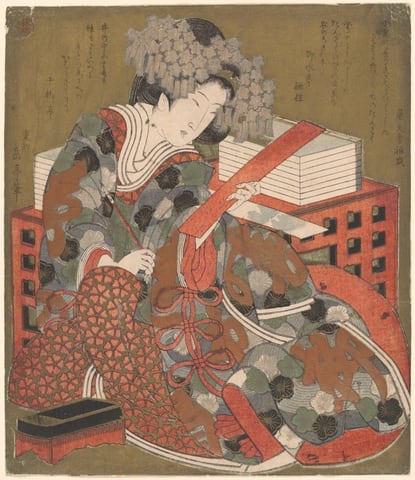
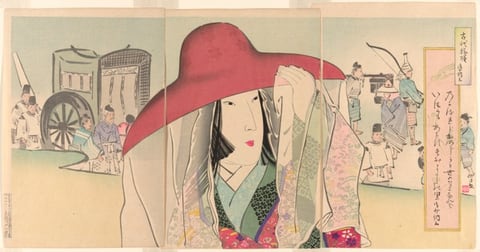
Books and CardsReisai, 18th–19th centuryCourtesy of The Metropolitan Museum of Art Woman About to Write a PoemYashima Gakutei, c. 1824Courtesy of the Art Institute of Chicago Sei Shonagon, from the series Ancient Patterns (Kodai moyo)Kobayashi Kiyochika, Meiji period (1896–1912), 1896Courtesy of the Art Institute of Chicago
Section 2, south wall
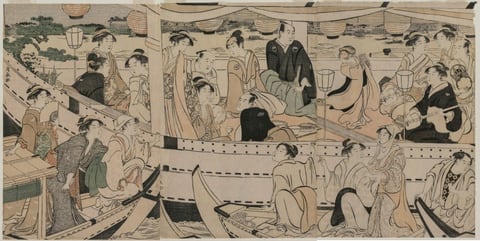
Boating Party on the Sumida RiverTorii Kiyonaga, 1789Courtesy of the Cleveland Museum of Art 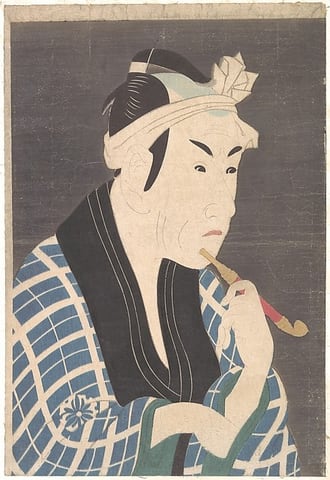
Matsumoto Koshiro IV as the Fish Peddler GorobeiTōshūsai Sharaku, Probably late 1880s or early 1890sCourtesy of The Metropolitan Museum of Art 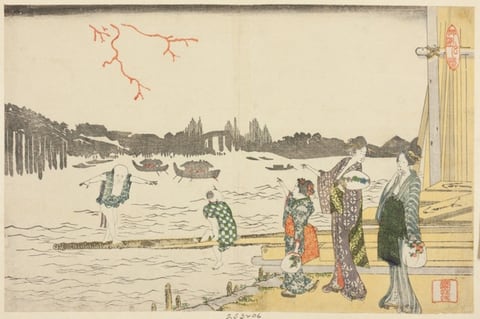
Women and Children Viewing the FireworksKatsushika Hokusai, c. 1798Courtesy of the Art Institute of Chicago
Section 2, north wall
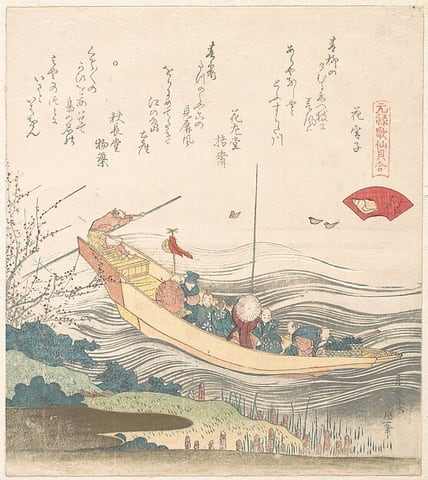
Miyako ShellKatsushika Hokusai, probably 1821Courtesy of The Metropolitan Museum of Art 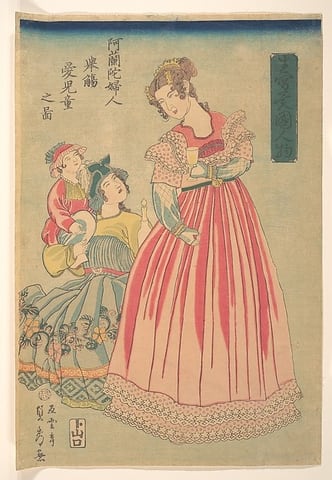
Dutch Woman and Child (Seisha ikoku jinbutsu Oranda fujin aijidō no zu)Utagawa (Gountei) Sadahide, 1860Courtesy of The Metropolitan Museum of Art 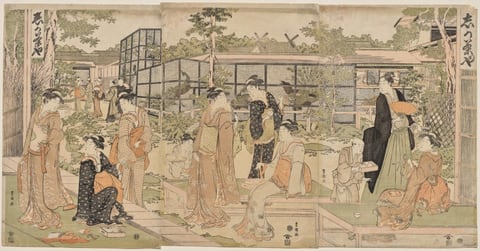
The Shika TeahouseUtagawa Toyokuni, early 1790sCourtesy of the Cleveland Museum of Art
Section 3, north wall
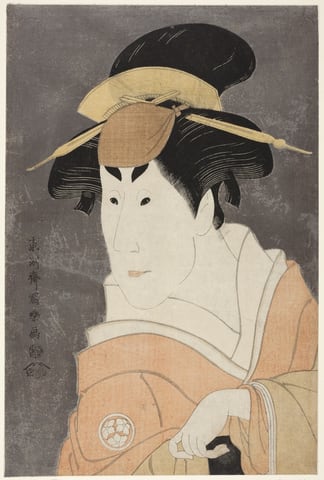
The actor Osagawa Tsuneyo II as Osan, Ippei’s elder sisterTōshūsai Sharaku, 1794Courtesy of the Art Institute of Chicago 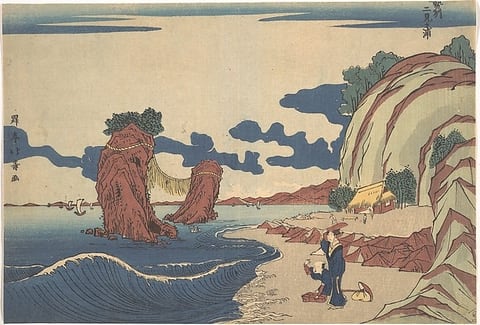
View of Futami Beach at IseShōtei Hokuju, ca. 1810–1820Courtesy of The Metropolitan Museum of Art
Section 3, south wall
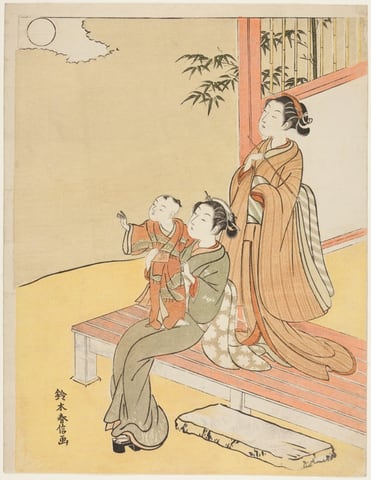
Viewing the MoonSuzuki Harunobu, c. 1767/68Courtesy of the Art Institute of Chicago 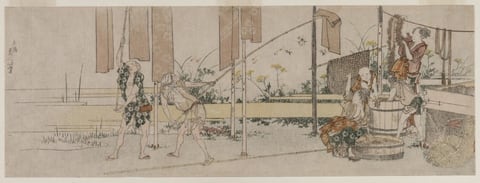
Dyers at WorkKatsushika Hokusai, c. 1800Courtesy of the Cleveland Museum of Art