The Floating World
Works in this room
Japanese woodblock prints of the floating world: actors, courtesans, landscapes and the sea.
Section 1, north wall
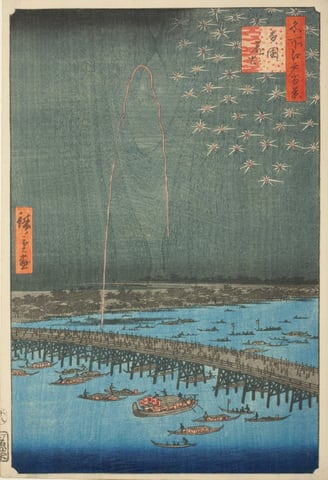
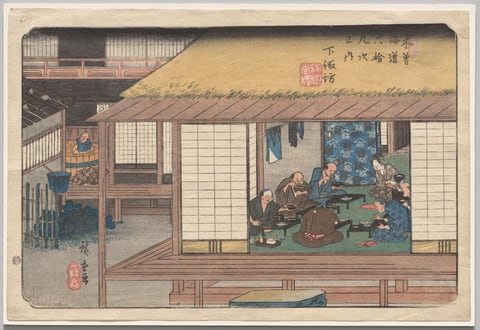
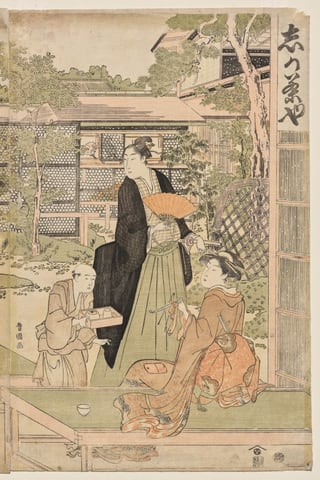
Fireworks at Ryōgoku (Ryōgoku hanabi), from the series One Hundred Famous Views of Edo (Meisho Edo hyakkei)Utagawa Hiroshige, 1858Courtesy of the Art Institute of Chicago Shimosuwa, from Sixty-Nine Stations of the KisokaidōUtagawa Hiroshige, 1835–38Courtesy of the Cleveland Museum of Art The Shika TeahouseUtagawa Toyokuni, early 1790sCourtesy of the Cleveland Museum of Art
Section 1, south wall
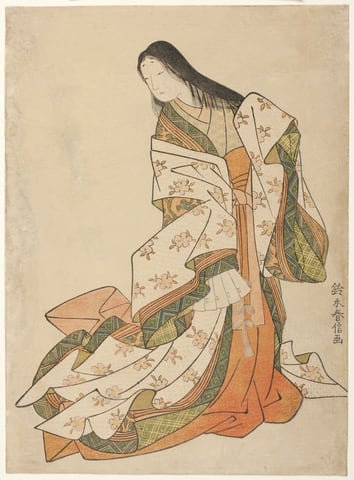
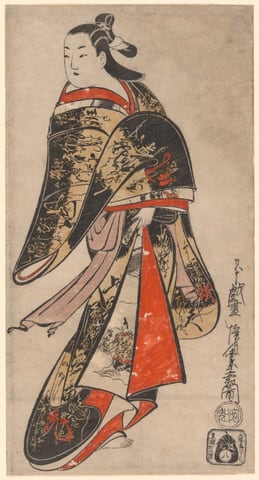
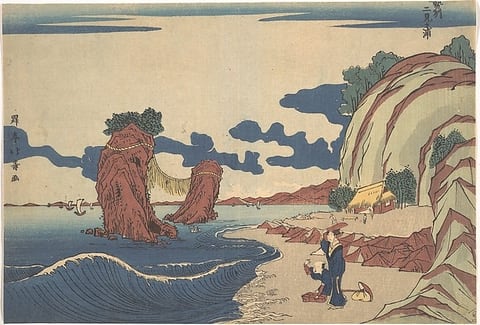
The Poetess Ono no KomachiSuzuki Harunobu, Edo period (1615–1868), 1767/68Courtesy of the Art Institute of Chicago Courtesan WalkingKaigetsudo Anchi, c. 1714Courtesy of the Art Institute of Chicago View of Futami Beach at IseShōtei Hokuju, ca. 1810–1820Courtesy of The Metropolitan Museum of Art
Section 2, south wall
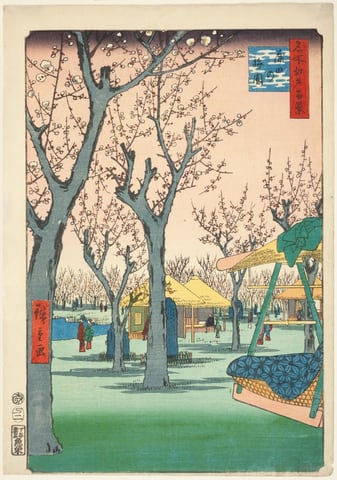
The Plum Orchard at Kamata (Kamata no umezono), from the series "One Hundred Famous Views of Edo (Meisho Edo hyakkei)"Utagawa Hiroshige, 1857Courtesy of the Art Institute of Chicago 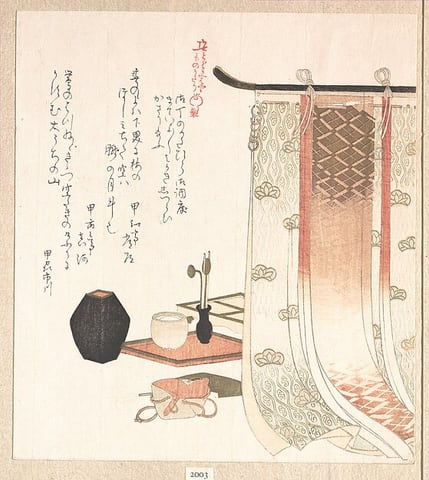
Screen and Utensils for the Incense CeremonyKubo Shunman, 19th centuryCourtesy of The Metropolitan Museum of Art 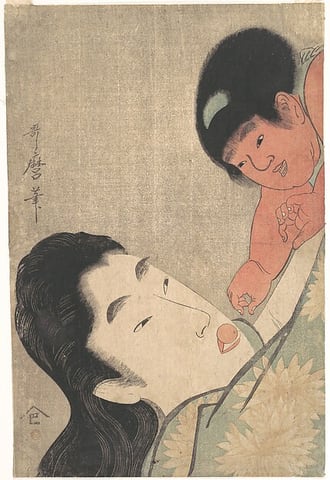
Yamauba and Kintarō Playing with a CherryKitagawa Utamaro, ca. 1795Courtesy of The Metropolitan Museum of Art
Section 2, north wall
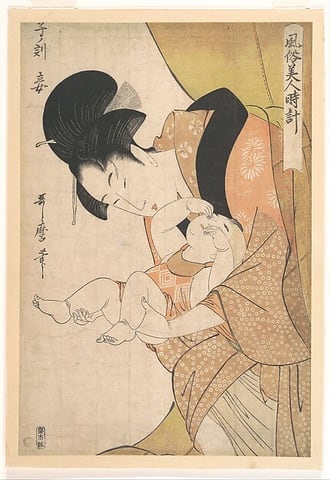
“Hour of the Rat: Mistress,” from the series Women’s Daily Customs (Fuzoku bijin tokei)Kitagawa Utamaro, 1790Courtesy of The Metropolitan Museum of Art 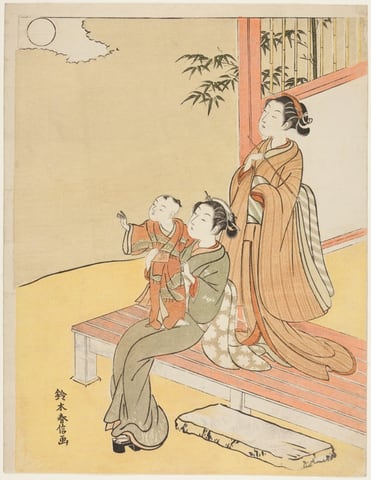
Viewing the MoonSuzuki Harunobu, c. 1767/68Courtesy of the Art Institute of Chicago 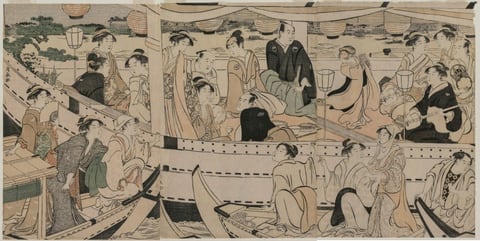
Boating Party on the Sumida RiverTorii Kiyonaga, 1789Courtesy of the Cleveland Museum of Art
Section 3, north wall
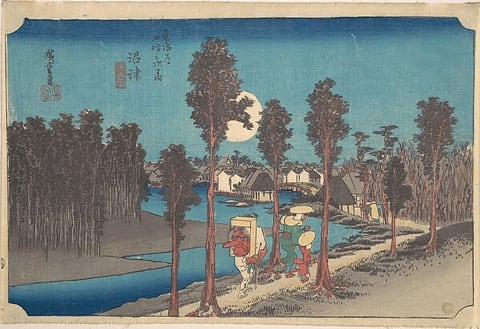
Numazu Ki KureUtagawa Hiroshige, ca. 1834Courtesy of The Metropolitan Museum of Art 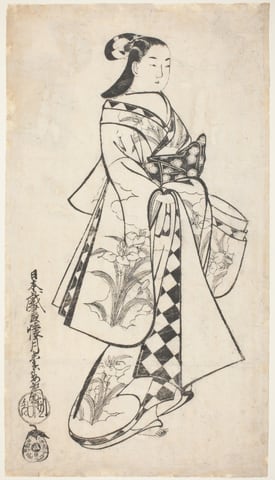
Standing BeautyKaigetsudo Anchi, About 1714Courtesy of the Art Institute of Chicago
Section 3, south wall
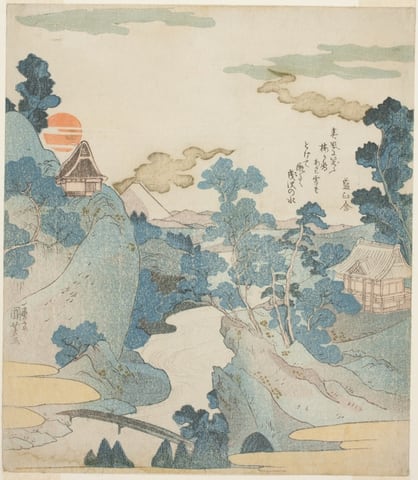
Distant View of Mount Fuji at Dawn from HakoneUtagawa Kuniyoshi, c. 1828/30Courtesy of the Art Institute of Chicago 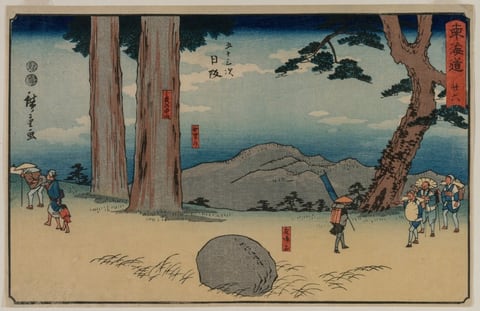
Nissaka: The Night-Weeping Stone at Sayo no Nakayama, from the series The Fifty-Three Stations of the TōkaidōUtagawa Hiroshige, c. 1848–50Courtesy of the Cleveland Museum of Art