The Floating World
Works in this room
Japanese woodblock prints of the floating world: actors, courtesans, landscapes and the sea.
Section 1, north wall
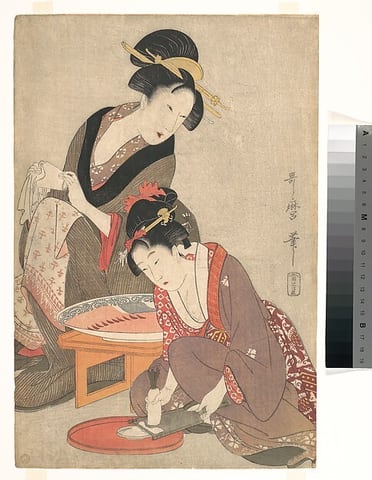
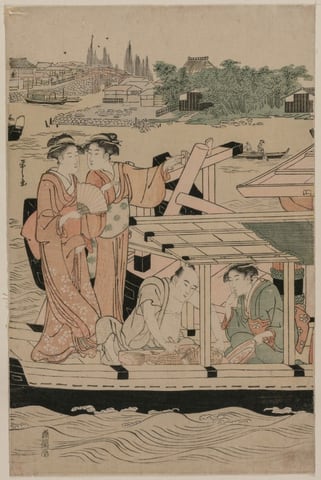
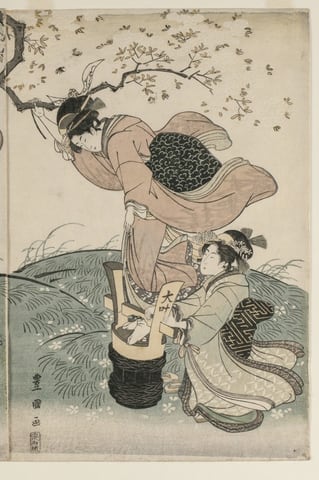
Women Grating Radish for SashimiKitagawa Utamaro, ca. 1798–99Courtesy of The Metropolitan Museum of Art Leftmost Print from Pleasure Boats on the Sumida River beneath Shin-Ōhashi BridgeChôbunsai Eishi, c. 1792Courtesy of the Cleveland Museum of Art Cherry Blossoms in the WindUtagawa Toyokuni, late 1790sCourtesy of the Cleveland Museum of Art
Section 1, south wall
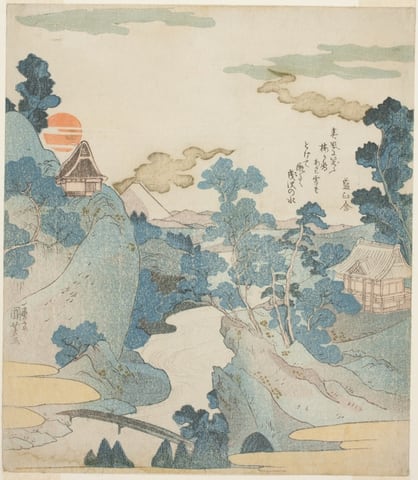
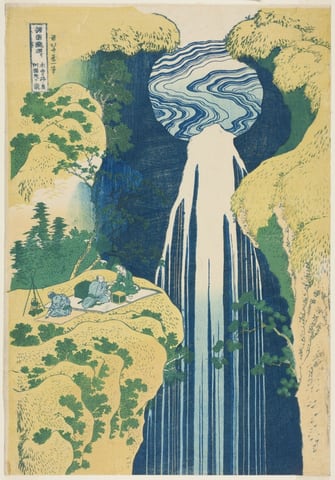
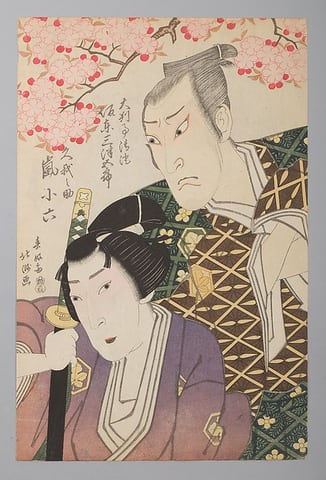
Distant View of Mount Fuji at Dawn from HakoneUtagawa Kuniyoshi, c. 1828/30Courtesy of the Art Institute of Chicago Amida Falls in the Far Reaches of the Kisokaido (Kisoji no oku Amidagataki), from the series "A Tour of Waterfalls in Various Provinces (Shokoku taki meguri)"Katsushika Hokusai, About 1833Courtesy of the Art Institute of Chicago Bandō Mitsugorō III as Daihanji Kiyozumi and Arashi Koroku IV as KoganosukeShunkōsai Hokushū, 1821Courtesy of The Metropolitan Museum of Art
Section 2, south wall
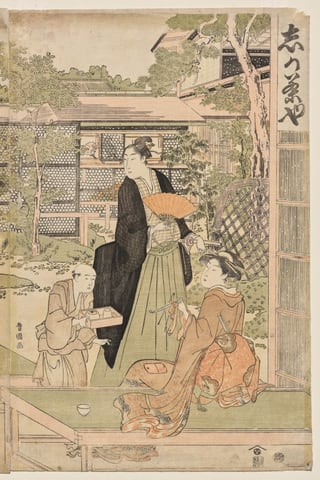
The Shika TeahouseUtagawa Toyokuni, early 1790sCourtesy of the Cleveland Museum of Art 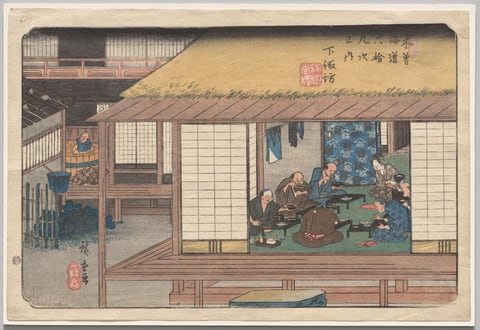
Shimosuwa, from Sixty-Nine Stations of the KisokaidōUtagawa Hiroshige, 1835–38Courtesy of the Cleveland Museum of Art 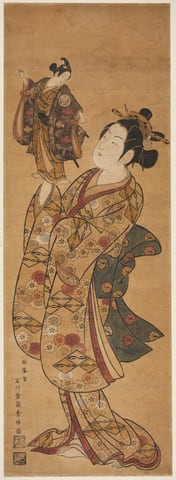
The Actor Onoe Kikugoro I holding a puppet of the Actor Sanogawa Ichimatsu IIshikawa Toyonobu, c. 1740sCourtesy of the Art Institute of Chicago
Section 2, north wall
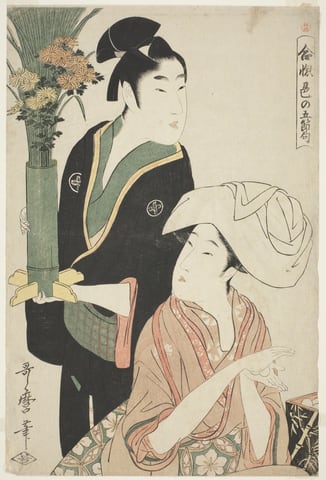
The Ninth Month, from the series Five Amorous Festivals of Love (Aibore iro no gosekku)Kitagawa Utamaro, 1801Courtesy of the Art Institute of Chicago 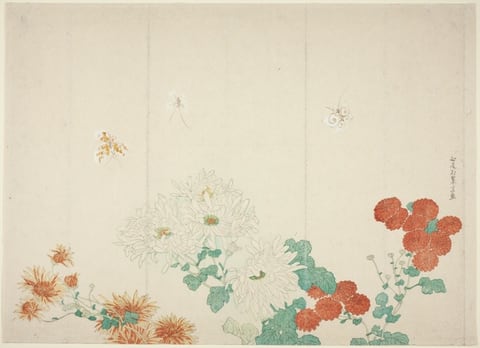
Three Types of ChrysanthemumsKitao Shigemasa, c. 1790Courtesy of the Art Institute of Chicago
Section 3, north wall
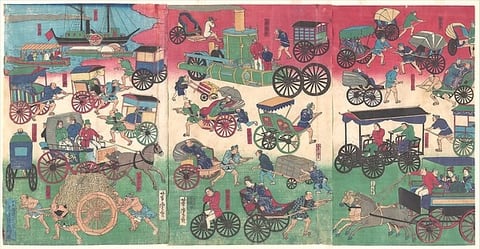
Vehicles on the Streets of TokyoUtagawa Yoshitora, 1870Courtesy of The Metropolitan Museum of Art 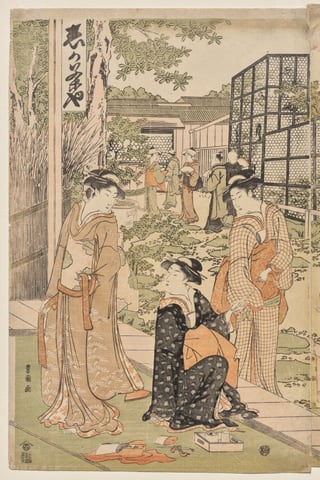
The Shika TeahouseUtagawa Toyokuni, early 1790sCourtesy of the Cleveland Museum of Art
Section 3, south wall
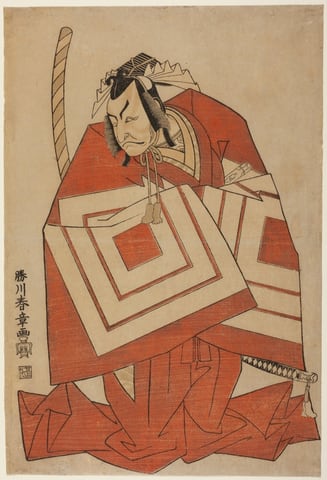
The Actor Ichikawa Danjuro IV in a "Shibaraku" Role, Possibly from the Play Ima o Sakari Suehiro Genji (The Genji Clan Now at Its Zenith), Performed at the Nakamura Theater from the First Day of the Eleventh Month, 1768Katsukawa Shunshō, c. 1768Courtesy of the Art Institute of Chicago 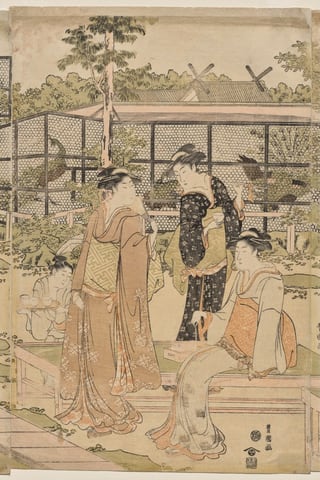
The Shika TeahouseUtagawa Toyokuni, early 1790sCourtesy of the Cleveland Museum of Art 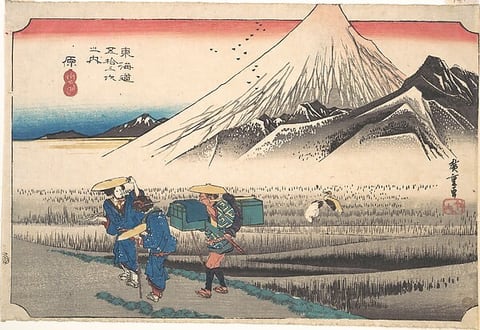
Hara: Mount Fuji in the Morning (Hara, Asa no Fuji), from the series Fifty-Three Stations of the Tōkaidō Road (Tōkaidō gojūsan tsugi), also known as the First Tōkaidō or Great TōkaidōUtagawa Hiroshige, ca. 1833–34Courtesy of The Metropolitan Museum of Art