The Floating World
Japanese woodblock prints of the floating world: actors, courtesans, landscapes and the sea.
Section 1, north wall
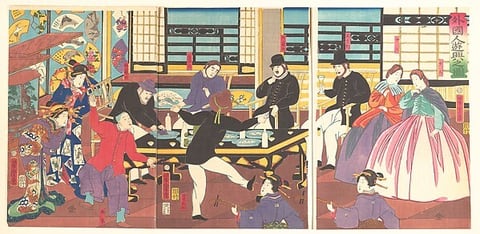
Foreigners Enjoying a Party (Gaikokujin yūkyō no zu)Utagawa Yoshitora, 1st month, 1861Courtesy of The Metropolitan Museum of Art 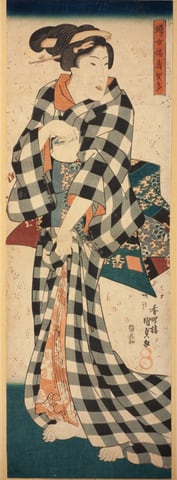
Image of a Japanese Woman (Fujo Yamato sugata)Utagawa Kunisada I (Toyokuni III), c. 1830/35Courtesy of the Art Institute of Chicago 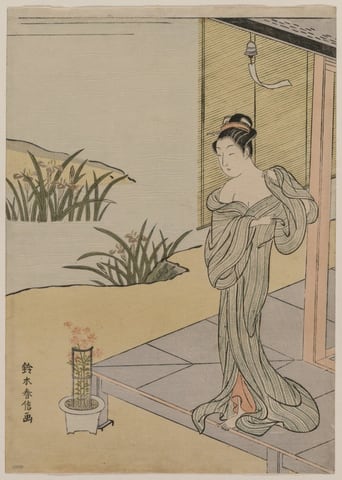
Young Woman Looking at a Pot of PinksSuzuki Harunobu, c. 1767Courtesy of the Cleveland Museum of Art
Section 1, south wall
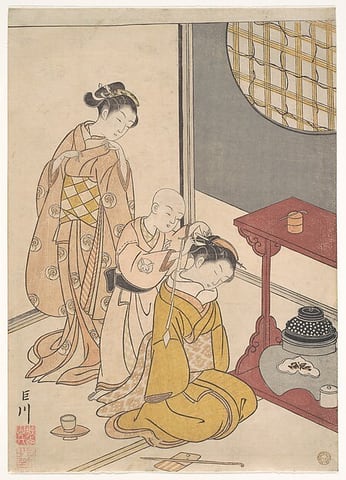
Night Rain at the Double-Shelf Stand, from the series Eight Parlor Views (Zashiki hakkei)Suzuki Harunobu, ca. 1766Courtesy of The Metropolitan Museum of Art 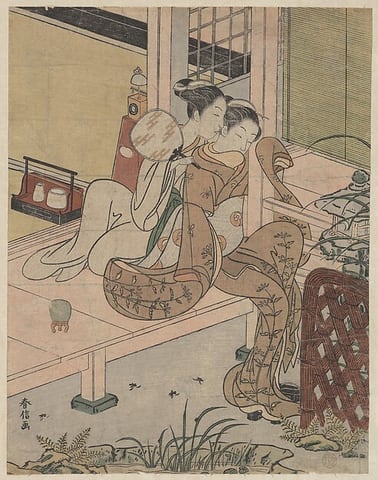
The GossipsSuzuki Harunobu, ca. 1767Courtesy of The Metropolitan Museum of Art 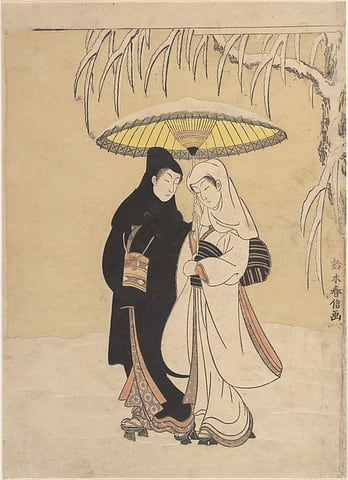
Lovers Walking in the Snow (Crow and Heron)Suzuki Harunobu, 1764–72Courtesy of The Metropolitan Museum of Art
Section 2, south wall
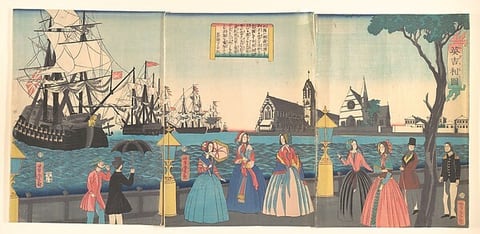
England (Igirisukoku)Utagawa Yoshitora, 2nd month, 1865Courtesy of The Metropolitan Museum of Art 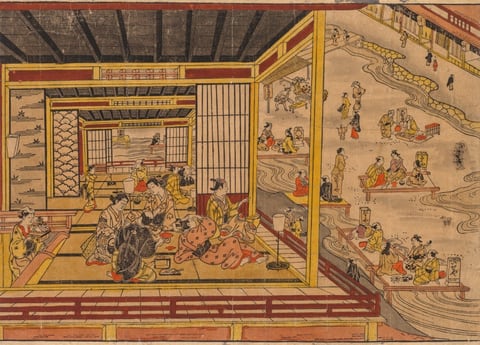
Tea House Beside the Kamo River in KyotoNishimura Shigenaga (Japanese, 1697(?)-1756), 1740sCourtesy of the Cleveland Museum of Art
Section 2, north wall
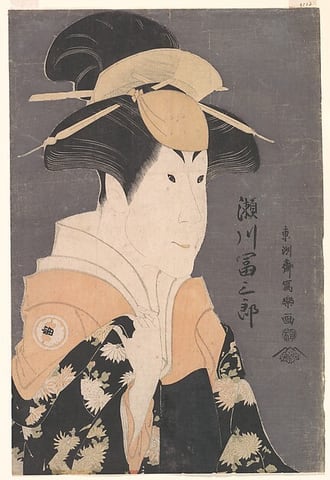
Segawa Tomisaburō II as Yadorigi in the Play "Hana Ayame Bunroku Soga"Tōshūsai Sharaku, 1794Courtesy of The Metropolitan Museum of Art 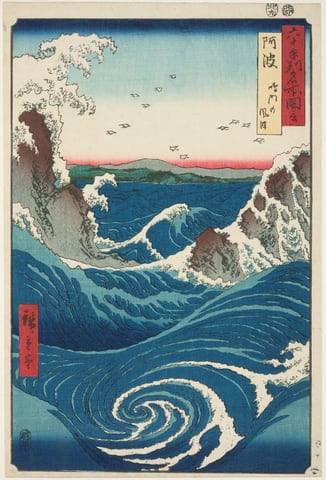
Awa Province: Naruto Whirlpools (Awa, Naruto no fūha), from the series Famous Places in the Sixty-Odd Provinces (Rokujūyoshmeisho zue)Utagawa Hiroshige, 1855Courtesy of the Art Institute of Chicago 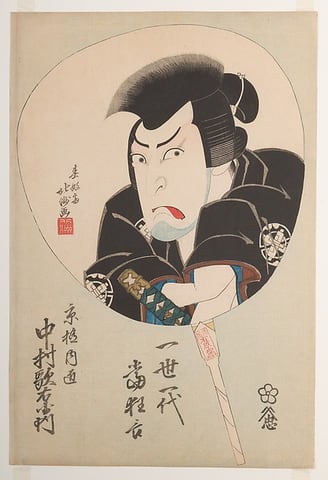
Kabuki Actor Nakamura Utaemon III as the Sword Master Kyōgoku Takumi, from the series Issei ichidai atari Kyōgen (Hits of a Lifetime of Kyōgen)Shunkōsai Hokushū, 1825Courtesy of The Metropolitan Museum of Art
Section 3, north wall
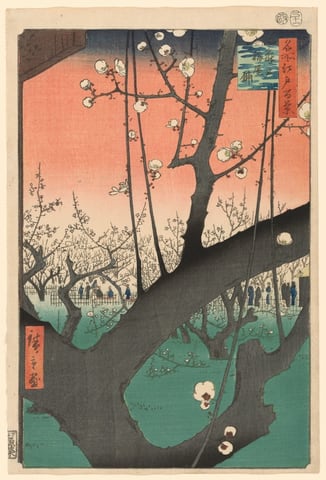
Plum Garden at Kameido (Kameido Umeyashiki), from the series "One Hundred Famous Views of Edo (Meisho Edo hyakkei)"Utagawa Hiroshige, 1857Courtesy of the Art Institute of Chicago 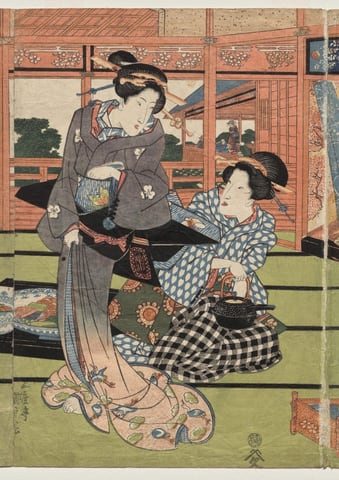
A View of the Large New Room at SakuraiUtagawa Kunisada, early or mid 1830sCourtesy of the Cleveland Museum of Art 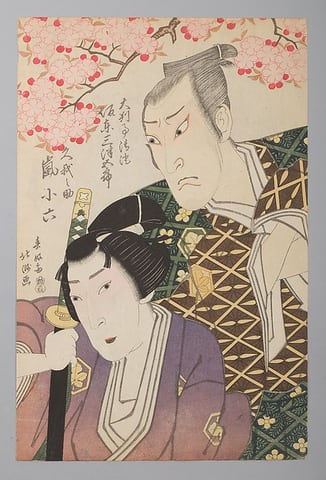
Bandō Mitsugorō III as Daihanji Kiyozumi and Arashi Koroku IV as KoganosukeShunkōsai Hokushū, 1821Courtesy of The Metropolitan Museum of Art
Section 3, south wall
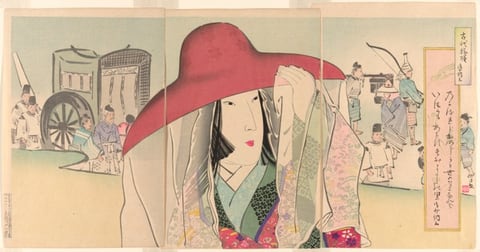
Sei Shonagon, from the series Ancient Patterns (Kodai moyo)Kobayashi Kiyochika, Meiji period (1896–1912), 1896Courtesy of the Art Institute of Chicago 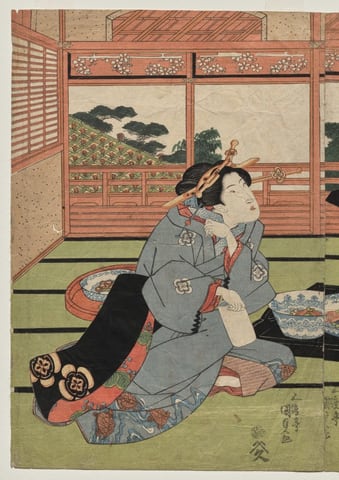
A View of the Large New Room at SakuraiUtagawa Kunisada, early or mid 1830sCourtesy of the Cleveland Museum of Art