The Floating World
Works in this room
Japanese woodblock prints of the floating world: actors, courtesans, landscapes and the sea.
Section 1, north wall
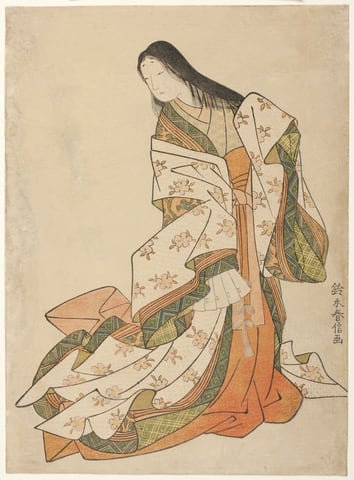
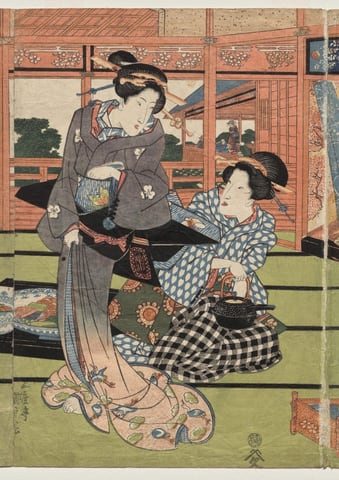
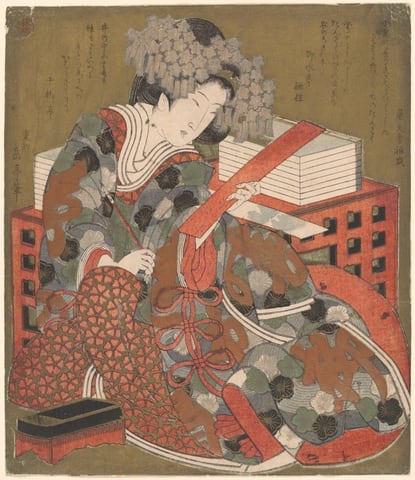
The Poetess Ono no KomachiSuzuki Harunobu, Edo period (1615–1868), 1767/68Courtesy of the Art Institute of Chicago A View of the Large New Room at SakuraiUtagawa Kunisada, early or mid 1830sCourtesy of the Cleveland Museum of Art Woman About to Write a PoemYashima Gakutei, c. 1824Courtesy of the Art Institute of Chicago
Section 1, south wall
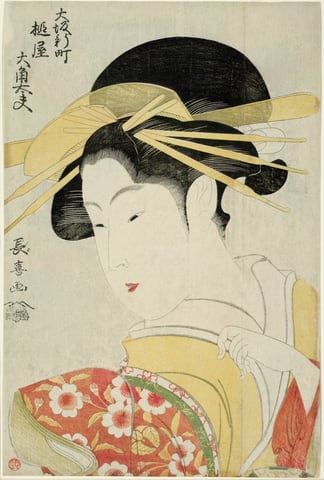
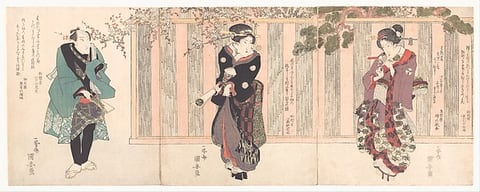
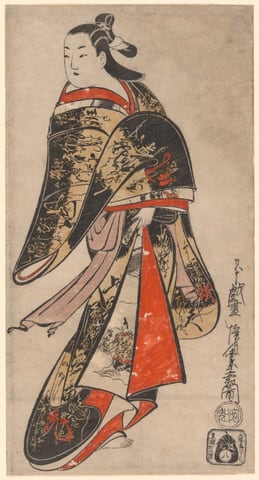
Osumi, a Tayu of the Tsuchiya in the Shinmachi Quarter in OsakaEishosai Choki, c. 1796/97Courtesy of the Art Institute of Chicago Three Kabuki Actors Playing HanetsukiUtagawa Kuniyasu, ca. 1823Courtesy of The Metropolitan Museum of Art Courtesan WalkingKaigetsudo Anchi, c. 1714Courtesy of the Art Institute of Chicago
Section 2, south wall
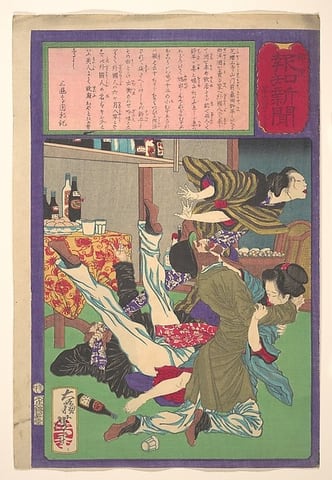
Postal Hōchi Newspaper no. 645, Englishman raping a wine shopkeeper's daughter (Yūbin Hōchi shinbun, roppyaku yonjū gogō)Tsukioka Yoshitoshi, August, 1875Courtesy of The Metropolitan Museum of Art 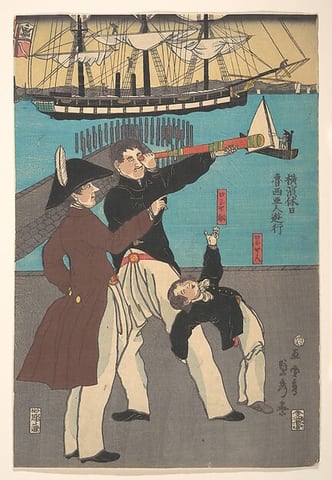
Russians Enjoying a Holiday in Yokohama (Yokohama kyūjitsu Roshiajin yūkō)Utagawa (Gountei) Sadahide, 1861Courtesy of The Metropolitan Museum of Art 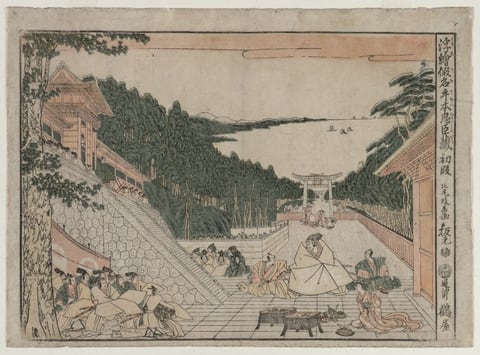
Chushingura: Act I (from the series Perspective Pictures for The Treasure House of Loyalty)Kitao Masayoshi, c. 1790sCourtesy of the Cleveland Museum of Art
Section 2, north wall
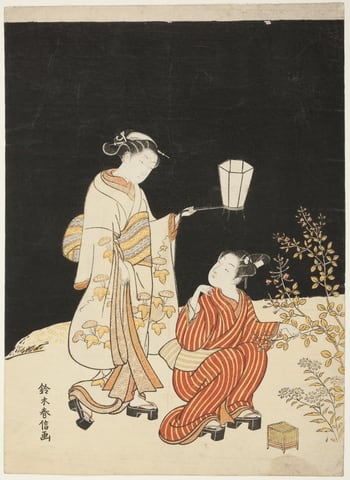
Searching for FirefliesSuzuki Harunobu, 1768Courtesy of the Art Institute of Chicago 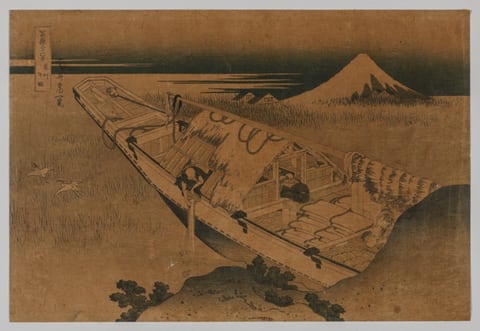
Fuji from Ushibori, Province of HitachiKatsushika Hokusai, 1760–1849Courtesy of the Cleveland Museum of Art 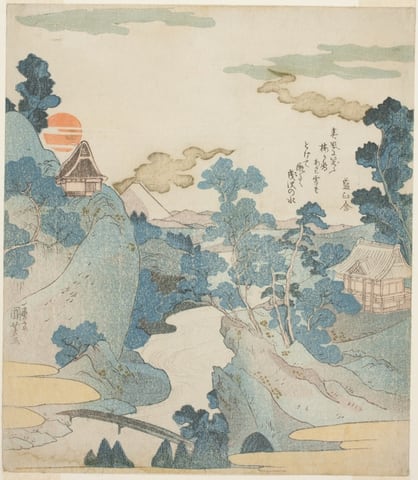
Distant View of Mount Fuji at Dawn from HakoneUtagawa Kuniyoshi, c. 1828/30Courtesy of the Art Institute of Chicago
Section 3, north wall
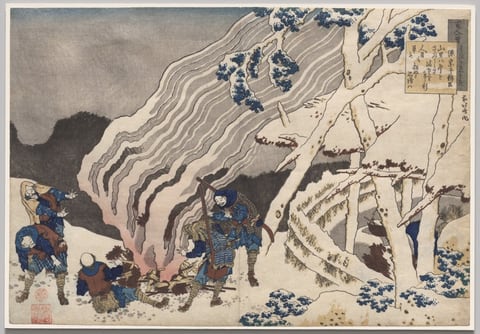
Poem by Minamoto no Muneyuki from the series One Hundred Poems by One Hundred Poets Explained by the NurseKatsushika Hokusai, 1835–36Courtesy of the Cleveland Museum of Art 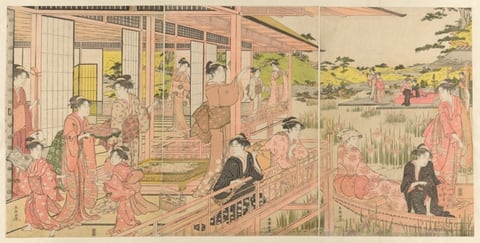
Iris GardenKatsukawa Shunchô, c. 1781/89Courtesy of the Art Institute of Chicago
Section 3, south wall
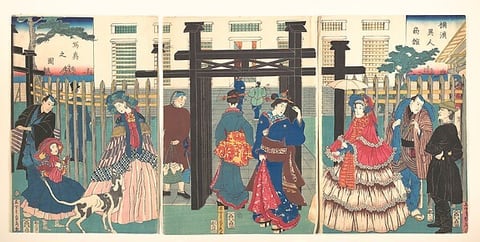
Foreign Business Establishment in Yokohama (Yokohama ijin shōkan shashin no zu)Utagawa (Gountei) Sadahide, 1861Courtesy of The Metropolitan Museum of Art 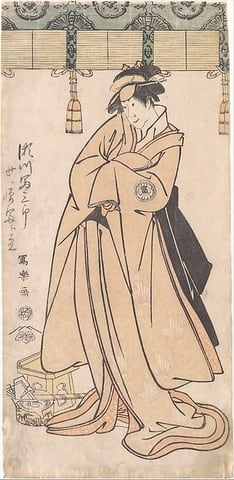
The Actor Segawa Tomisaburo II as the Otomos' Maid Wakakusa, Actually Prince KorehitoTōshūsai Sharaku, 1794–75Courtesy of The Metropolitan Museum of Art