Floor plan

The RotundaThe Rotunda

The Rotunda

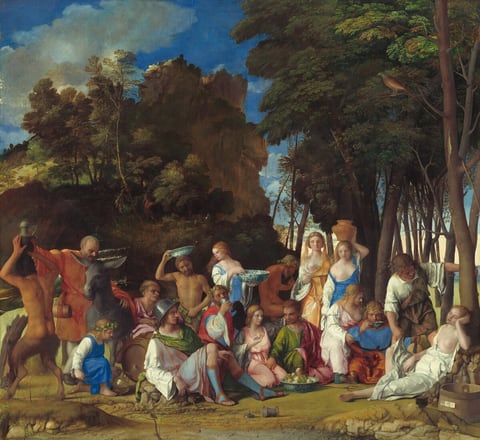
Six women, eight men, two satyrs, and one child gather in pairs and trios in a loose row that spans the width of this nearly square painting. They are set within a landscape with craggy rocks, cliffs, and trees. Most of the people face us, and the men, women, and child have pale skin. The two satyrs have men’s torsos and furry goat’s legs, and they have darker, olive complexions. Most of the men wear voluminous, knee-length togas wrapped in short robes in shades of white, topaz blue, grass green, coral orange, or rose pink. Most of the women wear long, dress-like garments in tones of shell pink, apricot orange, or lapis blue over white sleeves. For all but one woman, their garments have fallen off one shoulder to reveal a round, firm breast. Several objects are strewn on the rocky, dirt ground in front of the group, including a wide, wooden bucket with a piece of paper affixed to its front to our right, a glass goblet, a pitchfork, a large blue and white ceramic dish filled with grapes and small yellow fruits, and an overturned cup near the center. Cliff-like, craggy rocks rise steeply behind the group to our left, filling much of the sky opposite a tall grove of leafy, dark green trees to our right. A few puffy white clouds float across the vivid blue sky. The slip of paper on the barrel has been inscribed, “joannes bellinus venetus p MDXIIII.”
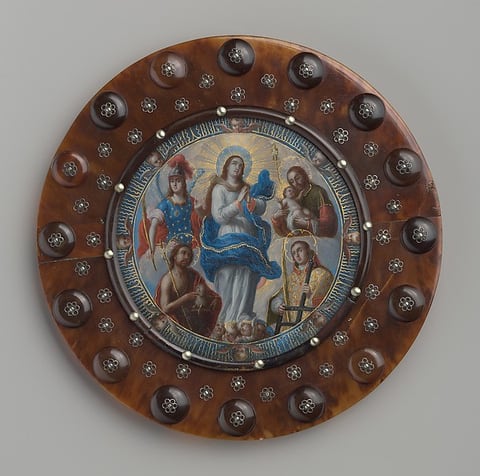
Nun’s Badge with the Virgin of the Immaculate Conception, by Nicolás Rodríguez Juárez, ca. 1710
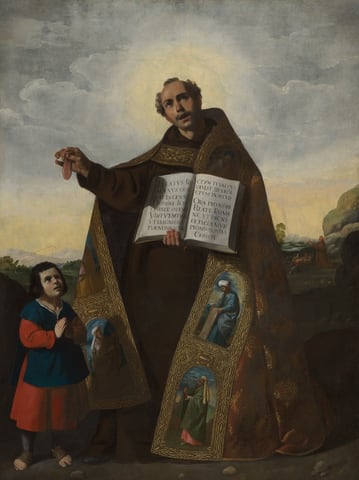
A work made of oil on canvas.
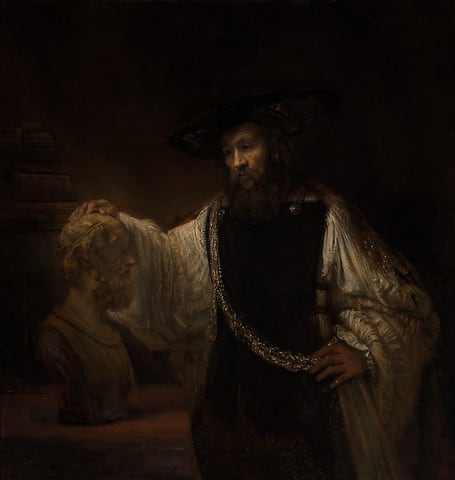
Aristotle with a Bust of Homer, by Rembrandt van Rijn, 1653

The works in this room are listed below.

Works in this room

The entrance hall. Its bays hold the works that show each museum at its fullest: large paintings first, a few from each collection, rehung every day.

Bay 1

  1. Six women, eight men, two satyrs, and one child gather in pairs and trios in a loose row that spans the width of this nearly square painting. They are set within a landscape with craggy rocks, cliffs, and trees. Most of the people face us, and the men, women, and child have pale skin. The two satyrs have men’s torsos and furry goat’s legs, and they have darker, olive complexions. Most of the men wear voluminous, knee-length togas wrapped in short robes in shades of white, topaz blue, grass green, coral orange, or rose pink. Most of the women wear long, dress-like garments in tones of shell pink, apricot orange, or lapis blue over white sleeves. For all but one woman, their garments have fallen off one shoulder to reveal a round, firm breast. Several objects are strewn on the rocky, dirt ground in front of the group, including a wide, wooden bucket with a piece of paper affixed to its front to our right, a glass goblet, a pitchfork, a large blue and white ceramic dish filled with grapes and small yellow fruits, and an overturned cup near the center. Cliff-like, craggy rocks rise steeply behind the group to our left, filling much of the sky opposite a tall grove of leafy, dark green trees to our right. A few puffy white clouds float across the vivid blue sky. The slip of paper on the barrel has been inscribed, “joannes bellinus venetus p MDXIIII.”
    The Feast of the GodsGiovanni Bellini, 1514/1529Courtesy National Gallery of Art, Washington
  2. Nun’s Badge with the Virgin of the Immaculate Conception, by Nicolás Rodríguez Juárez, ca. 1710
    Nun’s Badge with the Virgin of the Immaculate ConceptionNicolás Rodríguez Juárez, ca. 1710Courtesy of The Metropolitan Museum of Art

Bay 2

  1. A work made of oil on canvas.
    Saint Romanus of Antioch and Saint BarulasFrancisco de Zurbarán, 1638Courtesy of the Art Institute of Chicago
  2. Aristotle with a Bust of Homer, by Rembrandt van Rijn, 1653
    Aristotle with a Bust of HomerRembrandt van Rijn, 1653Courtesy of The Metropolitan Museum of Art

Bay 3
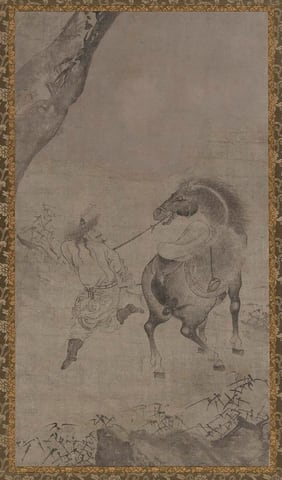
  1. Hanging scroll (mounted on panel)
    A horse and riderLi Gonglin, 16th century?Courtesy of the National Museum of Asian Art, Smithsonian Institution
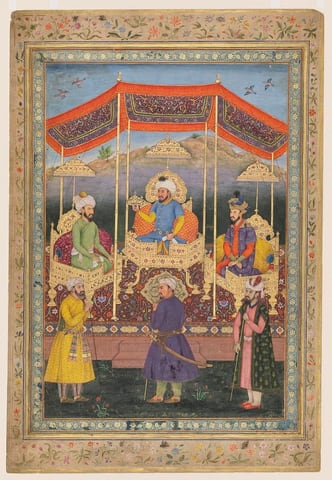
  2. Painting
    Ancestral group of Mughal rulersGovardhan, 18th centuryCourtesy of the National Museum of Asian Art, Smithsonian Institution

Bay 4
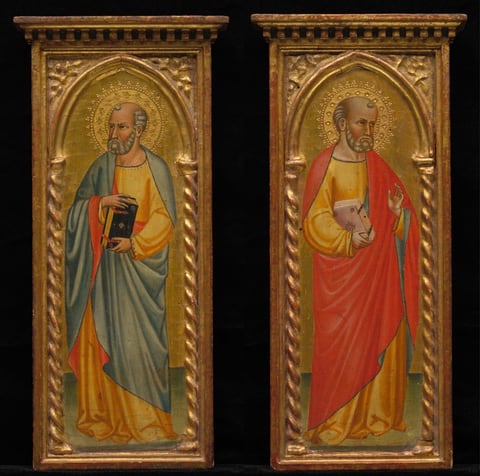
  1. Standing Saint and Saint in Red Cloak (pair), late 19th - early 20th century
    Standing Saint and Saint in Red Cloak (pair)Unrecorded Italian maker, late 19th - early 20th centuryCourtesy of the Cleveland Museum of Art
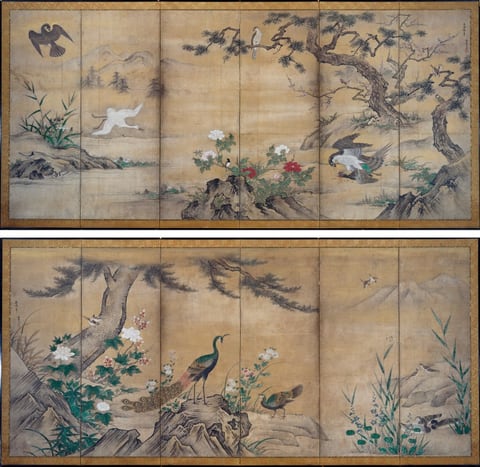
  2. Birds and Flowers, by Kano Mitsunobu, late 1500s
    Birds and FlowersKano Mitsunobu, late 1500sCourtesy of the Cleveland Museum of Art