Floor plan

Time and placeThe 20th century

The 20th century

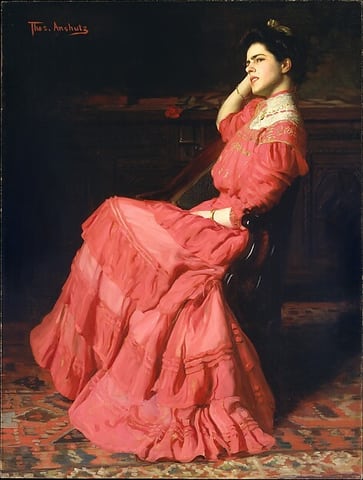
A Rose, by Thomas Anshutz, 1907
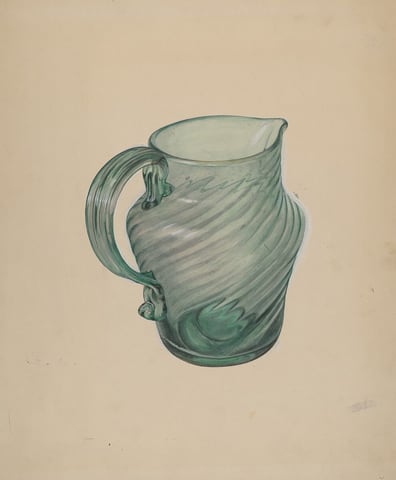
The image shows a translucent pitcher in soft, pale green with swirling, striped patterns and a curved handle. It is placed in the center of the frame, with a neutral off-white background. The spout faces slightly to the left and the handle curves from the right side.
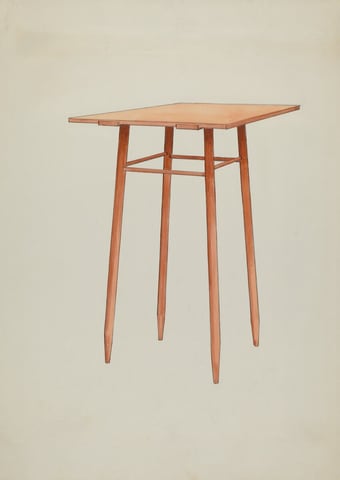
The image shows a tall, narrow wooden table with a square top and four long, slender legs. The color palette is warm with shades of light brown and reddish-brown on the table. Positioned centrally, the table stands against a plain, light-colored background.
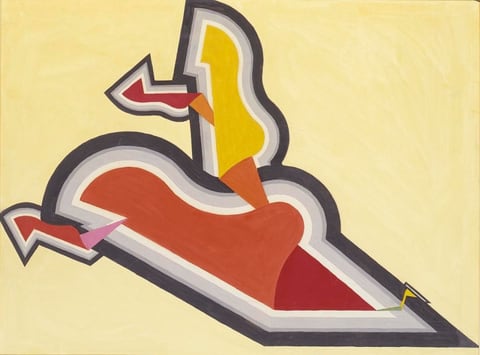
Study in Rhythm: Red and Gold, by Joseph Schillinger, ca. 1934
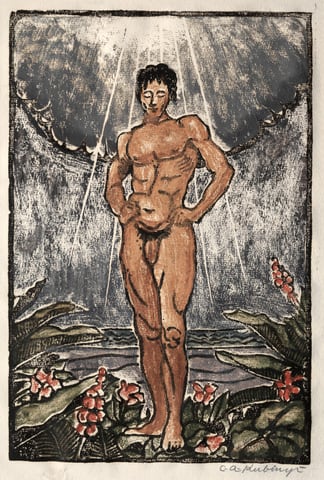
The Creation, by Kálmán Kubinyi, before 1927
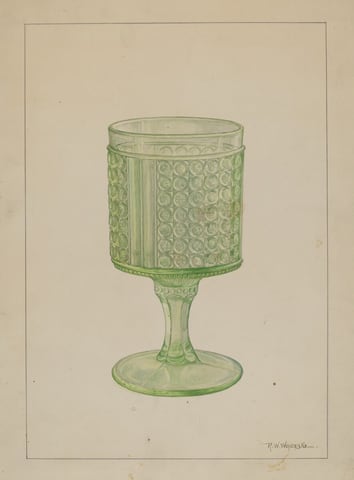
The image shows a green glass goblet with a textured, bubble-like pattern on the cup and a smooth stem. The color palette consists of shades of green with varying tones, depending on the glass's thickness and pattern. The goblet is positioned centrally, seen straight-on with the cup's pattern visible across its surface. It rests on a flat surface, slightly above the center of the image.
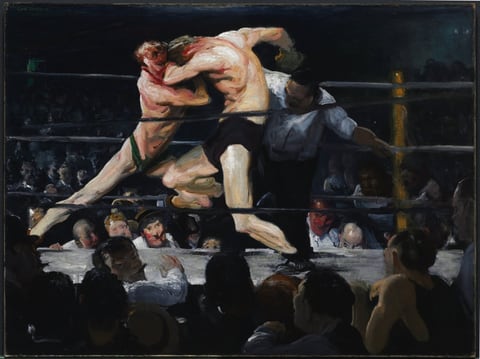
Stag at Sharkey's, by George Bellows, 1909
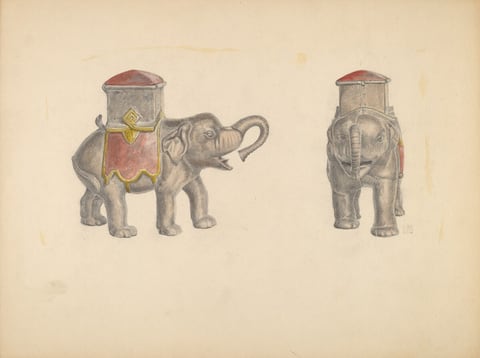
This is a drawing of two ornate elephants. The image depicts two stylized elephants, each adorned with decorative elements. Both elephants are shown carrying a structure on their backs, resembling a small tower or box with a red domed top. The left elephant is turned to the side, its trunk raised. The right elephant faces forward. Each structure on their backs is detailed with intricate designs, including a diamond shape on the side. The overall composition suggests a ceremonial or regal theme. The subtle use of colors like red and gold enhances the ornate appearance. The coloring and shading indicate an attention to detail typical of deliberately crafted illustrations.

The works in this room are listed below.

Works in this room

Works made in the 20th century, anywhere in the world.

Section 1, north wall

  1. A Rose, by Thomas Anshutz, 1907
    A RoseThomas Anshutz, 1907Courtesy of The Metropolitan Museum of Art
  2. The image shows a translucent pitcher in soft, pale green with swirling, striped patterns and a curved handle. It is placed in the center of the frame, with a neutral off-white background. The spout faces slightly to the left and the handle curves from the right side.
    Glass PitcherBeverly Chichester, c. 1937Courtesy National Gallery of Art, Washington
  3. The image shows a tall, narrow wooden table with a square top and four long, slender legs. The color palette is warm with shades of light brown and reddish-brown on the table. Positioned centrally, the table stands against a plain, light-colored background.
    Shaker StandRay Holden, c. 1936Courtesy National Gallery of Art, Washington
  4. Study in Rhythm: Red and Gold, by Joseph Schillinger, ca. 1934
    Study in Rhythm: Red and GoldJoseph Schillinger, ca. 1934Courtesy of the Smithsonian American Art Museum

Section 1, south wall

  1. The Creation, by Kálmán Kubinyi, before 1927
    The CreationKálmán Kubinyi, before 1927Courtesy of the Cleveland Museum of Art
  2. The image shows a green glass goblet with a textured, bubble-like pattern on the cup and a smooth stem. The color palette consists of shades of green with varying tones, depending on the glass's thickness and pattern. The goblet is positioned centrally, seen straight-on with the cup's pattern visible across its surface. It rests on a flat surface, slightly above the center of the image.
    GobletRonau William Woiceske, 1935/1942Courtesy National Gallery of Art, Washington
  3. Stag at Sharkey's, by George Bellows, 1909
    Stag at Sharkey'sGeorge Bellows, 1909Courtesy of the Cleveland Museum of Art
  4. This is a drawing of two ornate elephants. The image depicts two stylized elephants, each adorned with decorative elements. Both elephants are shown carrying a structure on their backs, resembling a small tower or box with a red domed top. The left elephant is turned to the side, its trunk raised. The right elephant faces forward. Each structure on their backs is detailed with intricate designs, including a diamond shape on the side. The overall composition suggests a ceremonial or regal theme. The subtle use of colors like red and gold enhances the ornate appearance. The coloring and shading indicate an attention to detail typical of deliberately crafted illustrations.
    Iron Bank ElephantZ.S. Lupus, c. 1938Courtesy National Gallery of Art, Washington

Section 2, south wall
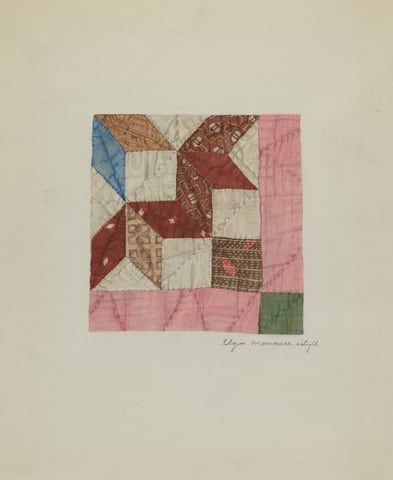
  1. This is a painting of a quilt design pattern. The image depicts a square quilt block featuring a variety of geometric shapes and patterns pieced together. The quilt features a mix of colors, including blues, reds, browns, and a pink border, with intricate patterns in the fabric segments. The textures and colors create an intricate optical composition resembling different geometric forms and depth. The piece is delicately framed within a larger white space, which emphasizes the detail of the quilt pattern. This is in the style of a traditional textile or quilting pattern illustrator.
    Cotton Bed QuiltElgin Moncure Styll, c. 1941Courtesy National Gallery of Art, Washington
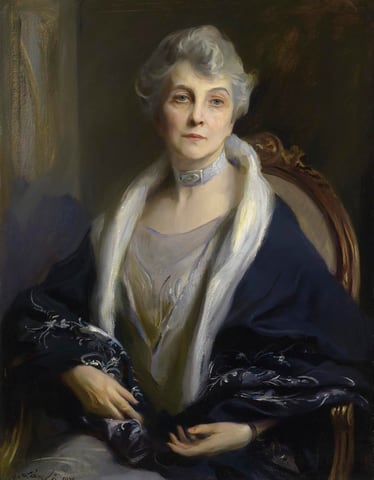
  2. Artist: Philip Alexius de László, Sitter: Clara Margaret Cook Kellogg, Current owner: National Portrait Gallery, Smithsonian Institution
    Clara Cook KelloggPhilip Alexius de László, 1929Courtesy of the National Portrait Gallery, Smithsonian Institution
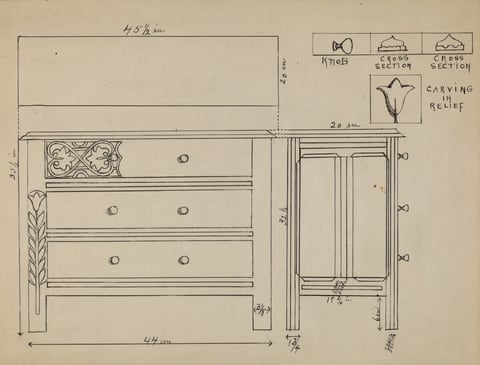
  3. This is a drawing of a furniture design with detailed measurements and decorative elements. The drawing depicts a piece of furniture with a combination of drawers and a cabinet, shown from the front and the side. Specific measurements are provided for various parts of the furniture, such as the width, height, and depth. The design features include a decorative carving in relief on the front panel, a detailed cross-section of the knob, and ornamental patterns on the side. The drawing is technical in nature, likely intended for crafting or woodworking purposes, emphasizing the detailed aspects needed for construction.
    Chest of DrawersFlorence Neal, 1935/1942Courtesy National Gallery of Art, Washington
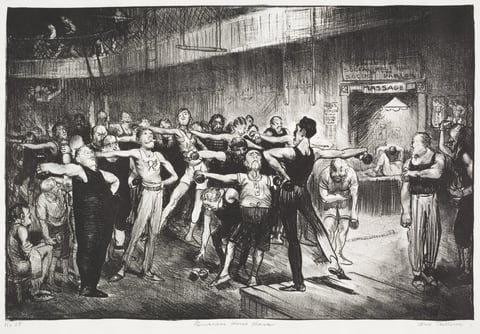
  4. Business Men's Class, by George Bellows, 1916
    Business Men's ClassGeorge Bellows, 1916Courtesy of the Cleveland Museum of Art

Section 2, north wall
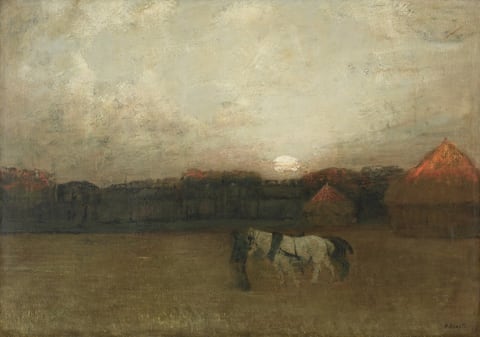
  1. The Stubble Field, by Henry Golden Dearth, c. 1909
    The Stubble FieldHenry Golden Dearth, c. 1909Courtesy of the Cleveland Museum of Art
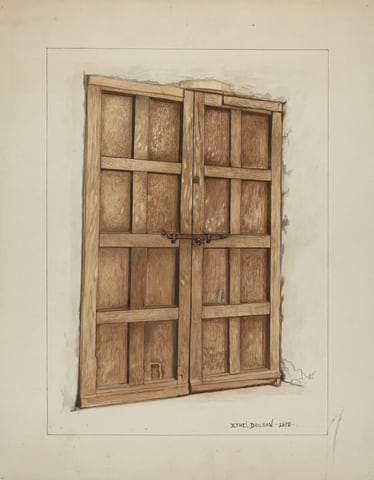
  2. This is a drawing of a wooden window shutter in a light-colored wall. The detailed study shows the craftsmanship of the shutter, with a focus on texture, form, wood grain, and panels. The aged and weathered texture suggests exposure to the elements. The shutter is secured with a metal latch in the center. The wall is subtly shaded to imply depth and setting, with slight distress marks adding to the aged ambiance of the scene.
    Sacristy Door at Mission San Juan BautistaEthel Dougan, 1938Courtesy National Gallery of Art, Washington
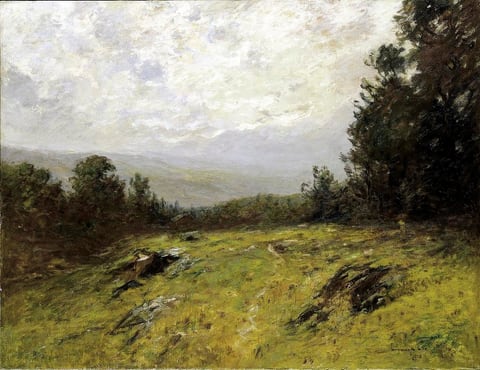
  3. Hillside, by Edward Gay, 1908
    HillsideEdward Gay, 1908Courtesy of the Smithsonian American Art Museum
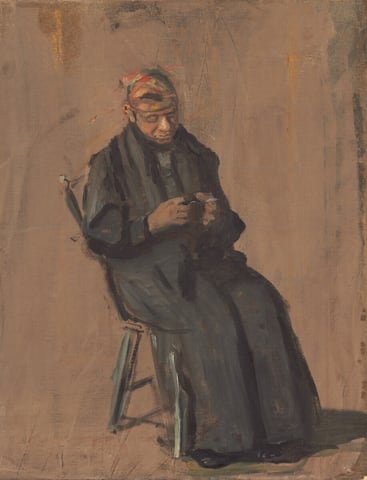
  4. This painting shows a person seated on a stool or chair, wearing a long, dark-blue robe or gown. They are slightly turned toward the right, looking downward at something they hold in their hands, and their head is covered with a cloth or cap. The background is textured with earthy tones, mostly tan with some patches of yellow ochre and gray.
    The ChaperoneThomas Eakins, c. 1908Courtesy National Gallery of Art, Washington