Floor plan

Time and placeThe 20th century

The 20th century

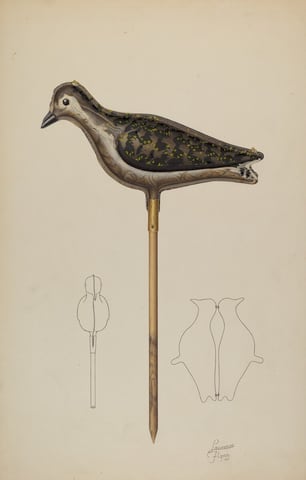
The image shows a painted decoy of a bird mounted on a wooden stake. The decoy has intricate details with spots of yellow and green on top of a dark body. The colors are naturalistic with brown, black, yellow, white, and beige. In the lower left section of the image, there are two line drawings of a bird.
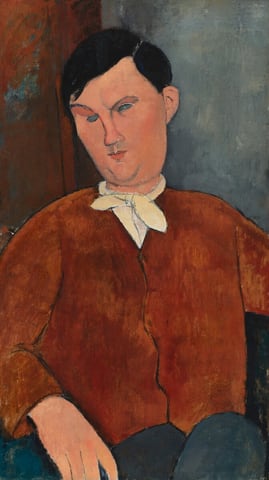
Shown from the lap up, a person with peach-colored skin sits facing us as he looks down and to our left in this vertical, stylized, portrait painting. The person’s clothing and features are outlined with thin black lines, and areas are filled in with mottled, streaked color painted with visible strokes. The person has a round face with a double chin and a small red mouth. The eyes are painted as slate-blue slivers under thin brows, one of which is cocked. The man’s short black hair is parted to one side and combed across the top of his head. He wears a white cravat tied at his neck under a rust-red jacket or shirt. Two rounded, muted blue forms below suggest crossed knees. The man’s right elbow rests next to his body, and that hand is near his lap. The background is painted with pecan brown on the left third and gray-blue on the right two-thirds.
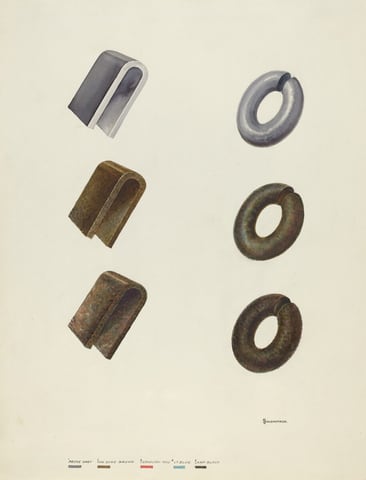
The image shows five metallic objects arranged in a vertical column. These include three L-shaped brackets and two circular rings, in muted gray and rust-brown shades with a metallic sheen. The objects are positioned against a light, neutral background.
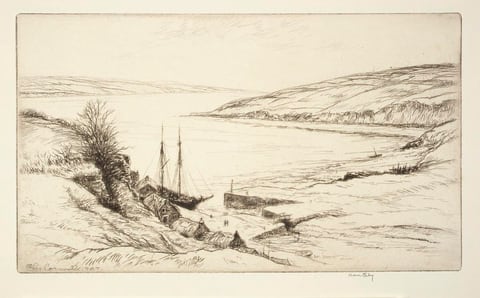
Cornwall, by Kerr Eby, 1927
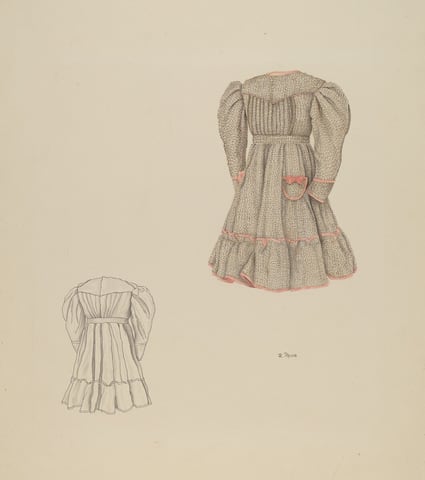
The image depicts a detailed illustration of a dress with exaggerated puff sleeves and ruffles towards the bottom. It is created using a dotted pattern with red accents around the edges and seams. The color palette consists of mostly muted tones with touches of red. The dress is positioned in the upper right quadrant of the image, while a smaller, less detailed sketch of the same dress without colors is located in the lower left quadrant.
Mäda Primavesi (1903–2000), by Gustav Klimt, 1912–13
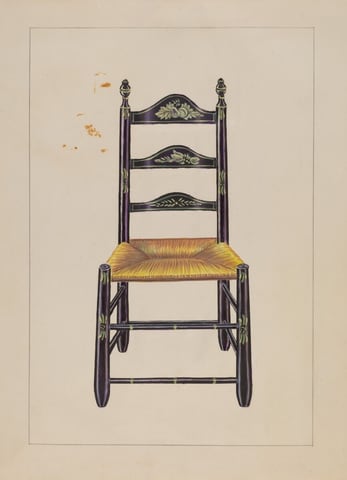
The image shows a wooden chair with a rush seat. It features ornate details on the backrest. The color palette includes dark wood tones, pale greenish detailing, and a warm yellowish hue for the seat. The chair is centrally positioned in the image, viewed from the front, with no other objects around it.
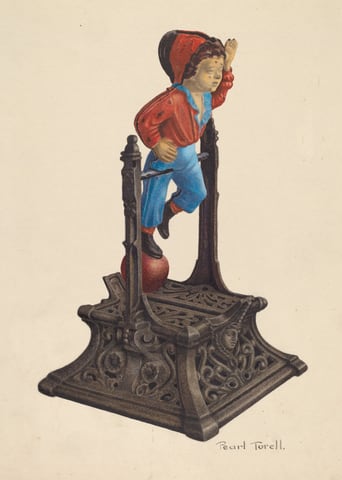
The sculpture depicts a young boy dressed in a bright red coat, blue shirt, and blue pants, with black shoes. He is wearing a black hat with a red rim and has curly hair. The boy is balanced on one foot atop a red ball, with one leg lifted behind him and one hand held high above his head. The sculpture is made of painted, cast metal with intricate designs and textures. The boy stands on an ornately decorated dark pedestal.

The works in this room are listed below.

Works in this room

Works made in the 20th century, anywhere in the world.

Section 1, north wall

  1. The image shows a painted decoy of a bird mounted on a wooden stake. The decoy has intricate details with spots of yellow and green on top of a dark body. The colors are naturalistic with brown, black, yellow, white, and beige. In the lower left section of the image, there are two line drawings of a bird.
    Snipe DecoyLawrence Flynn, 1941Courtesy National Gallery of Art, Washington
  2. Shown from the lap up, a person with peach-colored skin sits facing us as he looks down and to our left in this vertical, stylized, portrait painting. The person’s clothing and features are outlined with thin black lines, and areas are filled in with mottled, streaked color painted with visible strokes. The person has a round face with a double chin and a small red mouth. The eyes are painted as slate-blue slivers under thin brows, one of which is cocked. The man’s short black hair is parted to one side and combed across the top of his head. He wears a white cravat tied at his neck under a rust-red jacket or shirt. Two rounded, muted blue forms below suggest crossed knees. The man’s right elbow rests next to his body, and that hand is near his lap. The background is painted with pecan brown on the left third and gray-blue on the right two-thirds.
    Monsieur DeleuAmedeo Modigliani, 1916Courtesy National Gallery of Art, Washington
  3. The image shows five metallic objects arranged in a vertical column. These include three L-shaped brackets and two circular rings, in muted gray and rust-brown shades with a metallic sheen. The objects are positioned against a light, neutral background.
    Color Notes on IronGerald Transpota, 1935/1942Courtesy National Gallery of Art, Washington
  4. Cornwall, by Kerr Eby, 1927
    CornwallKerr Eby, 1927Courtesy of the Smithsonian American Art Museum

Section 1, south wall

  1. The image depicts a detailed illustration of a dress with exaggerated puff sleeves and ruffles towards the bottom. It is created using a dotted pattern with red accents around the edges and seams. The color palette consists of mostly muted tones with touches of red. The dress is positioned in the upper right quadrant of the image, while a smaller, less detailed sketch of the same dress without colors is located in the lower left quadrant.
    Child's DressRay Price, c. 1937Courtesy National Gallery of Art, Washington
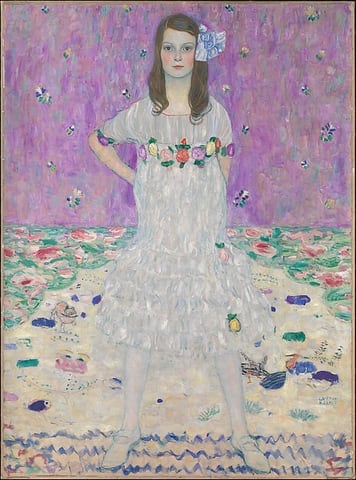
  2. Mäda Primavesi (1903–2000), by Gustav Klimt, 1912–13
    Mäda Primavesi (1903–2000)Gustav Klimt, 1912–13Courtesy of The Metropolitan Museum of Art
  3. The image shows a wooden chair with a rush seat. It features ornate details on the backrest. The color palette includes dark wood tones, pale greenish detailing, and a warm yellowish hue for the seat. The chair is centrally positioned in the image, viewed from the front, with no other objects around it.
    Ladderback ChairGerald Bernhardt, c. 1936Courtesy National Gallery of Art, Washington
  4. The sculpture depicts a young boy dressed in a bright red coat, blue shirt, and blue pants, with black shoes. He is wearing a black hat with a red rim and has curly hair. The boy is balanced on one foot atop a red ball, with one leg lifted behind him and one hand held high above his head. The sculpture is made of painted, cast metal with intricate designs and textures. The boy stands on an ornately decorated dark pedestal.
    Toy BankPearl Torell, c. 1939Courtesy National Gallery of Art, Washington

Section 2, south wall
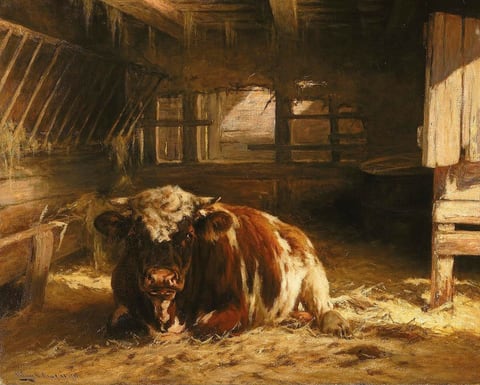
  1. My Day at Home, by William H. Howe, 1906
    My Day at HomeWilliam H. Howe, 1906Courtesy of the Smithsonian American Art Museum
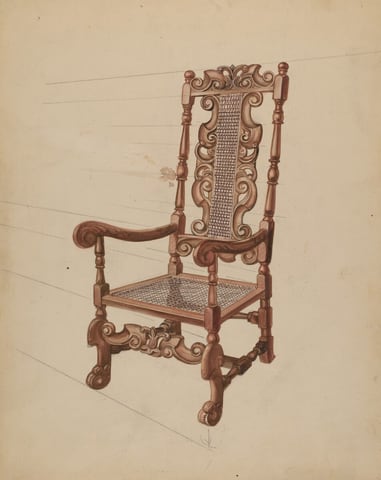
  2. The image shows an ornate chair with a high back, decorative carvings along its arms, legs, and backrest, a woven or cane seat and back, and intricate patterns. The chair is detailed with earthy brown tones and subtle shading accentuating the wood texture and design motifs. It is placed in the center of the image, facing slightly to the left, with linear guides indicating perspective and depth on a plain background.
    ArmchairAgnes Karlin, c. 1936Courtesy National Gallery of Art, Washington
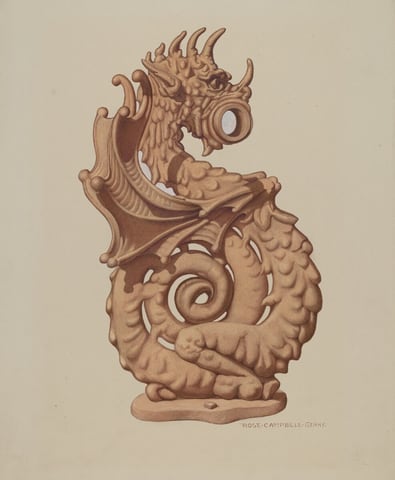
  3. The sculpture depicts a mythical creature resembling a dragon. It has a long spiraled body and an intricate head with spiky protrusions. The sculpture is a warm brown color. The dragon has bat-like wings, an open mouth, detailed texture with scales, and is standing on a small base.
    FenceRose Campbell-Gerke, c. 1941Courtesy National Gallery of Art, Washington
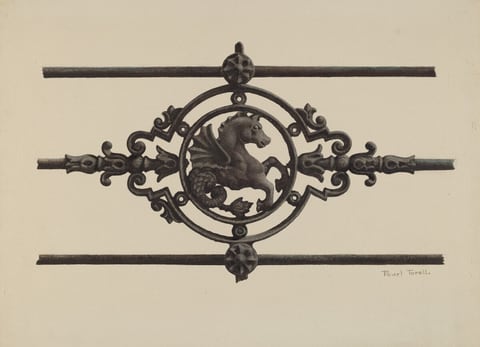
  4. The image shows an ornate metalwork design with a winged creature. The design features intricate wrought iron decoration with a mythical figure, resembling a Pegasus, enclosed within a circular frame. The central circle is surrounded by symmetrical, stylized scrollwork motifs and horizontal bars, suggesting an architectural or ornamental fixture intended for use in structures like gates or window grills. The detailed craftsmanship and balanced design highlight the creature's form and the harmonious symmetry of the patterns.
    Fence - Sea Horse DesignPearl Torell, c. 1939Courtesy National Gallery of Art, Washington

Section 2, north wall
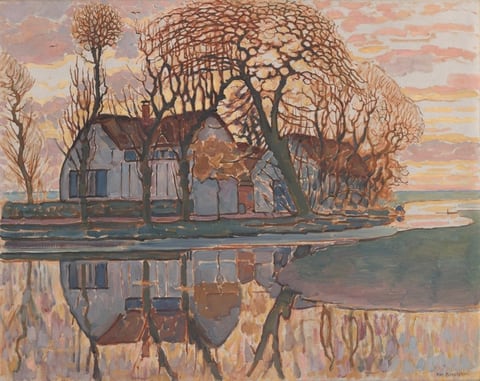
  1. A work made of oil on canvas.
    Farm near DuivendrechtPiet Mondrian, c. 1916Courtesy of the Art Institute of Chicago
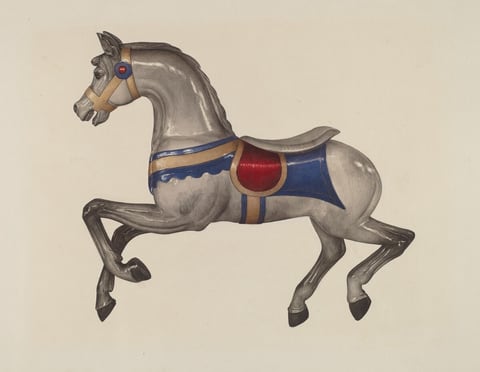
  2. This is a painting of a carousel horse. The image shows a gray carousel horse with glossy highlights and shading. The horse has a blue and red saddle with gold bands, and a blue harness with red accents. The horse is mid-gallop, with animated legs. The background is plain to focus on the horse's design. The style is detailed and realistic, reminiscent of carousel art from the late 19th to early 20th century.
    Carousel HorseDorothy Handy, c. 1939Courtesy National Gallery of Art, Washington
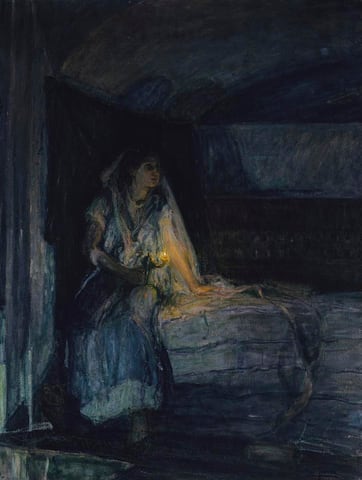
  3. Mary, by Henry Ossawa Tanner, ca. 1914
    MaryHenry Ossawa Tanner, ca. 1914Courtesy of the Smithsonian American Art Museum
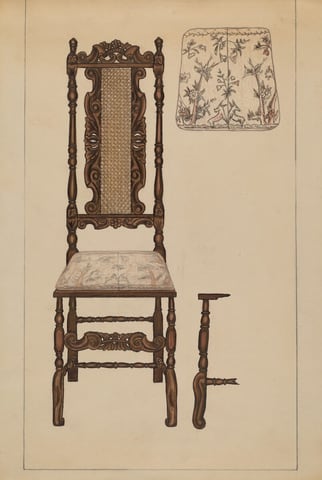
  4. This is a drawing of a wooden chair with detailed upholstery. The chair has an ornate, high backrest with elaborate scrollwork and a woven central panel. The seat is cushioned and covered with a floral patterned fabric. There is also a separate drawing of the fabric pattern used on the seat and a sketch of one of the chair's legs to show the craftsmanship and decorative elements.
    Side ChairUnrecorded American maker, 1935/1942Courtesy National Gallery of Art, Washington