Floor plan

East wing: The Nineteenth CenturyPost-Impressionism

Post-Impressionism

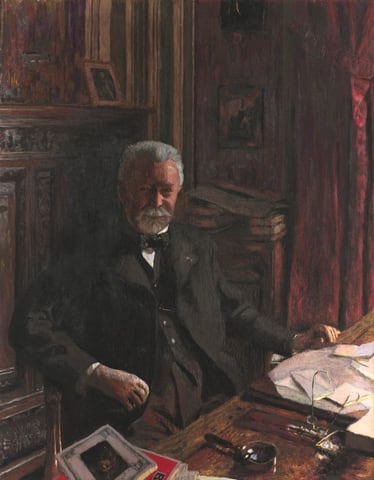
André Bénac, by Édouard Vuillard, 1936
A work made of oil on panel.
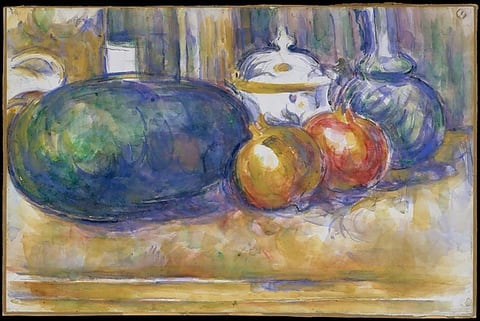
Still-Life with a Watermelon and Pomegranates, by Paul Cézanne, 1900–1906
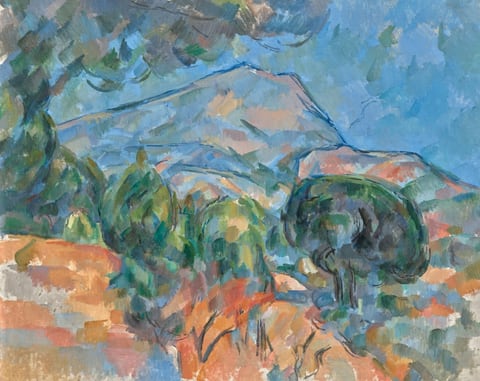
Mount Sainte-Victoire, by Paul Cézanne, c. 1904
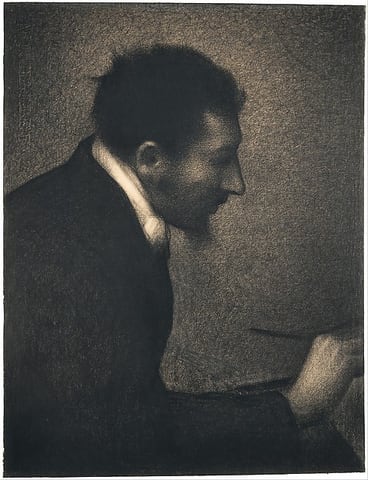
Aman-Jean (Portrait of Edmond François Aman-Jean), by Georges Seurat, 1882–83
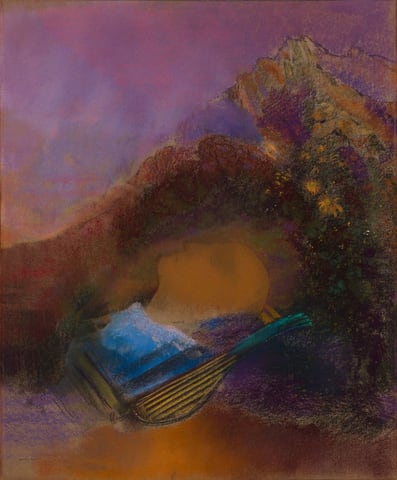
Orpheus, by Odilon Redon, c. 1903–10
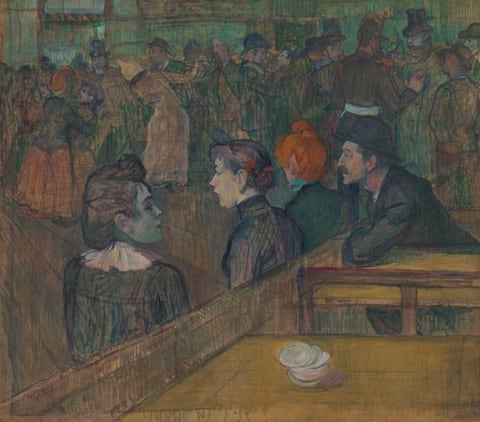
A scene in brown and green tones of people dancing indoors. In the foreground, three women stand near boothed tables while a man sits.
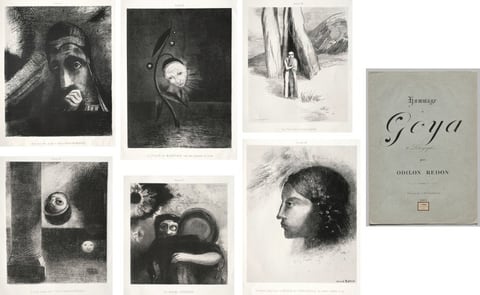
Homage to Goya, by Odilon Redon, 1885

The works in this room are listed below.

Works in this room

Artists who kept Impressionism's colour but pushed towards structure, symbol and feeling.

Section 1, north wall

  1. André Bénac, by Édouard Vuillard, 1936
    André BénacÉdouard Vuillard, 1936Courtesy of the Cleveland Museum of Art
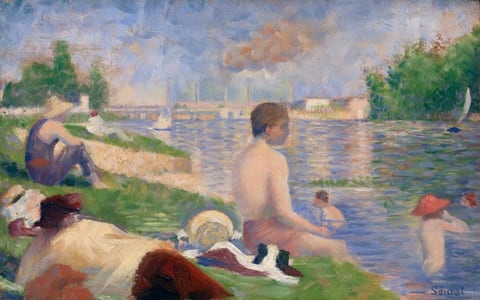
  2. A work made of oil on panel.
    Final Study for "Bathers at Asnières"Georges Seurat, 1883Courtesy of the Art Institute of Chicago
  3. Still-Life with a Watermelon and Pomegranates, by Paul Cézanne, 1900–1906
    Still-Life with a Watermelon and PomegranatesPaul Cézanne, 1900–1906Courtesy of The Metropolitan Museum of Art
  4. Mount Sainte-Victoire, by Paul Cézanne, c. 1904
    Mount Sainte-VictoirePaul Cézanne, c. 1904Courtesy of the Cleveland Museum of Art

Section 1, south wall

  1. Aman-Jean (Portrait of Edmond François Aman-Jean), by Georges Seurat, 1882–83
    Aman-Jean (Portrait of Edmond François Aman-Jean)Georges Seurat, 1882–83Courtesy of The Metropolitan Museum of Art
  2. Orpheus, by Odilon Redon, c. 1903–10
    OrpheusOdilon Redon, c. 1903–10Courtesy of the Cleveland Museum of Art
  3. A scene in brown and green tones of people dancing indoors. In the foreground, three women stand near boothed tables while a man sits.
    Moulin de la GaletteHenri de Toulouse-Lautrec, 1889Courtesy of the Art Institute of Chicago
  4. Homage to Goya, by Odilon Redon, 1885
    Homage to GoyaOdilon Redon, 1885Courtesy of the Cleveland Museum of Art

Section 2, south wall
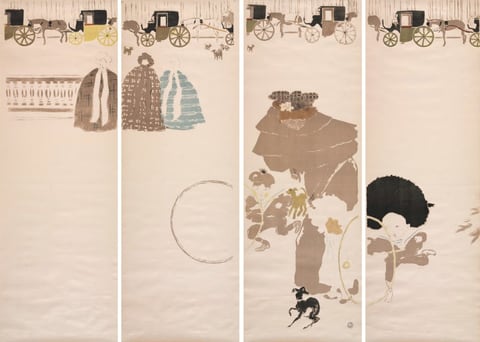
  1. Nursemaids’ Promenade, Frieze of Carriages, by Pierre Bonnard, 1895
    Nursemaids’ Promenade, Frieze of CarriagesPierre Bonnard, 1895Courtesy of the Cleveland Museum of Art
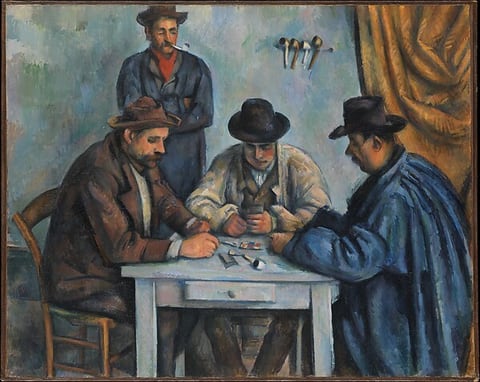
  2. The Card Players, by Paul Cézanne, 1890–92
    The Card PlayersPaul Cézanne, 1890–92Courtesy of The Metropolitan Museum of Art
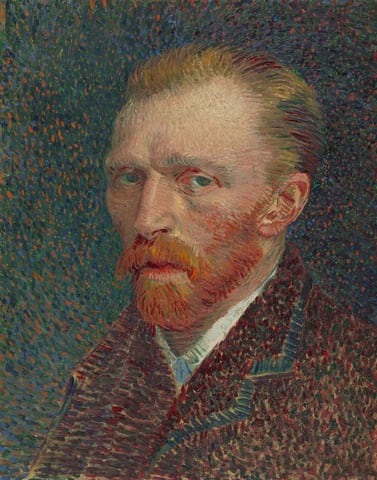
  3. Painting of a red-haired, bearded man with light skin, painted in short brushstrokes and multicolored dots. The background is likewise a mass of small, closely spaced colored dots, these in green, blue, and red-orange.
    Self-PortraitVincent van Gogh, 1887Courtesy of the Art Institute of Chicago
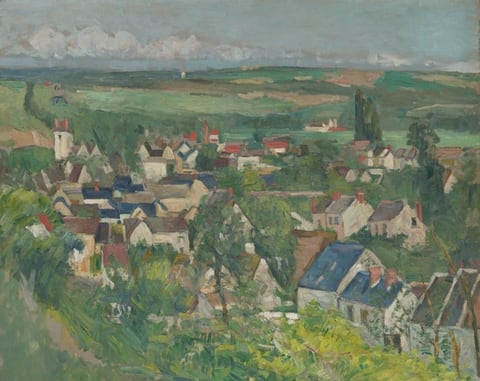
  4. View of a village surrounded by hills, fields, and trees, shown from a vantage point above the scene. Subtly rolling hills recede into a bluish gray-ish sky punctuated by white clouds. Thick brushstrokes built up atop each other are visible throughout.
    Auvers, Panoramic ViewPaul Cézanne, 1873–75Courtesy of the Art Institute of Chicago

Section 2, north wall
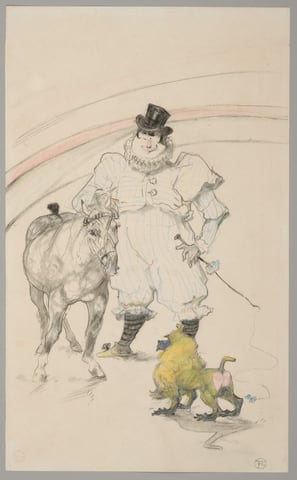
  1. A work made of pastel and graphite on cream wove paper.
    At the Circus: Trained Pony and BaboonHenri de Toulouse-Lautrec, 1899Courtesy of the Art Institute of Chicago
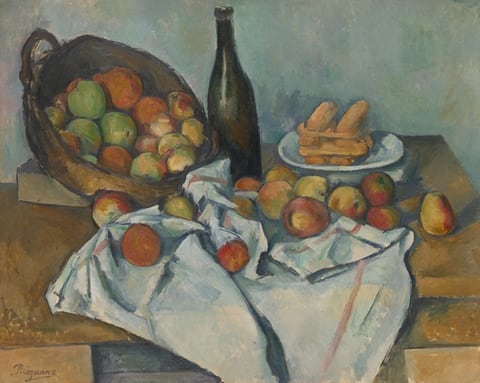
  2. Painting of a basket of green and red-yellow apples spilling over into a white cloth placed on a wooden table, with a dark green bottle and a plate of pale biscuits behind.
    The Basket of ApplesPaul Cézanne, c. 1893Courtesy of the Art Institute of Chicago
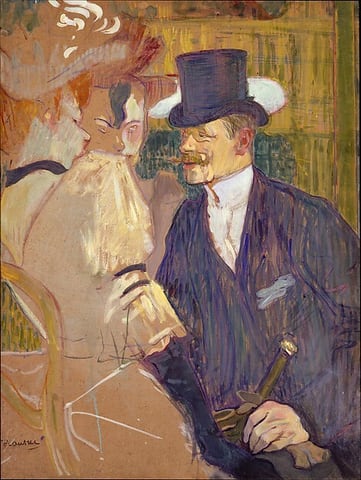
  3. The Englishman (William Tom Warrener, 1861–1934) at the Moulin Rouge, by Henri de Toulouse-Lautrec, 1892
    The Englishman (William Tom Warrener, 1861–1934) at the Moulin RougeHenri de Toulouse-Lautrec, 1892Courtesy of The Metropolitan Museum of Art
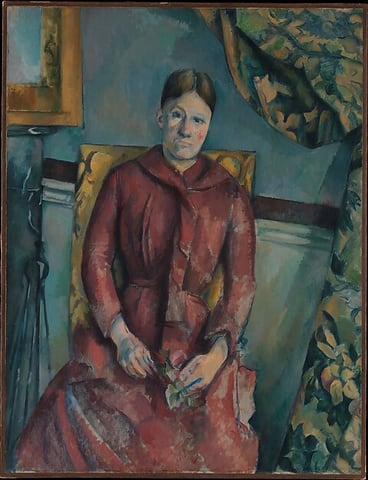
  4. Madame Cézanne (Hortense Fiquet, 1850–1922) in a Red Dress, by Paul Cézanne, 1888–90
    Madame Cézanne (Hortense Fiquet, 1850–1922) in a Red DressPaul Cézanne, 1888–90Courtesy of The Metropolitan Museum of Art