Floor plan

East wing: The Nineteenth CenturyPost-Impressionism

Post-Impressionism

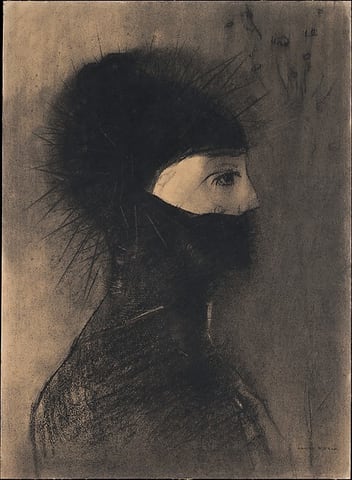
Armor, by Odilon Redon, 1891
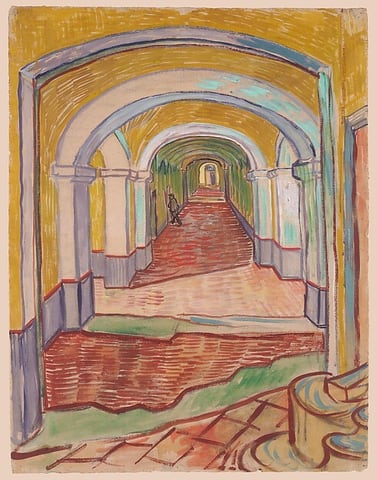
Corridor in the Asylum, by Vincent van Gogh, September 1889
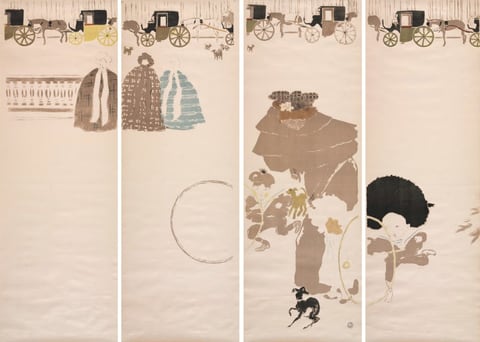
Nursemaids’ Promenade, Frieze of Carriages, by Pierre Bonnard, 1895
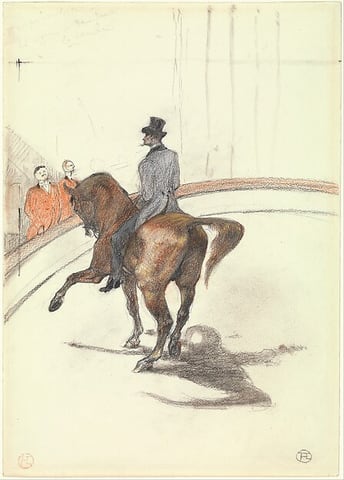
At the Circus: The Spanish Walk (Au Cirque: Le Pas espagnol), by Henri de Toulouse-Lautrec, 1899
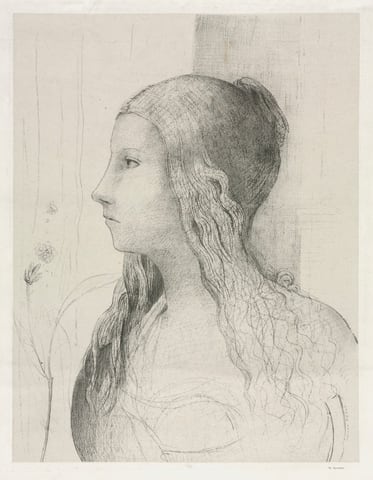
Brünnhilde in Twilight of the Gods, by Odilon Redon, 1894
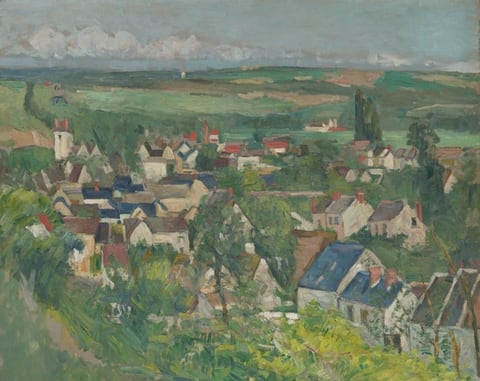
View of a village surrounded by hills, fields, and trees, shown from a vantage point above the scene. Subtly rolling hills recede into a bluish gray-ish sky punctuated by white clouds. Thick brushstrokes built up atop each other are visible throughout.
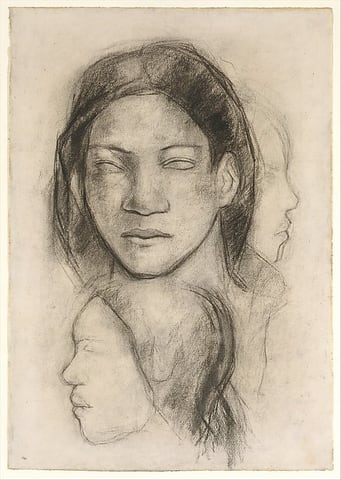
Tahitian Faces (Frontal View and Profiles), by Paul Gauguin, ca. 1899
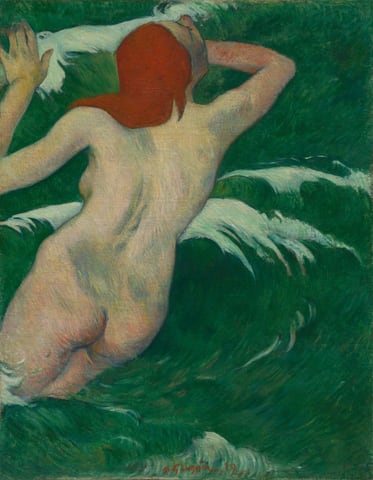
In the Waves (Dans les Vagues), by Paul Gauguin, 1889

The works in this room are listed below.

Works in this room

Artists who kept Impressionism's colour but pushed towards structure, symbol and feeling.

Section 1, north wall

  1. Armor, by Odilon Redon, 1891
    ArmorOdilon Redon, 1891Courtesy of The Metropolitan Museum of Art
  2. Corridor in the Asylum, by Vincent van Gogh, September 1889
    Corridor in the AsylumVincent van Gogh, September 1889Courtesy of The Metropolitan Museum of Art
  3. Nursemaids’ Promenade, Frieze of Carriages, by Pierre Bonnard, 1895
    Nursemaids’ Promenade, Frieze of CarriagesPierre Bonnard, 1895Courtesy of the Cleveland Museum of Art
  4. At the Circus: The Spanish Walk (Au Cirque: Le Pas espagnol), by Henri de Toulouse-Lautrec, 1899
    At the Circus: The Spanish Walk (Au Cirque: Le Pas espagnol)Henri de Toulouse-Lautrec, 1899Courtesy of The Metropolitan Museum of Art

Section 1, south wall

  1. Brünnhilde in Twilight of the Gods, by Odilon Redon, 1894
    Brünnhilde in Twilight of the GodsOdilon Redon, 1894Courtesy of the Cleveland Museum of Art
  2. View of a village surrounded by hills, fields, and trees, shown from a vantage point above the scene. Subtly rolling hills recede into a bluish gray-ish sky punctuated by white clouds. Thick brushstrokes built up atop each other are visible throughout.
    Auvers, Panoramic ViewPaul Cézanne, 1873–75Courtesy of the Art Institute of Chicago
  3. Tahitian Faces (Frontal View and Profiles), by Paul Gauguin, ca. 1899
    Tahitian Faces (Frontal View and Profiles)Paul Gauguin, ca. 1899Courtesy of The Metropolitan Museum of Art
  4. In the Waves (Dans les Vagues), by Paul Gauguin, 1889
    In the Waves (Dans les Vagues)Paul Gauguin, 1889Courtesy of the Cleveland Museum of Art

Section 2, south wall
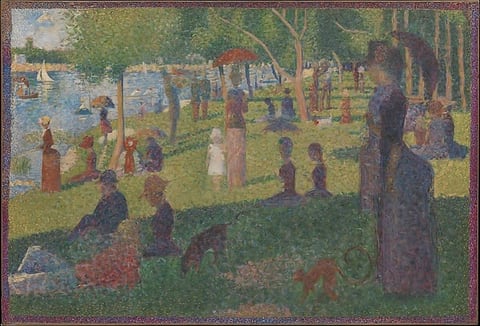
  1. Study for "A Sunday on La Grande Jatte", by Georges Seurat, 1884
    Study for "A Sunday on La Grande Jatte"Georges Seurat, 1884Courtesy of The Metropolitan Museum of Art
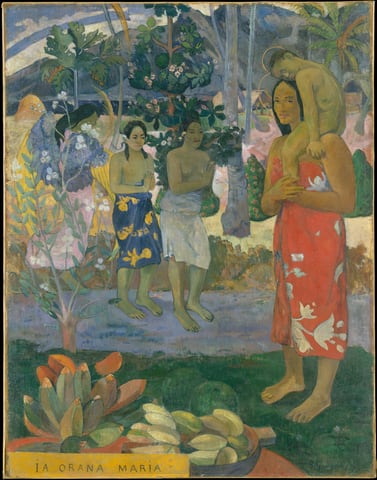
  2. Ia Orana Maria (Hail Mary), by Paul Gauguin, 1891
    Ia Orana Maria (Hail Mary)Paul Gauguin, 1891Courtesy of The Metropolitan Museum of Art
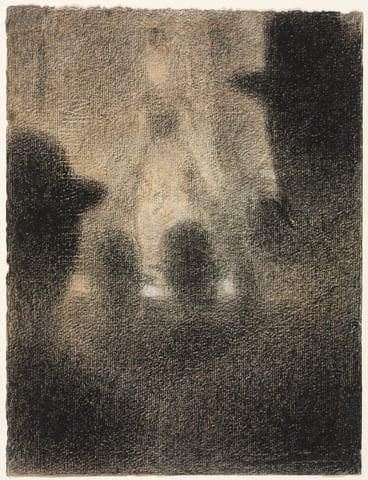
  3. At the Concert Parisien, by Georges Seurat, 1887–88
    At the Concert ParisienGeorges Seurat, 1887–88Courtesy of the Cleveland Museum of Art

Section 2, north wall
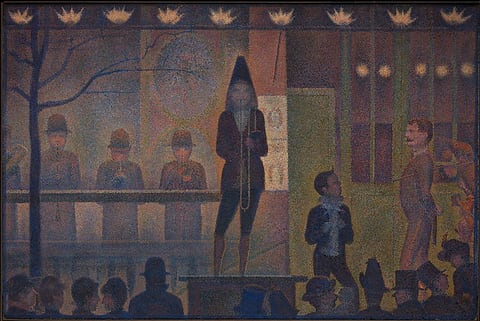
  1. Circus Sideshow (Parade de cirque), by Georges Seurat, 1887–88
    Circus Sideshow (Parade de cirque)Georges Seurat, 1887–88Courtesy of The Metropolitan Museum of Art
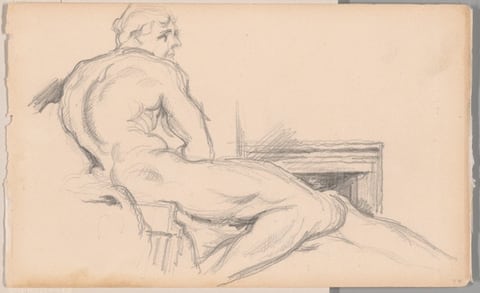
  2. A work made of graphite on ivory wove paper.
    Hercules RestingPaul Cézanne, 1897Courtesy of the Art Institute of Chicago
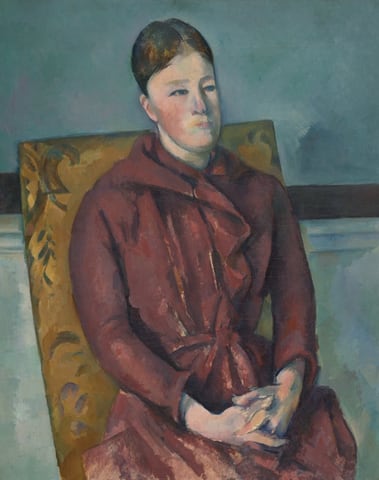
  3. Painting of a placid-looking, light-skinned woman in a maroon dress, seated in a chair with yellow upholstery, hands folded.
    Madame Cezanne in a Yellow ChairPaul Cézanne, 1888–90Courtesy of the Art Institute of Chicago

Section 3, north wall
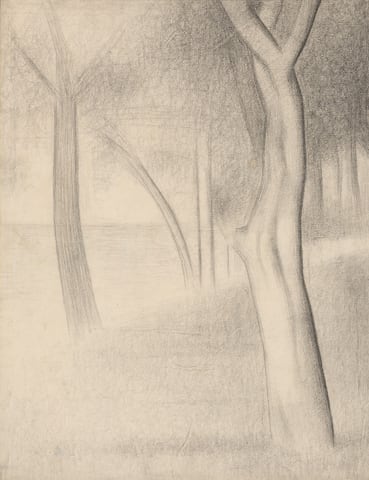
  1. A work made of black conté crayon, on white laid paper, laid down on cream board.
    Trees (study for La Grande Jatte)Georges Seurat, 1884Courtesy of the Art Institute of Chicago
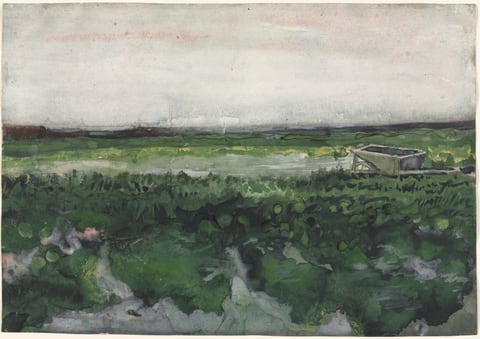
  2. Landscape with Wheelbarrow, by Vincent van Gogh, 1883
    Landscape with WheelbarrowVincent van Gogh, 1883Courtesy of the Cleveland Museum of Art