Floor plan

East wing: The Nineteenth CenturyPost-Impressionism

Post-Impressionism

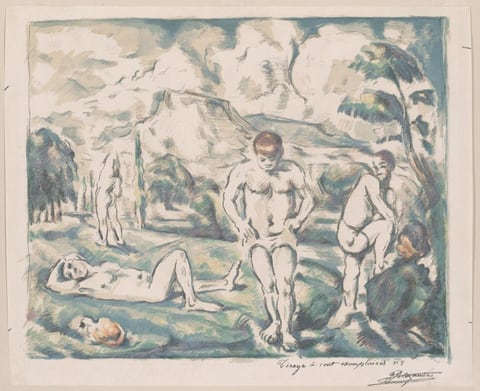
A work made of color lithograph on ivory laid paper.
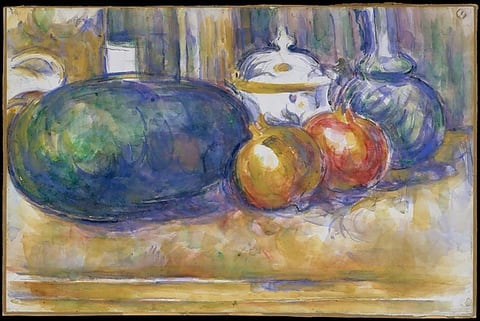
Still-Life with a Watermelon and Pomegranates, by Paul Cézanne, 1900–1906
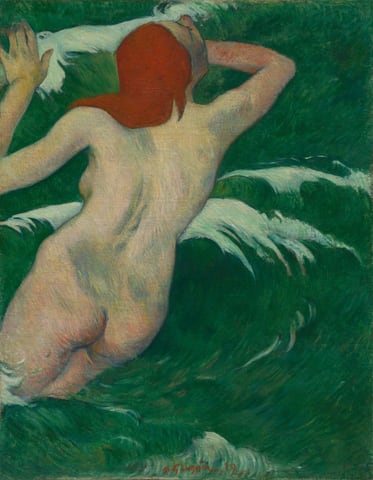
In the Waves (Dans les Vagues), by Paul Gauguin, 1889
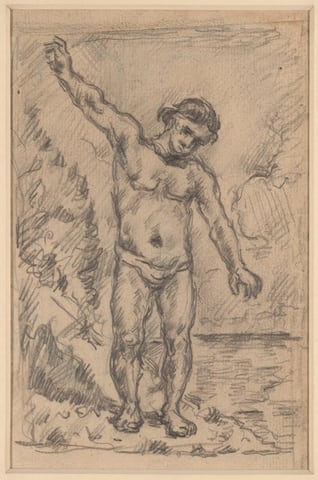
A work made of graphite on cream laid paper (pieced).
The Large Tree, by Paul Gauguin, 1891
A work made of oil on canvas.
A work made of oil on vellum.
A work made of graphite on ivory wove paper.

The works in this room are listed below.

Works in this room

Artists who kept Impressionism's colour but pushed towards structure, symbol and feeling.

Section 1, north wall

  1. A work made of color lithograph on ivory laid paper.
    BathersPaul Cézanne, 1890–1900Courtesy of the Art Institute of Chicago
  2. Still-Life with a Watermelon and Pomegranates, by Paul Cézanne, 1900–1906
    Still-Life with a Watermelon and PomegranatesPaul Cézanne, 1900–1906Courtesy of The Metropolitan Museum of Art
  3. In the Waves (Dans les Vagues), by Paul Gauguin, 1889
    In the Waves (Dans les Vagues)Paul Gauguin, 1889Courtesy of the Cleveland Museum of Art
  4. A work made of graphite on cream laid paper (pieced).
    Bather With Outstretched Arms (recto); Study of a Tree (verso)Paul Cézanne, 1874/77Courtesy of the Art Institute of Chicago

Section 1, south wall

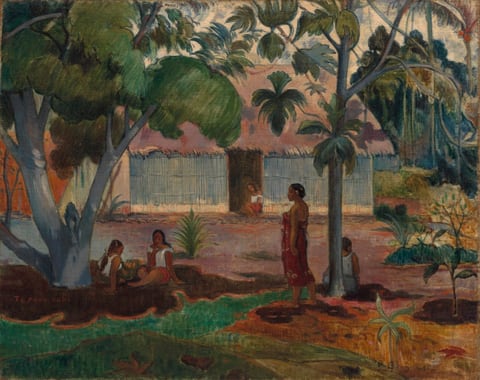
  1. The Large Tree, by Paul Gauguin, 1891
    The Large TreePaul Gauguin, 1891Courtesy of the Cleveland Museum of Art
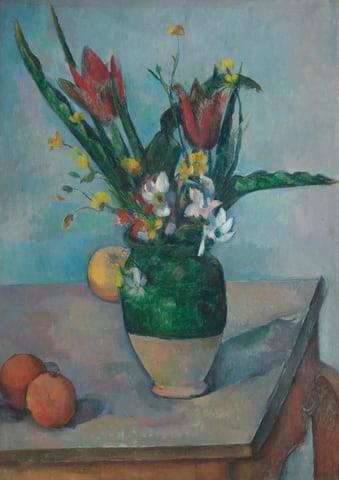
  2. A work made of oil on canvas.
    The Vase of TulipsPaul Cézanne, c. 1890Courtesy of the Art Institute of Chicago
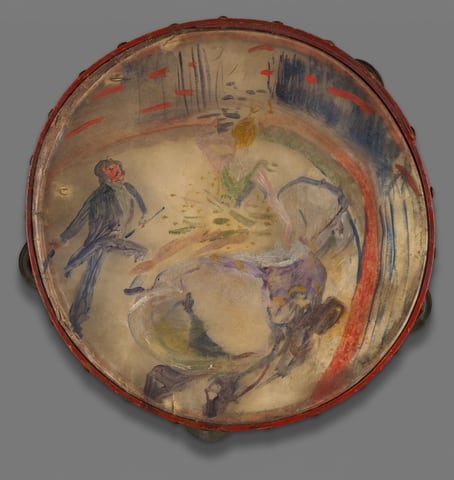
  3. A work made of oil on vellum.
    At the Circus: The Bareback Rider (Au Cirque: Écuyère)Henri de Toulouse-Lautrec, 1888Courtesy of the Art Institute of Chicago
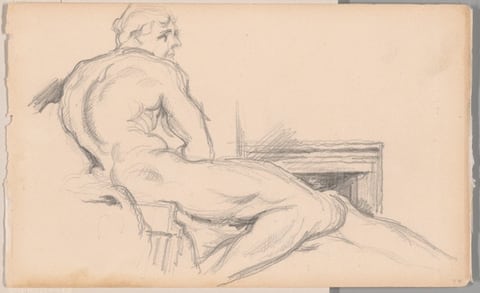
  4. A work made of graphite on ivory wove paper.
    Hercules RestingPaul Cézanne, 1897Courtesy of the Art Institute of Chicago

Section 2, south wall
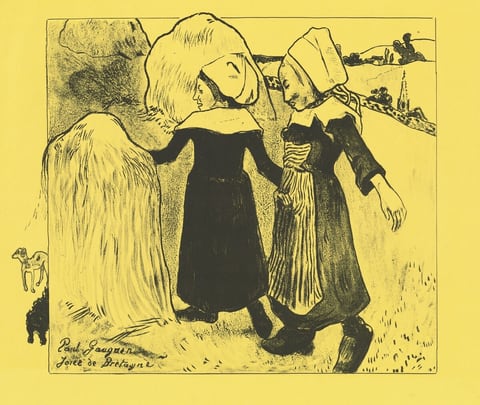
  1. The image shows two women walking arm in arm, both in traditional attire. One woman is facing away with a slight profile, while the other is seen from the side. Their faces are stylized and simplistic with covered hair. They wear long dresses with aprons and collars, and one has a striped apron. Haystacks and greenery surround them. Faint figures are in the background, as well as a spire-like structure. A dog is seen near the haystack, with simple lines suggesting a landscape.
    Pleasures of Brittany (Joies de Bretagne)Paul Gauguin, 1889Courtesy National Gallery of Art, Washington
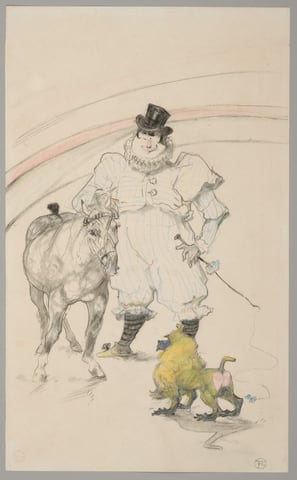
  2. A work made of pastel and graphite on cream wove paper.
    At the Circus: Trained Pony and BaboonHenri de Toulouse-Lautrec, 1899Courtesy of the Art Institute of Chicago
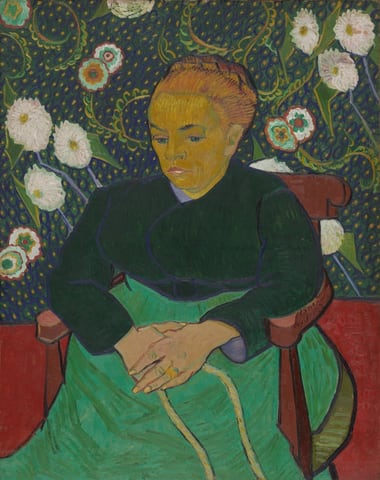
  3. A work made of oil on canvas.
    Madame Roulin Rocking the Cradle (La berceuse)Vincent van Gogh, 1889Courtesy of the Art Institute of Chicago
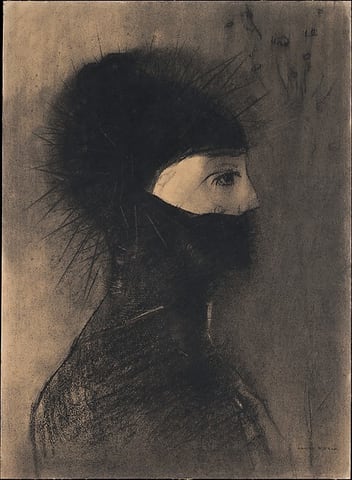
  4. Armor, by Odilon Redon, 1891
    ArmorOdilon Redon, 1891Courtesy of The Metropolitan Museum of Art

Section 2, north wall
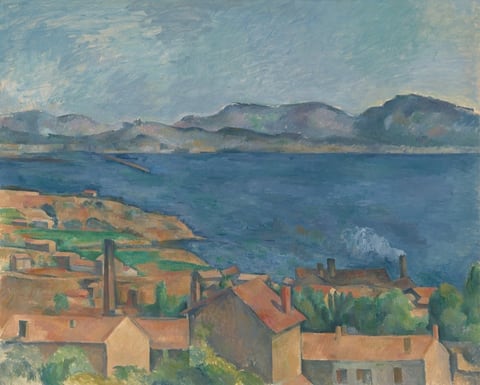
  1. Impressionist sea landscape, tan houses, blue ocean, distant mountains.
    The Bay of Marseille, Seen from L'EstaquePaul Cézanne, c. 1885Courtesy of the Art Institute of Chicago
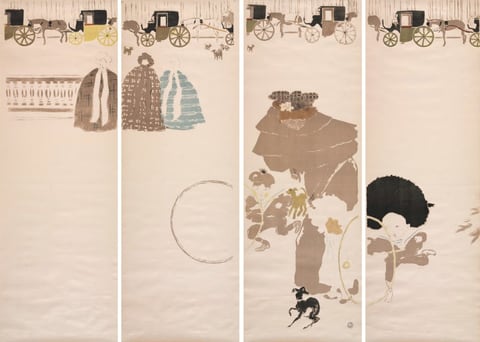
  2. Nursemaids’ Promenade, Frieze of Carriages, by Pierre Bonnard, 1895
    Nursemaids’ Promenade, Frieze of CarriagesPierre Bonnard, 1895Courtesy of the Cleveland Museum of Art
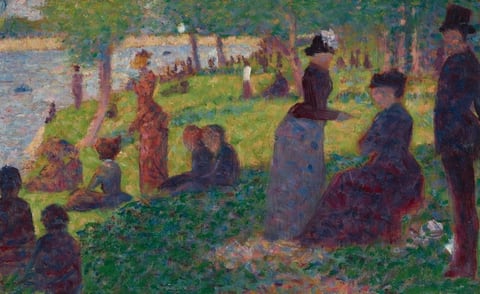
  3. Heavy daubs of pigment form a crowded scene of roughly defined, finely dressed individuals in a brightly color park along a riverbank.
    Oil Sketch for "A Sunday on La Grande Jatte — 1884"Georges Seurat, 1884Courtesy of the Art Institute of Chicago
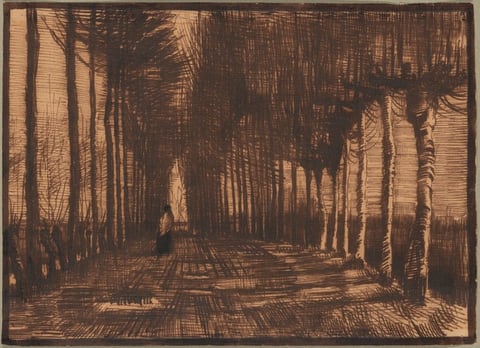
  4. A work made of reed pen and iron-gall ink on tan laid paper.
    Avenue of Pollard Birches and PoplarsVincent van Gogh, March 1884Courtesy of the Art Institute of Chicago