Floor plan

East wing: The Nineteenth CenturyPost-Impressionism

Post-Impressionism

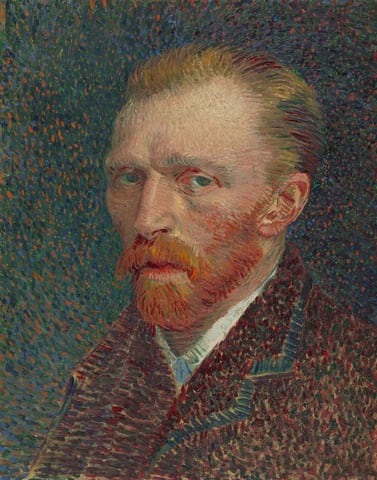
Painting of a red-haired, bearded man with light skin, painted in short brushstrokes and multicolored dots. The background is likewise a mass of small, closely spaced colored dots, these in green, blue, and red-orange.
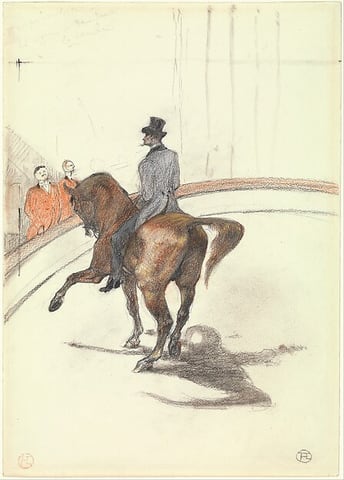
At the Circus: The Spanish Walk (Au Cirque: Le Pas espagnol), by Henri de Toulouse-Lautrec, 1899
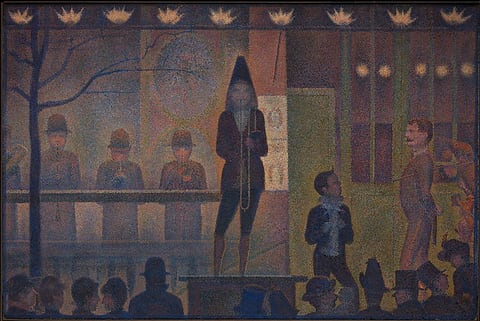
Circus Sideshow (Parade de cirque), by Georges Seurat, 1887–88
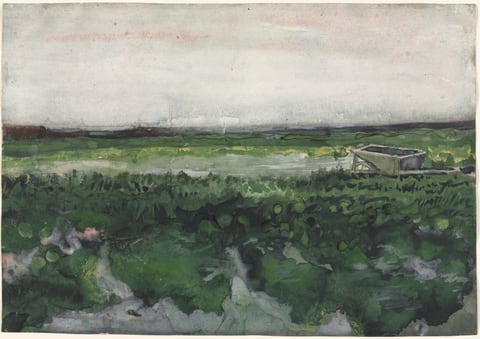
Landscape with Wheelbarrow, by Vincent van Gogh, 1883
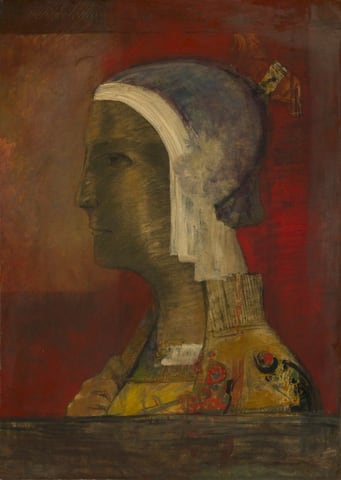
Symbolic Head, by Odilon Redon, c. 1890
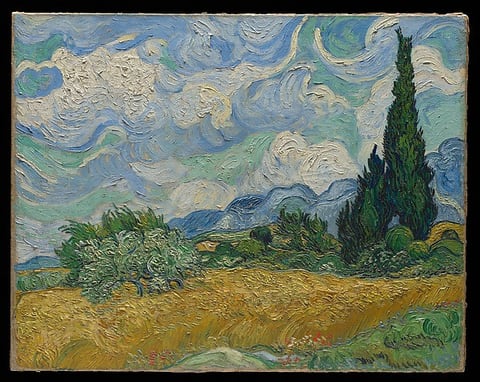
Wheat Field with Cypresses, by Vincent van Gogh, 1889
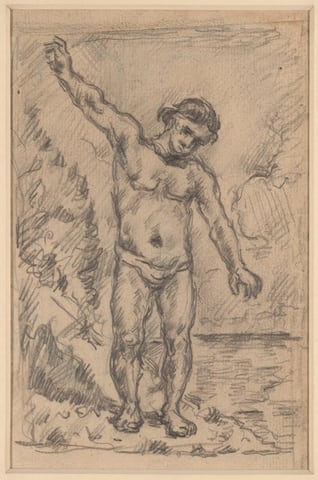
A work made of graphite on cream laid paper (pieced).
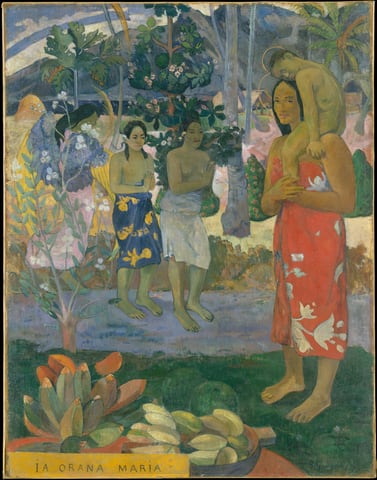
Ia Orana Maria (Hail Mary), by Paul Gauguin, 1891

The works in this room are listed below.

Works in this room

Artists who kept Impressionism's colour but pushed towards structure, symbol and feeling.

Section 1, north wall

  1. Painting of a red-haired, bearded man with light skin, painted in short brushstrokes and multicolored dots. The background is likewise a mass of small, closely spaced colored dots, these in green, blue, and red-orange.
    Self-PortraitVincent van Gogh, 1887Courtesy of the Art Institute of Chicago
  2. At the Circus: The Spanish Walk (Au Cirque: Le Pas espagnol), by Henri de Toulouse-Lautrec, 1899
    At the Circus: The Spanish Walk (Au Cirque: Le Pas espagnol)Henri de Toulouse-Lautrec, 1899Courtesy of The Metropolitan Museum of Art
  3. Circus Sideshow (Parade de cirque), by Georges Seurat, 1887–88
    Circus Sideshow (Parade de cirque)Georges Seurat, 1887–88Courtesy of The Metropolitan Museum of Art
  4. Landscape with Wheelbarrow, by Vincent van Gogh, 1883
    Landscape with WheelbarrowVincent van Gogh, 1883Courtesy of the Cleveland Museum of Art

Section 1, south wall

  1. Symbolic Head, by Odilon Redon, c. 1890
    Symbolic HeadOdilon Redon, c. 1890Courtesy of the Cleveland Museum of Art
  2. Wheat Field with Cypresses, by Vincent van Gogh, 1889
    Wheat Field with CypressesVincent van Gogh, 1889Courtesy of The Metropolitan Museum of Art
  3. A work made of graphite on cream laid paper (pieced).
    Bather With Outstretched Arms (recto); Study of a Tree (verso)Paul Cézanne, 1874/77Courtesy of the Art Institute of Chicago
  4. Ia Orana Maria (Hail Mary), by Paul Gauguin, 1891
    Ia Orana Maria (Hail Mary)Paul Gauguin, 1891Courtesy of The Metropolitan Museum of Art

Section 2, south wall
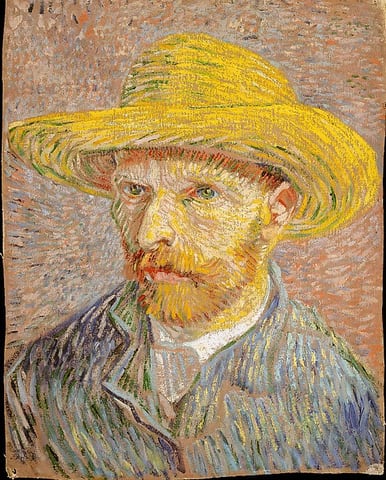
  1. Self-Portrait with a Straw Hat (obverse: The Potato Peeler), by Vincent van Gogh, 1887
    Self-Portrait with a Straw Hat (obverse: The Potato Peeler)Vincent van Gogh, 1887Courtesy of The Metropolitan Museum of Art
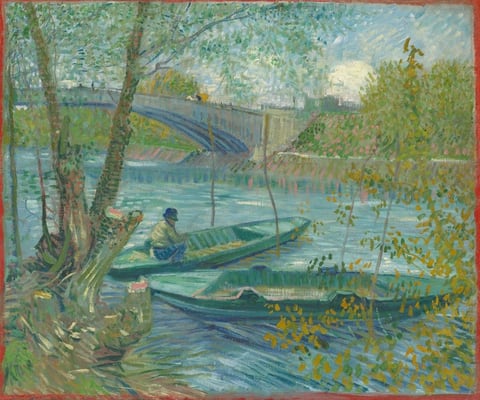
  2. Painting in short strokes of pale blue, green, white, yellow, and pink, of a fisherman in one of two small boats on a river, a tree-lined bank and a bridge in the background.
    Fishing in Spring, the Pont de Clichy (Asnières)Vincent van Gogh, 1887Courtesy of the Art Institute of Chicago
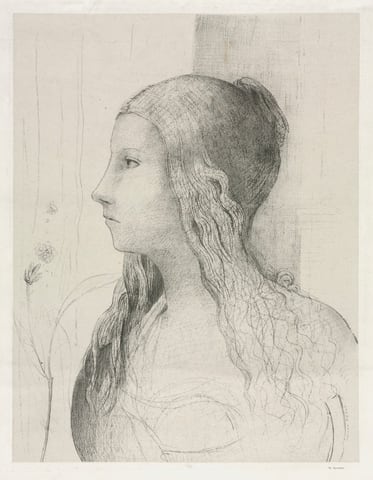
  3. Brünnhilde in Twilight of the Gods, by Odilon Redon, 1894
    Brünnhilde in Twilight of the GodsOdilon Redon, 1894Courtesy of the Cleveland Museum of Art
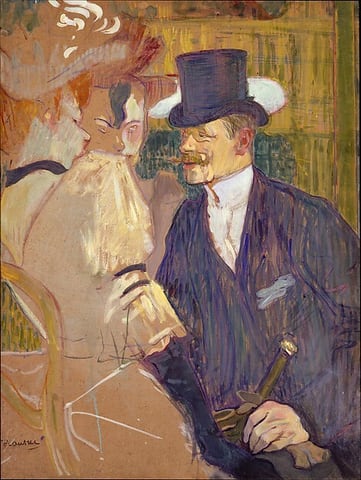
  4. The Englishman (William Tom Warrener, 1861–1934) at the Moulin Rouge, by Henri de Toulouse-Lautrec, 1892
    The Englishman (William Tom Warrener, 1861–1934) at the Moulin RougeHenri de Toulouse-Lautrec, 1892Courtesy of The Metropolitan Museum of Art

Section 2, north wall
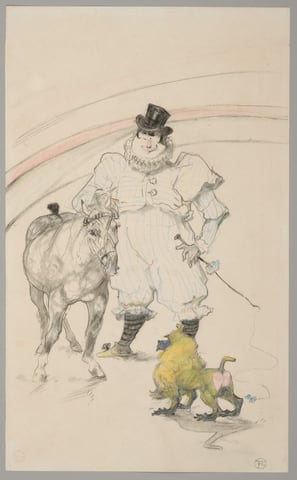
  1. A work made of pastel and graphite on cream wove paper.
    At the Circus: Trained Pony and BaboonHenri de Toulouse-Lautrec, 1899Courtesy of the Art Institute of Chicago
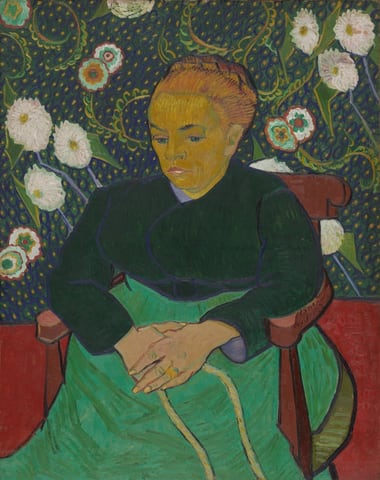
  2. A work made of oil on canvas.
    Madame Roulin Rocking the Cradle (La berceuse)Vincent van Gogh, 1889Courtesy of the Art Institute of Chicago
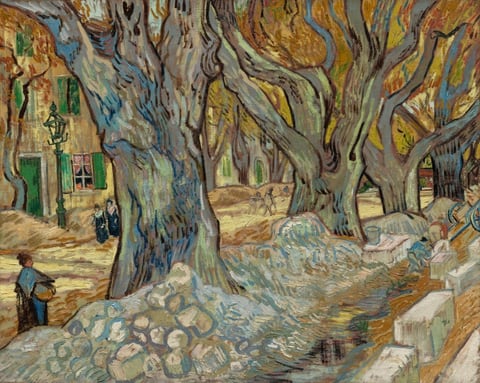
  3. The Large Plane Trees (Road Menders at Saint-Rémy), by Vincent van Gogh, 1889
    The Large Plane Trees (Road Menders at Saint-Rémy)Vincent van Gogh, 1889Courtesy of the Cleveland Museum of Art
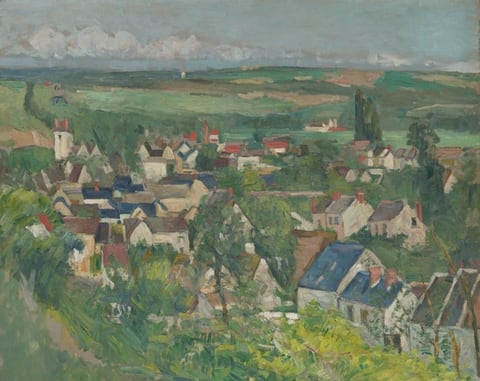
  4. View of a village surrounded by hills, fields, and trees, shown from a vantage point above the scene. Subtly rolling hills recede into a bluish gray-ish sky punctuated by white clouds. Thick brushstrokes built up atop each other are visible throughout.
    Auvers, Panoramic ViewPaul Cézanne, 1873–75Courtesy of the Art Institute of Chicago