Floor plan

East wing: The Nineteenth CenturyPost-Impressionism

Post-Impressionism

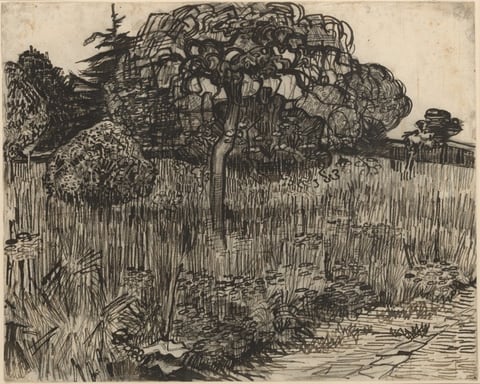
A work made of reed pen and black-brown ink, with black chalk on off-white wove paper.
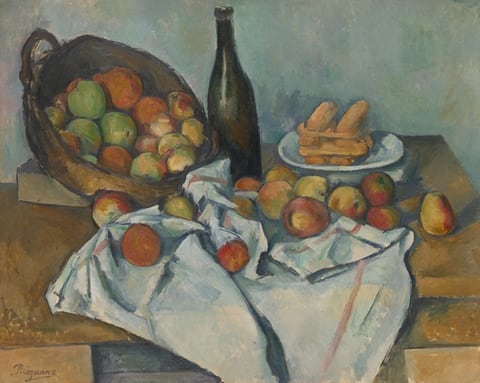
Painting of a basket of green and red-yellow apples spilling over into a white cloth placed on a wooden table, with a dark green bottle and a plate of pale biscuits behind.
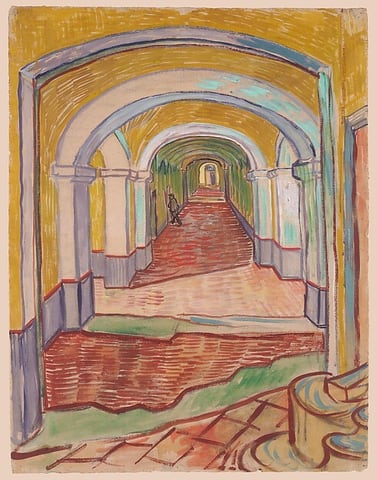
Corridor in the Asylum, by Vincent van Gogh, September 1889
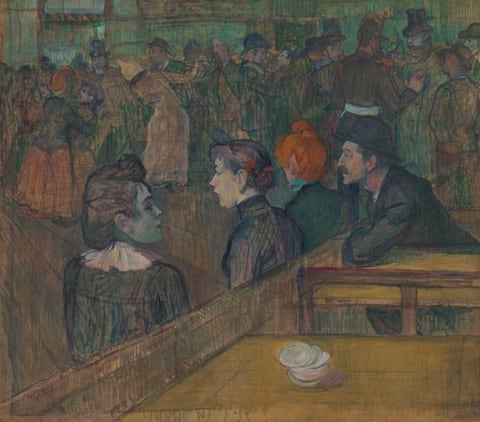
A scene in brown and green tones of people dancing indoors. In the foreground, three women stand near boothed tables while a man sits.
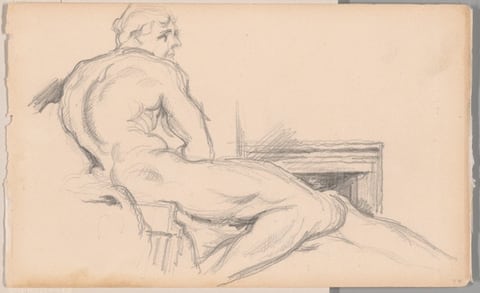
A work made of graphite on ivory wove paper.
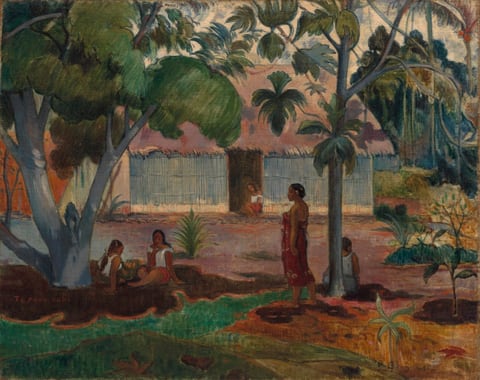
The Large Tree, by Paul Gauguin, 1891
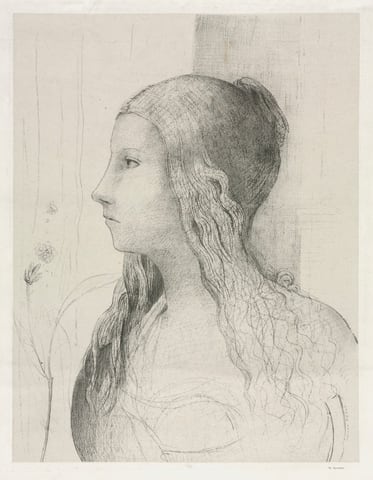
Brünnhilde in Twilight of the Gods, by Odilon Redon, 1894

The works in this room are listed below.

Works in this room

Artists who kept Impressionism's colour but pushed towards structure, symbol and feeling.

Section 1, north wall

  1. A work made of reed pen and black-brown ink, with black chalk on off-white wove paper.
    Weeping TreeVincent van Gogh, 1889Courtesy of the Art Institute of Chicago
  2. Painting of a basket of green and red-yellow apples spilling over into a white cloth placed on a wooden table, with a dark green bottle and a plate of pale biscuits behind.
    The Basket of ApplesPaul Cézanne, c. 1893Courtesy of the Art Institute of Chicago
  3. Corridor in the Asylum, by Vincent van Gogh, September 1889
    Corridor in the AsylumVincent van Gogh, September 1889Courtesy of The Metropolitan Museum of Art

Section 1, south wall

  1. A scene in brown and green tones of people dancing indoors. In the foreground, three women stand near boothed tables while a man sits.
    Moulin de la GaletteHenri de Toulouse-Lautrec, 1889Courtesy of the Art Institute of Chicago
  2. A work made of graphite on ivory wove paper.
    Hercules RestingPaul Cézanne, 1897Courtesy of the Art Institute of Chicago
  3. The Large Tree, by Paul Gauguin, 1891
    The Large TreePaul Gauguin, 1891Courtesy of the Cleveland Museum of Art
  4. Brünnhilde in Twilight of the Gods, by Odilon Redon, 1894
    Brünnhilde in Twilight of the GodsOdilon Redon, 1894Courtesy of the Cleveland Museum of Art

Section 2, south wall
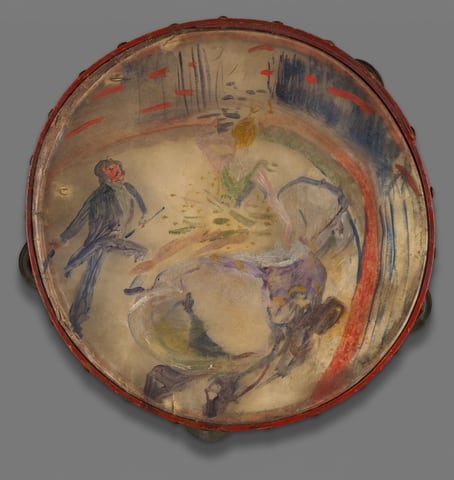
  1. A work made of oil on vellum.
    At the Circus: The Bareback Rider (Au Cirque: Écuyère)Henri de Toulouse-Lautrec, 1888Courtesy of the Art Institute of Chicago
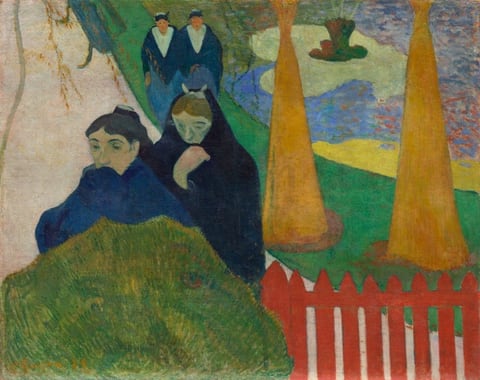
  2. Painting of four women with blue shawls walking near red fence.
    Arlésiennes (Mistral)Paul Gauguin, 1888Courtesy of the Art Institute of Chicago
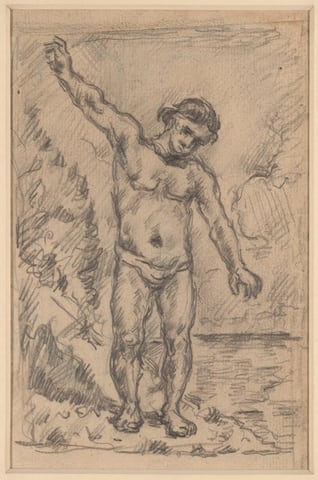
  3. A work made of graphite on cream laid paper (pieced).
    Bather With Outstretched Arms (recto); Study of a Tree (verso)Paul Cézanne, 1874/77Courtesy of the Art Institute of Chicago
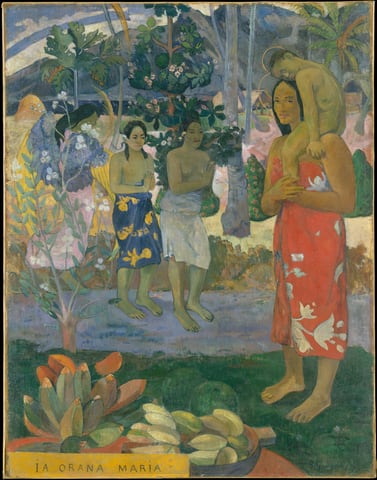
  4. Ia Orana Maria (Hail Mary), by Paul Gauguin, 1891
    Ia Orana Maria (Hail Mary)Paul Gauguin, 1891Courtesy of The Metropolitan Museum of Art

Section 2, north wall
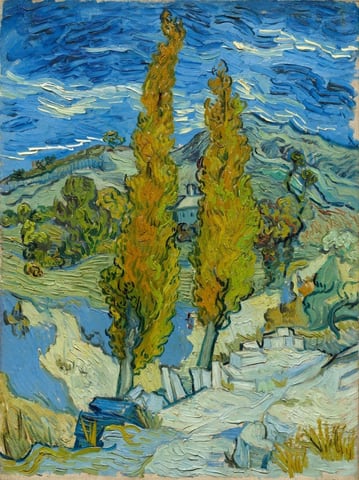
  1. Two Poplars in the Alpilles near Saint-Rémy, by Vincent van Gogh, 1889
    Two Poplars in the Alpilles near Saint-RémyVincent van Gogh, 1889Courtesy of the Cleveland Museum of Art
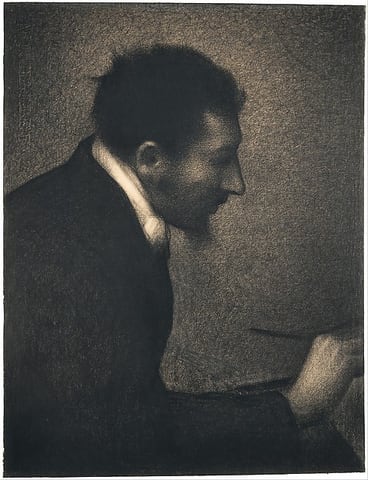
  2. Aman-Jean (Portrait of Edmond François Aman-Jean), by Georges Seurat, 1882–83
    Aman-Jean (Portrait of Edmond François Aman-Jean)Georges Seurat, 1882–83Courtesy of The Metropolitan Museum of Art
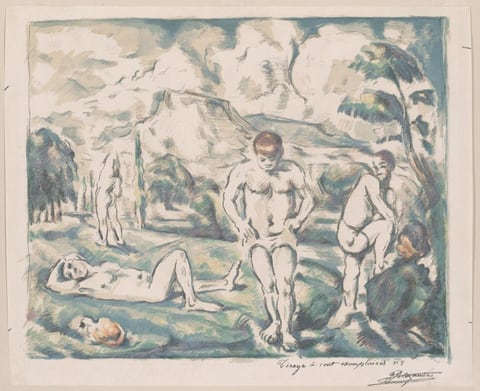
  3. A work made of color lithograph on ivory laid paper.
    BathersPaul Cézanne, 1890–1900Courtesy of the Art Institute of Chicago

Section 3, north wall
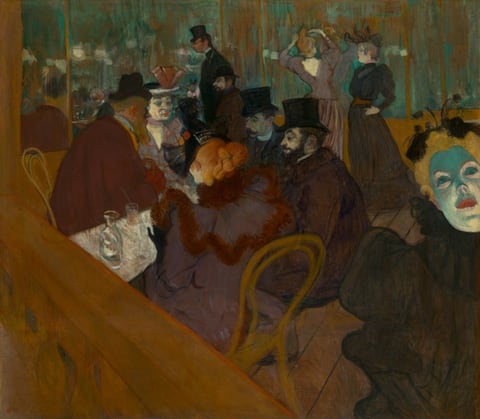
  1. Painting, heavy in tones of blue-green and burnt orange, depicting a bar scene at night. The men wear top hats and many are bearded; the women are dressed in voluminous gowns and decorative hats. Five people converse in the center of the composition and a woman with a green face dominates the right foreground.
    At the Moulin RougeHenri de Toulouse-Lautrec, 1892–95Courtesy of the Art Institute of Chicago
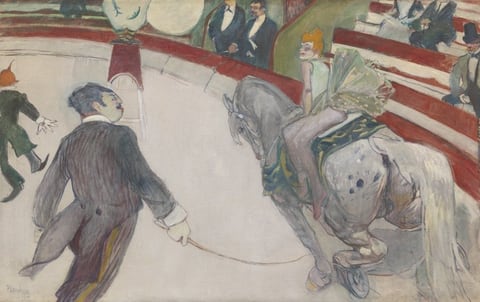
  2. Painting of a performance inside a circus ring. A man wearing a suit holds a whip in his hand and looks towards a woman with red hair riding a gray horse and wearing a green dress. Audience members wearing suits and top hats watch from red and white benches on the side.
    Equestrienne (At the Cirque Fernando)Henri de Toulouse-Lautrec, 1887–88Courtesy of the Art Institute of Chicago