Floor plan

East wing: The Nineteenth CenturyPost-Impressionism

Post-Impressionism

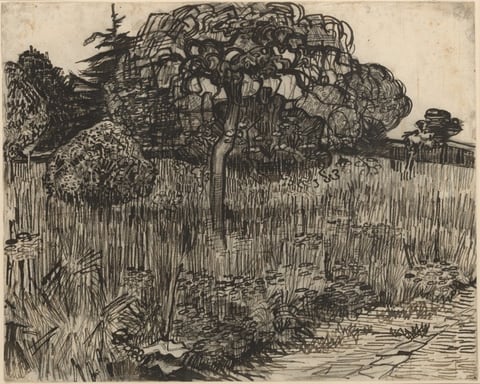
A work made of reed pen and black-brown ink, with black chalk on off-white wove paper.
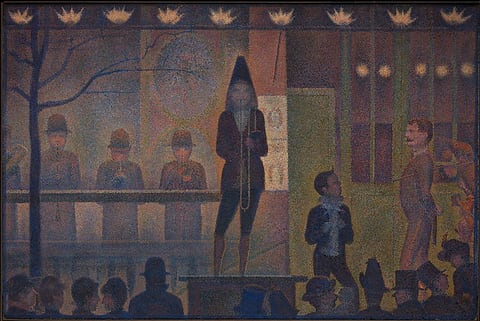
Circus Sideshow (Parade de cirque), by Georges Seurat, 1887–88
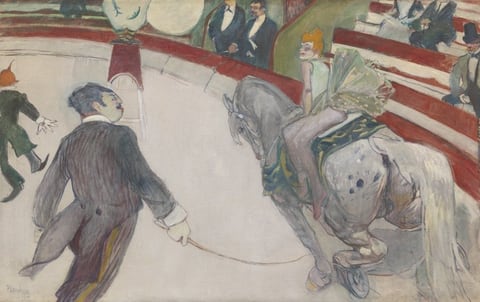
Painting of a performance inside a circus ring. A man wearing a suit holds a whip in his hand and looks towards a woman with red hair riding a gray horse and wearing a green dress. Audience members wearing suits and top hats watch from red and white benches on the side.
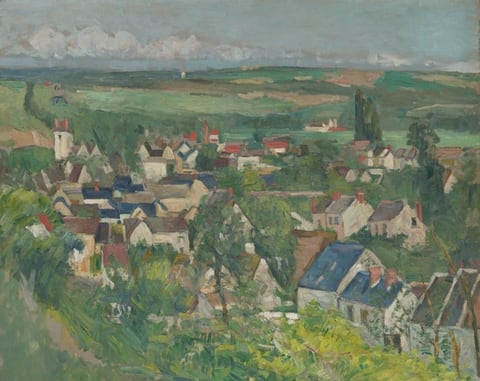
View of a village surrounded by hills, fields, and trees, shown from a vantage point above the scene. Subtly rolling hills recede into a bluish gray-ish sky punctuated by white clouds. Thick brushstrokes built up atop each other are visible throughout.
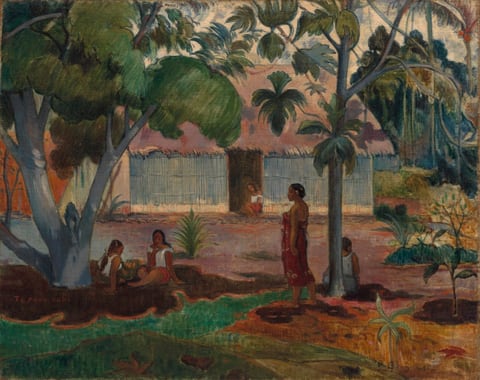
The Large Tree, by Paul Gauguin, 1891
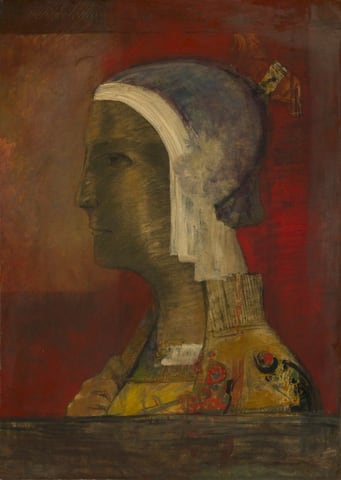
Symbolic Head, by Odilon Redon, c. 1890
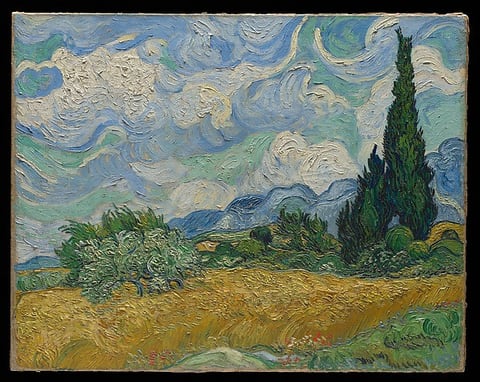
Wheat Field with Cypresses, by Vincent van Gogh, 1889

The works in this room are listed below.

Works in this room

Artists who kept Impressionism's colour but pushed towards structure, symbol and feeling.

Section 1, north wall

  1. A work made of reed pen and black-brown ink, with black chalk on off-white wove paper.
    Weeping TreeVincent van Gogh, 1889Courtesy of the Art Institute of Chicago
  2. Circus Sideshow (Parade de cirque), by Georges Seurat, 1887–88
    Circus Sideshow (Parade de cirque)Georges Seurat, 1887–88Courtesy of The Metropolitan Museum of Art
  3. Painting of a performance inside a circus ring. A man wearing a suit holds a whip in his hand and looks towards a woman with red hair riding a gray horse and wearing a green dress. Audience members wearing suits and top hats watch from red and white benches on the side.
    Equestrienne (At the Cirque Fernando)Henri de Toulouse-Lautrec, 1887–88Courtesy of the Art Institute of Chicago

Section 1, south wall

  1. View of a village surrounded by hills, fields, and trees, shown from a vantage point above the scene. Subtly rolling hills recede into a bluish gray-ish sky punctuated by white clouds. Thick brushstrokes built up atop each other are visible throughout.
    Auvers, Panoramic ViewPaul Cézanne, 1873–75Courtesy of the Art Institute of Chicago
  2. The Large Tree, by Paul Gauguin, 1891
    The Large TreePaul Gauguin, 1891Courtesy of the Cleveland Museum of Art
  3. Symbolic Head, by Odilon Redon, c. 1890
    Symbolic HeadOdilon Redon, c. 1890Courtesy of the Cleveland Museum of Art
  4. Wheat Field with Cypresses, by Vincent van Gogh, 1889
    Wheat Field with CypressesVincent van Gogh, 1889Courtesy of The Metropolitan Museum of Art

Section 2, south wall
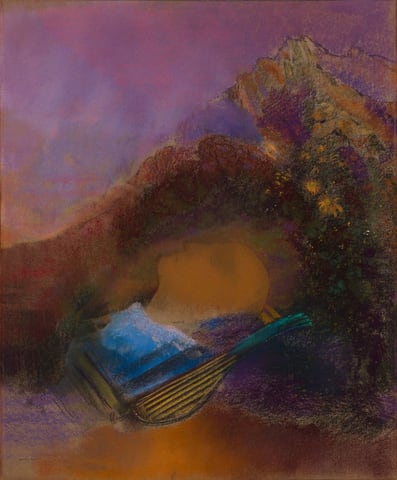
  1. Orpheus, by Odilon Redon, c. 1903–10
    OrpheusOdilon Redon, c. 1903–10Courtesy of the Cleveland Museum of Art
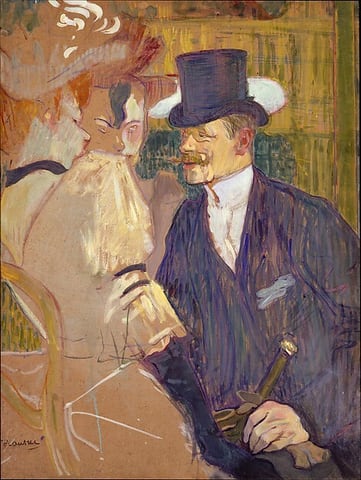
  2. The Englishman (William Tom Warrener, 1861–1934) at the Moulin Rouge, by Henri de Toulouse-Lautrec, 1892
    The Englishman (William Tom Warrener, 1861–1934) at the Moulin RougeHenri de Toulouse-Lautrec, 1892Courtesy of The Metropolitan Museum of Art
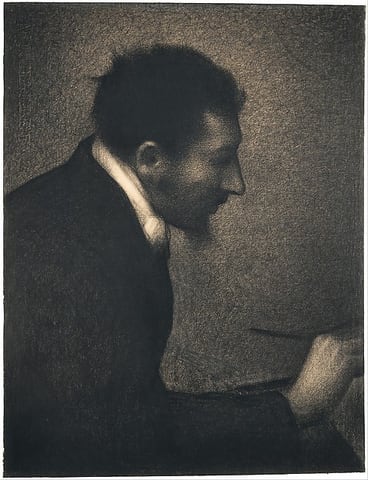
  3. Aman-Jean (Portrait of Edmond François Aman-Jean), by Georges Seurat, 1882–83
    Aman-Jean (Portrait of Edmond François Aman-Jean)Georges Seurat, 1882–83Courtesy of The Metropolitan Museum of Art
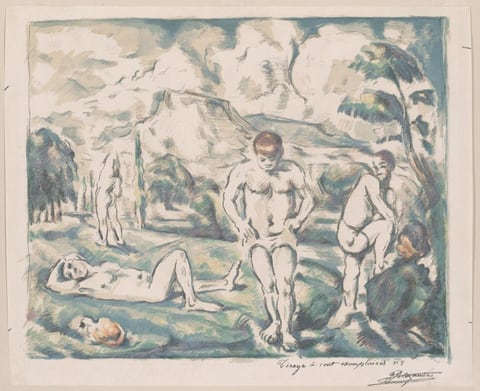
  4. A work made of color lithograph on ivory laid paper.
    BathersPaul Cézanne, 1890–1900Courtesy of the Art Institute of Chicago

Section 2, north wall
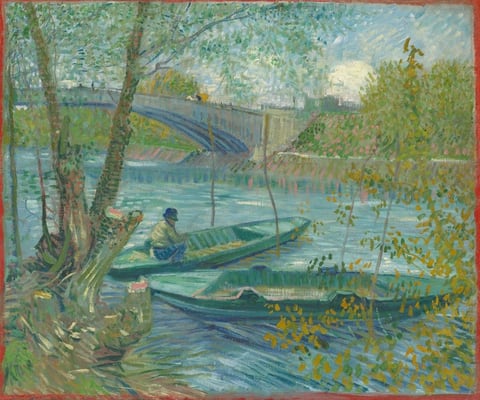
  1. Painting in short strokes of pale blue, green, white, yellow, and pink, of a fisherman in one of two small boats on a river, a tree-lined bank and a bridge in the background.
    Fishing in Spring, the Pont de Clichy (Asnières)Vincent van Gogh, 1887Courtesy of the Art Institute of Chicago
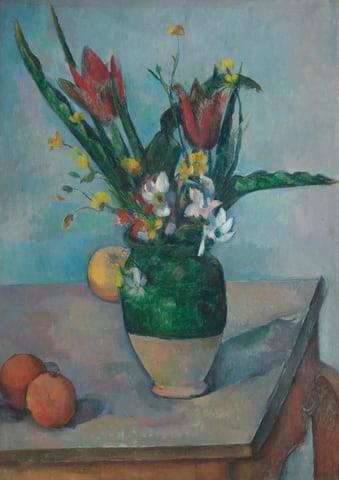
  2. A work made of oil on canvas.
    The Vase of TulipsPaul Cézanne, c. 1890Courtesy of the Art Institute of Chicago
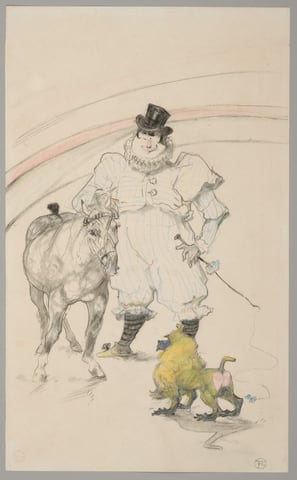
  3. A work made of pastel and graphite on cream wove paper.
    At the Circus: Trained Pony and BaboonHenri de Toulouse-Lautrec, 1899Courtesy of the Art Institute of Chicago

Section 3, north wall
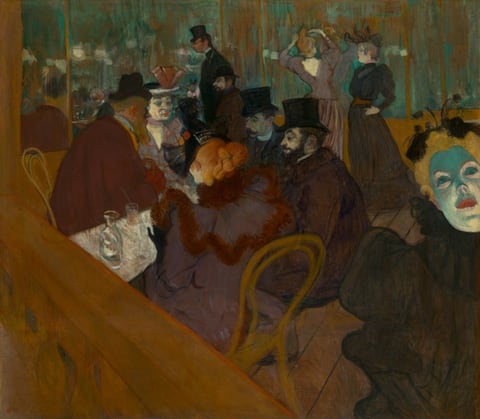
  1. Painting, heavy in tones of blue-green and burnt orange, depicting a bar scene at night. The men wear top hats and many are bearded; the women are dressed in voluminous gowns and decorative hats. Five people converse in the center of the composition and a woman with a green face dominates the right foreground.
    At the Moulin RougeHenri de Toulouse-Lautrec, 1892–95Courtesy of the Art Institute of Chicago
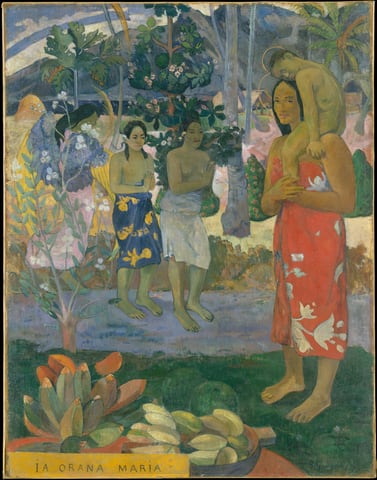
  2. Ia Orana Maria (Hail Mary), by Paul Gauguin, 1891
    Ia Orana Maria (Hail Mary)Paul Gauguin, 1891Courtesy of The Metropolitan Museum of Art