Renaissance
Works in this room
European art from about 1400 to 1600, when painters rediscovered perspective and the classical past.
Section 1, north wall
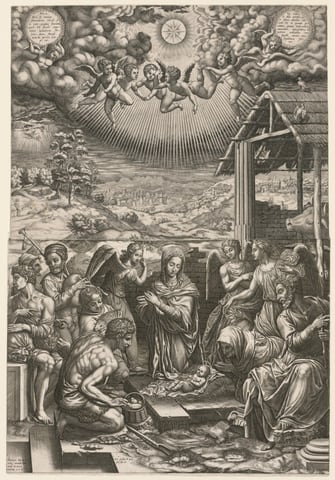
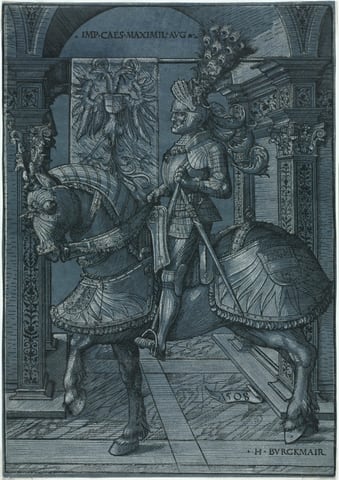
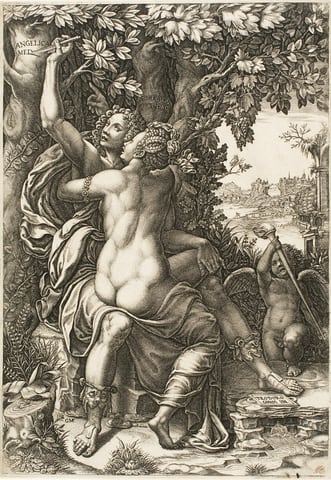
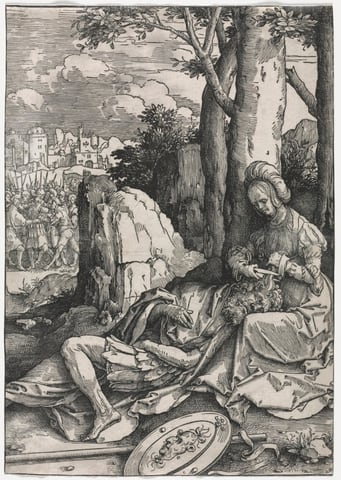
The NativityGiorgio Ghisi, 1553Courtesy of the Cleveland Museum of Art Equestrian Portrait of the Emperor MaximilianHans Burgkmair, 1508Courtesy of the Cleveland Museum of Art Angelica and MedoroGiorgio Ghisi, c. 1570Courtesy of the Art Institute of Chicago The Power of Women: Samson and DelilahLucas van Leyden, c. 1512Courtesy of the Cleveland Museum of Art
Section 1, south wall
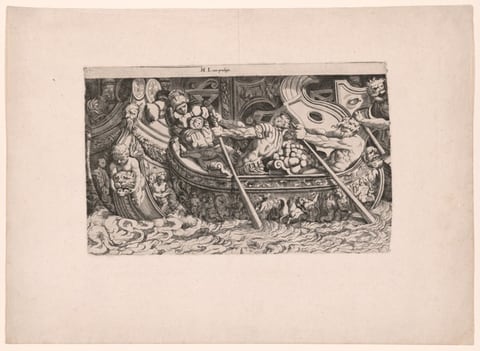
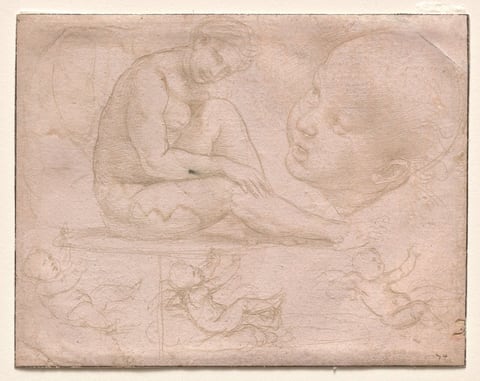
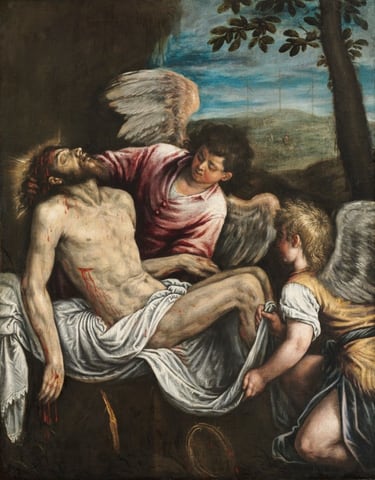
A Naval BattleMichele Lucchese, c. 1550Courtesy of the Art Institute of Chicago Studies of a Seated Female, Child's Head, and Three Studies of a BabyRaphael, c. 1507–8Courtesy of the Cleveland Museum of Art The Dead Christ with AngelsLeandro Bassano, c. 1580Courtesy of the Cleveland Museum of Art
Section 2, south wall
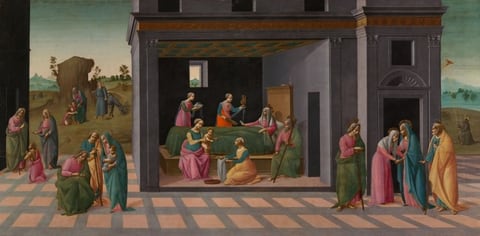
Scenes from the Life of Saint John the BaptistBartolomeo di Giovanni, 1490/95Courtesy of the Art Institute of Chicago 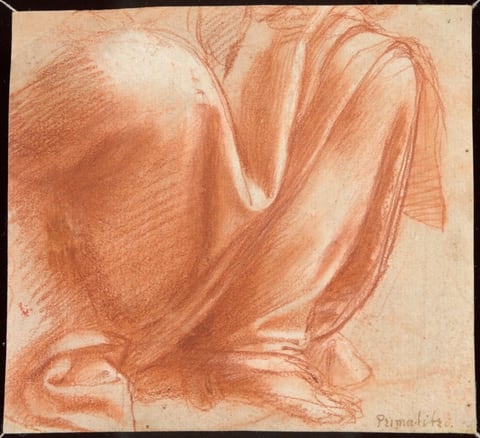
A Drapery Study for the Knees of a Seated Allegorical Figure of Charity (recto); Bust of a Naked Allegorical Figure of Charity with Two Putti (verso)Giovanni Antonio di Francesco Sogliani, 1520/30Courtesy of the Art Institute of Chicago 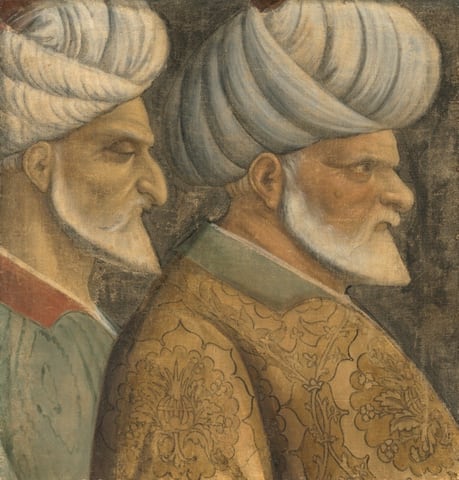
Sinan Reis and Hayreddin BarbarossaItalian, c. 1535Courtesy of the Art Institute of Chicago
Section 2, north wall
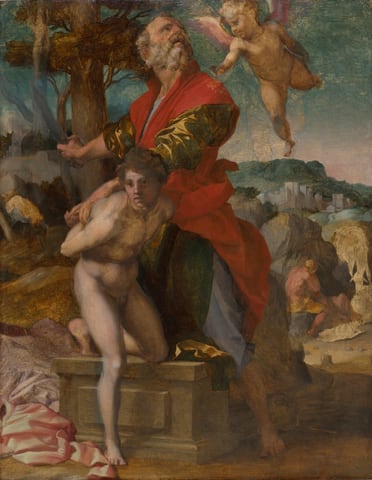
The Sacrifice of IsaacAndrea del Sarto, c. 1527Courtesy of the Cleveland Museum of Art 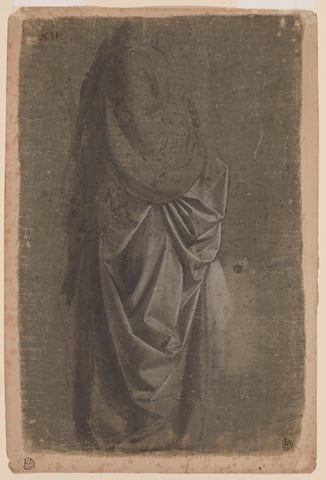
Drapery Study of a Standing Figure Facing Right, in ProfileAndrea del Verrocchio, late 1460s–early 1470sCourtesy of the Art Institute of Chicago 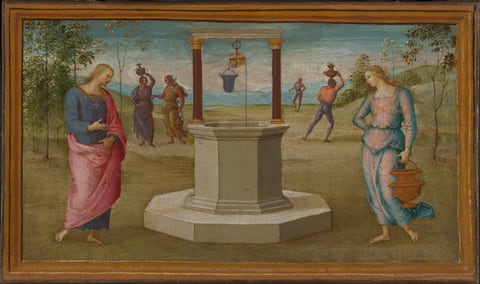
Christ and the Woman of SamariaPerugino, 1500–05Courtesy of the Art Institute of Chicago 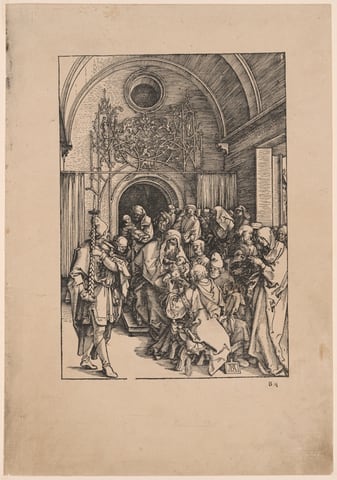
The Circumcision of Christ, from The Life of the VirginAlbrecht Dürer, c. 1505, published 1511Courtesy of the Art Institute of Chicago
Section 3, north wall
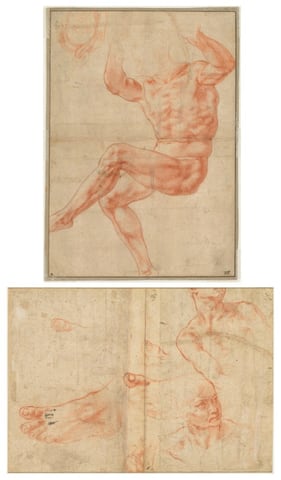
Study for the Nude Youth over the Prophet Daniel (recto); Figure Studies for the Sistine Ceiling (verso)Michelangelo Buonarroti, 1510–11Courtesy of the Cleveland Museum of Art 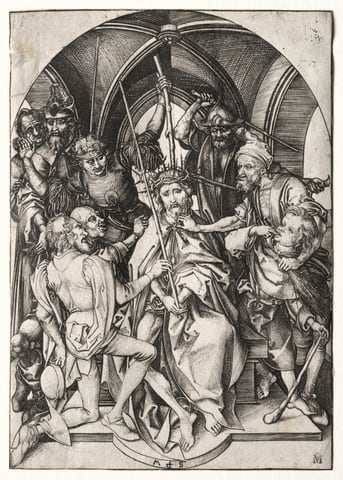
Christ Crowned with ThornsMartin Schongauer, 1470–82Courtesy of the Cleveland Museum of Art