Floor plan

Style galleriesFrench classicism

French classicism

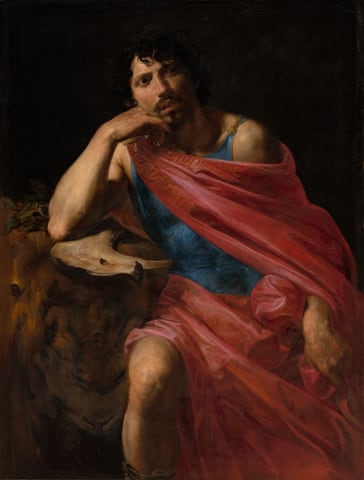
Samson, by Valentin de Boulogne, 1630–31
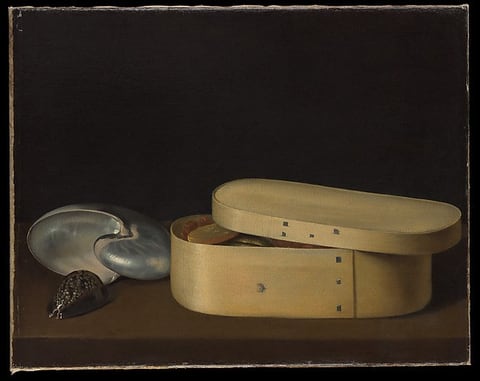
Still Life with Shells and a Chip-Wood Box, by Sebastian Stoskopff, late 1620s
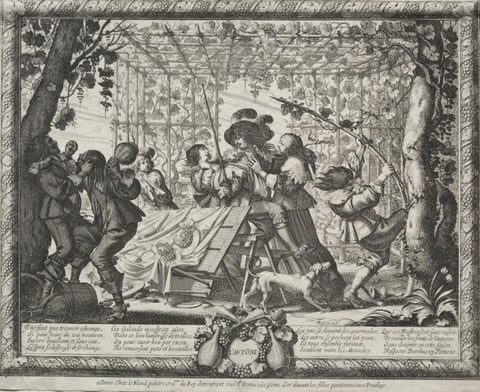
The Four Seasons: Autumn, by Abraham Bosse, 1635
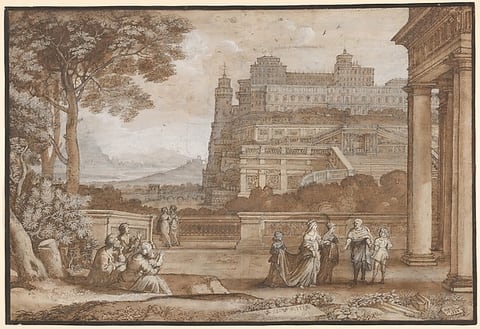
Queen Esther Approaching the Palace of Ahasuerus, by Claude Lorrain (Claude Gellée), 1658
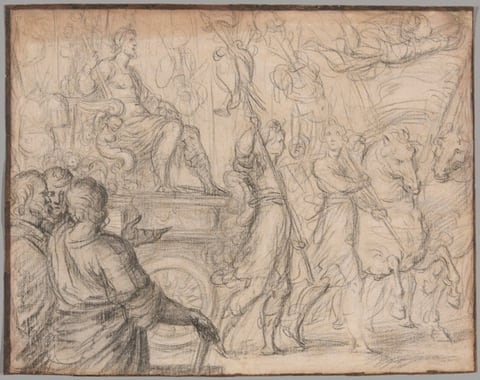
A work made of black chalk, with touches of white chalk, on cream laid paper.
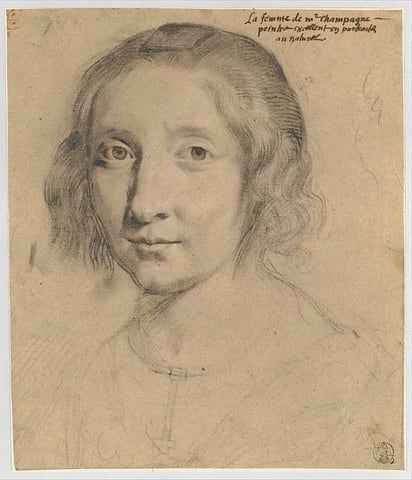
Portrait of Charlotte Duchesne, by Philippe de Champaigne, ca. 1628
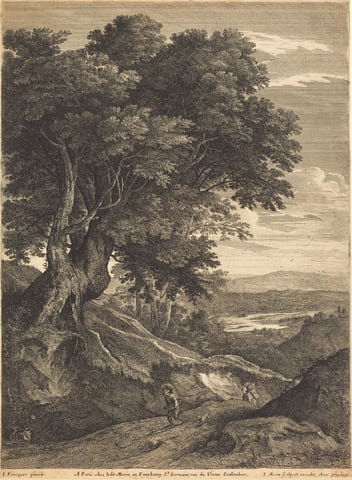
The image depicts a landscape viewed from a slightly elevated angle. On the left side, there is a large tree with a twisted trunk and dense foliage. A winding path can be seen with a figure walking with a dog. In the distance, a river winds through the land, and there are rolling hills and trees in the background. The color scheme is sepia-toned.
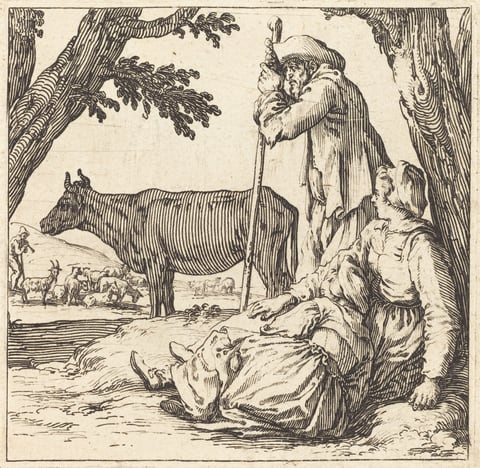
The image has an elevated perspective showing two figures with animals in the scene. One person is leaning against a tree with a stick, while the other is seated on the ground. A cow is between them and other livestock in the middle distance. A person in the distance is tending to the animals. The horizon is low in the image, hidden by rolling hills. The artwork is in monochrome with fine linework, creating texture through hatching and cross-hatching, emphasizing depth and dimensionality.

The works in this room are listed below.

Works in this room

Order, clarity and the ideal landscape in seventeenth-century France.

First room, north wall

  1. Samson, by Valentin de Boulogne, 1630–31
    SamsonValentin de Boulogne, 1630–31Courtesy of the Cleveland Museum of Art
  2. Still Life with Shells and a Chip-Wood Box, by Sebastian Stoskopff, late 1620s
    Still Life with Shells and a Chip-Wood BoxSebastian Stoskopff, late 1620sCourtesy of The Metropolitan Museum of Art
  3. The Four Seasons: Autumn, by Abraham Bosse, 1635
    The Four Seasons: AutumnAbraham Bosse, 1635Courtesy of the Cleveland Museum of Art
  4. Queen Esther Approaching the Palace of Ahasuerus, by Claude Lorrain (Claude Gellée), 1658
    Queen Esther Approaching the Palace of AhasuerusClaude Lorrain (Claude Gellée), 1658Courtesy of The Metropolitan Museum of Art

First room, south wall

  1. A work made of black chalk, with touches of white chalk, on cream laid paper.
    A ProcessionAmbroise Dubois, c. 1610Courtesy of the Art Institute of Chicago
  2. Portrait of Charlotte Duchesne, by Philippe de Champaigne, ca. 1628
    Portrait of Charlotte DuchesnePhilippe de Champaigne, ca. 1628Courtesy of The Metropolitan Museum of Art
  3. The image depicts a landscape viewed from a slightly elevated angle. On the left side, there is a large tree with a twisted trunk and dense foliage. A winding path can be seen with a figure walking with a dog. In the distance, a river winds through the land, and there are rolling hills and trees in the background. The color scheme is sepia-toned.
    Hilly Landscape with Travelers on FootJean MorinCourtesy National Gallery of Art, Washington
  4. The image has an elevated perspective showing two figures with animals in the scene. One person is leaning against a tree with a stick, while the other is seated on the ground. A cow is between them and other livestock in the middle distance. A person in the distance is tending to the animals. The horizon is low in the image, hidden by rolling hills. The artwork is in monochrome with fine linework, creating texture through hatching and cross-hatching, emphasizing depth and dimensionality.
    Peasant Couple with CowJacques Callot, c. 1621Courtesy National Gallery of Art, Washington

Second room, south wall
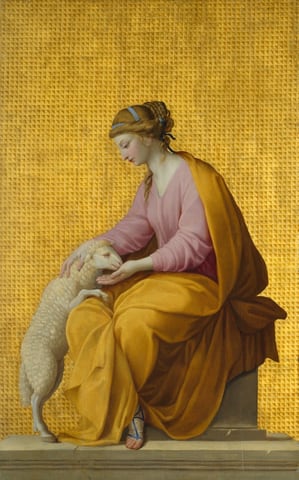
  1. A work made of oil on panel.
    MeeknessEustache Le Sueur, 1650Courtesy of the Art Institute of Chicago
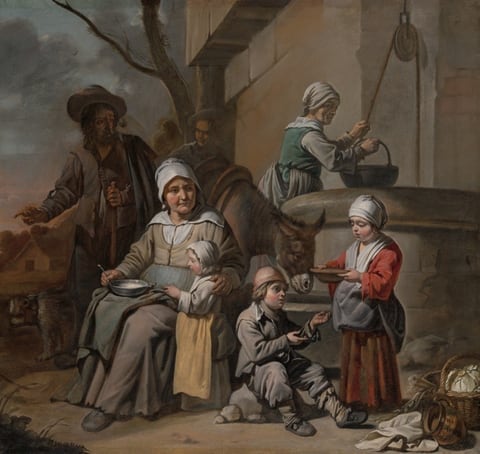
  2. A work made of oil on canvas.
    Peasant Family at a WellThe Master of the Children's Caps, 1650/60Courtesy of the Art Institute of Chicago
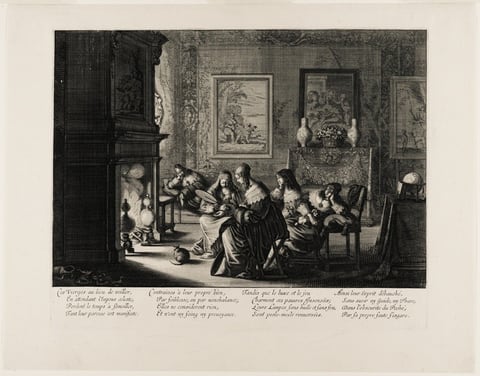
  3. A work made of engraving and etching on ivory laid paper.
    The Wise and Foolish Virgins, plate fiveAbraham Bosse, 1635Courtesy of the Art Institute of Chicago

Second room, north wall
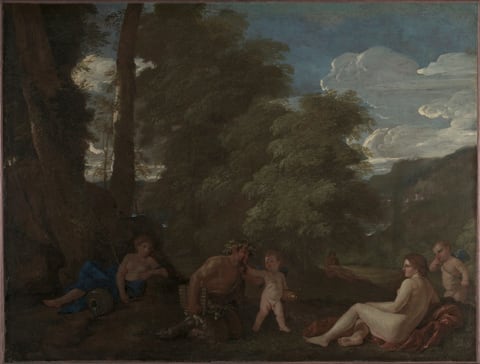
  1. Nymphs and a Satyr (Amor Vincit Omnia), by Nicolas Poussin, c. 1625–27
    Nymphs and a Satyr (Amor Vincit Omnia)Nicolas Poussin, c. 1625–27Courtesy of the Cleveland Museum of Art
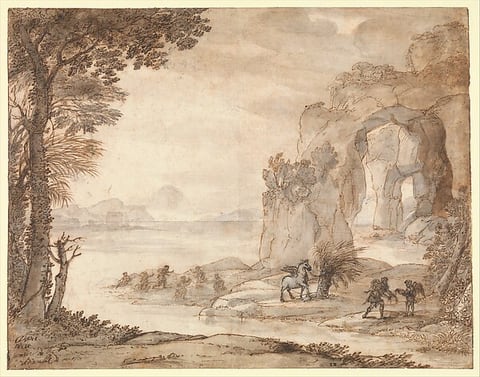
  2. Perseus and the Origin of Coral, by Claude Lorrain (Claude Gellée), ca. 1671
    Perseus and the Origin of CoralClaude Lorrain (Claude Gellée), ca. 1671Courtesy of The Metropolitan Museum of Art
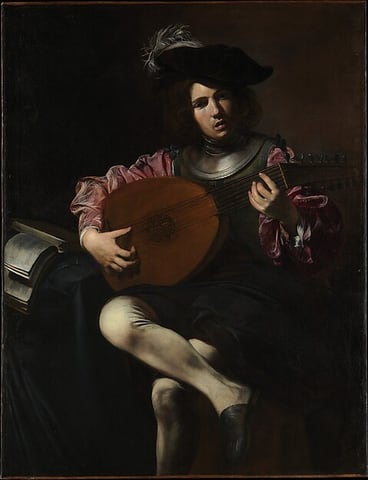
  3. Lute Player, by Valentin de Boulogne, ca. 1625–26
    Lute PlayerValentin de Boulogne, ca. 1625–26Courtesy of The Metropolitan Museum of Art

Third room, north wall
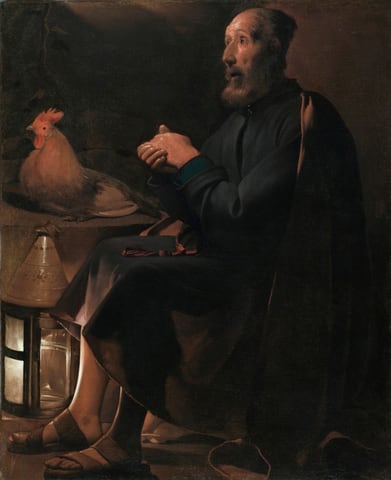
  1. Saint Peter Repentant, by Georges de La Tour, 1645
    Saint Peter RepentantGeorges de La Tour, 1645Courtesy of the Cleveland Museum of Art
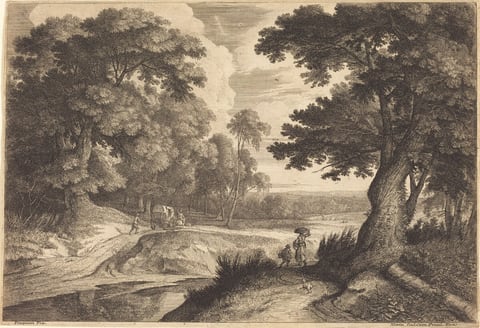
  2. The image shows an etching of a rural landscape with trees obscuring the horizon. In the distance, there is a cart on a winding path with a person walking beside it. Closer to the viewer, there is a person with a child under a tree, accompanied by a small dog. The artwork features fine and detailed brushwork with cross-hatching for texture and shadows. The color scheme is monochromatic in muted browns, emphasizing details and creating a peaceful scene under soft light filtered through the trees. The trees form a canopy framing the serene setting.
    Edge of a Wood with Peasants Going to MarketJean MorinCourtesy National Gallery of Art, Washington