Floor plan

Style galleriesPrints of the 18th century
Prints of the 18th century
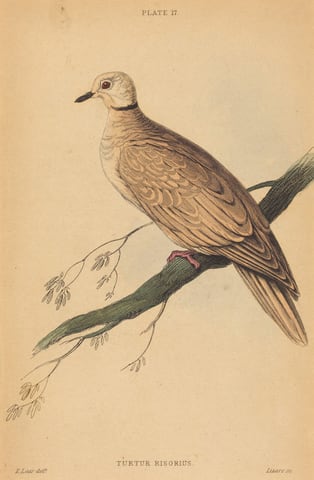
This is a drawing of a bird perched on a branch. The bird is detailed and identified as "Turtur Risorius." It rests on a green textured branch against a plain background. The bird has a black ring around its neck, soft brown plumage with intricate feather patterns, and light pink legs. Its eye is prominent and outlined within its head design. The branch is minimalist with small buds and thin twigs.
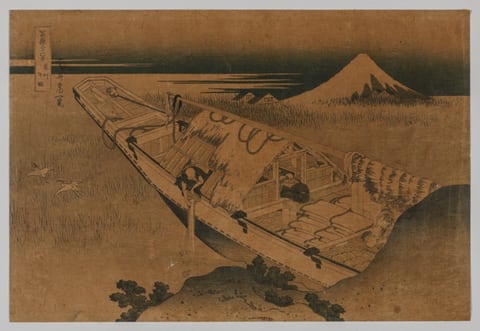
Fuji from Ushibori, Province of Hitachi, by Katsushika Hokusai, 1760–1849
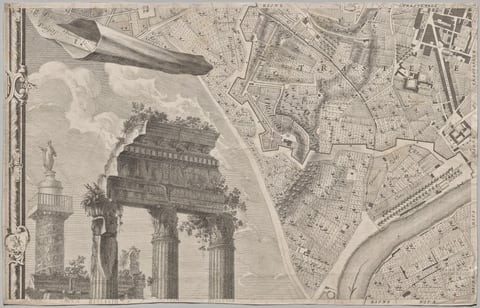
Nuova pianta di Roma data in luce da Giambattista Nolli l’anno MDCCXLVII, known as La Pianta Grande di Roma, by Giovanni Battista Nolli, 1748
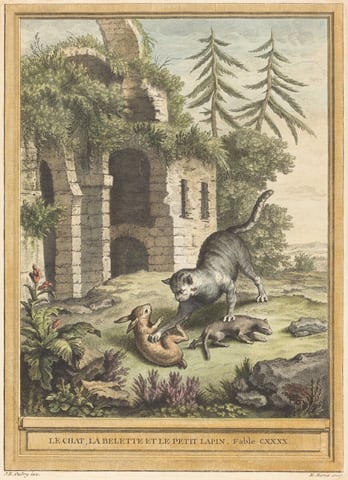
This is a painting of animals in front of a ruined structure. The painting features a cat, a weasel, and a small rabbit gathered on a patch of grass. The cat has its paw over the rabbit, with the weasel observing. They are in front of an ancient stone structure surrounded by vegetation. In the background are trees against a sky. The foreground has detailed foliage and flowers.

The works in this room are listed below.

Works in this room

Prints made in the 18th century, from every museum.

Section 1, north wall

  1. This is a drawing of a bird perched on a branch. The bird is detailed and identified as "Turtur Risorius." It rests on a green textured branch against a plain background. The bird has a black ring around its neck, soft brown plumage with intricate feather patterns, and light pink legs. Its eye is prominent and outlined within its head design. The branch is minimalist with small buds and thin twigs.
    Turtur RisoriusWilliam Home LizarsCourtesy National Gallery of Art, Washington
  2. Fuji from Ushibori, Province of Hitachi, by Katsushika Hokusai, 1760–1849
    Fuji from Ushibori, Province of HitachiKatsushika Hokusai, 1760–1849Courtesy of the Cleveland Museum of Art

Section 1, south wall

  1. Nuova pianta di Roma data in luce da Giambattista Nolli l’anno MDCCXLVII, known as La Pianta Grande di Roma, by Giovanni Battista Nolli, 1748
    Nuova pianta di Roma data in luce da Giambattista Nolli l’anno MDCCXLVII, known as La Pianta Grande di RomaGiovanni Battista Nolli, 1748Courtesy of the Cleveland Museum of Art
  2. This is a painting of animals in front of a ruined structure. The painting features a cat, a weasel, and a small rabbit gathered on a patch of grass. The cat has its paw over the rabbit, with the weasel observing. They are in front of an ancient stone structure surrounded by vegetation. In the background are trees against a sky. The foreground has detailed foliage and flowers.
    Le chat, la balette et le petit lapin (The Cat, the Weasel, and the Rabbit)Martin Marvie, published 1756Courtesy National Gallery of Art, Washington

Section 2, south wall
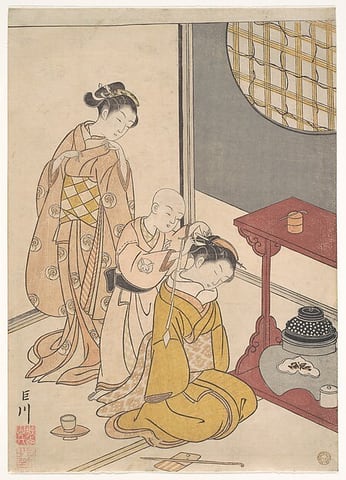
  1. Night Rain at the Double-Shelf Stand, from the series Eight Parlor Views (Zashiki hakkei), by Suzuki Harunobu, ca. 1766
    Night Rain at the Double-Shelf Stand, from the series Eight Parlor Views (Zashiki hakkei)Suzuki Harunobu, ca. 1766Courtesy of The Metropolitan Museum of Art
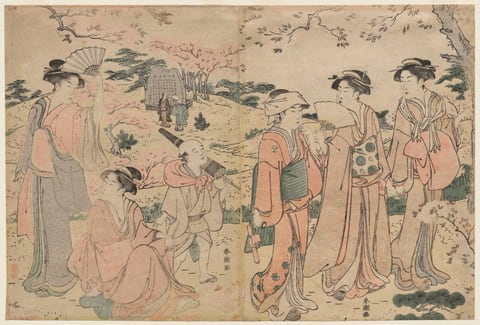
  2. Women Viewing Cherry Blossoms at Asukayama, by Katsukawa Shunchô, 1780s
    Women Viewing Cherry Blossoms at AsukayamaKatsukawa Shunchô, 1780sCourtesy of the Cleveland Museum of Art
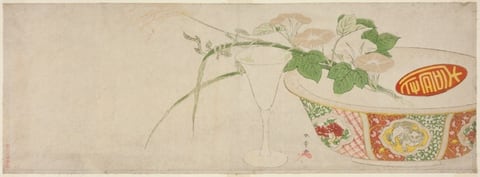
  3. A work made of color woodblock print; long surimono.
    Plants, Porcelain Bowl, and Glass GobletKatsukawa Shunshō, c. 1789Courtesy of the Art Institute of Chicago

Section 2, north wall
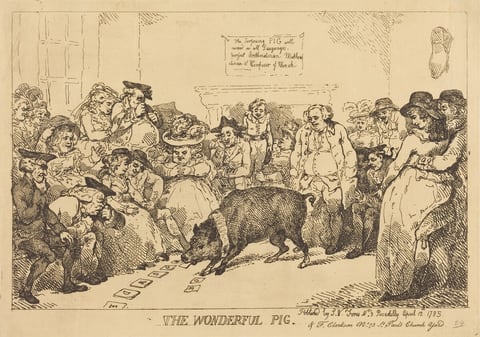
  1. This is a drawing showing a pig performing a trick for an audience. It depicts a group of people watching the pig interacting with cards on the floor. The detailed image shows the varied facial expressions of the audience members. There is text at the top of the image suggesting the pig has a unique ability, possibly related to languages. The drawing captures a moment of entertainment in a satirical style, with lines and cross-hatching used to emphasize the humor.
    The Wonderful PigThomas Rowlandson, 1785Courtesy National Gallery of Art, Washington
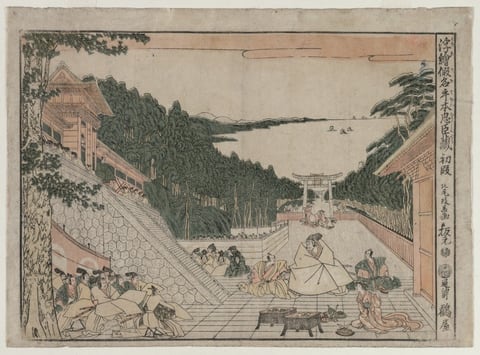
  2. Perspective Pictures for The Treasure House of Loyalty, by Kitao Masayoshi, c. 1790s
    Perspective Pictures for The Treasure House of LoyaltyKitao Masayoshi, c. 1790sCourtesy of the Cleveland Museum of Art
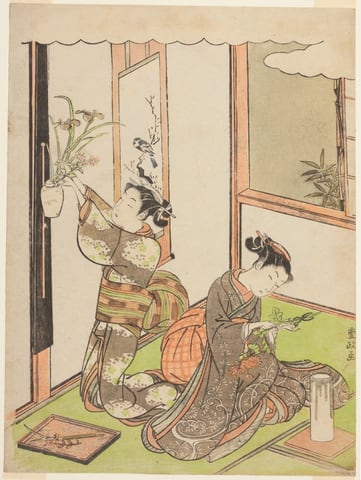
  3. A work made of color woodblock print; chuban.
    Flower ArrangingKitao Shigemasa, c. 1769Courtesy of the Art Institute of Chicago

Section 3, north wall
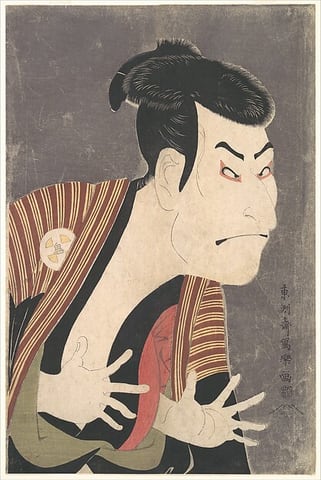
  1. Kabuki Actor Ōtani Oniji III as Yakko Edobei, by Tōshūsai Sharaku, 1794
    Kabuki Actor Ōtani Oniji III as Yakko EdobeiTōshūsai Sharaku, 1794Courtesy of The Metropolitan Museum of Art
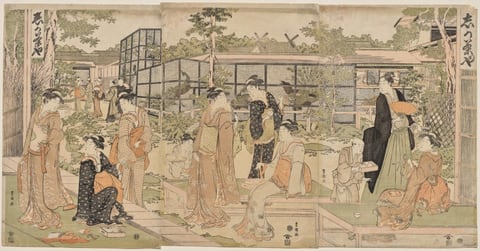
  2. The Shika Teahouse, by Utagawa Toyokuni, early 1790s
    The Shika TeahouseUtagawa Toyokuni, early 1790sCourtesy of the Cleveland Museum of Art

Section 3, south wall
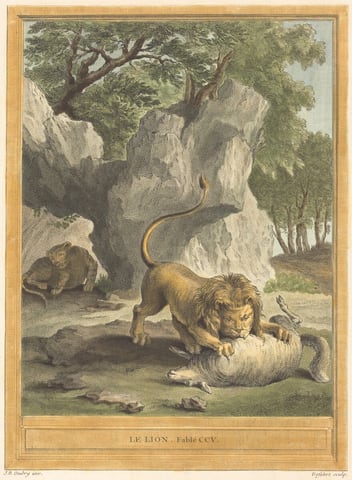
  1. This is a drawing of a lion in a forested rocky landscape. The lion is seen standing over a defeated animal. In the background, a forest with dense trees frames the scene. One monkey is visible among the rocks watching the lion. The setting conveys a wild, rugged terrain with rocky formations and scattered vegetation. Light and shadow emphasize textures in the lion's mane and the surrounding rocks. The composition focuses on the lion and its prey.
    Le lion (The Lion)A.-J. de Fehrt, published 1759Courtesy National Gallery of Art, Washington
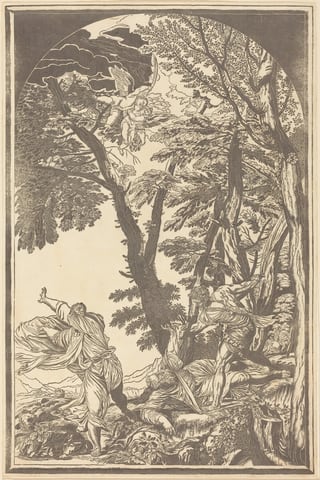
  2. This drawing depicts multiple figures in a forest setting. An angelic figure hovers at the top with wings outstretched. The forest below is filled with intricately detailed trees. Figures on the ground are in dynamic poses, one showing surprise or fear, and another reaching upwards. The composition is detailed with flowing garments and textured foliage, evoking tension and animation.
    The Death of Saint Peter MartyrJohn Baptist Jackson, 1739Courtesy National Gallery of Art, Washington

Section 4, south wall
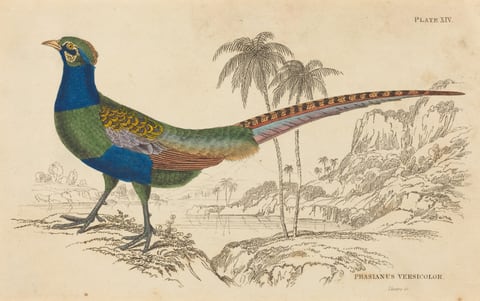
  1. The image shows a pheasant with vivid green and blue plumage and intricate golden patterns on its wings. The bird has long, patterned tail feathers extended to the right. The background includes palm trees, rocky outcrops, and distant hills.
    Phasianus VersicolorWilliam Home LizarsCourtesy National Gallery of Art, Washington
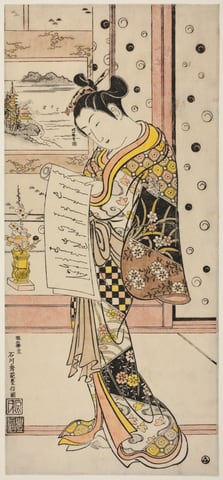
  2. A work made of hand-colored woodblock print; toku-oban, urushi-e.
    Courtesan Reading a LetterIshikawa Toyonobu, c. 1745Courtesy of the Art Institute of Chicago